
 Se i rummet
 Del som kort
 Del
Del
 Detaljer
 Guide
Guide

 Download
 Lignende værker
 Røntgenundersøgelse
 Diasshow
 Spørgsmål og svar
 Statistikker
Dead birds


 Vis mere
Giclée / Kunsttryk
Giclée- eller lærredstryk i museumskvalitet med hurtig produktion og fleksible muligheder for finish. ( Køb håndmalet maleri Skift til digitalt billede)




P118B Dkr10

P118H Dkr10

P118W Dkr10

P438Z Dkr10

P508JH Dkr12

P508YH Dkr12

P805H Dkr10

P805Z Dkr10

P919BZ Dkr10

P919G Dkr10

P919XJ Dkr10

P959ZH Dkr10

P968JZ Dkr12

W106C Dkr8

W218G Dkr10

W218JH Dkr8

W218Y Dkr10

W307PJ Dkr10

W316G Dkr10

W316PJ Dkr8

W316Y Dkr10

W398PJ Dkr8

W4111J Dkr10

W500HY Dkr15

W500JH Dkr15

W692G Dkr12

W849H Dkr8

W940BG Dkr15

W953PJ Dkr8




Vælg mellem vores forudindstillede størrelser, der matcher kunstværkets originale proportioner.

Indtast den bredde og højde, du har brug for, så det passer til din ramme eller din væg. Et print kan kun beskæres, aldrig gøres større end selve billedet, så en størrelse med et andet format vil medføre, at dele af motivet går tabt. Vi sender dig en digital mockup til godkendelse, før vi printer noget. Billedet vist på denne side viser ikke den faktiske beskæring — det er kun mockuppen, der gør.
Verdensomspændende levering () på 2 uger i stedet for de sædvanlige 4/5 uger. (9 november)

Gratis ekspresforsendelse til hele verden

Lærred af linned i høj kvalitet

Fuld transportforsikring

Garanti for refusion af told og importafgifter

Garanti for præcis farvegengivelse

100 dages returret ved fabrikationsfejl

100% fuld returret

Mængderabat ved flere køb
 Glasmulighed er kun tilgængelig i størrelser under 110 cm

Dead birds
Giclée / Kunsttryk
Størrelse på reproduktion
-


Samlet pris
Dkr 540
A Haunting Symphony of Life and Stillness
In the evocative masterpiece "Dead Birds", the Dutch Golden Age master Melchior de Hondecoetter invites viewers into a profound meditation on the fleeting nature of existence. This striking Baroque composition presents a dramatic tableau where the vibrant, chaotic energy of life meets the silent, heavy stillness of death. At first glance, the eye is drawn to the foreground, where a collection of birds—each rendered with breathtaking anatomical precision—lies scattered across the earth. The artist meticulously captures a variety of species, their plumage displaying a spectrum of rich, saturated colors that contrast sharply against the somber, darker tones of the ground. Some birds rest in limp, graceful poses, while others, with beaks slightly agape, seem caught in a final, breathless moment of transition. This intricate detail serves to ground the viewer in a visceral reality, making the scene feel both intimate and profoundly unsettling.
Beyond the immediate tragedy of the foreground, Hondecoetter employs a brilliant compositional technique to create a sense of narrative depth and tension. In the upper reaches of the canvas, a bird feeder teems with life, populated by at least ten birds perched in lively, dynamic positions. This juxtaposition is nothing short of masterful; it creates a visual dialogue between the thriving, active world above and the fallen, silent world below. The presence of the feeder suggests a cycle of abundance that has been interrupted, or perhaps a stark reminder of the precariousness of life itself. Through this layering of subjects, the painting transcends a mere study of ornithology to become a complex allegory of the 1-7th century Dutch fascination with memento mori—the inevitable reminder of mortality that underlies all living things.
The Artistry of the Baroque Animalier
Technically, "Dead Birds" showcases why Melchior de Hondecoetter was revered as a premier animalier of his era. His brushwork is characterized by an extraordinary ability to render texture, from the soft, downy feathers of a fledgling to the sleek, iridescent sheen of more exotic species. The light in the painting does not merely illuminate the scene; it sculpts it, catching the edges of a wing or the glint of a dark eye to create a three-dimensional presence that feels almost tactile. This mastery of light and shadow, a hallmark of the Baroque style, imbues the work with a dramatic, theatrical quality that commands attention in any setting.
For the discerning collector or interior designer, this piece offers much more than visual splendor. It is an intellectual centerpiece, capable of sparking deep conversation and adding a layer of historical gravity to a curated space. Whether placed in a grand library, a sophisticated study, or a contemporary gallery-style living room, a high-quality reproduction of this work brings with it the prestige of the Dutch Golden Age. The painting’s ability to balance morbid subject matter with exquisite beauty makes it a timeless choice for those who appreciate art that challenges the senses and stirs the soul, offering a window into a world where every feather tells a story of life, loss, and the enduring power of nature.
Spørgsmål og svar
Hvilken farvepalette er brugt i "Dead birds" af Melchior De Hondecoetter?
Farverne i "Dead birds" udgør en Earthy palet. Denne klassificering beskriver de dominerende farvefamilier.
Hvilket rum komplementerer farverne i "Dead birds" af Melchior De Hondecoetter?
Med hensyn til dets Earthy farver foreslås "Dead birds" til et Restaurant.
Hvilken gennemgående nuance præger "Dead birds" af Melchior De Hondecoetter?
Den dominerende nuance i "Dead birds" af Melchior De Hondecoetter er Golden Yellow Range. Nuancen er den underliggende tone i farvepaletten.
Kunstnerbiografi
The Avian Majesty of Melchior de Hondecoeter
In the golden twilight of the Dutch Golden Age, few artists captured the vibrant pulse of the natural world as vividly as Melchior de Hondecoeter. A master of the Baroque era, his brush possessed a rare alchemy, capable of transforming mere pigment into the iridescent sheen of a peacock’s plume or the delicate, translucent down of a songbird. Born in Utrecht around 1636, Hondecoetter emerged not merely as a painter of animals, but as a storyteller of the exotic and the magnificent. His work serves as a window into a century defined by global exploration, where the arrival of rare species from distant lands ignited a profound fascination with the wonders of the natural order.
The foundation of his extraordinary talent was laid through rigorous discipline and an unwavering commitment to anatomical truth. Apprenticeship under the esteemed Willem van Royen provided him with the technical scaffolding necessary to master the complexities of light and shadow. Yet, Hondecoetter’s genius lay in his ability to transcend mere scientific documentation. While he approached his subjects with the precision of a naturalist—studying musculature and skeletal structure with almost clinical devotion—he infused every composition with a theatrical energy characteristic of the Baroque movement. His canvases are never static; they are stages where birds interact, preen, and take flight amidst lush, atmospheric landscapes.
A Symphony of Color and Motion
To gaze upon a Hondecoeter masterpiece is to experience a sensory deluge. He rejected the muted, somber palettes that often characterized much of Dutch genre painting, opting instead for a bold, expressive use of color that commands the viewer's attention. His technique was a sophisticated balance of precise observation and expressive bravura. Through masterful rendering of texture, he could differentiate between the heavy, waxy surface of a waterfowl’s wing and the soft, airy lightness of a forest dweller. This tactile quality creates an immersive experience, pulling the observer into a world where the rustle of feathers feels almost audible.
The development of his style saw him move toward increasingly complex and dynamic compositions. He became renowned for his ability to arrange multiple subjects within a single frame, creating a sense of organized chaos that mirrors the untamed beauty of nature. These works often featured:
- Exoticism: The inclusion of rare, brightly colored birds that symbolized wealth, discovery, and the expanding horizons of the Dutch Republic.
- Dramatic Lighting: A use of chiaroscuro that highlighted the intricate details of plumage while casting deep, mysterious shadows in the surrounding foliage.
- Narrative Depth: Scenes that suggested a larger story, whether it be a moment of predatory tension or a peaceful interlude in a sun-drenched garden.
Legacy and Historical Significance
Melchior de Hondecoeter’s influence extended far beyond the borders of the Netherlands. As an animalier, he helped establish a specialized genre that would captivate collectors across Europe, from the courts of kings to the homes of wealthy merchants. His ability to marry scientific accuracy with high art ensured that his work was valued both for its aesthetic splendor and its contribution to the era's burgeoning interest in natural history.
Though his life ended in 1695, his artistic footprint remains indelible. He did not simply paint birds; he elevated them to subjects of profound dignity and drama. In an age of discovery, Hondecoeter acted as a visual chronicler of the earth's splendor, leaving behind a legacy of canvases that continue to breathe with life, color, and an eternal sense of wonder. His work remains a testament to the power of art to bridge the gap between the observed world and the human imagination.

Melchior De Hondecoetter
1636 - 1695
Kort om kunstneren
- Full Name: Melchior de Hondecoetter
- Nationality: Dutch
- Date Of Birth: 1636
- Date Of Death: 1695
- Place Of Birth: Utrecht, Netherlands
- Notable Artworks:
- A Cock
- The Menagerie
- Birds, Butterflies and a Frog Among Plants and Fungi
- Artistic Movement Or Style: Baroque
- Artists Who Influenced This Artist: ['None Known']
- Artists Or Movements Influenced By This Artist: ['William Hendrik Wilhemus van Royen']
Relaterede artikler

Hollandske Mestre: Top 10 Værker fra Guldalderen – Kunst til Dit Hjem
Oplev de 10 mest ikoniske værker fra den hollandske guldalder! Rembrandt, Vermeer og andre mestre afsløres. Find inspiration til dit hjem & køb museumskvalitets kunsttryk på OriginalUniqueArt.com.

Golden Light & Dutch Skies: The Timeless Magic of Dutch Golden Age Landscapes
Discover the breathtaking beauty of Dutch Golden Age landscapes. Explore the mastery of light, chiaroscuro, and 17th-century realism through an expert art history lens, celebrating the enduring legacy of the Dutch Masters for discerning collectors and art lovers.

Hollandsk Barok: Top 10 Mesterværker der Definerede en Æra – Kunst til Dit Hjem
Oplev Hollandsk Barok's 10 mest ikoniske værker! Rembrandt, Vermeer & co. – dyk ned i historien bag mesterværkerne og find inspiration til din boligindretning. Køb luksus kunsttryk på OriginalUniqueArt.com.

Golden Age Reflections: Dutch Baroque Painting & Cultural Innovation
Explore the Dutch Golden Age of painting! Discover key artists like Vermeer & ter Borch, their innovative techniques, and the rich cultural context behind these Baroque masterpieces. Learn about collecting & appreciating this iconic art period.
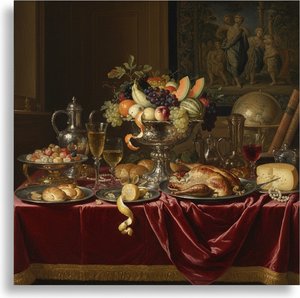
Abraham Hendricksz van Beyeren: Pioneering Dutch Still Life & the Banquet Tradition
Explore the captivating world of Dutch Golden Age still life with Abraham van Beyeren. Discover his innovative techniques, symbolic banquet scenes & lasting influence on art history. Learn about collecting these masterpieces.