
 Se i rummet
 Del som kort
 Del
Del
 Detaljer
 Guide
Guide

 Download
 Lignende værker
 Røntgenundersøgelse
 Diasshow
 Q&A
Q&A Statistikker
The Flight into Egypt

- 44.0 x 39.0 cm


 Vis mere
Kunstværket vist på denne side er beskyttet af ophavsretsloven, hvilket betyder, at vi ikke lovligt kan skabe eller sælge en identisk reproduktion. Denne beskyttelse håndhæves i henhold til internationale aftaler som f.eks. den Bernerkonventionen og af nationale love, herunder de bestemmelser, der er fastlagt i Amerikansk ophavsretslov - Titel 17.
Denne metode overholder fuldt ud ophavsretsreglerne, da den ikke indebærer kopiering eller duplikering af det beskyttede kunstværk. I stedet er der tale om en kreativ nytolkning – et nyt maleri, som er inspireret af det oprindelige, men ikke identisk med det.
Giclée / Kunsttryk
Giclée- eller lærredstryk i museumskvalitet med hurtig produktion og fleksible muligheder for finish. ( Køb håndmalet maleri Skift til digitalt billede)




P118B Dkr10

P118H Dkr10

P118W Dkr10

P438Z Dkr10

P508JH Dkr12

P508YH Dkr12

P805H Dkr10

P805Z Dkr10

P919BZ Dkr10

P919G Dkr10

P919XJ Dkr10

P959ZH Dkr10

P968JZ Dkr12

W106C Dkr8

W218G Dkr10

W218JH Dkr8

W218Y Dkr10

W307PJ Dkr10

W316G Dkr10

W316PJ Dkr8

W316Y Dkr10

W398PJ Dkr8

W4111J Dkr10

W500HY Dkr15

W500JH Dkr15

W692G Dkr12

W849H Dkr8

W940BG Dkr15

W953PJ Dkr8




Vælg mellem vores forudindstillede størrelser, der matcher kunstværkets originale proportioner.

Indtast den bredde og højde, du har brug for, så det passer til din ramme eller din væg. Et print kan kun beskæres, aldrig gøres større end selve billedet, så en størrelse med et andet format vil medføre, at dele af motivet går tabt. Vi sender dig en digital mockup til godkendelse, før vi printer noget. Billedet vist på denne side viser ikke den faktiske beskæring — det er kun mockuppen, der gør.
Verdensomspændende levering () på 2 uger i stedet for de sædvanlige 4/5 uger. (1 november)

Gratis ekspresforsendelse til hele verden

Lærred af linned i høj kvalitet

Fuld transportforsikring

Garanti for refusion af told og importafgifter

Garanti for præcis farvegengivelse

100 dages returret ved fabrikationsfejl

100% fuld returret

Mængderabat ved flere køb
 Glasmulighed er kun tilgængelig i størrelser under 110 cm

The Flight into Egypt
Giclée / Kunsttryk
Størrelse på reproduktion
-


Samlet pris
Dkr 538
A Journey Through Sacred History: The Flight into Egypt
To gaze upon this depiction of The Flight into Egypt is to be transported across centuries, to a moment etched deeply into the fabric of Christian narrative. The scene unfolds with an air of profound solemnity and quiet urgency. We see Mary and Joseph, their journey marked by both necessity and divine purpose, guiding the infant Jesus through a landscape that speaks of distant lands and arduous travel. The composition immediately draws the eye to the foreground, where the figures are arranged around a horse-drawn carriage—a tangible anchor in this historical tableau. Beyond these central figures, the surrounding crowd adds depth, suggesting not just an event, but a community witnessing a pivotal passage.
Mastery of the German Renaissance Style
Attributed to the enigmatic Master of AB Monogram, this work exemplifies the devotional intensity characteristic of 16th-century German art. While the artist remains shrouded in mystery—a true enigma whose signature is only found in his monogram—the quality of execution speaks volumes of a highly skilled workshop tradition. The style balances the emerging naturalism of the Renaissance with a deep, almost palpable sense of religious fervor. Notice how the figures are rendered; they possess a grounded humanity, yet their actions carry an unmistakable weight of sacred destiny. This was art intended for private contemplation, designed to draw the viewer into intimate dialogue with the divine narrative.
Symbolism and Emotional Resonance
The symbolism inherent in this piece is rich and multilayered. The journey itself—the flight—is a potent metaphor for exile, protection, and the beginning of a sacred lineage. The mountainous backdrop anchors the scene geographically while simultaneously suggesting the challenges overcome. Emotionally, the painting resonates with themes of vulnerability juxtaposed against divine providence. It captures that delicate balance between human frailty, represented by the weary travelers, and the enduring promise of faith. For the modern collector or designer, this piece offers more than mere decoration; it offers a focal point for contemplation, a visual meditation on endurance.
Technique and Decorative Appeal
Executed around 1530, the painting showcases a mastery of composition typical of its era. The handling of light across the figures and the landscape suggests careful attention to atmospheric perspective, giving the scene an almost three-dimensional presence despite its panel format. When considering this for your home or sacred space, the dimensions (44 x 39 cm) offer a perfect scale—substantial enough to command attention without overwhelming a mantlepiece or niche. Owning a reproduction of this work allows you to bring the quiet drama and profound artistry of the German Renaissance into your contemporary life, honoring its historical weight while enhancing modern decor.
Spørgsmål og svar
Hvilke andre navne er Master Of Ab Monogram kendt under?
Master Of Ab Monogram er også kendt som Johannes Hintermeyer.
Hvilket museum udstiller det originale "The Flight into Egypt"?
Du kan se det originale værk "The Flight into Egypt" på Pushkin State Museum of Fine Arts, Moskva, Rusland.
Hvornår er "The Flight into Egypt" af Master Of Ab Monogram skabt?
"The Flight into Egypt" af Master Of Ab Monogram blev skabt i 1530.
Kunstnerbiografi
The Enigmatic Master of the AB Monogram: A Glimpse into a German Renaissance Workshop
The 16th century in Germany was a period of profound religious and artistic upheaval, witnessing both the blossoming of Renaissance ideals and the seismic shifts initiated by the Reformation. Emerging from this dynamic context is an artist known only as the Master of the AB Monogram – a name derived not from personal identity but from the distinctive monogram that consistently appears on his devotional paintings. While Johannes Hintermeyer has been proposed as a possible identification, the true personality behind this captivating oeuvre remains shrouded in mystery, adding to the allure and intrigue surrounding his work.
The Master of AB Monogram’s artistic output centers almost exclusively on small-scale religious scenes, primarily depictions of the life of Christ and the Virgin Mary. These are not grand altarpieces intended for public display; rather, they were likely created for private devotion, commissioned by a burgeoning middle class eager to possess images that fostered personal piety. The paintings themselves are remarkable for their exquisite detail, luminous colors, and a profound sense of emotional intimacy. He worked with oil on panel, achieving a smoothness and clarity reminiscent of Early Netherlandish masters like Jan van Eyck, yet infused with a distinctly German sensibility.
Influences and Artistic Development
The Master’s style is deeply rooted in the traditions of Northern Renaissance painting. The influence of artists such as Albrecht Dürer – particularly his meticulous engraving techniques and attention to anatomical accuracy – is readily apparent. However, he also demonstrates a clear understanding of Italian Renaissance principles, evident in the balanced compositions and subtle use of perspective. The artist’s workshop likely had access to prints from both Northern and Southern Europe, allowing for a synthesis of diverse artistic currents.
Early works display a somewhat rigid formality, with figures possessing a certain stiffness. As his career progressed, however, the Master's style evolved towards greater naturalism and emotional expressiveness. The drapery becomes more fluid, faces more individualized, and the overall effect is one of heightened realism. This development suggests a continuous process of experimentation and refinement within the workshop, driven by both artistic ambition and the demands of discerning patrons.
Key Characteristics: Detail, Symbolism & Devotional Power
The hallmark of the Master of AB Monogram’s paintings lies in their extraordinary attention to detail. Every object is rendered with painstaking accuracy – from the intricate folds of fabric to the delicate features of the figures. This meticulousness wasn't merely a display of technical skill; it served a deeper purpose: to create images that were both visually compelling and spiritually resonant.
Symbolism permeates his work, enriching the narrative and inviting contemplation. Flowers often carry specific religious meanings – lilies representing purity, roses symbolizing love and sacrifice. The inclusion of everyday objects, such as musical instruments or domestic utensils, adds a layer of realism while also hinting at deeper allegorical interpretations. The Annunciation, for example, frequently features carefully chosen elements that allude to the Virgin Mary’s immaculate conception and her role in salvation history.
Legacy and Historical Significance
Despite the anonymity surrounding his identity, the Master of AB Monogram occupies a significant place in the history of German Renaissance art. His paintings provide valuable insights into the religious beliefs and artistic tastes of the 16th-century middle class. They represent a unique blend of Northern realism and Italian idealism, reflecting the complex cultural forces at play during this period.
The Circumcision, The Birth of Jesus and other works by the Master demonstrate his mastery of narrative storytelling and his ability to convey profound spiritual truths through visual means. His influence can be seen in the work of later German artists, who adopted his meticulous technique and devotional sensibility. Today, his paintings are prized for their beauty, craftsmanship, and enduring power to evoke a sense of faith and wonder.
- Style: Northern Renaissance with Italian influences
- Medium: Oil on panel
- Subject Matter: Primarily religious scenes – life of Christ, Virgin Mary
- Key Features: Exquisite detail, luminous colors, emotional intimacy, symbolic imagery

Master Of Ab Monogram
Germany
Kort om kunstneren
- Full Name: Master of AB Monogram
- Nationality: German
- Place Of Birth: Germany
- Notable Artworks: ['Annunciation Paintings']
- Artistic Movement Or Style: Renaissance Art
Relaterede artikler
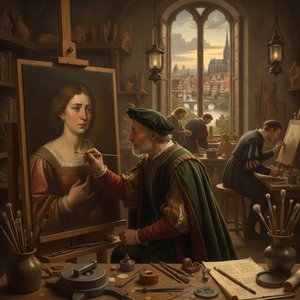
The Northern Awakening: Artistic Innovation & Cultural Transformation in the German Renaissance
Explore the artistic innovation of the German Renaissance! Discover Dürer, the Danube School & Reformation art. Learn about techniques, materials & lasting influence. Find museum-quality reproductions at OriginalUniqueArt.

The Enduring Appeal of Decorative Art: A Historical Survey of Ornamentation, Functionality & Cultural Significance
Explore the rich history of decorative arts with OriginalUniqueArt.com. Discover key movements, influential artists, and expert guidance for building a discerning collection. Learn about ornamentation, functionality & cultural significance.

Tysk Ekspressionisme: 10 Mesterværker der Definerede en Æra – Kunst til Dit Hjem
Oplev de 10 mest ikoniske værker fra Tysk Ekspressionisme! Lær historierne bag Kirchner, Nolde & Kandinsky. Find museumskvalitets kunsttryk og inspiration til din indretning på OriginalUniqueArt.com – udforsk samlingen online.

Gustav Klimts 25 Mesterværker: Kunst, Historie & Inspiration til Dit Hjem | OriginalUniqueArt
Oplev Gustav Klimts 25 mest ikoniske værker! Fordyb dig i symbolisme, jugendstil og den gyldne periodes skønhed. Find inspiration til din indretning & køb luksus kunst reproduktioner på OriginalUniqueArt.com.
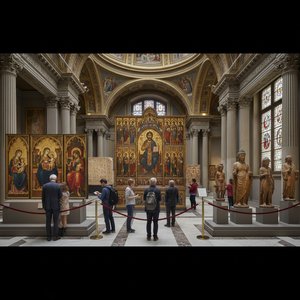
Sacred Narratives Embodied: A Comprehensive Exploration of Religious Iconography in Art History
Explore the rich history of religious iconography in art! Discover symbolism, movements & masterpieces from Byzantine to Renaissance periods. Expert insights for collectors and enthusiasts at OriginalUniqueArt.