

 Se i rummet
 Send
Send Del
Del
 Detaljer
 Studieguide til kunstværker

 Download
 Lignende værker
 Røntgenundersøgelse
 Se diasshow
 Statistik
Saint Gotthard


 Læs mere
Giclée / Kunsttryk
Giclée- eller lærredstryk i museumskvalitet med hurtig produktion og fleksible muligheder for finish. ( Bestil håndmalet reproduktion Skift til digitalt billede)




P118B Dkr10

P118H Dkr10

P118W Dkr10

P438Z Dkr10

P508JH Dkr12

P508YH Dkr12

P805H Dkr10

P805Z Dkr10

P919BZ Dkr10

P919G Dkr10

P919XJ Dkr10

P959ZH Dkr10

P968JZ Dkr12

W106C Dkr8

W218G Dkr10

W218JH Dkr8

W218Y Dkr10

W307PJ Dkr10

W316G Dkr10

W316PJ Dkr8

W316Y Dkr10

W398PJ Dkr8

W4111J Dkr10

W500HY Dkr15

W500JH Dkr15

W692G Dkr12

W849H Dkr8

W940BG Dkr15

W953PJ Dkr8




Vælg mellem vores forudindstillede størrelser, der matcher kunstværkets originale proportioner.

Indtast den bredde og højde, du har brug for, så det passer til din ramme eller din væg. Et print kan kun beskæres, aldrig gøres større end billedet, så en størrelse med en anden form vil miste en del af motivet. Vi sender dig en digital mockup til godkendelse, før vi printer noget. Billedet vist på denne side viser ikke den faktiske beskæring — det er kun mockuppen, der gør.
Verdensomspændende levering () på 2 uger i stedet for de sædvanlige 4/5 uger. (22 oktober)

Gratis ekspresforsendelse til hele verden

Lærred af linned i høj kvalitet

Komplet transportforsikring

Garanti for refusion af told og importafgifter

Garanti for autentisk farvegengivelse

100 dages returret ved fabrikationsfejl

100% fuld returret

Mængderabat ved flere køb
 Glasmulighed er kun tilgængelig i størrelser under 110 cm

Saint Gotthard
Giclée / Kunsttryk
Reproduktionsstørrelse
-


Samlet pris
Dkr 528
A Vision of Faith and the Alpine Landscape
Martin Knoller’s “Saint Gotthard” is not merely a depiction of a biblical figure; it's an immersive experience, a vibrant tapestry woven with threads of faith, landscape, and the burgeoning Neoclassical movement that defined 18th-century Italian art. Painted in the mid-1760s, this monumental fresco – now faithfully reproduced as a stunning hand-painted artwork – transports the viewer to a serene alpine sanctuary, bathed in an ethereal light that speaks of both earthly beauty and divine presence.
The scene unfolds within a modest chapel, its walls adorned with a complex arrangement of figures. At the heart of the composition stands Saint Gotthard himself, identifiable by his simple robe and contemplative gaze. He’s not presented as a warrior or a saint in traditional armor, but rather as a humble servant of God, surrounded by a group of individuals engaged in various acts of devotion – reading scripture, offering prayers, and presenting gifts. The inclusion of birds, one perched near the top left corner and another towards the bottom right, adds an element of natural grace and symbolizes spiritual aspiration, reaching for the heavens.
Neoclassical Influence and Baroque Roots
Knoller’s style is a fascinating synthesis of the established Baroque techniques he learned from masters like Paul Troger and Michelangelo Unterberger, combined with the emerging ideals of Neoclassicism championed by figures such as Anton Raphael Mengs and Johann Joachim Winckelmann. The influence of Neoclassicism is evident in the clarity of form, the balanced composition, and the restrained use of color – a departure from the dramatic chiaroscuro favored by earlier Baroque painters. However, Knoller retains a distinctly Baroque sensibility through his dynamic figure arrangements, rich textures, and masterful rendering of light and shadow.
The choice of subject matter itself reflects this duality. Saint Gotthard, a relatively obscure figure in Christian iconography, was likely chosen for his embodiment of humility and service – virtues highly valued during the Neoclassical period. The setting within a modest chapel further emphasizes this theme, suggesting that true devotion lies not in grand displays of piety but in quiet contemplation and adherence to spiritual principles.
Symbolism and Emotional Resonance
Beyond its religious subject matter, “Saint Gotthard” is rich in symbolic meaning. The clock on the wall, a subtle detail often overlooked, represents the passage of time and the importance of living a virtuous life. The books held by some figures symbolize knowledge and wisdom, while the bowl they offer suggests gratitude and reverence. The overall effect is one of profound peace and serenity – an invitation to reflect on faith, morality, and the beauty of the natural world.
Knoller’s masterful use of color contributes significantly to the painting's emotional impact. The warm hues of red, gold, and ochre evoke a sense of warmth and spirituality, while the cooler blues and greens create a backdrop of tranquil alpine scenery. The vibrant colors are particularly noticeable in the clothing of the figures, adding a touch of life and dynamism to the scene.
A Legacy Preserved Through Reproduction
Today, “Saint Gotthard” stands as a testament to Martin Knoller’s artistic skill and his ability to capture both the spiritual and aesthetic qualities of his time. OriginalUniqueArt is proud to offer a faithful reproduction of this remarkable painting, allowing art lovers around the world to experience its beauty and significance firsthand. Whether displayed in a private residence or a public space, this hand-painted artwork will undoubtedly serve as a source of inspiration and contemplation for generations to come.
Spørgsmål & svar
Kan "Saint Gotthard" af Martin Knoller, som findes på Veneranda Fabbrica del Duomo di Milano, reproduceres lovligt?
Originalen af "Saint Gotthard" findes på Veneranda Fabbrica del Duomo di Milano, og værket er i det offentlige domæne – ophavsretten er udløbet.
Hvordan downloader jeg billedet af "Saint Gotthard" af Martin Knoller?
Billedet af "Saint Gotthard" af Martin Knoller kan downloades fra værkets Download-side: et højtopløseligt digitalt billeddownload.
Hvilken størrelse skal jeg printe "Saint Gotthard" i til mit værelse?
Til et Living Room er den anbefalede printstørrelse for "Saint Gotthard" af Martin Knoller Medium.
Om kunstneren
Martin Knoller: Life and Legacy
Early Life and Education
Martin Knoller (1725 – 1804) was an Austrian-Italian painter, primarily active in Italy, renowned for his fresco work. Born in Steineck im Brenner, near Innsbruck, Austria, he received his initial artistic training under the tutelage of Paul Troger and Michelangelo Unterberger in Salzburg and Vienna. These masters instilled in him a foundation in Baroque techniques that would later inform his distinctive style.
Artistic Development and Influences
In 1755, Knoller journeyed to Rome, a pivotal moment in his artistic development. Exposure to the burgeoning Neoclassical movement profoundly influenced his work. He studied under Anton Raphael Mengs and engaged with the writings of Johann Joachim Winckelmann, absorbing their emphasis on classical ideals of form and composition. While retaining elements of Baroque drama, Knoller’s style increasingly incorporated clarity, balance, and a refined aesthetic sensibility.
Key Characteristics and Style
Knoller's art occupies an interesting space between the Baroque and Rococo periods, with the latter often prevailing in his paintings rather than his frescoes. He specialized in both frescoes and altarpiece paintings. His compositions frequently feature groups of figures, always ensuring the principal subject is prominently located in the foreground. A hallmark of his work is the use of bright, vibrant colors, particularly in clothing, adding a sense of life and dynamism to his scenes.
- Emphasis on Figure Groups: Knoller excelled at depicting dynamic interactions between figures.
- Vibrant Color Palette: His use of color adds energy and visual interest.
- Clear Composition: He favored well-ordered arrangements, avoiding the excessive drama of High Baroque.
- Masterful Perspective: Knoller demonstrated a strong understanding of perspective, creating realistic spatial depth.
Major Achievements and Commissions
Knoller’s breakthrough came with his completion of “The Glory of St Stephen” in 1754 at the parish church of Anras in East Tyrol. However, it was through the patronage of Karl Joseph von Firmian, the Imperial Governor of Lombardy under Maria Theresa, that Knoller achieved widespread recognition. Von Firmian commissioned him to paint frescoes for the Palazzo Firmian-Vigoni, a significant undertaking that showcased Knoller’s talent and cemented his reputation.
Later Life and Legacy
From 1793 until his death in 1804, Knoller served as a professor at the Brera Academy of Fine Arts in Milan. Among his pupils was Giuseppe Mazzola, who continued to propagate Knoller’s artistic principles. While not as widely celebrated as some of his contemporaries, Martin Knoller left behind a substantial body of work that reflects the transition between Baroque exuberance and Neoclassical restraint. His frescoes and altarpieces remain important examples of 18th-century Italian art.
Historical Significance
Knoller’s significance lies in his ability to synthesize diverse artistic influences – Baroque, Rococo, and Neoclassicism – into a unique and compelling style. He represents a transitional figure whose work embodies the changing aesthetic sensibilities of his time. His emphasis on clarity, balance, and vibrant color continues to resonate with art enthusiasts today.

Martin Knoller
1725 - 1804 , Austria
Hurtige fakta
- Name: Martin Knoller
- Movement:
- Baroque
- Rococo
- Neoclassicism
- Birth Date: 1725
- Death Date: 1804
- Influenced: ['Giuseppe Mazzola']
- Birth Place: Steineck im Brenner, Austria
- Nationality: Austrian-Italian
- Date Of Birth: 1725
- Date Of Death: 1804
- Influenced By:
- Paul Troger
- Michelangelo Unterberger
- Anton Raphael Mengs
- Johann Joachim Winckelmann
- Notable Works:
- The Glory of St Stephen
- Palazzo Firmian-Vigoni frescoes
- Place Of Birth: Steineck im Brenner, Austria
Relaterede artikler

Baroque vs. Rococo: A Definitive Guide to the Drama of Grandeur and the Elegance of Grace
Explore the profound differences between Baroque drama and Rococo elegance. Our expert guide delves into art history, chiaroscuro, and the evolution of European masterpieces for collectors and enthusiasts seeking deep historical context.
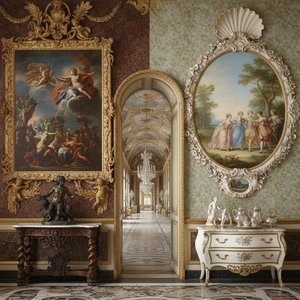
Drama & Delight: A Journey Through the Grandeur of Baroque and Rococo Art
Embark on a cultural journey through the dramatic grandeur of Baroque and the delicate grace of Rococo art. Discover the history, techniques, and timeless beauty of these magnificent eras with our expert-led exploration of European masterpieces.

Freskoen som Familiens Arv: Bevar Din Historie på Væggene
Bevar din families historie med smukke, håndmalede vægmalerier og freskoer. Få professionel rådgivning & skræddersyede kunstværker hos – kvalitet og ekspertise garanteret!
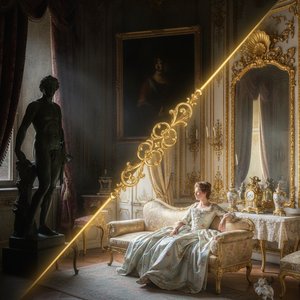
Baroque vs. Rococo: A Definitive Guide to High-Drama Shadows and Golden Elegance
Explore the dramatic evolution from Baroque's intense chiaroscuro to Rococo's golden elegance. Our expert guide decodes the shift from high-drama shadows to playful, ornate grace for art enthusiasts and collectors seeking deep historical insight.
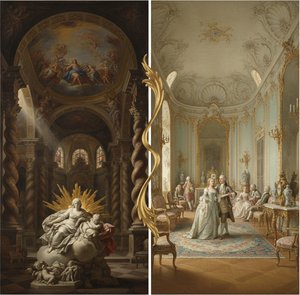
From Grandeur to Grace: Exploring the Evolution of Baroque & Rococo Art
Explore the captivating evolution from Baroque's drama to Rococo's grace! Discover key artists, characteristics & lasting influence of these art movements with expert insights at OriginalUniqueArt.