Color Field
Horizontal Vision (Mark Rothko)
Mark Rothko (1903–1970) har skabt Horizontal Vision. Det tilhører Color Field-bevægelsen. Den er udført i Oil On Canvas.
- Oil On Canvas

 Se i rummet

 Håndmalet oliemalerie
 Del som kort
 Del
 Faktablad


 Download
 Lignende værker
 Røntgenundersøgelse
 Diasshow
 Spørgsmål og svar

 Statistikker
Horizontal Vision kort fortalt
- Titel
- Horizontal Vision
- Kunstner
- Mark Rothko (1903–1970)
- Kunstner født i
- Daugavpils, Letland
- Medium
- Oil On Canvas
- Bevægelse
- Color Field
- Periode
- Modern
- Motiv
- color blocks, geometric shapes, red hue, minimalism, emotional resonance, bowl composition
Hvad forestiller Horizontal Vision?
A Symphony of Crimson and Light
To stand before Mark Rothko’s “Horizontal Vision” is to step away from the clamor of the physical world and enter a sanctuary of pure, unadulterated emotion. Painted in 1946, this masterpiece serves as a profound cornerstone of the Abstract Expressionist movement, a period when artists sought to strip away the superficiality of representation to uncover the raw essence of the human condition. The canvas does not present a landscape or a figure; instead, it offers a meditative expanse where color itself becomes the protagonist. Through its layered, luminous rectangles, the work invites a silent dialogue between the viewer and the infinite, making it an unparalleled centerpiece for any collection dedicated to contemplative beauty.
The composition is deceptively simple, yet its complexity lies in the subtle vibrations of its palette. Rothko utilizes a mesmerizing arrangement of horizontal bands—deep crimsons, warm oranges, and muted yellows—that seem to float upon one another. There are no hard edges here; rather, the boundaries between colors are soft and atmospheric, achieved through his signature technique of “gypsy staining.” By applying thin, translucent washes of pigment, Rothko allowed each layer to bleed into the next, creating a sense of breathing depth. This meticulous layering produces a hazy, ethereal glow, as if the light is emanating from within the canvas itself rather than reflecting off its surface.
The Architecture of Emotion and Spirit
Beyond its visual splendor, “Horizontal Vision” is steeped in the spiritual and historical tensions of the post-World War II era. Emerging from a period of global trauma, Rothko sought to bypass the rational mind and speak directly to the primal soul. Influenced by the meditative stillness of Zen Buddhism, his work functions as a visual prayer. The tension between the warm, advancing reds and the receding shadows creates a rhythmic pulse, a visual heartbeat that draws the eye into a state of deep reflection. For the collector or interior designer, this painting offers more than mere decoration; it provides an emotional anchor, a way to infuse a space with a sense of profound stillness and intellectual weight.
For those seeking to integrate such a powerful work into a modern environment, a high-quality reproduction allows the transformative power of Rothko’s vision to become a permanent fixture of the home. Whether placed in a minimalist gallery-style living room or a quiet study, the painting acts as a window into an internal landscape. It challenges the viewer to look past the surface and find meaning in the absence of form, proving that even in the lack of recognizable imagery, there is a wealth of narrative, history, and soul to be discovered.
Højopløselige billeder af Horizontal Vision
Protected by copyright: these files are for personal reference, not a licence to republish.
Mark Rothko, Horizontal Vision.
Spørgsmål om Horizontal Vision besvaret
Hvilken teknik er brugt til "Horizontal Vision" af Mark Rothko?
Mark Rothko brugte Oil On Canvas-teknikken til "Horizontal Vision". Teknikken definerer det originale værks materielle karakter.
Hvad forestiller "Horizontal Vision" af Mark Rothko?
"Horizontal Vision" af Mark Rothko forestiller: color blocks, geometric shapes, red hue, minimalism, emotional resonance, bowl composition, rothko style.
Er "Horizontal Vision" fri for ophavsret?
Ophavsretsstatus for "Horizontal Vision" af Mark Rothko: værket er stadig beskyttet af ophavsret. Dette afgør, om der frit må foretages reproduktioner af billedet.
Hvilken kunstner tilskrives "Horizontal Vision"?
"Horizontal Vision" tilskrives Mark Rothko.
Hvilken kunstretning tilhører "Horizontal Vision" af Mark Rothko?
Kunstretningen forbundet med "Horizontal Vision" af Mark Rothko er Color Field. Denne klassificering placerer værket blandt relaterede kunstnere og kunstværker.
Hvilken fase af Mark Rothkos kunstneriske udvikling repræsenterer "Horizontal Vision"?
"Horizontal Vision" repræsenterer Mark Rothkos Mature.
Hvorfor er ophavsretsstatus for "Horizontal Vision" som den er?
"Horizontal Vision" af Mark Rothko er stadig beskyttet af ophavsret. Ophavsretten løber fra kunstnerens dødsår, som var 1970.
Hvad deler "Horizontal Vision" med resten af Mark Rothkos produktion?
I Mark Rothkos samlede værk placerer "Horizontal Vision" sig i Color Field-stilen, sammen med temaerne omkring color field expression, existential minimalism, emotional depth exploration, rothko’s formal legacy, central composition motif.
Er "Horizontal Vision" typisk for det, som Mark Rothko normalt skabte?
"Horizontal Vision" skildrer color blocks, geometric shapes, red hue, minimalism, emotional resonance, bowl composition, rothko style, mens Mark Rothkos registrerede temaer er color field expression, existential minimalism, emotional depth exploration, rothko’s formal legacy, central composition motif. En sammenligning af de to viser, hvordan værket relaterer sig til kunstnerens sædvanlige motiver.
Om kunstneren, Mark Rothko

1903–1970, Letland
Mark Rothko
Mark Rothkos tidlige liv Mark Rothko blev født som Markus Yakovlevich Rothkowitz i 1903. Han blev født i Dvinsk, Rusland, i et område, der i dag er kendt som Daugavpils i Letland. Hans familie levede inden for Pale of Settlement, en region præget af politisk uro og den konstante skygge fra pogromer. Denne atmosfære af ustabilitet fulgte med familien, da de emigrerede til USA i 1913.
Også af Mark Rothko
 Hvid Center1950
 Ingen.
 Nr. 61 (Rust og Blå)1953
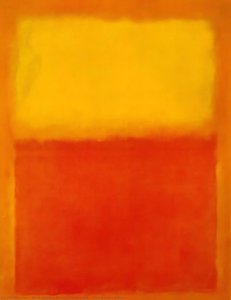 Orange og gul1956
Essays om Horizontal Vision
 The Architecture of Emotion: A Connoisseur’s Guide to the Chromatic Sublimity of Mark RothkoExplore the profound emotional landscapes of Mark Rothko. An expert editorial on Color Field painting, decoding the spiritual depth, techni…
 Beyond the Canvas: A Definitive Guide to Abstract Expressionism, Action Painting, and Color Field MastersExplore the profound history of Abstract Expressionism, from the visceral energy of Action Painting to the serene depth of Color Field mast…
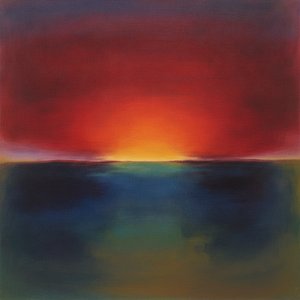 Color & Emotion: The Top 25 Masterpieces by Mark RothkoImmerse yourself in the profound emotion of Mark Rothko's greatest works. Explore 25 iconic Abstract Expressionist masterpieces, from color…