() ·

Et maleri skabt til dig, i hånden

Triptych

Håndlavet oliereproduktion

Håndmalet olie på lærred i din valgte størrelse og ramme, udført efter bestilling af vores kunstnere. ( Skift til printsalg Skift til digitalt billede)

Beskrivelse af samlerobjektet

Explore Mariotto Albertinelli’s 1500 Triptych: A haunting skull & devotional scenes in monochrome oil on canvas. Renaissance art, memento mori, & a poignant reflection on life.

Kunstnerbiografi

Explore Mariotto Albertinelli (1474-1515), a Florentine Renaissance painter known for his collaboration with Fra Bartolomeo & harmonious compositions blending Perugino's grace, Flemish detail, and Leonardo’s sfumato. Discover masterpieces like the Visitation!

fra ·

Kapitel 1

Hvor stor skal den være?

Træk i skyderen for at ændre størrelsen; billedet til venstre viser rammen i dens faktiske bredde. Originalens proportioner bevares.

Standardstørrelse
speciallavet
CM
INCH

Vælg mellem vores forudindstillede størrelser, der matcher kunstværkets originale proportioner.

bredde
højde

Indtast den bredde og højde, du har brug for, så det passer til din ramme eller din væg. Da dette er håndmalet, kan kunstneren ved en anden form på størrelsen male lidt mere rundt om billedet eller skære lidt væk — det er op til dig. Vi sender dig et digitalt mockup til godkendelse, før maleriet påbegyndes. Billedet, der vises på denne side, viser ikke det endelige resultat — det er kun mockuppet, der gør.

Kapitel 2

Hvordan skal det leveres?

Vælg kanterne på det opspændte lærred

Vælg din ramme

Corner sample of the WhiteWrap canvas edge finish, stretched on massivt træ bars
Hvid kant Dkr1
Corner sample of the BlurSideWrap canvas edge finish, stretched on massivt træ bars
Udvasket kant Dkr1
Corner sample of the ExtendedWrap canvas edge finish, stretched on massivt træ bars
Fortsat motiv Dkr1
Corner sample of the P118B picture frame: støbt polystyren, 5 cm wide and 3 cm thick
P118B Dkr10
Corner sample of the P118H picture frame: støbt polystyren, 5 cm wide and 3 cm thick
P118H Dkr10
Corner sample of the P118W picture frame: støbt polystyren, 5 cm wide and 3 cm thick
P118W Dkr10
Corner sample of the P438Z picture frame: støbt polystyren, 5.5 cm wide and 3.5 cm thick
P438Z Dkr10
Corner sample of the P508JH picture frame: støbt polystyren, 7 cm wide and 3.5 cm thick
P508JH Dkr12
Corner sample of the P508YH picture frame: støbt polystyren, 7 cm wide and 3.5 cm thick
P508YH Dkr12
Corner sample of the P805H picture frame: støbt polystyren, 5 cm wide and 3.5 cm thick
P805H Dkr10
Corner sample of the P805Z picture frame: støbt polystyren, 5 cm wide and 3.5 cm thick
P805Z Dkr10
Corner sample of the P919BZ picture frame: støbt polystyren, 7 cm wide and 3.5 cm thick
P919BZ Dkr10
Corner sample of the P919G picture frame: støbt polystyren, 7 cm wide and 3.5 cm thick
P919G Dkr10
Corner sample of the P919XJ picture frame: støbt polystyren, 7 cm wide and 3.5 cm thick
P919XJ Dkr10
Corner sample of the P959ZH picture frame: støbt polystyren, 5 cm wide and 3 cm thick
P959ZH Dkr10
Corner sample of the P968JZ picture frame: støbt polystyren, 6 cm wide and 4 cm thick
P968JZ Dkr12
Corner sample of the W106C picture frame: massivt træ, 5 cm wide and 3 cm thick
W106C Dkr8
Corner sample of the W218G picture frame: massivt træ, 5 cm wide and 3 cm thick
W218G Dkr10
Corner sample of the W218JH picture frame: massivt træ, 5 cm wide and 3 cm thick
W218JH Dkr8
Corner sample of the W218Y picture frame: massivt træ, 5 cm wide and 3 cm thick
W218Y Dkr10
Corner sample of the W307PJ picture frame: massivt træ, 6 cm wide and 3 cm thick
W307PJ Dkr10
Corner sample of the W316G picture frame: massivt træ, 6 cm wide and 3 cm thick
W316G Dkr10
Corner sample of the W316PJ picture frame: massivt træ, 6 cm wide and 3 cm thick
W316PJ Dkr8
Corner sample of the W316Y picture frame: massivt træ, 6 cm wide and 3 cm thick
W316Y Dkr10
Corner sample of the W398PJ picture frame: massivt træ, 5 cm wide and 3 cm thick
W398PJ Dkr8
Corner sample of the W4111J picture frame: massivt træ, 6.5 cm wide and 3.5 cm thick
W4111J Dkr10
Corner sample of the W500HY picture frame: massivt træ, 7 cm wide and 5 cm thick
W500HY Dkr15
Corner sample of the W500JH picture frame: massivt træ, 7 cm wide and 5 cm thick
W500JH Dkr15
Corner sample of the W692G picture frame: massivt træ, 8 cm wide and 4 cm thick
W692G Dkr12
Corner sample of the W849H picture frame: massivt træ, 5 cm wide and 3 cm thick
W849H Dkr8
Corner sample of the W940BG picture frame: massivt træ, 7.5 cm wide and 4.5 cm thick
W940BG Dkr15
Corner sample of the W953PJ picture frame: massivt træ, 6 cm wide and 3.5 cm thick
W953PJ Dkr8
Corner sample of the H24-GOLD picture frame: udskåret træ med gesso, 10 cm wide and 6 cm thick
H24-GOLD Dkr30
Corner sample of the H24-SILVER picture frame: udskåret træ med gesso, 10 cm wide and 6 cm thick
H24-SILVER Dkr30
Corner sample of the H36-GOLD picture frame: udskåret træ med gesso, 15 cm wide and 6.5 cm thick
H36-GOLD Dkr45
Corner sample of the H36-SILVER picture frame: udskåret træ med gesso, 15 cm wide and 6.5 cm thick
H36-SILVER Dkr45
Ramme-forhåndsvisning
Indrammet

Profil: . Samlet størrelse med ramme: .

Kapitel 3

Hvem maler det, og bør der ændres noget?

Eksempler på hvad kan ændres: Udskift ansigt med kundens eget foto; Tilføj kæledyr (f.eks. udskift kat med hund); Inkluder skjult besked i baggrunden; Skift baggrundslandskab eller elementer.
Efter bestilling vil OriginalUniqueArt.com-teamet sende en e-mail til kunden for at få instruktioner og levere et udkast til forhåndsvisning

Verdensomspændende levering () på 3-4 uger i stedet for de standard 5 uger. (13 november). Ingen kompromiser med kvaliteten.

Kapitel 4

De sidste detaljer

En navneplade, ligesom på et museum?

Detaljer om indgraveret bronzeskilt

This elegant plaque features the artist's name and the title of the artwork, finely engraved for a timeless presentation.

It is made from bronze with a refined, elegant finish. The text is precisely laser-engraved for a sharp and permanent result. Measuring 9x2 cm, the plaque is compact yet easy to read. It's built to be durable and scratch-resistant, offering a professional, museum-quality look. Mounting is simple thanks to the included adhesive backing.

Detaljer om gennemsigtig akrylplade

The plaque includes essential engraved details such as the artist's name, the title of the artwork, the date it was created, the type of media used-like oil on canvas or watercolor-a brief description of the piece, and a QR code that links to the complete artwork information.

It is crafted from clear acrylic, offering a sleek, modern appearance. The text is UV-engraved in black to ensure strong visual contrast. With a size of 10x15 cm, it ensures optimal readability. It comes equipped with two metal hooks for secure wall mounting. The plaque is designed to be weather-resistant, making it suitable for various environments, and it includes interactive features that work seamlessly with smartphone scanning.

Detaljer om sort akrylplade

This elegant plaque includes engraved information such as the artist's name, the title of the artwork, the date it was created, the type of media used (like oil on canvas or watercolor), a short description of the artwork, and a QR code for quick access to more information.

The plaque itself is made from refined black acrylic with a premium finish. The text is laser-engraved in white for high contrast and readability. Its size is 10x15 cm, designed to be easy to read. It comes with two metal hooks for professional mounting. The design is sleek and fits any interior style. It is also weather-resistant and durable, with built-in digital integration for mobile compatibility.

En beskyttende lak?

Hvornår skal det leveres?

Kapitel 5

Dit maleri, præcis som du har bestilt det

Triptych

Reproduktionsmetode

Størrelse på reproduktion

-

Eksklusivt udvalgte senior-kunstnere

Mere detaljerigdom, finesse og ekstra produktionstid

-

Indramning af reproduktion

-

-

For kunstværker eller reproduktioner, der er større end 105 cm (ca. 41 tommer) på en hvilken som helst side, vil rammen blive leveret som et adskilt sæt. Denne metode sikrer sikker levering og forhindrer skader under transport.

Professionel montering er påkrævet – dette er ikke et gør-det-selv produkt.
Sættet skal samles, og lærredet skal opspændes af en erfaren professionel indrammer ved brug af trælim (ikke medfølger), en lærredsspænder og klemmer til at holde blindrammen vinkelret, mens limen tørrer. Forkert samling eller ujævn spænding af lærredet kan beskadige kunstværket permanent og er ikke dækket af vores garanti.

  • Alle massive trælister er inkluderet, præcist tilpasset i størrelsen.

  • Samles med de medfølgende skruer samt trælim til hjørneforbindelserne, som ikke medfølger og skal anskaffes af din indrammer.

  • Professionelt værktøj er påkrævet og medfølger ikke: en lærredsstrækker (spændetang) og klemmer til at holde blindrammen vinkelret, mens limen tørrer.

Vigtigt:
Hjørneforbindelserne kræver trælim, listerne skal holdes fast med skruetvinger, indtil limen er helt tør, og opspænding af lærredet på den samlede ramme kræver en lærredsspænder. Ingen af disse dele er inkluderet i sættet. Vi anbefaler, at du kontakter en erfaren professionel indrammer, før du bestiller denne størrelse.

Navneskilt

-

-

Beskyttende fernis

Blank lak (fremhæver farverne og beskytter mod lys og fugt)

-

Tilpas mit kunstværk

Eksempler på tilpasningsmuligheder: Udskift ansigt med kunde-foto; Tilføj kæledyr (f.eks. udskift kat med hund); Inkluder skjult besked i baggrunden; Ændr baggrundslandskab eller elementer.

-

Hurtig levering

Verdensomspændende levering () på 3-4 uger i stedet for de standard 5 uger. (13 november). Ingen kompromiser med kvaliteten.

-

Ekspreslevering

Verdensomspændende levering til inden for 5 uger. (20 november).

Inkluderet

Samlet pris

Dkr 2001

Samlet pris Dkr 2001

Glasmulighed er kun tilgængelig i størrelser under 110 cm

Inkluderet i hver ordre

  • Gratis ekspresforsendelse til hele verden
  • Lærred af linned i høj kvalitet
  • Fuld transportforsikring
  • Garanti for refusion af told og importafgifter
  • Garanti for præcis farvegengivelse
  • 100 dages returret ved fabrikationsfejl
  • 100% fuld returret
  • Mængderabat ved flere køb

A Meditation on Mortality: Mariotto Albertinelli’s Triptych (c. 1500)

Mariotto Albertinelli's "Triptych," a remarkably preserved example of early Renaissance artistry, offers far more than a simple religious depiction; it is a profound meditation on the human condition – a stark reminder of our fleeting existence rendered with unsettling beauty and meticulous detail. Executed around 1500, this triptych, measuring 21 x 30 cm, reveals Albertinelli’s mastery of color, composition, and symbolism, hallmarks of his Florentine training and the burgeoning artistic currents of the era. The work's immediate impact is undeniably driven by its central element: a meticulously rendered skull presented as a still life against a somber backdrop. This isn’t merely a morbid fascination; it’s a deliberate invocation of *memento mori*, a tradition deeply rooted in Christian thought, reminding viewers of the inevitability of death and urging contemplation on spiritual matters.

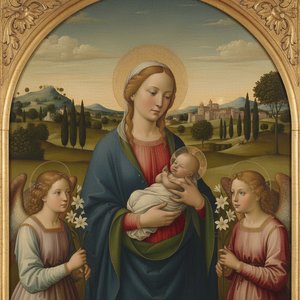
  • Subject Matter: The triptych unfolds with layers of religious iconography. When closed, the tabernacle displays an Annunciation rendered in monochrome, a poignant contrast to the vibrant scenes revealed when opened.
  • Central Panel: The Virgin enthroned nursing the Child dominates the central panel, embodying maternal grace and divine protection.
  • Side Panels: Saint Catherine of Alexandria, kneeling on her spiked wheel – a testament to unwavering faith – and Saint Barbara, kneeling beside her executioner father Dioscurus, create a powerful narrative of martyrdom and sacrifice.

Albertinelli’s technical skill is immediately apparent in the painting's construction. Executed in oil paints on canvas, the artist demonstrates a sophisticated understanding of *chiaroscuro*, utilizing subtle gradations of light and shadow to sculpt the skull and imbue it with a startling sense of volume and realism. The brushwork, though visible, is expertly controlled, contributing to a polished finish that speaks to Albertinelli’s dedication to detail. The geometric shapes – the tabletop, the skull itself, the curved shadow – are rendered with precision, creating a stable and grounded composition. The muted color palette—browns, ochres, and blacks—further emphasizes the solemnity of the subject matter.

Symbolism and Narrative

Beyond its immediate visual impact, the "Triptych" is rich in symbolic meaning. The skull, as a central motif, transcends mere representation; it functions as a potent symbol of mortality, echoing themes prevalent throughout Western art history. The inclusion of scenes depicting martyrdom – Catherine’s ordeal and Barbara’s plight – reinforces the Christian narrative of sacrifice and redemption. Dioscurus, Barbara's father, acting as her executioner, adds another layer of complexity to the scene, highlighting the tragic consequences of religious persecution. The landscape elements, featuring further depictions of saintly deaths, serve not just as background but as integral components of the overall theological message.

Historical Context and Artistic Influences

Created around 1500, this triptych represents a pivotal moment in Mariotto Albertinelli’s career. Born in Florence in 1474, he benefited from the artistic ferment of the Renaissance, absorbing influences from masters such as Perugino, Piero di Cosimo, and even the Flemish painters whose techniques – particularly their mastery of detail and use of light – profoundly shaped his style. The abbreviation “MD” on the frame likely indicates the year of creation, solidifying its place within a significant period of artistic innovation. Albertinelli’s joint studio with Fra Bartolomeo further enriched his artistic development, exposing him to diverse perspectives and techniques.

Emotional Impact and Collectible Value

The "Triptych" is not simply a beautiful artwork; it's an emotionally resonant piece that invites contemplation on profound themes. Its somber mood, coupled with the arresting image of the skull, evokes a sense of melancholy and reminds us of our own mortality. This triptych by Mariotto Albertinelli represents a rare opportunity to own a significant work from one of Florence’s most accomplished Renaissance painters. Its size (21 x 30 cm) makes it suitable for a variety of settings, while its historical importance and artistic merit ensure its enduring value as an investment piece and a source of inspiration.

Spørgsmål og svar

Hvilken national oprindelse ligger bag Early Renaissance i "Triptych"?

Det Early Renaissance værk "Triptych" blev skabt af en kunstner født i Italy.

Opbevares "Triptych" i kunstnerens hjemland?

Nej – kunstværket opbevares i udlandet. "Triptych" findes i Italien, mens Mariotto Albertinelli blev født i Italy.

Kan jeg se "Triptych" som et diasshow i fuld skærm?

Se diaporamabillederne af "Triptych" på værkets side Billedserie.

Læs mere om dette maleri

Se i rummet Se i AR Skift til printsalg Skift til digitalt billede Del som kort
Detaljer Guide Tilføj til favoritter Download Lignende værker Røntgenundersøgelse Diasshow Spørgsmål og svar Statistikker

I tal

  • 1500året det blev malet
  • 29vælg mellem forskellige rammer
  • standardstørrelser, i deres egne proportioner
  • 5uger at male og levere

Mariotto Albertinelli

Mariotto Albertinelli

1474 - 1515, Italy

Hurtige fakta om Mariotto Albertinelli

  • Full Name: Mariotto Albertinelli
  • Nationality: Italian
  • Date Of Birth: 1474
  • Date Of Death: 1515
  • Place Of Birth: Florence, Italy
  • Notable Artworks:
    • Visitation (1503)
    • Scenes from Genesis panels
  • Artistic Movement Or Style: Florentine Renaissance
  • Artists Who Influenced This Artist:
    • Perugino
    • Piero di Cosimo
    • Lorenzo di Credi
    • Leonardo da Vinci
    • Fra Bartolomeo
  • Artists Or Movements Influenced By This Artist:
    • Jacopo da Pontormo
    • Giuliano Bugiardini

Kunstnerbiografi

Mariotto Albertinelli: A Florentine Renaissance Painter

  • Born: Florence, Italy (1474)
  • Died: 1515

Early Life and Training

Mariotto di Bigio di Bindo Albertinelli was born in Florence as the son of a gold beater. He was an only child, and his mother died when he was just five years old. Initially trained as a gold beater until the age of 12, he then became a pupil of Cosimo Rosselli, sharing studies with Fra Bartolomeo. The close friendship between Albertinelli and Fra Bartolomeo led them to establish a joint studio in Florence by 1494.

Artistic Development and Influences

Albertinelli’s style demonstrates the influence of several prominent artists including Perugino, Piero di Cosimo, Lorenzo di Credi, and Flemish painters. His early works, produced independently of Fra Bartolomeo, are stylistically distinct and reveal a sophisticated taste for detail. Piero di Cosimo introduced him to Flemish techniques, enriching his artistic palette. A period of independence followed Fra Bartolomeo’s entry into the Dominican order in 1500, allowing Albertinelli to develop his own voice while still maintaining a connection to his former mentor's style.

Major Works and Collaborations

  • The Visitation (1503): Housed in the Uffizi Gallery, this is considered Albertinelli’s masterpiece. It depicts the biblical story of Elizabeth visiting Mary, showcasing his skill in composition, narrative depiction, and blending influences from Fra Bartolomeo and Perugino.
  • Altarpiece for the Chapel of Congregazione di San Martino: This altarpiece includes panels depicting the Visitation, Annunciation, Nativity, and Circumcision. It demonstrates Albertinelli's ability to create a cohesive narrative across multiple panels.
  • Kress Tondo: Initially attributed solely to Fra Bartolomeo, it is now believed that Albertinelli used his partner’s cartoon in its creation, highlighting their collaborative relationship.
  • Annunciation (1511): A joint work with Fra Bartolomeo, showcasing a period of stylistic convergence and collaboration.

Historical Significance and Legacy

Albertinelli's artistic career reflects the dynamic shifts within Florentine painting during the High Renaissance. His ability to synthesize diverse influences—Perugino’s grace, Flemish detail, and Leonardo’s sfumato technique—created a unique style that contributed to the richness of Florentine art. He trained notable artists such as Jacopo da Pontormo, Innocenzo di Pietro Francucci da Imola, and Giuliano Bugiardini, ensuring his influence extended beyond his own works. Despite facing financial difficulties later in life, Albertinelli left behind a body of work that demonstrates his skill and artistic versatility, solidifying his place within the Florentine Renaissance.

Hurtige fakta

  • Medium: Oil on canvas
  • Title: Triptych
  • Movement: Renaissance
  • Year: 1500
  • Artist: Mariotto Albertinelli