Tekststørrelse

() ·

Et maleri skabt til dig, i hånden

Polishing Pans

Håndlavet oliereproduktion

Håndmalet olie på lærred i din valgte størrelse og ramme, udført efter bestilling af vores kunstnere. ( Skift til printsalg Skift til digitalt billede)

Beskrivelse af samlerobjektet

Discover 'Polishing Pans' by Marianne Stokes (1887). This captivating oil painting depicts domesticity with intricate detail & warm colors, housed at the Walker Art Gallery.

Kunstnerbiografi

Marianne Stokes (1855-1927) was a leading Victorian artist known for her rustic naturalism, medieval romantic scenes & portraits. A member of the Newlyn School, she captured Slovak culture in tempera and gesso paintings. Discover her work!

fra ·

Kapitel 1

Hvor stor skal den være?

Træk i skyderen for at ændre størrelsen; billedet til venstre viser rammen i dens faktiske bredde. Originalens proportioner bevares.

Standardstørrelse
speciallavet
CM
INCH

Vælg mellem vores forudindstillede størrelser, der matcher kunstværkets originale proportioner.

bredde
højde

Indtast den bredde og højde, du har brug for, så det passer til din ramme eller din væg. Da dette er håndmalet, kan kunstneren ved en anden form på størrelsen male lidt mere rundt om billedet eller skære lidt væk — det er op til dig. Vi sender dig et digitalt mockup til godkendelse, før maleriet påbegyndes. Billedet, der vises på denne side, viser ikke det endelige resultat — det er kun mockuppet, der gør.

Kapitel 2

Hvordan skal det leveres?

Vælg kanterne på det opspændte lærred

Vælg din ramme

Corner sample of the WhiteWrap canvas edge finish, stretched on massivt træ bars
Hvid kant Dkr1
Corner sample of the BlurSideWrap canvas edge finish, stretched on massivt træ bars
Udvasket kant Dkr1
Corner sample of the ExtendedWrap canvas edge finish, stretched on massivt træ bars
Fortsat motiv Dkr1
Corner sample of the P118B picture frame: støbt polystyren, 5 cm wide and 3 cm thick
P118B Dkr10
Corner sample of the P118H picture frame: støbt polystyren, 5 cm wide and 3 cm thick
P118H Dkr10
Corner sample of the P118W picture frame: støbt polystyren, 5 cm wide and 3 cm thick
P118W Dkr10
Corner sample of the P438Z picture frame: støbt polystyren, 5.5 cm wide and 3.5 cm thick
P438Z Dkr10
Corner sample of the P508JH picture frame: støbt polystyren, 7 cm wide and 3.5 cm thick
P508JH Dkr12
Corner sample of the P508YH picture frame: støbt polystyren, 7 cm wide and 3.5 cm thick
P508YH Dkr12
Corner sample of the P805H picture frame: støbt polystyren, 5 cm wide and 3.5 cm thick
P805H Dkr10
Corner sample of the P805Z picture frame: støbt polystyren, 5 cm wide and 3.5 cm thick
P805Z Dkr10
Corner sample of the P919BZ picture frame: støbt polystyren, 7 cm wide and 3.5 cm thick
P919BZ Dkr10
Corner sample of the P919G picture frame: støbt polystyren, 7 cm wide and 3.5 cm thick
P919G Dkr10
Corner sample of the P919XJ picture frame: støbt polystyren, 7 cm wide and 3.5 cm thick
P919XJ Dkr10
Corner sample of the P959ZH picture frame: støbt polystyren, 5 cm wide and 3 cm thick
P959ZH Dkr10
Corner sample of the P968JZ picture frame: støbt polystyren, 6 cm wide and 4 cm thick
P968JZ Dkr12
Corner sample of the W106C picture frame: massivt træ, 5 cm wide and 3 cm thick
W106C Dkr8
Corner sample of the W218G picture frame: massivt træ, 5 cm wide and 3 cm thick
W218G Dkr10
Corner sample of the W218JH picture frame: massivt træ, 5 cm wide and 3 cm thick
W218JH Dkr8
Corner sample of the W218Y picture frame: massivt træ, 5 cm wide and 3 cm thick
W218Y Dkr10
Corner sample of the W307PJ picture frame: massivt træ, 6 cm wide and 3 cm thick
W307PJ Dkr10
Corner sample of the W316G picture frame: massivt træ, 6 cm wide and 3 cm thick
W316G Dkr10
Corner sample of the W316PJ picture frame: massivt træ, 6 cm wide and 3 cm thick
W316PJ Dkr8
Corner sample of the W316Y picture frame: massivt træ, 6 cm wide and 3 cm thick
W316Y Dkr10
Corner sample of the W398PJ picture frame: massivt træ, 5 cm wide and 3 cm thick
W398PJ Dkr8
Corner sample of the W4111J picture frame: massivt træ, 6.5 cm wide and 3.5 cm thick
W4111J Dkr10
Corner sample of the W500HY picture frame: massivt træ, 7 cm wide and 5 cm thick
W500HY Dkr15
Corner sample of the W500JH picture frame: massivt træ, 7 cm wide and 5 cm thick
W500JH Dkr15
Corner sample of the W692G picture frame: massivt træ, 8 cm wide and 4 cm thick
W692G Dkr12
Corner sample of the W849H picture frame: massivt træ, 5 cm wide and 3 cm thick
W849H Dkr8
Corner sample of the W940BG picture frame: massivt træ, 7.5 cm wide and 4.5 cm thick
W940BG Dkr15
Corner sample of the W953PJ picture frame: massivt træ, 6 cm wide and 3.5 cm thick
W953PJ Dkr8
Corner sample of the H24-GOLD picture frame: udskåret træ med gesso, 10 cm wide and 6 cm thick
H24-GOLD Dkr30
Corner sample of the H24-SILVER picture frame: udskåret træ med gesso, 10 cm wide and 6 cm thick
H24-SILVER Dkr30
Corner sample of the H36-GOLD picture frame: udskåret træ med gesso, 15 cm wide and 6.5 cm thick
H36-GOLD Dkr45
Corner sample of the H36-SILVER picture frame: udskåret træ med gesso, 15 cm wide and 6.5 cm thick
H36-SILVER Dkr45
Ramme-forhåndsvisning
Indrammet

Profil: . Samlet størrelse med ramme: .

Kapitel 3

Hvem maler det, og bør der ændres noget?

Eksempler på hvad kan ændres: Udskift ansigt med kundens eget foto; Tilføj kæledyr (f.eks. udskift kat med hund); Inkluder skjult besked i baggrunden; Skift baggrundslandskab eller elementer.
Efter bestilling vil OriginalUniqueArt.com-teamet sende en e-mail til kunden for at få instruktioner og levere et udkast til forhåndsvisning

Verdensomspændende levering () på 3-4 uger i stedet for de standard 5 uger. (3 november). Ingen kompromiser med kvaliteten.

Kapitel 4

De sidste detaljer

En navneplade, ligesom på et museum?

Detaljer om indgraveret bronzeskilt

This elegant plaque features the artist's name and the title of the artwork, finely engraved for a timeless presentation.

It is made from bronze with a refined, elegant finish. The text is precisely laser-engraved for a sharp and permanent result. Measuring 9x2 cm, the plaque is compact yet easy to read. It's built to be durable and scratch-resistant, offering a professional, museum-quality look. Mounting is simple thanks to the included adhesive backing.

Detaljer om gennemsigtig akrylplade

The plaque includes essential engraved details such as the artist's name, the title of the artwork, the date it was created, the type of media used-like oil on canvas or watercolor-a brief description of the piece, and a QR code that links to the complete artwork information.

It is crafted from clear acrylic, offering a sleek, modern appearance. The text is UV-engraved in black to ensure strong visual contrast. With a size of 10x15 cm, it ensures optimal readability. It comes equipped with two metal hooks for secure wall mounting. The plaque is designed to be weather-resistant, making it suitable for various environments, and it includes interactive features that work seamlessly with smartphone scanning.

Detaljer om sort akrylplade

This elegant plaque includes engraved information such as the artist's name, the title of the artwork, the date it was created, the type of media used (like oil on canvas or watercolor), a short description of the artwork, and a QR code for quick access to more information.

The plaque itself is made from refined black acrylic with a premium finish. The text is laser-engraved in white for high contrast and readability. Its size is 10x15 cm, designed to be easy to read. It comes with two metal hooks for professional mounting. The design is sleek and fits any interior style. It is also weather-resistant and durable, with built-in digital integration for mobile compatibility.

En beskyttende lak?

Hvornår skal det leveres?

Kapitel 5

Dit maleri, præcis som du har bestilt det

Polishing Pans

Reproduktionsmetode

Størrelse på reproduktion

-

Eksklusivt udvalgte senior-kunstnere

Mere detaljerigdom, finesse og ekstra produktionstid

-

Indramning af reproduktion

-

-

For kunstværker eller reproduktioner, der er større end 105 cm (ca. 41 tommer) på en hvilken som helst side, vil rammen blive leveret som et adskilt sæt. Denne metode sikrer sikker levering og forhindrer skader under transport.

Professionel montering er påkrævet – dette er ikke et gør-det-selv produkt.
Sættet skal samles, og lærredet skal opspændes af en erfaren professionel indrammer ved brug af trælim (ikke medfølger), en lærredsspænder og klemmer til at holde blindrammen vinkelret, mens limen tørrer. Forkert samling eller ujævn spænding af lærredet kan beskadige kunstværket permanent og er ikke dækket af vores garanti.

  • Alle massive trælister er inkluderet, præcist tilpasset i størrelsen.

  • Samles med de medfølgende skruer samt trælim til hjørneforbindelserne, som ikke medfølger og skal anskaffes af din indrammer.

  • Professionelt værktøj er påkrævet og medfølger ikke: en lærredsstrækker (spændetang) og klemmer til at holde blindrammen vinkelret, mens limen tørrer.

Vigtigt:
Hjørneforbindelserne kræver trælim, listerne skal holdes fast med skruetvinger, indtil limen er helt tør, og opspænding af lærredet på den samlede ramme kræver en lærredsspænder. Ingen af disse dele er inkluderet i sættet. Vi anbefaler, at du kontakter en erfaren professionel indrammer, før du bestiller denne størrelse.

Navneskilt

-

-

Beskyttende fernis

Blank lak (fremhæver farverne og beskytter mod lys og fugt)

-

Tilpas mit kunstværk

Eksempler på tilpasningsmuligheder: Udskift ansigt med kunde-foto; Tilføj kæledyr (f.eks. udskift kat med hund); Inkluder skjult besked i baggrunden; Ændr baggrundslandskab eller elementer.

-

Hurtig levering

Verdensomspændende levering () på 3-4 uger i stedet for de standard 5 uger. (3 november). Ingen kompromiser med kvaliteten.

-

Ekspreslevering

Verdensomspændende levering til inden for 5 uger. (10 november).

Inkluderet

Samlet pris

Dkr 2001

Samlet pris Dkr 2001

Glasmulighed er kun tilgængelig i størrelser under 110 cm

Inkluderet i hver ordre

  • Gratis ekspresforsendelse til hele verden
  • Lærred af linned i høj kvalitet
  • Fuld transportforsikring
  • Garanti for refusion af told og importafgifter
  • Garanti for præcis farvegengivelse
  • 100 dages returret ved fabrikationsfejl
  • 100% fuld returret
  • Mængderabat ved flere køb

Polishing Pans: A Glimpse into Victorian Domesticity

Marianne Stokes’s “Polishing Pans,” painted in 1887, is more than just a depiction of a woman engaged in a household chore; it's a poignant meditation on the quiet dignity and subtle beauty found within everyday life. Housed at the Walker Art Gallery in Liverpool, this oil-on-canvas piece offers a rare window into the Victorian era’s fascination with domesticity and its evolving portrayal of women.

The scene unfolds within a modestly furnished room – a kitchen or dining area, as many art historians suggest. A woman, rendered with remarkable detail by Stokes, is seated on the floor before a table laden with an assortment of objects: bottles, cups, a bowl, and what appears to be a bucket, likely containing cleaning solution. Her posture suggests focused concentration, her hands deftly manipulating the implements at hand. The composition isn’t grand or dramatic; rather, it's deliberately intimate, drawing the viewer into this private moment of labor.

A Masterclass in Victorian Detail and Light

Stokes’s artistic style is characterized by an almost obsessive attention to detail—a hallmark of her work throughout her career. She meticulously captures the textures of the fabrics, the sheen of the copperware, and the subtle variations in light and shadow. The use of warm colors – ochres, browns, and muted reds – creates a sense of warmth and tranquility, contrasting with the cool blues and greens used for the background. Notably, Stokes employs soft lighting, casting gentle highlights on the woman’s arm and the polished surfaces, adding to the painting's intimate atmosphere.

Technically, “Polishing Pans” demonstrates a sophisticated understanding of oil paint. Stokes skillfully builds up layers of color to achieve depth and luminosity, utilizing glazing techniques to create subtle transitions between tones. The brushwork is generally smooth and controlled, yet with moments of expressive strokes that convey the woman’s focused energy. The choice of canvas allows for rich pigment saturation and a remarkable level of detail – a testament to Stokes's mastery.

Symbolism and Victorian Ideals

“Polishing Pans” is not simply a snapshot of domestic life; it carries significant symbolic weight within the context of Victorian society. The act of polishing, traditionally associated with women’s roles, becomes imbued with a quiet dignity. The woman's diligence and focus suggest an embodiment of Victorian ideals – industry, piety, and self-sufficiency. While seemingly mundane, her task represents a vital contribution to the household and family—a subtle assertion of female agency within a patriarchal society.

Furthermore, the inclusion of everyday objects—bottles, cups, and cleaning supplies—elevates the ordinary to the level of art. Stokes’s ability to find beauty in the commonplace reflects a broader trend in Victorian art, which often sought to capture the essence of rural life and the virtues of simplicity. The copperware, particularly, connects the scene to the industrial heartland of Cornwall, adding another layer of local significance.

A Legacy of Observation and Quiet Beauty

Marianne Stokes’s “Polishing Pans” stands as a remarkable example of Victorian art—a testament to her skill, observation, and ability to imbue ordinary subjects with profound meaning. It invites us to pause and consider the beauty that can be found in the most unassuming moments of daily life. The painting's enduring appeal lies not only in its technical brilliance but also in its poignant portrayal of a woman engaged in a timeless act of labor and self-expression.

Reproductions of “Polishing Pans” offer an accessible way to experience this captivating artwork, bringing its quiet beauty into any home or space. Consider commissioning a high-quality hand-painted reproduction to add a touch of Victorian elegance and thoughtful artistry to your interior design.

Spørgsmål og svar

Hvilken teknik og stil kendetegner "Polishing Pans" af Marianne Stokes?

I "Polishing Pans" forenes Oil On Canvas-teknikken med Victorian Romanticism-bevægelsen.

Er farverne i "Polishing Pans" af Marianne Stokes mættede eller dæmpede?

Farvepaletten i "Polishing Pans" har en mætning på Subtle Color.

Hvilken kunsthistorisk betydning har "Polishing Pans" af Marianne Stokes?

"Polishing Pans" af Marianne Stokes tilhører Victorian Romanticism-bevægelsen fra 19th Century-perioden. Sammen giver de værket dets plads i kunsthistorien.

Læs mere om dette maleri

Se i rummet Se i AR Skift til printsalg Skift til digitalt billede Del som kort
Detaljer Guide Tilføj til favoritter Download Lignende værker Røntgenundersøgelse Diasshow Spørgsmål og svar Statistikker

I tal

  • 1887året det blev malet
  • 29vælg mellem forskellige rammer
  • standardstørrelser, i deres egne proportioner
  • 5uger at male og levere
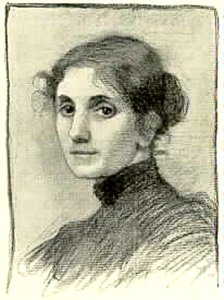
Marianne Stokes

Marianne Stokes

1855 - 1927, Austria

Hurtige fakta om Marianne Stokes

  • Artistic Movement Or Style: Rustic naturalism
  • Artists Or Movements Influenced By This Artist: ['Newlyn School']
  • Artists Who Influenced This Artist:
    • Jules Bastien-Lepage
    • Helene Schjerfbeck
  • Date Of Birth: 1855
  • Date Of Death: 1927
  • Full Name: Marianne Stokes
  • Nationality: Austrian
  • Notable Artworks:
    • A Parting
    • Polishing Pans
    • Madonna And Child
  • Place Of Birth: Graz, Austria

Kunstnerbiografi

A Tapestry of Tradition and Romance: The Life of Marianne Stokes

The history of Victorian art is often told through the lens of great men, yet the legacy of Marianne Stokes offers a profound testament to the power of a woman’s vision in an era of rigid societal boundaries. Born Marianne Preindlsberger in Graz, Austria, in 1855, her journey was one of remarkable geographical and stylistic breadth. From the academic rigor of Munich to the sun-drenched coasts of Cornwall, Stokes wove together a life that mirrored the very textures of her paintings—a blend of disciplined technique and ethereal, romantic longing. Her early years were defined by an intense pursuit of mastery, beginning with her studies under Lindenschmidt in Munich. It was here that she first demonstrated her burgeoning talent, earning a prestigious scholarship for her debut work, Muttergluck, a piece that signaled the arrival of a formidable new voice in the European art scene.

As her ambitions grew, so did her horizons. Her travels through France brought her into contact with the masters of the era, most notably Pascal Adolphe Jean Dagnan-Bouveret and Colin Courtois. These encounters were transformative, infusing her work with a sophisticated understanding of light and form. However, it was the influence of Jules Bastien-Lepage that would leave the deepest imprint upon her soul. Through his lens of rustic naturalism, Stokes learned to find the profound within the mundane, capturing the quiet dignity of rural life and the delicate nuances of the natural world. This period of her life marked the transition from a student of technique to a poet of the landscape, as she began to master the ability to render the essence of the countryside with both meticulous detail and emotional depth.

The Newlyn School and the Spirit of Place

A pivotal chapter in Stokes’s biography unfolded when she moved to England and entered into a profound artistic and personal partnership with her husband, Adrian Scott Stokes. Settling within the vibrant community of the Newlyn School in Cornwall, she became part of a movement that sought to capture the authentic light and character of the British coast. Her work during this time became a bridge between worlds; while her surroundings provided the serene Cornish vistas that would become iconic, her heart remained tethered to her Eastern European roots. She possessed a unique ability to infuse her paintings with the folklore and spirit of Slovakia, creating a visual language that felt both intimately local and universally mythic.

Her technical evolution during these years was nothing short of extraordinary. While many of her contemporaries adhered strictly to oil painting, Stokes experimented with more ancient, evocative mediums. She became celebrated for her use of tempera and gesso, techniques that allowed her to achieve a luminous, almost otherworldly quality in her landscapes. These works often transcended mere representation, leaning into the realms of medieval romanticism and symbolic storytelling. In her hands, a simple landscape could become a stage for historical memory or a dreamscape of folk legend, characterized by:

  • The delicate application of tempera, which lent a matte, precious quality to her surfaces.
  • A mastery of light that captured the fleeting moments of dusk and dawn in both English and Slovak settings.
  • A profound sense of nostalgia, often blending the rustic reality of peasant life with the idealized beauty of a lost medieval era.

Legacy of a Visionary

The significance of Marianne Stokes lies in her refusal to be confined by a single movement or identity. She was simultaneously a naturalist and a romantic, an Austrian-born artist thriving in the English tradition, and a painter who could navigate the gritty reality of rural labor and the ethereal beauty of mythic landscapes. Her marriage to Adrian Scott Stokes did not merely provide companionship but established a collaborative sanctuary where art and life were indistinguishable. Together, they contributed to a cultural dialogue that celebrated the intersection of craftsmanship and emotion.

Today, when we look upon the works of Stokes, we see more than just beautiful depictions of the past; we see the triumph of an individual spirit. Her ability to capture the soul of a culture through the medium of paint ensures her place in the pantheon of Victorian masters. She remains a pioneer who proved that the most enduring art is that which finds the universal within the particular, turning the quiet corners of the world into eternal monuments of beauty and grace.

Hurtige fakta

  • Artist: Marianne Stokes
  • Subject or theme: Household activity
  • Notable elements: Domestic scene, bottles
  • Influences:
    • Stokes
    • Bastien-Lepage
  • Location: Walker Art Gallery

Kunstquiz

Der er kun ét korrekt svar på hvert spørgsmål.

Spørgsmål 1:
What is the primary subject depicted in Marianne Stokes’s ‘Polishing Pans’?
Spørgsmål 2:
In what year was ‘Polishing Pans’ painted?
Spørgsmål 3:
Where is ‘Polishing Pans’ currently housed?
Spørgsmål 4:
Marianne Stokes’s artistic style is characterized by:
Spørgsmål 5:
The painting ‘Polishing Pans’ exemplifies which artistic movement?