

 Se i fuld skala
 Del
Del Del
Del
 Detaljer

 Download
 Lignende værker
 Røntgenundersøgelse
 Diasshow
 Statistik
Untitled (D7T2A8)


 Se mere
Giclée / Kunsttryk
Giclée- eller lærredstryk i museumskvalitet med hurtig produktion og fleksible muligheder for finish. ( Køb håndlavet maleri Skift til digitalt billede)




P118B $10

P118H $10

P118W $10

P438Z $10

P508JH $12

P508YH $12

P805H $10

P805Z $10

P919BZ $10

P919G $10

P919XJ $10

P959ZH $10

P968JZ $12

W106C $8

W218G $10

W218JH $8

W218Y $10

W307PJ $10

W316G $10

W316PJ $8

W316Y $10

W398PJ $8

W4111J $10

W500HY $15

W500JH $15

W692G $12

W849H $8

W940BG $15

W953PJ $8




Vælg mellem vores forudindstillede størrelser, der matcher kunstværkets originale proportioner.

Du kan indtaste dine egne mål for at passe til en specifik ramme eller et bestemt område. Hvis den valgte størrelse ikke stemmer overens med det originale billedes proportioner, vil vi enten beskære kunstværket eller udvide billedet med en spejlet eller ensfarvet kant. En digital mockup vil blive sendt til din godkendelse, før produktionen påbegyndes.
Bemærk venligst, at forhåndsvisningen på skærmen ikke afspejler den faktiske beskæring eller udvidelse. Kun mockuppen vil nøjagtigt vise den endelige komposition.
Selvom specialmål er tilgængelige, anbefaler vi at vælge et mål fra den foruddefinerede liste for at bevare de originale proportioner.
Verdensomspændende levering () på 2 uger i stedet for de sædvanlige 4/5 uger. (16 september)

Gratis ekspresforsendelse til hele verden

Lærred af linned i høj kvalitet

Fuld transportforsikring

Garanti for refusion af told og importafgifter

Garanti for præcis farvegengivelse

100 dages returret (kun ved fejl og mangler)

100% Tilfredshedsgaranti

Mængderabat tilgængelig
 Glasmulighed er kun tilgængelig i størrelser under 110 cm

Untitled (D7T2A8)
Giclée / Kunsttryk
Størrelse på reproduktion
-


Samlet pris
$ 81
A Window Into Surinam’s Hidden World: Examining Maria Sibylla Merian's “Untitled (D7T2A8)”
Maria Sibylla Merian’s “Untitled (D7T2A8),” a deceptively simple studio photograph of a black gown draped upon a mannequin, transcends its formal presentation to offer a glimpse into the extraordinary mind of a pioneering naturalist and artist. Captured in 1992, this image isn't merely documentation; it’s an invitation to contemplate Merian’s unwavering dedication to observing and representing the natural world with unparalleled precision—a pursuit that challenged societal expectations for women during the Baroque era and cemented her legacy as one of the foremost botanical illustrators of her time. The photograph itself is characterized by a masterful use of light, diffusing evenly across the fabric to minimize harsh shadows while highlighting its subtle textures. This deliberate choice underscores Merian’s meticulous attention to detail—a hallmark of her artistic practice that extended far beyond mere aesthetic beauty. The composition centers on the gown, mirroring the symmetry and balance inherent in Merian's scientific approach; it speaks to a desire for clarity and objectivity, qualities crucial to conveying the complexities of biological observation. Merian’s artistic style is undeniably rooted in Baroque aesthetics—a period marked by grandeur, ornamentation, and dramatic contrasts—yet tempered with an astonishing level of realism. Her technique involved painstakingly rendering insects and plants with meticulous accuracy, utilizing watercolor pigments mixed with gum arabic on paper treated with mordant to achieve vibrant colors and durable prints. This painstaking process demanded patience and precision, reflecting Merian’s belief that true understanding required immersing oneself fully in the subject matter. The resulting illustrations are not simply representations; they are miniature worlds brimming with life—a testament to Merian's profound respect for the interconnectedness of nature. The historical context surrounding Merian’s work is equally significant. During her lifetime, women faced considerable obstacles in pursuing scientific endeavors, often relegated to domestic roles and denied access to formal education. Yet, Merian defied these limitations, embarking on a daring expedition to Surinam—modern-day Suriname—a Dutch colony teeming with exotic flora and fauna. Her observations during this voyage revolutionized entomology and botany, providing invaluable data for understanding insect metamorphosis and plant reproduction. Furthermore, her illustrations served as crucial tools for disseminating scientific knowledge and advocating for conservation – an ambition remarkably forward-thinking for the 17th century. Beyond its technical brilliance, “Untitled (D7T2A8)” evokes a powerful emotional response—a sense of wonder at the beauty and intricacy of the natural world. The gown’s understated elegance serves as a counterpoint to Merian's groundbreaking scientific discoveries, reminding us that artistic expression can illuminate profound truths about our relationship with the environment. It encourages viewers to appreciate the legacy of a woman who dared to challenge convention and transform our understanding of the planet through her unwavering curiosity and unparalleled artistry.- Artist: Maria Sibylla Merian
- Year Created: 1992
- Medium: Watercolor pigment on paper
Kunstnerens biografi
A Life Unfurled: The Botanical Brilliance of Maria Sibylla Merian
Maria Sibylla Merian, born in Frankfurt am Main in 1647, wasn’t merely an artist; she was a revolutionary observer, a pioneering naturalist, and a visionary whose dedication to meticulous detail fundamentally altered our understanding of the insect world. Her story is one of unwavering curiosity, courageous exploration against societal constraints, and a profound connection to nature that defied the conventions of her time. Growing up amidst the vibrant trade and intellectual ferment of Frankfurt, Merian’s artistic journey began not with grand ambitions but with a simple fascination—a deep-seated love for insects, nurtured by her father, Matthäus Merian the Elder, a renowned engraver and publisher whose family had long been associated with producing lavishly illustrated books. Her stepfather, Jacob Marrel, a skilled still life painter, recognized and fostered this nascent passion, providing her with early training in drawing and painting—a rare opportunity for a young woman of that era. This formative influence wasn’t limited to technique; it instilled within her a meticulousness, an appreciation for detail, and a desire to truly *understand* the creatures she studied – a pursuit considered unusual, even eccentric, for a female artist. Even as a child, Merian didn't simply depict butterflies and caterpillars; she sought to unravel their complete life cycles, challenging the prevailing belief in spontaneous generation—the notion that insects arose magically from mud or decaying matter. This early questioning of established dogma would become a defining characteristic of her work.From European Gardens to Surinamese Rainforests
Merian’s artistic career blossomed alongside her scientific investigations. Initially, she focused on creating beautiful floral illustrations for her father's publications, showcasing her talent for capturing the delicate beauty of European blooms with exquisite precision. However, a deeper yearning propelled her beyond the confines of familiar gardens. Inspired by her stepfather’s work and fueled by an insatiable curiosity, Merian began to meticulously collect and study insects—not just their appearance but also their behavior, their diet, and their interactions with their environment. This pursuit led her to challenge the prevailing scientific understanding that insects were simply random occurrences. She painstakingly documented the complete life cycles of various species, illustrating each stage with remarkable accuracy and detail – a revolutionary approach for the time. Recognizing the limitations of studying insects within European gardens, Merian embarked on an extraordinary undertaking—a self-funded expedition to Dutch Guiana (modern-day Suriname) in 1699, accompanied by her younger daughter, Dorothea Maria. This bold move was unprecedented for a woman traveling alone, let alone with a child, and demonstrated her unwavering commitment to her research. For two years, she immersed herself in the heart of the rainforest, braving challenging conditions and personal risks to document the exotic insects, plants, and animals of Suriname—a region largely unknown to Europeans at the time.Metamorphosis Surinamensis: A Legacy of Observation
The culmination of Merian’s South American journey was *Metamorphosis Insectorum Surinamensium* (1705), a monumental work that cemented her legacy as a pioneering naturalist and illustrator. This two-volume publication presented detailed depictions of the insects of Suriname, their life cycles, and their relationships with the surrounding flora—a holistic approach to natural history that was remarkably innovative for its time. Unlike previous illustrations which often focused on isolated specimens, Merian’s plates depicted insects interacting with their host plants, showcasing a profound understanding of ecological connections. Her illustrations weren't merely scientific records; they were vibrant works of art, imbued with a sense of wonder and appreciation for the beauty of the natural world. The work was revolutionary not only for its artistic quality but also for its scientific accuracy. Merian challenged existing beliefs about insect behavior and development, providing compelling evidence against spontaneous generation—a cornerstone of scientific thought at the time. She meticulously documented previously unknown species, contributing significantly to the field of entomology and establishing a new standard for detailed natural history illustration. *Metamorphosis Insectorum Surinamensium* became an instant sensation across Europe, captivating audiences with its beauty, accuracy, and groundbreaking insights.Influences and Artistic Style
Merian’s artistic style was deeply influenced by her family's legacy in engraving and printmaking, as well as the still life paintings of her stepfather, Jacob Marrel. She skillfully combined meticulous observation with a painterly approach, creating illustrations that were both scientifically accurate and aesthetically pleasing. Her use of color was particularly striking—she employed vibrant hues to capture the beauty of insects and plants, while also utilizing shading and detail to convey their three-dimensional form. Beyond her artistic skills, Merian’s work was shaped by a deep respect for nature and a desire to understand its intricate workings. She wasn't simply recording what she saw; she was actively investigating how things worked—a testament to her intellectual curiosity and scientific rigor. Her dedication to documenting the complete life cycles of insects, from egg to larva to pupa to adult, demonstrated a remarkable understanding of natural processes – a rare quality for an artist of her time.A Lasting Impact on Art and Science
Maria Sibylla Merian’s influence extends far beyond the realm of natural history illustration. Her work bridged the gap between art and science, demonstrating that meticulous observation and artistic skill could be powerful tools for scientific discovery. She challenged societal norms by pursuing her passion for natural history with unwavering determination, paving the way for future female scientists and artists. David Attenborough has rightly recognized Merian as a pivotal figure in entomology, acknowledging her groundbreaking contributions to our understanding of insect life cycles. Her legacy continues to inspire artists, scientists, and nature enthusiasts alike—a testament to the enduring power of curiosity, observation, and a deep reverence for the natural world. Her original illustrations remain highly prized possessions of museums and private collectors worldwide, offering a glimpse into the mind of a truly remarkable woman who dared to challenge convention and transform our understanding of the insect world.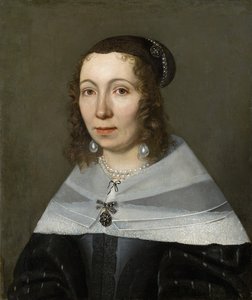
maria sybilla merian
1647 - 1717 , Tyskland
Kort om kunstneren
- Artistic Movement Or Style: Naturalhistorisk kunst
- Artists Or Movements Influenced By This Artist: ['Entomologi']
- Artists Who Influenced This Artist: ['Jacob Marrel']
- Date Of Birth: 2. april 1647
- Date Of Death: 13. januar 1717
- Full Name: Maria Sibylla Merian
- Nationality: Tysk
- Notable Artworks:
- Metamorphose Insectorum
- Erucarum Ortus
- Place Of Birth: Frankfurt am Main
Relaterede artikler

The Evocative Detail of Nature: A History of Naturalistic Illustration
Explore the rich history of botanical illustration! Discover pioneering artists like Maria Sibylla Merian & Marianne North. Learn about scientific precision, artistic expression, and find museum-quality reproductions at OriginalUniqueArt.
The Delicate Beauty of Botanical Realism: Capturing Nature's True Essence through the Lens of Art History
Explore the exquisite world of botanical realism. From scientific precision to Impressionist light, discover how master artists capture nature's true essence through timeless, hand-painted oil reproductions and historical insights for the discerning art lover.
The Flourishing Canvas: A Historical & Artistic Exploration of Botanical Illustration
Explore the rich history of botanical illustration! Discover key artists like Havell & Barraband, learn about scientific accuracy & aesthetic beauty. Shop museum-quality reproductions at OriginalUniqueArt.

The Flourishing Canvas: A Historical Journey Through Botanical Illustration
Explore the captivating history of botanical illustration! Discover renowned artists like Robert Havell & Mary Walcott, learn about techniques, and find museum-quality art at OriginalUniqueArt.com.
The Flourishing Canvas: A Historical Journey Through Botanical Illustration
Explore the captivating history of botanical illustration! Discover renowned artists like Robert Havell & Mary Walcott, learn about techniques, and find museum-quality art at OriginalUniqueArt.com.