Cubism
Father (Marcel Duchamp)
Marcel Duchamp (1887–1968) har skabt Father. Det tilhører Cubism-bevægelsen. Den er udført i Acrylic On Canvas.
- Acrylic On Canvas

 Se i rummet

 Håndmalet oliemalerie
 Del som kort
 Del
 Faktablad


 Download
 Lignende værker
 Røntgenundersøgelse
 Diasshow
 Spørgsmål og svar

 Statistikker
Father kort fortalt
- Titel
- Father
- Kunstner
- Marcel Duchamp (1887–1968)
- Kunstner født i
- Blainville-Crevon, Frankrig
- Medium
- Acrylic On Canvas
- Bevægelse
- Cubism
- Motiv
- portrait, cubism, fragmentation, introspection, earth tones, older man
Hvad forestiller Father?
Marcel Duchamp’s ‘Father’: A Cubist Portrait of Introspection
Marcel Duchamp's “Father,” painted in 1910, stands as a poignant testament to the artist’s exploration of familial bonds and psychological depth within the framework of Expressionism. More than just a likeness of his father, Eugène Duchamp, the painting delves into themes of vulnerability, contemplation, and the quiet dignity of aging—elements that resonate powerfully with viewers today.
- Style & Technique: The artwork embodies the stylistic hallmarks of Expressionism, characterized by bold brushstrokes and dramatic lighting. Thick impasto creates a palpable textural surface, conveying emotion through physicality rather than meticulous realism. Duchamp’s masterful manipulation of pigment captures the nuances of light and shadow, emphasizing the figure's solemn expression.
- Composition: The painting utilizes a simplified geometric composition—primarily dominated by the central figure seated in a chair—to heighten its impact. Overlapping planes contribute to a sense of depth, subtly disrupting traditional perspective conventions. This deliberate distortion serves not merely as aesthetic choice but as a symbolic representation of fractured perception.
- Color Palette: Employing earthy tones—primarily browns and ochres—the color palette evokes a mood of melancholy and introspection. The subdued hues underscore the painting’s contemplative atmosphere, mirroring the quiet contemplation conveyed by the subject’s gaze.
- Symbolism: “Father” transcends a simple portrait; it embodies Duchamp's preoccupation with familial relationships and the passage of time. The posture of Eugène Duchamp—seated calmly yet thoughtfully—suggests resilience amidst vulnerability, encapsulating the artist’s desire to portray dignity and inner strength.
Exploring Cubism: A Revolutionary Approach
“Father” is firmly rooted in the burgeoning movement of Cubism, spearheaded by Picasso and Braque. Duchamp's engagement with Cubist principles—particularly the fragmentation of form and simultaneous viewpoints—represents a radical departure from academic painting traditions. This stylistic influence underscores his commitment to questioning established artistic conventions and prioritizing conceptual exploration over visual representation.
- Geometric Abstraction: The artwork’s geometric abstraction—evident in the simplified shapes defining the chair and the man's facial features—reflects Cubist’s rejection of illusionistic depth. Instead, Duchamp prioritizes structural clarity and intellectual engagement, inviting viewers to consider the painting on a deeper level.
- Multiple Perspectives: The depiction of Eugène Duchamp from various angles simultaneously challenges conventional notions of perspective. This technique mirrors Cubism's ambition to capture reality as it is perceived by multiple observers—a concept that fundamentally altered artistic discourse.
The Significance of Impasto and Texture
Duchamp’s deliberate use of impasto—thickly applied paint—is crucial to conveying the painting’s emotional resonance. The textured surface captures the physicality of the brushstrokes, mirroring Eugène Duchamp's own presence within the artwork. This tactile element enhances the viewer’s experience, inviting contemplation and fostering a connection with the artist’s expressive intent.
- Material Choice: Oil paints on canvas—a standard medium for Expressionist painters—were selected to maximize textural impact and luminosity. Duchamp skillfully utilizes brushwork to sculpt form and imbue the painting with palpable energy.
- Emotional Impact: The resulting surface contributes significantly to “Father’s” emotional depth, mirroring Eugène Duchamp's inner life and conveying a sense of quiet dignity—a testament to Duchamp’s artistic vision.
A Legacy Beyond Representation
"Father" exemplifies Duchamp’s broader philosophical stance: rejecting the pursuit of visual beauty in favor of intellectual inquiry. By prioritizing conceptual exploration over realistic depiction, he ushered in a new era of art history—one characterized by questioning assumptions and redefining artistic value. This enduring legacy continues to inspire artists and collectors alike who appreciate the profound emotional impact of art that transcends mere surface appearance."
Højopløselige billeder af Father
Protected by copyright: these files are for personal reference, not a licence to republish.
Marcel Duchamp, Father.
Spørgsmål om Father besvaret
Hvilken teknik er "Father" udført med?
"Father" af Marcel Duchamp er udført i Acrylic On Canvas. Reproduktionerne har til formål at gengive denne tekniks visuelle udtryk.
Hvad forestiller "Father" af Marcel Duchamp?
"Father" af Marcel Duchamp forestiller: portrait, cubism, fragmentation, introspection, earth tones, older man, abstract form, depth.
Er billedet af "Father" af Marcel Duchamp frit tilgængeligt i det offentlige domæne?
Ophavsretsstatus for "Father" af Marcel Duchamp: værket er stadig beskyttet af ophavsret. Dette afgør, om der frit må foretages reproduktioner af billedet.
Hvem har skabt "Father"?
Kunstneren bag "Father" er Marcel Duchamp. Værket er katalogiseret under Marcel Duchamps navn.
Hvilken stilart tilhører "Father"?
"Father" af Marcel Duchamp tilhører Cubism-bevægelsen. Denne bevægelse giver den stilistiske kontekst for værket.
Hvilken periode i Marcel Duchamps karriere tilhører "Father"?
"Father" repræsenterer Marcel Duchamps Mature Period.
Er "Father" af Marcel Duchamp i det offentlige domæne, og hvorfor?
"Father" af Marcel Duchamp er stadig beskyttet af ophavsret. Ophavsretten beregnes ud fra kunstnerens dødsår, og Marcel Duchamp døde i 1968.
Hvad deler "Father" med resten af Marcel Duchamps produktion?
"Father" er et værk fra Marcel Duchamps Cubism-periode, hvis gennemgående temaer inkluderer father portrait series, exploration of identity, shift towards abstraction, expressionism, cubism, early 20th century art, introspection, melancholy.
Er "Father" typisk for det, som Marcel Duchamp normalt skabte?
Marcel Duchamps gennemgående temaer inkluderer father portrait series, exploration of identity, shift towards abstraction, expressionism, cubism, early 20th century art, introspection, melancholy; "Father" fokuserer på portrait, cubism, fragmentation, introspection, earth tones, older man, abstract form, depth.
Om kunstneren, Marcel Duchamp
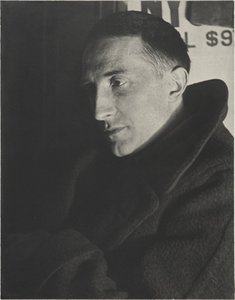
1887–1968, Frankrig
Marcel Duchamp
Livet og kunsten bag Marcel Duchamp Født den 28. juli 1887 i Blainville, Normandiet, Frankrig, trådte Marcel Duchamp ind i en verden, hvor skabertrangen var dybt forankret i hans selve blod. Han var det fjerde af syv børn født af Eugene og Lucie Duchamp. Dette var et hjem fyldt med skabere og tænkere; hans søskende delte denne kreative rastløshed, da hans brødre Jacques Villon og Raymond Duchamp-Villon, sammen med hans søster Suzanne Duchamp-Crotti, alle førte et liv som kunstnere.
Om Marcel Duchamp Bemærkelsesværdige værker af Marcel Duchamp
Også af Marcel Duchamp
 Nøgen nedad trappen1912
 Sad ung mand i toget1911
 Given: 1. Vandfaldet, 2. Gaslyset1966
 Fontæne1917
Essays om Father
 Deconstructing Reality: Cubism's Revolutionary Impact on 20th-Century ArtExplore the revolutionary world of Cubism with OriginalUniqueArt. Discover Picasso & Braque's groundbreaking techniques, its philosophical …
 The Sculptural Surface: Analyzing the Impact of Impasto and Texture in Oil PaintingMaster the science of impasto and oil texture through expert analysis. Explore the depth of fine art mastery now.
 Marcel Duchamp: The Top 25 Most Influential Artworks of a Modern IconExplore 25 iconic Marcel Duchamp masterpieces and Dadaist gems. Discover the full collection online at OriginalUniqueArt.com.