() ·

A painting made for you, by hand

Chess Game

Håndlavet oliereproduktion

Håndmalet olie på lærred i din valgte størrelse og ramme, udført efter bestilling af vores kunstnere. ( Skift til printsalg Skift til digitalt billede)

Beskrivelse af samlerobjektet

Experience Marcel Duchamp's 'The Chess Game,' a captivating post-impressionist oil painting from 1910. Explore themes of boredom, social constraints & Cubism at OriginalUniqueArt.com.

Kunstnerbiografi

Marcel Duchamp: Revolutionerende kunstner der udfordrede kunstens definition med Dadaismen & readymades som 'Fountain'. Udforsk hans ikoniske værker og filosofiske indflydelse.

from ·

Chapter 1

How large should it be?

Slide to change the size; the picture on the left shows the frame at its real width. The proportions of the original are kept.

Standardstørrelse
speciallavet
CM
INCH

Vælg mellem vores forudindstillede størrelser, der matcher kunstværkets originale proportioner.

bredde
højde

Indtast den bredde og højde, du har brug for, så det passer til din ramme eller din væg. Da dette er håndmalet, kan kunstneren ved en anden form på størrelsen male lidt mere rundt om billedet eller skære lidt væk — det er op til dig. Vi sender dig et digitalt mockup til godkendelse, før maleriet påbegyndes. Billedet, der vises på denne side, viser ikke det endelige resultat — det er kun mockuppet, der gør.

Chapter 2

How should it arrive?

Choose the edges of the stretched canvas

Choose your frame

Corner sample of the WhiteWrap canvas edge finish, stretched on massivt træ bars
White Dkr1
Corner sample of the BlurSideWrap canvas edge finish, stretched on massivt træ bars
Blurside Dkr1
Corner sample of the ExtendedWrap canvas edge finish, stretched on massivt træ bars
Extended Dkr1
Corner sample of the P118B picture frame: støbt polystyren, 5 cm wide and 3 cm thick
P118B Dkr10
Corner sample of the P118H picture frame: støbt polystyren, 5 cm wide and 3 cm thick
P118H Dkr10
Corner sample of the P118W picture frame: støbt polystyren, 5 cm wide and 3 cm thick
P118W Dkr10
Corner sample of the P438Z picture frame: støbt polystyren, 5.5 cm wide and 3.5 cm thick
P438Z Dkr10
Corner sample of the P508JH picture frame: støbt polystyren, 7 cm wide and 3.5 cm thick
P508JH Dkr12
Corner sample of the P508YH picture frame: støbt polystyren, 7 cm wide and 3.5 cm thick
P508YH Dkr12
Corner sample of the P805H picture frame: støbt polystyren, 5 cm wide and 3.5 cm thick
P805H Dkr10
Corner sample of the P805Z picture frame: støbt polystyren, 5 cm wide and 3.5 cm thick
P805Z Dkr10
Corner sample of the P919BZ picture frame: støbt polystyren, 7 cm wide and 3.5 cm thick
P919BZ Dkr10
Corner sample of the P919G picture frame: støbt polystyren, 7 cm wide and 3.5 cm thick
P919G Dkr10
Corner sample of the P919XJ picture frame: støbt polystyren, 7 cm wide and 3.5 cm thick
P919XJ Dkr10
Corner sample of the P959ZH picture frame: støbt polystyren, 5 cm wide and 3 cm thick
P959ZH Dkr10
Corner sample of the P968JZ picture frame: støbt polystyren, 6 cm wide and 4 cm thick
P968JZ Dkr12
Corner sample of the W106C picture frame: massivt træ, 5 cm wide and 3 cm thick
W106C Dkr8
Corner sample of the W218G picture frame: massivt træ, 5 cm wide and 3 cm thick
W218G Dkr10
Corner sample of the W218JH picture frame: massivt træ, 5 cm wide and 3 cm thick
W218JH Dkr8
Corner sample of the W218Y picture frame: massivt træ, 5 cm wide and 3 cm thick
W218Y Dkr10
Corner sample of the W307PJ picture frame: massivt træ, 6 cm wide and 3 cm thick
W307PJ Dkr10
Corner sample of the W316G picture frame: massivt træ, 6 cm wide and 3 cm thick
W316G Dkr10
Corner sample of the W316PJ picture frame: massivt træ, 6 cm wide and 3 cm thick
W316PJ Dkr8
Corner sample of the W316Y picture frame: massivt træ, 6 cm wide and 3 cm thick
W316Y Dkr10
Corner sample of the W398PJ picture frame: massivt træ, 5 cm wide and 3 cm thick
W398PJ Dkr8
Corner sample of the W4111J picture frame: massivt træ, 6.5 cm wide and 3.5 cm thick
W4111J Dkr10
Corner sample of the W500HY picture frame: massivt træ, 7 cm wide and 5 cm thick
W500HY Dkr15
Corner sample of the W500JH picture frame: massivt træ, 7 cm wide and 5 cm thick
W500JH Dkr15
Corner sample of the W692G picture frame: massivt træ, 8 cm wide and 4 cm thick
W692G Dkr12
Corner sample of the W849H picture frame: massivt træ, 5 cm wide and 3 cm thick
W849H Dkr8
Corner sample of the W940BG picture frame: massivt træ, 7.5 cm wide and 4.5 cm thick
W940BG Dkr15
Corner sample of the W953PJ picture frame: massivt træ, 6 cm wide and 3.5 cm thick
W953PJ Dkr8
Corner sample of the H24-GOLD picture frame: udskåret træ med gesso, 10 cm wide and 6 cm thick
H24-GOLD Dkr30
Corner sample of the H24-SILVER picture frame: udskåret træ med gesso, 10 cm wide and 6 cm thick
H24-SILVER Dkr30
Corner sample of the H36-GOLD picture frame: udskåret træ med gesso, 15 cm wide and 6.5 cm thick
H36-GOLD Dkr45
Corner sample of the H36-SILVER picture frame: udskåret træ med gesso, 15 cm wide and 6.5 cm thick
H36-SILVER Dkr45
Ramme-forhåndsvisning
Indrammet

Moulding: . Overall size with the frame: .

Chapter 3

Who paints it, and should anything change?

Examples of what can be changed: Replace face with customer photo; Add pet (e.g., replace cat with dog); Include hidden message in background; Change background landscape or elements.
After order, OriginalUniqueArt.com team will email client for instructions and provide a mockup preview

Verdensomspændende levering () på 3-4 uger i stedet for de standard 5 uger. (1 november). Ingen kompromiser med kvaliteten.

Chapter 4

The finishing touches

A nameplate, as in a museum?

Detaljer om indgraveret bronzeskilt

This elegant plaque features the artist's name and the title of the artwork, finely engraved for a timeless presentation.

It is made from bronze with a refined, elegant finish. The text is precisely laser-engraved for a sharp and permanent result. Measuring 9x2 cm, the plaque is compact yet easy to read. It's built to be durable and scratch-resistant, offering a professional, museum-quality look. Mounting is simple thanks to the included adhesive backing.

Detaljer om gennemsigtig akrylplade

The plaque includes essential engraved details such as the artist's name, the title of the artwork, the date it was created, the type of media used-like oil on canvas or watercolor-a brief description of the piece, and a QR code that links to the complete artwork information.

It is crafted from clear acrylic, offering a sleek, modern appearance. The text is UV-engraved in black to ensure strong visual contrast. With a size of 10x15 cm, it ensures optimal readability. It comes equipped with two metal hooks for secure wall mounting. The plaque is designed to be weather-resistant, making it suitable for various environments, and it includes interactive features that work seamlessly with smartphone scanning.

Detaljer om sort akrylplade

This elegant plaque includes engraved information such as the artist's name, the title of the artwork, the date it was created, the type of media used (like oil on canvas or watercolor), a short description of the artwork, and a QR code for quick access to more information.

The plaque itself is made from refined black acrylic with a premium finish. The text is laser-engraved in white for high contrast and readability. Its size is 10x15 cm, designed to be easy to read. It comes with two metal hooks for professional mounting. The design is sleek and fits any interior style. It is also weather-resistant and durable, with built-in digital integration for mobile compatibility.

A protective varnish?

When do you need it?

Chapter 5

Your painting, as you ordered it

Chess Game

Reproduktionsmetode

Størrelse på reproduktion

-

Eksklusivt udvalgte senior-kunstnere

Mere detaljerigdom, finesse og ekstra produktionstid

-

Indramning af reproduktion

-

-

For kunstværker eller reproduktioner, der er større end 105 cm (ca. 41 tommer) på en hvilken som helst side, vil rammen blive leveret som et adskilt sæt. Denne metode sikrer sikker levering og forhindrer skader under transport.

Professionel montering er påkrævet – dette er ikke et gør-det-selv produkt.
Sættet skal samles, og lærredet skal opspændes af en erfaren professionel indrammer ved brug af trælim (ikke medfølger), en lærredsspænder og klemmer til at holde blindrammen vinkelret, mens limen tørrer. Forkert samling eller ujævn spænding af lærredet kan beskadige kunstværket permanent og er ikke dækket af vores garanti.

  • Alle massive trælister er inkluderet, præcist tilpasset i størrelsen.

  • Samles med de medfølgende skruer samt trælim til hjørneforbindelserne, som ikke medfølger og skal anskaffes af din indrammer.

  • Professionelt værktøj er påkrævet og medfølger ikke: en lærredsstrækker (spændetang) og klemmer til at holde blindrammen vinkelret, mens limen tørrer.

Vigtigt:
Hjørneforbindelserne kræver trælim, listerne skal holdes fast med skruetvinger, indtil limen er helt tør, og opspænding af lærredet på den samlede ramme kræver en lærredsspænder. Ingen af disse dele er inkluderet i sættet. Vi anbefaler, at du kontakter en erfaren professionel indrammer, før du bestiller denne størrelse.

Navneskilt

-

-

Beskyttende fernis

Blank lak (fremhæver farverne og beskytter mod lys og fugt)

-

Tilpas mit kunstværk

Eksempler på tilpasningsmuligheder: Udskift ansigt med kunde-foto; Tilføj kæledyr (f.eks. udskift kat med hund); Inkluder skjult besked i baggrunden; Ændr baggrundslandskab eller elementer.

-

Hurtig levering

Verdensomspændende levering () på 3-4 uger i stedet for de standard 5 uger. (1 november). Ingen kompromiser med kvaliteten.

-

Ekspreslevering

Verdensomspændende levering til inden for 5 uger. (8 november).

Inkluderet

Samlet pris

Dkr 1994

Samlet pris Dkr 1994

Glasmulighed er kun tilgængelig i størrelser under 110 cm

Included with every order

  • Gratis ekspresforsendelse til hele verden
  • Lærred af linned i høj kvalitet
  • Fuld transportforsikring
  • Garanti for refusion af told og importafgifter
  • Garanti for præcis farvegengivelse
  • 100 dages returret ved fabrikationsfejl
  • 100% fuld returret
  • Mængderabat ved flere køb

A Game of Shadows: Marcel Duchamp’s “The Chess Game”

Marcel Duchamp's "The Chess Game," painted in 1910, isn’t merely a depiction of a game; it’s a meticulously crafted tableau of ennui, social constraint, and the burgeoning anxieties of modern life. Housed within the walls of the Philadelphia Museum of Art, this oil on canvas invites viewers into a world where strategic decisions collide with unspoken tensions, all rendered in Duchamp's signature post-impressionist style – a deliberate departure from the naturalistic focus of his predecessors. The painting’s power lies not just in its visual elements but in the complex web of symbolism it weaves, reflecting the intellectual currents of early 20th-century Europe and hinting at Duchamp’s revolutionary approach to art itself.

Duchamp's artistic journey leading up to "The Chess Game" was marked by a restless experimentation. Initially drawn to Cubism – evident in his earlier work, *Portrait of Chess Players* – he soon found himself increasingly dissatisfied with the purely formal concerns of the movement. He sought to capture not just the appearance of objects but their underlying essence, their emotional weight. This pursuit led him toward Dadaism and ultimately, Conceptual Art, where the idea behind a work often superseded its physical form. “The Chess Game” embodies this shift, prioritizing atmosphere and psychological suggestion over straightforward representation.

  • Post-Impressionist Influence: Duchamp’s use of bold colors – particularly the muted greens and browns that dominate the scene – is characteristic of post-impressionism. However, he employs these colors not to faithfully reproduce reality but to evoke a specific mood: one of quiet desperation and stifled energy.
  • Gustave Flaubert's Echoes: The painting’s pervasive sense of boredom and restlessness directly reflects the themes explored by Gustave Flaubert in *Madame Bovary*. Duchamp, deeply influenced by Flaubert’s exploration of female dissatisfaction and the limitations imposed upon women in 19th-century society, uses the chess game as a metaphor for life itself – a strategic battle fought within restrictive social boundaries.
  • Brotherly Portraiture: The inclusion of Duchamp's brothers, Raymond and Jacques Villon, alongside their wives, Yvonne and Gaby, is particularly significant. Their postures—hunched over the chessboard, Yvonne reclining languidly on the grass, Gaby nervously fiddling with a tea set—suggest a subtle power dynamic. The exclusion of the women from the game underscores the societal constraints placed upon them at the time, highlighting their limited roles and unspoken frustrations.

The Scene Unfolds: A Garden of Contemplation

The setting itself is crucial to understanding the painting’s emotional impact. It's a meticulously rendered garden scene, yet one devoid of warmth or vitality. The furniture—a table laden with cups, bowls, and spoons—suggests a comfortable domesticity, but it’s juxtaposed against the palpable sense of unease. The chessboard, positioned at the center of the composition, becomes a potent symbol: a battlefield where men engage in intellectual warfare while women are relegated to the periphery. The careful arrangement of objects – the strategically placed cups and bowls, the precise positioning of the chairs – creates a visual rhythm that mirrors the strategic thinking required for success in chess, yet simultaneously underscores the artificiality of the situation.

Symbolism and the Chessboard as Metaphor

Beyond its immediate depiction, “The Chess Game” is rich with symbolic meaning. The chessboard itself represents life’s complexities – a series of choices, strategies, and potential outcomes. The players, engrossed in their game, are trapped within this metaphorical landscape, navigating challenges and making decisions that shape their destinies. Duchamp's brothers, as the dominant figures at the table, embody the masculine ideals of the era—intellectual prowess, strategic thinking, and a perceived control over their own lives. The exclusion of the women suggests a critique of patriarchal structures and the limited opportunities available to women in that society. Yvonne’s semi-recumbent position speaks to a sense of passive acceptance, while Gaby's nervous fidgeting hints at suppressed anxieties.

Artistic Significance and Reproduction

“The Chess Game” stands as a pivotal work in Duchamp’s artistic development, demonstrating his early experimentation with post-impressionism and foreshadowing his later embrace of Cubism and Conceptual Art. It's a remarkably prescient painting, capturing the anxieties and social tensions of its time while simultaneously anticipating the radical shifts that would transform the art world in the 20th century. OriginalUniqueArt.com offers meticulously crafted oil painting reproductions of this captivating masterpiece, ensuring that every detail—from the subtle nuances of color to the intricate textures of the furniture—is faithfully recreated. These handmade reproductions provide a tangible connection to Duchamp’s revolutionary vision, allowing art enthusiasts and collectors alike to experience the power and beauty of “The Chess Game” in their own homes.
  • High-Quality Reproduction: Our skilled artists use traditional oil painting techniques to meticulously recreate Duchamp's original work, capturing its unique atmosphere and emotional depth.
  • Authentic Materials: We employ only the finest pigments and canvases to ensure that our reproductions are durable and visually stunning.
  • A Window into Modernity: Own a piece of art history and gain a deeper understanding of Duchamp’s artistic vision.

Explore more post-impressionist masterpieces and discover the beauty of handmade art at Marcel Duchamp: Chess Game and The Chess Game on OriginalUniqueArt.com.

Spørgsmål og svar

Hvor placerer "Chess Game" sig blandt Marcel Duchamps gennemgående motiver?

Blandt Marcel Duchamps gennemgående temaer – post-impressionism, flaubert’s ennui, cubist elements, distorted forms, early experimentation, chess game series, dada precursors, exploring modern life – bringer "Chess Game" sit eget fokus på chess, game, boredom, women, exclusion, flaubert, garden, strategy.

Hvilken reproduktionsstørrelse anbefales til "Chess Game" af Marcel Duchamp?

Den anbefalede trykstørrelse til "Chess Game" af Marcel Duchamp er Medium.

Hvad er formatet på "Chess Game"?

"Chess Game" af Marcel Duchamp er en Landscape komposition. Det er værd at tjekke proportionerne, før du vælger en printstørrelse.

More about this painting

Se i rummet Se i AR Skift til printsalg Skift til digitalt billede Del som kort
Detaljer Guide Tilføj til favoritter Download Lignende værker Røntgenundersøgelse Diasshow Q&A Statistikker

In numbers

  • 1910the year it was painted
  • 29frames to choose from
  • standard sizes, in its own proportions
  • 5weeks to paint and deliver it

About the original

Dimensioner
114.0 x 146.0 cm
Marcel Duchamp

Marcel Duchamp

1887 - 1968, Frankrig

Quick facts about Marcel Duchamp

  • Artistic Movement Or Style:
    • Kubisme
    • Dadaisme
    • Konceptuel kunst
  • Artists Or Movements Influenced By This Artist:
    • Kubisme
    • Pop kunst
    • Minimalisme
  • Date Of Birth: 28 juli 1887
  • Date Of Death: 2 oktober 1968
  • Full Name: Marcel Duchamp
  • Nationality: Fransk-Amerikaner
  • Notable Artworks:
    • Fontæne
    • L.H.O.O.Q.
    • Det Store Glas
    • Boîte-en-valise
  • Place Of Birth: Blainville, Frankrig

Kunstnerbiografi

Marcel Duchamp – En Revolutionær Ånd

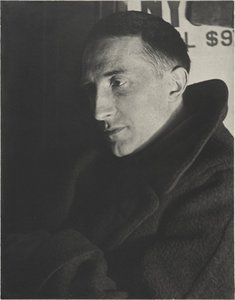
Marcel Duchamp, født Henri-Robert-Marcel Duchamp i 1887 i Blainville-Crevon, Normandien, var mere end blot en kunstner; han var en filosofisk provokatør, der fundamentalt ændrede kunstens kursus og efterlod sig et varigt præg på moderne kunsthistorie. Hans tidlige liv afslørede allerede en ånd af ikonoklasme – opdraget inden for en familie, der værdsatte kunstnerisk udtryk både med hans brødre som succesfulde kunstnere – hvilket antydede den kommende udfordring til traditionelle kunstnormer. Duchamp begyndte sin kunstneriske uddannelse ved at mestre klassiske teknikker og eksperimentere med postimpressionistiske stilarter, men denne akademiske baggrund tjente ikke som en slutning i sig selv, snarere som et springbræt til spørgsmål om kunstens natur, dens formål og dets definition. Han var ikke tilfreds med blot at gengive verden; han søgte efter at udfordre vores perception af den og hvad der udgør kunstnerisk værdi. Denne rastløse intellektuelle nysgerrighed ville blive hans prægede karriere.

Fra Kubisme til Dada – Afvisning af Konvention

Duchamp’s kunstneriske rejse var præget af konstant udvikling, en bevidst afstandtagen fra etablerede normer. Hans første engagement med kubismen, hvilket ses i værker som *Portræt af Skakspillere* (1911), viste interesse for fragmenterede former og flere perspektiver – et væsentligt brud med traditionel repræsentation. Alligevel bevægede han sig hurtigt ud over blot æstetiske bekymringer, erkendende at simpel omstrukturering af visuelle elementer ikke var nok til at adressere de dybere spørgsmål, der hvilede inden i ham. De horrors af Første Verdenskrig nærede denne utilfredshed og førte Duchamp til omfavnelse af dadaismen – en bevægelse født af disillusionment og afvisning af logik, grundighed og traditionelle kunstværdier. Det var inden for dadaistens rammer, at Duchamp virkelig begyndte at nedbryde konventionelle forståelser af kunst. Han var ikke interesseret i at skabe smukke objekter; han ønskede efterlade sig refleksion, udfordre antagelser og afsløre arbitræreheden af æstetisk vurdering. Denne periode så fødslen af hans mest radikale innovation: ‘readymaden’.

Readymaden – Kunstens Omvendelse

‘Readymaden’ var Duchamp’s mest betydningsfulde bidrag til det 20. århundrede og repræsenterede en fuldstændig omvendelse fra traditionel kunstproduktion. Disse var ikke blot fundne objekter; de var bevidste handlinger af kunstnerisk subversion. Ved at vælge et almindeligt fremstillet objekt – som et urinal (*Fountain*, 1917) – underskrive det “R. Mutt” og præsentere det på en kunstudstilling, udfordrede Duchamp selve kunstens definition og ophavsmandskab. Var det kunstnerens hånd, der skabte værket, eller var det kunstnerens idé? Dette spørgsmål blev centralt for hans praksis og lagde grundlaget for konceptuel kunst. Hans mest ikoniske værk *L.H.O.O.Q.* (1919), hvor Mona Lisas smil blev defaceret med en skjult moustache og goatee, var ikke blot et satirisk udfald mod kunsthistorie og kulturelle ikoner; det var et symbol på Dadaismen’s kamp mod traditionelle værdier og en udfordring til vores forståelse af skønhed. Disse værker var ikke beregnet til at blive beundret for deres æstetiske kvaliteter, men til at fremprovokere debat og tvinge publikum til at omdefinere deres prækoncepter om hvad kunst er.

Eftervirkninger og Et Varigt Eftertryk

Marcel Duchamp’s indflydelse på efterfølgende generationer af kunstnere er enorm og hans arbejde fortsætter med at inspirere kunstnere i dag. Han ændrede fundamentalt vores forståelse af kunst og banede vejen for bevægelser som konceptuel kunst, minimalism og popkunst – blandt andre. Hans fokus på kunstnerens idé – konceptet bag værket – fremfor dets æstetiske kvaliteter fortsætter med at udfordre os og inspirere os til refleksion. Han blev en pioner inden for kubistisk skulptur og hans arbejde har efterladt sig et varigt præg på kunsthistorien, hvilket cementerede hans status som en af de mest betydningsfulde kunstnere i det 20. århundrede. Hans udfordring til traditionelle kunstnormer og hans fokus på konceptuel kunst vil fortsætte med at forme kunstens udvikling i fremtiden.

Hurtige fakta

  • Dimensions: 114 x 146 cm
  • Artistic style: Cubist influence
  • Year: 1910
  • Influences: Flaubert
  • Location: Philadelphia Museum
  • Movement: Post-Impressionism

Kunstquiz

Der er kun ét korrekt svar på hvert spørgsmål.

Spørgsmål 1:
What artistic movement is Marcel Duchamp primarily associated with in this painting?
Spørgsmål 2:
The scene depicted in 'The Chess Game' primarily reflects which theme?
Spørgsmål 3:
Which literary work heavily influenced Duchamp's interpretation of the scene in 'The Chess Game'?
Spørgsmål 4:
What is the significance of the exclusion of Yvonne and Gaby from the chess game in the painting?
Spørgsmål 5:
The chessboard itself serves as a metaphor for what concept within the painting?