Surrealism · 1951
The Dance (Marc Chagall, 1951)
Marc Chagall (1887–1985) har skabt The Dance. Det er fra 1951. Det tilhører Surrealism-bevægelsen. Den er udført i Oil On Canvas.
- 1951
- Oil On Canvas

 Se i rummet

 Håndmalet oliemalerie
 Del som kort
 Del
 Faktablad


 Download
 Lignende værker
 Røntgenundersøgelse
 Diasshow
 Spørgsmål og svar

 Statistikker
The Dance kort fortalt
- Titel
- The Dance
- Kunstner
- Marc Chagall (1887–1985)
- Kunstner født i
- Liozna, Belarus
- Dato
- 1951
- Medium
- Oil On Canvas
- Bevægelse
- Surrealism
- Periode
- Modern
- Motiv
- dance, figures, flowers, animals, fantasy, color
Hvad forestiller The Dance?
The Dance: A Surrealist Symphony of Color and Emotion
Marc Chagall’s “The Dance” stands as a cornerstone of surrealist art, embodying the artist's singular vision—a harmonious fusion of dreamlike fantasy and tangible reality. Executed in 1951, this oil on canvas masterpiece transcends mere depiction; it invites contemplation and evokes profound feelings about human connection and transcendence. Its enduring appeal lies not only in its visual beauty but also in the intricate layers of symbolism woven into its composition.Composition and Symbolism: Gravity Defying Grace
At first glance, “The Dance” presents a joyous tableau of figures engaged in movement—a celebration of communal experience. However, astute observation reveals a rich tapestry of symbols that elevate the painting beyond a simple visual narrative. Dominating the canvas is a vibrant yellow hue, establishing an atmosphere charged with optimism and imbued with the ethereal quality characteristic of surrealism. The dancers themselves appear to defy gravity, hovering effortlessly above the ground—a deliberate gesture signifying liberation from earthly constraints and embracing spiritual aspiration. Notably, one figure holds aloft a bouquet of flowers, symbolizing fertility, beauty, and remembrance, while another rests upon the shoulders of his companion, representing interdependence and support.Artistic Influences: Matisse’s Legacy and Surrealist Roots
Chagall's artistic journey was profoundly shaped by movements like Expressionism and Cubism, yet he ultimately found his voice within the embrace of Surrealism—a movement championed by luminaries such as Henri Matisse. Chagall’s distinctive style, marked by fantastical imagery and bold color palettes, reflects a deep fascination with the subconscious mind and its capacity to generate visions unbound by logic. “The Dance” draws inspiration from Matisse's seminal work "The Dance" (1909-1910), mirroring their shared commitment to spontaneity and conveying the essence of human movement—a testament to Matisse’s influence on Chagall’s artistic sensibilities.Context in 20th Century Art: Avant-Garde Innovation
“The Dance” occupies a pivotal position within the broader context of 20th-century Western painting, which witnessed an explosion of experimental creativity and challenged conventional aesthetic standards. Alongside fellow Surrealist artists like Giorgio de Chirico and Salvador Dalí, Chagall spearheaded this transformative movement—a reaction against rationalism and realism—and championed new artistic approaches that prioritized emotion and imagination. The Museum of Dartmoor Life in Devon, South West England, houses a remarkable collection of artworks reflecting the region’s cultural heritage; while “The Dance” isn't featured prominently within its galleries, it exemplifies the spirit of innovation that defined this era of artistic exploration.Conclusion: An Enduring Masterpiece
Marc Chagall’s “The Dance” remains an unforgettable achievement in surrealist art—a captivating portrayal of human joy and spiritual yearning. Its luminous colors, intricate symbolism, and masterful technique continue to inspire artists and connoisseurs alike. As a symbol of artistic boldness and visionary imagination, "The Dance" secures its place as one of the most celebrated paintings of the 20th century.- Marc Chagall - The Dance (Surrealism, Oil On Canvas)
- Marc Chagall - The Rooster (81 x 65 cm, Surrealism, Oil On Canvas)
- Marc Chagall - The Sky inflames (47 x 56 cm, Surrealism, Oil On Canvas)
- Marc Chagall - A rooster (Surrealism, Oil On Canvas)
- Painting by 'Marc Chagall' | Marc Chagall:The Dance
- Museum of Dartmoor Life - Discovering the Artworks of Museum of Dartmoor Life, United Kingdom
- 20th-century Western painting
- Abstract expressionism
- Paul Klee - Paul Klee (German: [paʊ̯l ˈkleː]; 1879–1940)
Højopløselige billeder af The Dance

Protected by copyright: these files are for personal reference, not a licence to republish.
Marc Chagall, The Dance (1951).
Spørgsmål om The Dance besvaret
Hvornår blev "The Dance" skabt?
"The Dance" af Marc Chagall er dateret til 1951.
Hvilket medie er "The Dance" af Marc Chagall udført i?
"The Dance" er udført i Oil On Canvas.
Hvad forestiller "The Dance"?
"The Dance" af Marc Chagall forestiller: dance, figures, flowers, animals, fantasy, color, symbolism.
Er "The Dance" af Marc Chagall i det offentlige domæne?
Hvad angår ophavsret, er "The Dance" stadig beskyttet af ophavsret.
Hvem har skabt "The Dance"?
Kunstneren bag "The Dance" er Marc Chagall. Værket er katalogiseret under Marc Chagalls navn.
Hvilken kunstretning tilhører "The Dance" af Marc Chagall?
"The Dance" er et værk fra Surrealism. Denne stilart angiver den kunstneriske tradition, som værket indgår i.
Hvor i Marc Chagalls karriere placerer "The Dance" sig?
"The Dance" tilhører Mature Period i Marc Chagalls karriere. Denne klassificering knytter værket til kunstnerens udvikling.
Hvor gammel var Marc Chagall, da "The Dance" blev skabt i 1951?
Da "The Dance" blev skabt i 1951, var Marc Chagall – født i 1887 – 64 år gammel.
Er "The Dance" af Marc Chagall i det offentlige domæne, og hvorfor?
"The Dance" af Marc Chagall er stadig beskyttet af ophavsret. Ophavsretten løber fra kunstnerens dødsår, som var 1985.
Om kunstneren, Marc Chagall
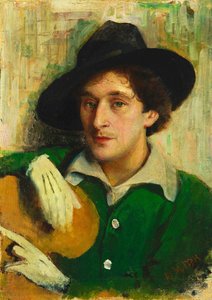
1887–1985, Belarus
Marc Chagall
Tidlige år, familie og uddannelse Marc Chagall træder ind i verden den 7. juli 1887 i Vitebsk i Det Russiske Imperium, født som Moishe Segal. Han er det første af ni børn i en beskedent stillelse jødisk familie. Livet er defineret af arbejdets rytmer og småskala handel.
Også af Marc Chagall
 Jeg og landsbyen1911
 Hvid Korsfæstelse1938
 Fødselsdag1915
 Over Værelset1918
Essays om The Dance
 Dreaming in Color: The 25 Most Iconic Masterpieces by Marc ChagallStep into the dreamlike world of Marc Chagall. Explore 25 iconic masterpieces, from vibrant surrealist tales to soulful folklore. Find insp…
 Belarusian artworks of the 1960sIconic Belarusian artworks of the 1960s, including masterpieces by Marc Chagall. Explore the full collection online at OriginalUniqueArt.co…
 Belarusian artworks of the 1950s1950s Belarusian art features masterpieces by Marc Chagall, including works like The Prophet. Find museum-quality reproductions on Original…