Surrealism
Non-Euclidian Object (Man Ray)
Man Ray (1890–1976) har skabt Non-Euclidian Object. Det tilhører Surrealism-bevægelsen. Den er udført i Assemblage. Det opbevares på Oscar Niemeyers Museum i Curitiba, Brasil.
- Assemblage
- Oscar Niemeyers Museum, Curitiba

 Håndmalet oliemalerie
 Del som kort
 Del
 Faktablad


 Download
 Lignende værker
 Diasshow
 Spørgsmål og svar

 Statistikker
Non-Euclidian Object kort fortalt
- Titel
- Non-Euclidian Object
- Kunstner
- Man Ray (1890–1976)
- Kunstner født i
- Philadelphia, USA
- Materiale
- Assemblage
- Hvor det kan ses
- Oscar Niemeyers Museum, Curitiba, Brasil
- Bevægelse
- Surrealism
- Motiv
- sculpture, man ray, surrealism, geometry, sphere, metal
Hvad forestiller Non-Euclidian Object?
The Geometry of Dreams: Man Ray’s “Non-Euclidian Object”
Man Ray's "Non-Euclidian Object," crafted in 1932 and meticulously realized in 1973, isn’t merely a sculpture; it’s an invitation to contemplate the very nature of perception and reality. Born Emmanuel Radnitzky, Man Ray—a name he adopted with deliberate artistry—was a pivotal figure in the Dada and Surrealist movements, a restless innovator who consistently challenged conventional artistic boundaries. This particular piece embodies his fascination with geometric abstraction, combined with a subtle, almost unsettling, sense of spatial distortion. It’s a work that rewards prolonged observation, revealing layers of meaning within its deceptively simple form.
The sculpture itself is constructed from a striking array of materials: polished silver, sturdy steel tubing, and flexible rubber, all anchored to a subtly textured wooden base. The central element—a polyhedron with a precisely drilled hole—appears to defy the laws of Euclidean geometry, hinting at alternate dimensions and suggesting that our familiar understanding of space may be fundamentally flawed. This deliberate disruption of established rules aligns perfectly with the core tenets of Surrealism, which sought to unlock the subconscious through unexpected juxtapositions and illogical arrangements. Ray’s choice of materials – the cold gleam of silver representing precision and intellect, contrasted against the yielding softness of rubber – creates a compelling tension, mirroring the interplay between logic and intuition within the human psyche.
A Legacy Forged in Paris
Ray's artistic journey began in Philadelphia, where he honed his skills as a commercial artist before being drawn to the vibrant avant-garde scene of New York City. It was through his connections with Marcel Duchamp and the burgeoning Dada movement that Ray’s work began to shift towards abstraction and experimentation. Paris became his adopted home, and it's here, amidst the intellectual ferment of the 1920s and 30s, that he truly blossomed as a photographer and sculptor. The “Non-Euclidian Object” reflects this Parisian influence – a synthesis of American pragmatism with European artistic sophistication.
The sculpture’s creation coincided with Ray's exploration of photograms, or "rayographs," techniques he pioneered to capture ethereal images without the use of traditional cameras. This interest in manipulating light and shadow—in creating illusions of depth and form—clearly informed his approach to sculptural design. The piece can be seen as a continuation of this photographic experimentation, translating the principles of image-making into three dimensions.
Symbolism and the Unconscious
Beyond its purely geometric qualities, “Non-Euclidian Object” is rich in symbolic potential. The hole within the polyhedron could represent an opening to another realm—a portal to the subconscious mind, as explored by Surrealists like Freud. The deliberate distortion of space suggests a questioning of established norms and a desire to break free from conventional thinking. Some art historians have interpreted the piece as a meditation on time itself, with the hole acting as a visual representation of an infinite void.
Furthermore, the use of silver—a material often associated with spirituality and reflection—adds another layer of meaning. It invites contemplation and encourages viewers to engage with their own perceptions and beliefs. The sculpture’s inherent ambiguity allows for multiple interpretations, making it a truly engaging and thought-provoking work of art.
A Timeless Masterpiece
“Non-Euclidian Object” stands as a testament to Man Ray's innovative spirit and his profound understanding of the relationship between form, space, and perception. It’s a sculpture that transcends its materials—wood, metal, and rubber—to become a powerful symbol of artistic exploration and intellectual curiosity. Reproductions capture the essence of this work, offering a glimpse into the mind of one of the 20th century's most influential artists. Its unique geometry continues to challenge our assumptions about reality, inviting us to embrace the beauty of the unexpected and the power of the unconscious.
Hvilket museum udstiller Non-Euclidian Object?
Oscar Niemeyers Museum
Curitiba, Brasil
A Symphony of Concrete and Light: Exploring the Oscar Niemeyer Museum in Curitiba Inden for Curitibas frodige favn – en by kendt for sin banebrydende byplanlægning og engagement i bæredygtighed – står Oscar Niemeyer Museum som et beundringsværdigt monument over arkitektonisk tanke og kunstnerisk udtryk. Mere end blot et repositorium for brasiliansk visuel kunst, er det en oplevelse; en dialog mellem dristige former, hensigtsmæssig funktion og den uforglemmelige arv af dets visionære skaber, Oscar Niemeyer. Officielt kendt som Museu Oscar Niemeyer (MON), kælet kaldet “Øjet” på grund af dets slående tilknytning – en høj, menneskelignende struktur – inviterer dette kulturelle vartegn besøgende på en rejse gennem brasiliansk kunstnerisk arv og internationale tendenser, alt sammen indlejret i et rum, der selv er et betagende vidnesbyrd om arkitektonisk dygtighed.


Højopløselige billeder af Non-Euclidian Object

Beskyttet af ophavsret: disse filer er til personlig reference og udgør ikke en licens til genudgivelse.
Man Ray, Non-Euclidian Object, Oscar Niemeyers Museum.
Spørgsmål om Non-Euclidian Object besvaret
Hvor kan man i dag se "Non-Euclidian Object" af Man Ray udstillet?
Originalen af "Non-Euclidian Object" af Man Ray opbevares på Oscar Niemeyers Museum, Curitiba, Brasil. En reproduktion gør det muligt at udstille værket i hjemmet.
Hvilken teknik er brugt til "Non-Euclidian Object" af Man Ray?
"Non-Euclidian Object" af Man Ray er udført i Assemblage. Reproduktionerne har til formål at gengive denne tekniks visuelle udtryk.
Hvad forestiller "Non-Euclidian Object" af Man Ray?
"Non-Euclidian Object" af Man Ray forestiller: sculpture, man ray, surrealism, geometry, sphere, metal, wood, object.
Er billedet af "Non-Euclidian Object" af Man Ray frit tilgængeligt i det offentlige domæne?
"Non-Euclidian Object" af Man Ray er stadig beskyttet af ophavsret. Denne status bestemmer, hvordan billedet af værket må reproduceres.
Hvilken kunstner tilskrives "Non-Euclidian Object"?
"Non-Euclidian Object" blev skabt af Man Ray. Informationen på denne side beskriver Man Rays originale værk.
Hvilken kunstretning tilhører "Non-Euclidian Object" af Man Ray?
"Non-Euclidian Object" er et værk fra Surrealism. Denne stilart angiver den kunstneriske tradition, som værket indgår i.
Hvilken fase af Man Rays kunstneriske udvikling repræsenterer "Non-Euclidian Object"?
Inden for Man Rays karriere tilhører "Non-Euclidian Object" perioden Surrealist Period, hvilket gør det muligt at sammenligne værket med kunstnerens øvrige værker.
Er "Non-Euclidian Object" af Man Ray i det offentlige domæne, og hvorfor?
"Non-Euclidian Object" af Man Ray er stadig beskyttet af ophavsret. Ophavsretten beregnes ud fra kunstnerens dødsår, og Man Ray døde i 1976.
Opbevares "Non-Euclidian Object" af Man Ray i kunstnerens hjemland?
Nej – kunstværket opbevares i udlandet. "Non-Euclidian Object" findes i Brasil, mens Man Ray blev født i USA.
Om kunstneren, Man Ray

1890–1976, USA
Man Ray
Emmanuel Radnitzky – En Mystisk Skikkelse i Kunstens Verden Man Ray, som han blev kendt verden over, var en rastløs ånd, der afveg fra enhver let kategorisering. Hans livsbane, født i 1890 i Philadelphia til russisk-jødiske immigranter, er et vidnesbyrd om den radikale kunstneriske ferment i det tidlige 20. århundrede. Skiftet fra “Manny” Radnitzky til det gådefulde “Man Ray” afspejler en kunstners bestræbelse på at skabe en ny identitet, fri for konventioner.
Også af Man Ray
 La Galerie Surréaliste, rue Jacques Callot
 Pisces1938
 Rayograph (The Kiss)1922
 Solarisation1931
Essays om Non-Euclidian Object
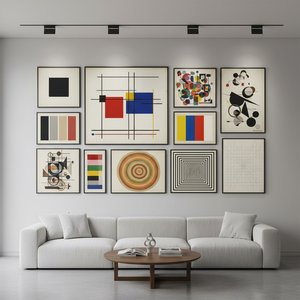 Geometrisk Abstraktion: Top 10 Kunstværker der Definerede Bevægelsen | OriginalUniqueArt.dkOplev de 10 mest ikoniske værker inden for geometrisk abstraktion! Fra Kandinsky til Mondrian – lær historierne bag disse banebrydende kuns…
 The Radical Legacy of Marcel Duchamp: What Was He Known For?Explore the radical legacy of Marcel Duchamp from his iconic readymades to his portable museum and find ways to bring his vision into your …
 Geometry with Purpose: Distinguishing Suprematism from ConstructivismMaster the differences between Suprematism and Constructivism with our expert guide. Discover the soul of the Russian avant-garde now.