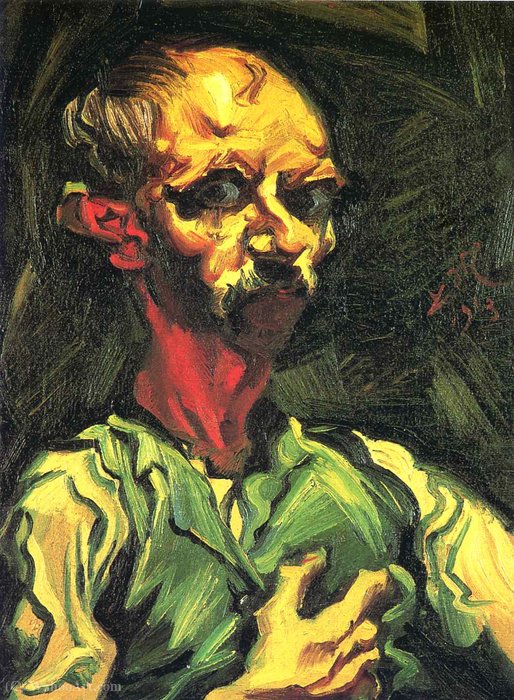
 Se i rummet
 Del som kort
 Del
Del
 Detaljer
 Guide
Guide

 Download
 Lignende værker
 Røntgenundersøgelse
 Diasshow
 Spørgsmål og svar
 Statistikker
Untitled (716)

 Vis mere
Kunstværket vist på denne side er beskyttet af ophavsretsloven, hvilket betyder, at vi ikke lovligt kan skabe eller sælge en identisk reproduktion. Denne beskyttelse håndhæves i henhold til internationale aftaler som f.eks. den Bernerkonventionen og af nationale love, herunder de bestemmelser, der er fastlagt i Amerikansk ophavsretslov - Titel 17.
Denne metode overholder fuldt ud ophavsretsreglerne, da den ikke indebærer kopiering eller duplikering af det beskyttede kunstværk. I stedet er der tale om en kreativ nytolkning – et nyt maleri, som er inspireret af det oprindelige, men ikke identisk med det.
Giclée / Kunsttryk
Giclée- eller lærredstryk i museumskvalitet med hurtig produktion og fleksible muligheder for finish. ( Køb håndmalet maleri Skift til digitalt billede)




P118B Dkr10

P118H Dkr10

P118W Dkr10

P438Z Dkr10

P508JH Dkr12

P508YH Dkr12

P805H Dkr10

P805Z Dkr10

P919BZ Dkr10

P919G Dkr10

P919XJ Dkr10

P959ZH Dkr10

P968JZ Dkr12

W106C Dkr8

W218G Dkr10

W218JH Dkr8

W218Y Dkr10

W307PJ Dkr10

W316G Dkr10

W316PJ Dkr8

W316Y Dkr10

W398PJ Dkr8

W4111J Dkr10

W500HY Dkr15

W500JH Dkr15

W692G Dkr12

W849H Dkr8

W940BG Dkr15

W953PJ Dkr8




Vælg mellem vores forudindstillede størrelser, der matcher kunstværkets originale proportioner.

Indtast den bredde og højde, du har brug for, så det passer til din ramme eller din væg. Et print kan kun beskæres, aldrig gøres større end selve billedet, så en størrelse med et andet format vil medføre, at dele af motivet går tabt. Vi sender dig en digital mockup til godkendelse, før vi printer noget. Billedet vist på denne side viser ikke den faktiske beskæring — det er kun mockuppen, der gør.
Verdensomspændende levering () på 2 uger i stedet for de sædvanlige 4/5 uger. (10 november)

Gratis ekspresforsendelse til hele verden

Lærred af linned i høj kvalitet

Fuld transportforsikring

Garanti for refusion af told og importafgifter

Garanti for præcis farvegengivelse

100 dages returret ved fabrikationsfejl

100% fuld returret

Mængderabat ved flere køb
 Glasmulighed er kun tilgængelig i størrelser under 110 cm

Untitled (716)
Giclée / Kunsttryk
Størrelse på reproduktion
-


Samlet pris
Dkr 540
Kunstnerbiografi
A Life Shaped by Change
Born in Bernstadt, Germany, in 1884, Ludwig Meidner began his adult life far from the canvas. He first followed his parents' wishes by taking up an apprenticeship as a stonemason, though he did not complete this training. His path eventually led him to the Royal School of Art in Breslau and later to Paris, where he studied at the Académie Julian and Cormon Academies. During these years in Paris, he met Amedeo Modigliani, a connection that placed him at the center of a changing artistic landscape. After returning to Berlin, he worked as a fashion illustrator and draftsman, finding his footing within the city's growing avant-garde circles.
The years leading up to the First World War brought a profound shift in his vision. In 1912, he began creating what are often called his apocalyptic landscapes. These works featured chaotic scenes of urban life, with comets crossing skies like shells and buildings appearing on the verge of collapse. While some saw these images as predictions of the coming war, they were also reflections of the intense energy and social unrest present in the modern metropolis. His involvement with the Die Pathetiker group further solidified his place in the German expressionist movement.
Faith and Displacement
The devastation of the First World War changed Meidner deeply. Having served in the German military as an infantry soldier and a French interpreter, he emerged from the conflict with a different perspective on life and art. He turned toward Orthodox Judaism, finding a new source of meaning through religious themes. His work began to include portraits of prophets and scenes of Jewish ritual, such as his 1937 drawing, Blowing the Shofar. This period saw him moving away from pure expressionist chaos toward more structured, religious imagery that explored the inner experience of faith.
The rise of the Nazi party forced another period of movement and hardship. In 1935, Meidner moved to Cologne to teach at a Jewish school, but the increasing pressure in Germany became impossible to ignore. His work was included in the 1937 Degenerate Art exhibition in Munich, an event that marked him as a target of the regime. In August 1939, he and his wife, Else Meidner, fled to England. Life in London was difficult; he was interned at Huyton Camp and later on the Isle of Man. During these years of exile, he lived in near poverty, often relying on the support of the local Jewish community while continuing to draw and paint from his observations of the world around him.
A Return to Germany
After many years in England, Meidner chose to return to Germany in 1953. He settled in Frankfurt, a city that offered him both a sense of stability and a connection to his heritage. This later period of his life was marked by a renewed recognition within the German art scene. In 1964, he received the Order of Merit of the Federal Republic of Germany and became a member of the Berlin Academy of Fine Arts. His late works continued to reflect his lifelong engagement with both the physical world and the spiritual realm.
Meidner passed away in Darmstadt in 1966. His legacy remains visible in major institutions such as the Jewish Museum Frankfurt, the Museum of Modern Art in New York, and the Metropolitan Museum of Art. Through his varied roles as a painter, printmaker, and writer, he left behind a body of work that documented the turbulent transitions of the twentieth century.

Ludwig Meidner
1884 - 1966
Kort om kunstneren
- Artistic Movement Or Style: Expressionism, Dada
- Artists Who Influenced This Artist:
- Amedeo Modigliani
- Rembrandt
- Full Name: Ludwig Meidner
- Nationality: German
- Notable Artworks:
- Blowing the Shofar
- Apocalyptic Landscapes
- The Bomb
- Street at Kreuzberg
- Place Of Birth: Bernstadt, Germany
- Date Of Birth: 1884
- Date Of Death: 1966
Relaterede artikler

Unmasking Emotion: A Journey Through the Raw Power and Visceral Beauty of German Expressionism
Explore the raw emotional power of German Expressionism. From Kirchner to Die Brücke, discover how artists used distortion and vibrant color to unmask the human psyche. A deep dive into art history for the discerning collector and enthusiast.

Tysk Ekspressionisme: 10 Mesterværker der Definerede en Æra – Kunst til Dit Hjem
Oplev de 10 mest ikoniske værker fra Tysk Ekspressionisme! Lær historierne bag Kirchner, Nolde & Kandinsky. Find museumskvalitets kunsttryk og inspiration til din indretning på OriginalUniqueArt.com – udforsk samlingen online.
Verdant Visions: Exploring the Symbolism & Aesthetic Impact of Green in Art History
Explore the rich history & symbolism of green in art! Discover iconic paintings, techniques, and how to bring verdant harmony into your home with OriginalUniqueArt's expert guide.
Unmasking Emotion: A Definitive Guide to the Raw Power and Visceral Beauty of German Expressionism
Explore the visceral power of German Expressionism. From Ernst Ludwig Kirchner to Die Brücke, discover how bold colors and distorted forms unmask raw human emotion in this expert art history guide for collectors and enthusiasts.
The Visceral Cry of a Nation: Exploring Emotion & Distortion in German Expressionism
Explore the powerful world of German Expressionism with OriginalUniqueArt. Discover Kirchner, Nolde & Die Brücke's emotive masterpieces. Learn about this pivotal art movement and its lasting impact on modern art.