

 Se i rummet
 Send
Send Del
Del
 Detaljer
 Studieguide til kunstværker

 Download
 Lignende værker
 Røntgenundersøgelse
 Se diasshow
 Statistik
The Big Man
 Oil On Canvas
- WallArt
- Expressionism
 1977
1977- Modern
 91.0 x 91.0 cm
 Læs mere
Kunstværket vist på denne side er beskyttet af ophavsretsloven, hvilket betyder, at vi ikke lovligt kan skabe eller sælge en identisk reproduktion. Denne beskyttelse håndhæves i henhold til internationale aftaler som f.eks. den Bernerkonventionen og af nationale love, herunder de bestemmelser, der er fastlagt i Amerikansk ophavsretslov - Titel 17.
Denne metode overholder fuldt ud ophavsretsreglerne, da den ikke indebærer kopiering eller duplikering af det beskyttede kunstværk. I stedet er der tale om en kreativ nytolkning – et nyt maleri, som er inspireret af det oprindelige, men ikke identisk med det.
Giclée / Kunsttryk
Giclée- eller lærredstryk i museumskvalitet med hurtig produktion og fleksible muligheder for finish. ( Bestil håndmalet reproduktion Skift til digitalt billede)




P118B Dkr10

P118H Dkr10

P118W Dkr10

P438Z Dkr10

P508JH Dkr12

P508YH Dkr12

P805H Dkr10

P805Z Dkr10

P919BZ Dkr10

P919G Dkr10

P919XJ Dkr10

P959ZH Dkr10

P968JZ Dkr12

W106C Dkr8

W218G Dkr10

W218JH Dkr8

W218Y Dkr10

W307PJ Dkr10

W316G Dkr10

W316PJ Dkr8

W316Y Dkr10

W398PJ Dkr8

W4111J Dkr10

W500HY Dkr15

W500JH Dkr15

W692G Dkr12

W849H Dkr8

W940BG Dkr15

W953PJ Dkr8




Vælg mellem vores forudindstillede størrelser, der matcher kunstværkets originale proportioner.

Du kan indtaste dine egne mål for at passe til en specifik ramme eller et bestemt område. Hvis den valgte størrelse ikke stemmer overens med det originale billedes proportioner, vil vi enten beskære kunstværket eller udvide billedet med en spejlet eller ensfarvet kant. En digital mockup vil blive sendt til din godkendelse, før produktionen påbegyndes.
Bemærk venligst, at forhåndsvisningen på skærmen ikke afspejler den faktiske beskæring eller udvidelse. Kun mockuppen vil nøjagtigt vise den endelige komposition.
Selvom specialmål er tilgængelige, anbefaler vi at vælge et mål fra den foruddefinerede liste for at bevare de originale proportioner.
Verdensomspændende levering () på 2 uger i stedet for de sædvanlige 4/5 uger. (10 oktober)

Gratis ekspresforsendelse til hele verden

Lærred af linned i høj kvalitet

Komplet transportforsikring

Garanti for refusion af told og importafgifter

Garanti for autentisk farvegengivelse

100 dages returret ved fabrikationsfejl

100% fuld returret

Mængderabat ved flere køb
 Glasmulighed er kun tilgængelig i størrelser under 110 cm

The Big Man
Giclée / Kunsttryk
Reproduktionsstørrelse
-


Samlet pris
Dkr 522
The Big Man by Lucian Freud: A Portrait of Introspection
Lucian Freud's "The Big Man," created in 1977, is a captivating oil on canvas painting measuring 91 x 91 cm. This work exemplifies Expressionism and offers a profound exploration of the human condition through its depiction of a solitary figure.
Style and Influences: Expressionism and Realism
Freud was a renowned British artist celebrated for his contributions to Expressionism, though he often resisted categorization. His style is characterized by unflinching realism, portraying everyday people in ordinary settings with an emphasis on psychological depth and emotional honesty. While influenced by earlier movements like Surrealism, Freud developed a unique approach that prioritized direct observation and the raw depiction of human form. The painting's composition features a man seated in a chair, accompanied by two indistinct figures in the background, creating a sense of isolation and introspection.
Technique and Composition: A Study in Texture and Light
The painting’s technique is immediately striking due to Freud’s masterful use of oil paint. The visible brushstrokes create a rich, textured surface that emphasizes the physicality of the subject. Light plays a crucial role, illuminating the man's face and clothing while casting shadows that accentuate his contours. This interplay of light and shadow contributes to the painting's depth and emotional intensity. Freud’s deliberate choice of muted colors—primarily browns and blacks—further enhances the somber mood and reinforces the sense of introspection.
Symbolism and Interpretation: Age, Authority, and Contemplation
“The Big Man” invites multiple interpretations. The subject's attire – a dark suit and tie – suggests authority or status, while his clasped hands and downward gaze convey a sense of contemplation and perhaps weariness. The presence of the two figures in the background adds another layer of complexity, hinting at relationships and social dynamics. Symbolically, the painting can be seen as an exploration of age, introspection, and the burdens of responsibility. The title itself, "The Big Man," suggests not only physical stature but also a sense of power or influence, prompting viewers to consider the complexities of human character.
Emotional Impact: A Moment of Quiet Reflection
Ultimately, “The Big Man” evokes a powerful emotional response through its portrayal of solitude and introspection. The painting’s realism, combined with Freud's expressive technique, creates a sense of immediacy and invites viewers to connect with the subject on a deeply personal level. It is a testament to Freud’s ability to capture not just physical likeness but also the inner life of his subjects, leaving a lasting impression long after viewing.
Spørgsmål & svar
Hvornår blev "The Big Man" af Lucian Freud skabt?
"The Big Man" stammer fra 1977. Datoen placerer værket i Lucian Freud's karriere og dets tidsalder.
Hvilken farvepalette og hvilken følelse forener "The Big Man"?
"The Big Man" af Lucian Freud kombinerer en Earthy farvepalet med en Melancholic tone.
Hvad forklarer ophavsretsstatus for "The Big Man" af Lucian Freud?
"The Big Man" af Lucian Freud er stadig beskyttet af ophavsret. Ophavsretten beregnes fra kunstnerens dødsår, og Lucian Freud døde i 2011.
Hvilket motiv og hvilken stemning forener "The Big Man" af Lucian Freud?
"The Big Man" viser portrait, male, introspection, seated, dignity, authority, realism, expressionism, og den stemning, der er indfanget, er Dramatic.
Hvor gammel var Lucian Freud, da The Big Man blev skabt i 1977?
Da "The Big Man" blev skabt i 1977, var Lucian Freud – født i 1922 – 55 år gammel.
Hvor kraftige er farverne i "The Big Man"?
Farverne i "The Big Man" af Lucian Freud fremviser en Subtle Color mætning med en Balanced intensitet.
Hvem har skabt "The Big Man"?
"The Big Man" tilskrives Lucian Freud.
Om kunstneren
Lucian Freud - En Pioner inden for Realisme og Psykologisk Portræt
Lucian Michael Freud (født 8 december 1922 i Berlin, død 20 juli 2011) var en britisk kunstmaler af tysk oprindelse. Han anses for at være en af sin tids største figurative malere og en nøglefigur inden for den engelske kunstscene efter anden verdenskrig. Hans arbejde er kendt for sin direkte observation, fysisk udførelse og dybe psykologiske analyser af menneskelige forhold – egenskaber der gjorde ham til en unik stemme i kunsthistorien.- Barndom og Familie: Lucian blev født i Berlin under naziregimet og var søn af arkitekten Ernst Freud og psykologen Lucie Brasch, som emigrerede til England i 1933 for at undslippe den stigende antisemitisme. Hans barnebarn Sigmund Freud havde været en banebrydende psykoanalytiker, hvilket satte præcedens for Lucian’s egen kunstneriske rejse. Han modtog uddannelse ved Dartington Hall og Bryanston School før han blev udvist på grund af dårlig opførsel.
- Kunstnerisk Udvikling: Freud begyndte sin kunstneriske karriere med surrealisme og ekspressionisme, men udviklede hurtigt en distinkt stil præget af dybtgående fysisk udførelse og fokus på menneskelig psykologi. Hans tidlige værker viser allerede hans interesse for at skildre menneskelige følelser og tanker gennem direkte observation og brug af impasto teknikken – en metode han senere perfektionerede.
- Teknik og Stil: Lucian Freud var kendt for sin unikke teknik, hvor han anvendte store hogs-hair børster til at påføre maling med stor fysisk energi. Dette skabte en tekstureret overflade, der fremhævede menneskeligt væsens kompleksitet og gjorde hans værker til både kunstværker og psykologiske studier. Han var særligt interesseret i at skildre menneskelige figurer i naturlig størrelse og udførte ofte lange sittings med sine modeller for at opnå maksimal detaljegrad og psykologisk dybde.
- Portrætter og Eftermæle: Freud blev verdensberømt for sine portrætter af prominente personer og hans nære relationer til kunstnere og andre mennesker omkring ham. Hans værker udforsker ofte temaer om identitet, selvindsigt og menneskelige forbindelser på en måde, der var både innovativ og udfordrende for sin tid. Han efterlod sig et betydeligt kunstnerisk arv og inspirerede mange efterfølgende kunstnere med sin ærlige stil og fokus på menneskelig psykologi.
- Efterliv og Anerkendelse: Lucian Freud døde i London i 2011 og blev fejret som en af de største kunstnere af sin generation. Hans værker er nu udstillet i nogle af verdens mest prestigefulde museer, hvilket vidner om hans kunstnerske geni og hans varige indflydelse på kunsthistorien. Han anses for at være en pioner inden for realistisk portrætkunst og har efterladt sig et ikonisk billede af menneskeligheden – både fysisk og psykologisk.
, , - , , ) for at sikre korrekt formatering og undgå andre markup typer.

Lucian Freud
1922 - 2011 , Tyskland
Hurtige fakta
- Artistic Movement Or Style: Realisme
- Artists Or Movements Influenced By This Artist: ['School of London']
- Artists Who Influenced This Artist:
- Sigmund Freud
- Cedric Morris
- Date Of Birth: 8 december 1922
- Date Of Death: 20 juli 2011
- Full Name: Lucian Michael Freud
- Nationality: Britisk
- Notable Artworks:
- Girl with a Kitten
- Benefits Supervisor Sleeping
- Place Of Birth: Berlin, Tyskland
Relaterede artikler
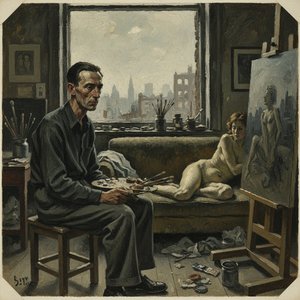
Lucian Freud: A Psychological Portraiture of Post-War Existence
Explore the profound psychological depth of Lucian Freud's portraits. Discover his unique realism, artistic evolution, and lasting influence on modern art. A collector’s guide to a master.
Digitale NFT‑kunstværker omdannet til håndmalede oliekopier – Museumskvalitet, høj fortjeneste og global levering for den moderne samlende kunstner
Oplev håndmalede oliekopier af digitale kunstværker med museumskvalitet hos OriginalUniqueArt. Ekspertise i reproduktion, fuld tilfredshedsgaranti og global levering sikrer din investering. Køb sikkert, værdsæt ægte kunst.

Oil on Canvas: A Historical & Technical Exploration of a Timeless Artistic Medium
Explore the rich history & enduring techniques of oil painting on canvas. Discover the science behind its longevity, conservation practices, and contemporary relevance. Expert insights for art enthusiasts.

The Enduring Legacy of Oil on Canvas: Technique, History & Aesthetic Impact
Explore the rich history & techniques of oil painting – from Renaissance masters to Impressionism. Discover pigments, layering methods, and why this timeless medium endures. Expert insights for artists & art enthusiasts.

The Enduring Power of Painting: A Historical & Contemporary Exploration of Form and Emotion
Explore the rich history & enduring techniques of oil painting with OriginalUniqueArt. Discover masterpieces, learn about art collecting, and find authentic handmade reproductions crafted by skilled artists.

