Northern Renaissance · 1515
Trinity (Lucas Cranach Den Ældre, 1515)
Lucas Cranach Den Ældre (1472–1553) har skabt Trinity. Det er fra 1515. Det tilhører Northern Renaissance-bevægelsen. Den er udført i Oil On Panel.
- 1515
- Oil On Panel

 Se i rummet

 Håndmalet oliemalerie
 Del som kort
 Del
 Faktablad


 Download
 Lignende værker
 Røntgenundersøgelse
 Diasshow
 Spørgsmål og svar

 Statistikker
Trinity kort fortalt
- Titel
- Trinity
- Kunstner
- Lucas Cranach Den Ældre (1472–1553)
- Kunstner født i
- Kronach, Tyskland
- Dato
- 1515
- Medium
- Oil On Panel
- Bevægelse
- Northern Renaissance
- Periode
- Renaissance
- Motiv
- religious art, jesus christ, angels, trinity, cross, northern renaissance
Hvad forestiller Trinity?
A Vision of Divine Majesty: Exploring Lucas Cranach The Elder's Trinity
To stand before Lucas Cranach The Elder’s Trinity is to step across the threshold of time and into the very heart of Christian theology rendered in breathtaking pigment. This oil on panel, dating back to 1515, is far more than a mere depiction of sacred figures; it is a profound meditation on divinity, sacrifice, and eternal life. Cranach, a master artisan of the Northern Renaissance, did not simply paint a scene; he captured an overwhelming spiritual experience, inviting the viewer into a complex interplay of light, shadow, and divine narrative.
The Intricate Tapestry of Symbolism
The composition itself is a masterful puzzle woven with layers of meaning. At the core, we find the poignant image of Jesus Christ bearing the cross, simultaneously being elevated by celestial angels—a visual metaphor for resurrection and ascension. Flanking this central drama are other significant figures, including a majestic man crowned, whose presence suggests the embodiment of God the Father or another pivotal theological concept. Cranach populated this scene with meticulous detail; observe the background's mountainous landscape, dotted with distant trees, which grounds the ethereal event in a tangible, earthly realm. Every element, from the vibrant colors to the gestures of the surrounding figures, whispers secrets of Christian doctrine, inviting deep contemplation from any who gaze upon it.
Mastery of Northern Renaissance Technique
Cranach’s technical prowess is undeniable. Characteristic of the Northern Renaissance style, his work thrives on intricate detail and a rich application of color that gives the panel an almost luminous quality. The way light interacts with the robes and the faces speaks to an advanced understanding of oil painting techniques. His ability to render figures with such exquisite precision, while maintaining a sense of dramatic emotional weight, marks him as a pivotal figure in German art history. It is this marriage of technical brilliance and spiritual fervor that makes The Trinity so enduringly powerful.
An Echo for the Modern Collector
For the contemporary collector or designer seeking an anchor of profound beauty for their space, reproductions of this work offer a tangible connection to this golden age of art. Owning a piece inspired by The Trinity is not merely decorating; it is curating a focal point of contemplation. The drama, the depth, and the sheer artistry contained within Cranach’s original vision translate beautifully into high-quality reproductions, allowing you to bring the solemn majesty of this masterpiece into your modern life.
Højopløselige billeder af Trinity

Public domain: kunstneren døde i 1553.
Andre størrelser, beskæringer og kildehenvisning →Lucas Cranach Den Ældre, Trinity (1515). Public domain
Farverne er matchet til originalen af en digital ekspert, og filen er finretoucheret og tro mod kunstnerens penselstrøg.
Køb filen i høj opløsningSpørgsmål om Trinity besvaret
Hvornår blev "Trinity" skabt?
"Trinity" af Lucas Cranach Den Ældre blev skabt i 1515.
Hvilken teknik er "Trinity" udført med?
Lucas Cranach Den Ældre brugte Oil On Panel-teknikken til "Trinity". Teknikken definerer det originale værks materielle karakter.
Hvad forestiller "Trinity" af Lucas Cranach Den Ældre?
Motiverne i "Trinity" er religious art, jesus christ, angels, trinity, cross, northern renaissance, symbolism.
Er billedet af "Trinity" af Lucas Cranach Den Ældre frit tilgængeligt i det offentlige domæne?
Hvad angår ophavsret, er "Trinity" i det offentlige domæne – ophavsretten er udløbet.
Hvilken kunstner tilskrives "Trinity"?
"Trinity" blev skabt af Lucas Cranach Den Ældre. Informationen på denne side beskriver Lucas Cranach Den Ældres originale værk.
Hvilken kunstretning tilhører "Trinity" af Lucas Cranach Den Ældre?
Kunstretningen forbundet med "Trinity" af Lucas Cranach Den Ældre er Northern Renaissance. Denne klassificering placerer værket blandt relaterede kunstnere og kunstværker.
Hvilken fase af Lucas Cranach Den Ældres kunstneriske udvikling repræsenterer "Trinity"?
"Trinity" repræsenterer Lucas Cranach Den Ældres Early Career.
Hvor gammel var Lucas Cranach Den Ældre, da vedkommende skabte "Trinity"?
Lucas Cranach Den Ældre var 43 år gammel, da vedkommende skabte "Trinity" i 1515. Alderen er beregnet ud fra kunstnerens fødselsår, 1472.
Er "Trinity" af Lucas Cranach Den Ældre i det offentlige domæne, og hvorfor?
"Trinity" af Lucas Cranach Den Ældre er i det offentlige domæne – ophavsretten er udløbet. Ophavsretten løber fra kunstnerens dødsår, som var 1553.
Om kunstneren, Lucas Cranach Den Ældre

1472–1553, Tyskland
Lucas Cranach Den Ældre
Reformationens visuelle arkitekt For at forstå den tyske renæssance må man se forbi den abstrakte teologi og i stedet rette blikket mod de skarpe, beslutsomme linjer hos Lucas Cranach Den Ældre. Han var ikke blot en maler; han var en visuel strateg. Mens den protestantiske reformation splittede Europa, leverede Cranach det billedsprog, der definerede den nye orden. Hans tilknytning til Martin Luther var ikke blot et spørgsmål om venskab, men et funktionelt partnerskab, der transformerede religiøs tankegang til håndgribelig, reproducerbar kunst.
Om Lucas Cranach Den Ældre Bemærkelsesværdige værker af Lucas Cranach Den Ældre
Også af Lucas Cranach Den Ældre
 Ungdommens Kilde1546
 Adam og Eva1531
 Judith med Holofernes' hoved1530
 Jagt efter elektoren Friedrich III den vise1529
Essays om Trinity
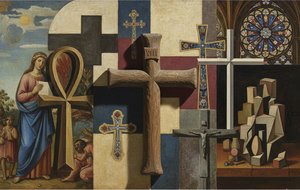 Sacred Symbols: Exploring the Power of Cross Imagery in Fine Art HistoryDelve into the profound symbolism of cross imagery in fine art history. From Renaissance masterpieces to sacred iconography, explore how re…
 25 Masterpieces by Rogier van der Weyden: The Pinnacle of Emotional ArtImmerse yourself in the profound emotion of Rogier van der Weyden’s greatest works. From Northern Renaissance mastery to exquisite textures…
 German Northern Renaissance paintersMasterpieces by Dürer and Holbein define the German Northern Renaissance. Explore the full collection online at OriginalUniqueArt.com.