Se i rummet
 Send
Send Del
Del
 Detaljer
 Studieguide til kunstværker

 Download
 Lignende værker
 Røntgenundersøgelse
 Se diasshow
 Statistik
The Golden Age
 Oil On Panel
- Northern Renaissance
 1530
1530 73.0 x 105.0 cm
 Alte Pinakothek
 Læs mere
Giclée / Kunsttryk
Giclée- eller lærredstryk i museumskvalitet med hurtig produktion og fleksible muligheder for finish. ( Bestil håndmalet reproduktion Skift til digitalt billede)




P118B Dkr10

P118H Dkr10

P118W Dkr10

P438Z Dkr10

P508JH Dkr12

P508YH Dkr12

P805H Dkr10

P805Z Dkr10

P919BZ Dkr10

P919G Dkr10

P919XJ Dkr10

P959ZH Dkr10

P968JZ Dkr12

W106C Dkr8

W218G Dkr10

W218JH Dkr8

W218Y Dkr10

W307PJ Dkr10

W316G Dkr10

W316PJ Dkr8

W316Y Dkr10

W398PJ Dkr8

W4111J Dkr10

W500HY Dkr15

W500JH Dkr15

W692G Dkr12

W849H Dkr8

W940BG Dkr15

W953PJ Dkr8




Vælg mellem vores forudindstillede størrelser, der matcher kunstværkets originale proportioner.

Indtast den bredde og højde, du har brug for, så det passer til din ramme eller din væg. Et print kan kun beskæres, aldrig gøres større end billedet, så en størrelse med en anden form vil miste en del af motivet. Vi sender dig en digital mockup til godkendelse, før vi printer noget. Billedet vist på denne side viser ikke den faktiske beskæring — det er kun mockuppen, der gør.
Verdensomspændende levering () på 2 uger i stedet for de sædvanlige 4/5 uger. (24 oktober)

Gratis ekspresforsendelse til hele verden

Lærred af linned i høj kvalitet

Komplet transportforsikring

Garanti for refusion af told og importafgifter

Garanti for autentisk farvegengivelse

100 dages returret ved fabrikationsfejl

100% fuld returret

Mængderabat ved flere køb
 Glasmulighed er kun tilgængelig i størrelser under 110 cm

The Golden Age
Giclée / Kunsttryk
Reproduktionsstørrelse
-


Samlet pris
Dkr 531
The Echoes of Paradise: Lucas Cranach’s “The Golden Age”
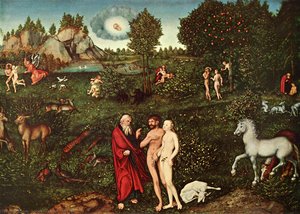
Lucas Cranach the Elder's "The Golden Age," painted in 1530, isn’t merely a depiction of nude figures frolicking in a garden; it’s a vibrant distillation of Renaissance ideals, a carefully constructed allegory steeped in classical mythology and humanist thought. This oil-on-panel masterpiece, now housed within the Alte Pinakothek in Munich, offers a glimpse into a world where earthly pleasure and divine harmony intertwine – a vision both alluring and subtly complex.
Cranach, a pivotal figure of the German Renaissance, served as court painter to the Electors of Saxony for much of his career. His work reflects this patronage, blending meticulous realism with an expressive understanding of human psychology. “The Golden Age” exemplifies this skill, showcasing not just anatomical accuracy but also a remarkable ability to convey mood and narrative through gesture and composition. The painting’s genesis lies in the ancient Greek concept of the *Ages of Man*, as articulated by Hesiod – a cyclical progression from an idyllic, pre-civilized “Golden Age” to one defined by strife and decay. Cranach cleverly translates this philosophical framework into a visual experience, inviting the viewer to contemplate humanity's relationship with nature, pleasure, and ultimately, mortality.
A Symphony of Nudity and Movement
The scene unfolds within a lush, enclosed garden, its boundaries delineated by a sturdy stone wall. Within this idyllic space, a group of young couples engage in a variety of activities: dancing, bathing, eating grapes, and simply enjoying each other’s company. Cranach masterfully employs the technique of *contrapposto*, subtly shifting the weight of the figures to create dynamic poses that ripple through the composition. The musculature is rendered with remarkable precision, yet the overall effect is one of effortless grace and naturalism. Note the subtle variations in skin tone – a deliberate choice that adds depth and realism to the scene, while simultaneously reinforcing the painting’s classical inspiration.
The figures themselves are arranged in carefully considered groupings, suggesting relationships and interactions. The use of light and shadow is particularly effective, highlighting certain bodies and creating a sense of intimacy within the larger composition. Cranach's attention to detail extends beyond the human forms; observe the meticulously rendered foliage, the delicate details of the fruit, and the subtle textures of the stone wall – all contributing to the painting’s immersive quality.
Symbolism Woven into the Landscape
Beyond its immediate visual appeal, “The Golden Age” is rich in symbolic meaning. The garden itself represents an idealized paradise, a realm free from the constraints and anxieties of civilized life. The abundance of fruit symbolizes fertility and prosperity, while the presence of animals suggests a harmonious relationship between humanity and nature. The fortress visible in the upper left corner, likely representing Hartenfels Castle, subtly anchors the scene to the contemporary world, reminding us that this idyllic vision is not entirely detached from reality.
Furthermore, the painting’s title directly references Hesiod's concept of the Golden Age – a time when humanity lived in perfect harmony with itself and with the natural world. Cranach’s depiction of nude figures engaged in playful activities can be interpreted as an allegory for this lost state of innocence, inviting viewers to reflect on the potential for human happiness and fulfillment.
A Timeless Appeal
"The Golden Age" remains a powerfully evocative work of art, captivating audiences with its beauty, grace, and subtle complexity. It’s a testament to Lucas Cranach's artistic skill and his deep understanding of classical mythology and humanist thought. Whether admired for its technical brilliance or appreciated for its profound symbolic meaning, this painting continues to resonate with viewers centuries after its creation – a timeless reminder of the enduring allure of paradise and the human desire for a life of beauty, pleasure, and harmony.
Spørgsmål & svar
Hvordan forbinder "The Golden Age" af Lucas Cranach den Ældre Northern Renaissance med kunstnerens hjemland?
"The Golden Age" forbinder Northern Renaissance-bevægelsen med Tyskland gennem skaberens fødested.
Hvilken fase af Lucas Cranach den Ældres udvikling repræsenterer "The Golden Age"?
"The Golden Age" repræsenterer Lucas Cranach den Ældres Mature Period.
Hvor kraftige er farverne i "The Golden Age"?
"The Golden Age" af Lucas Cranach den Ældre er gengivet med en Balanced Soft mætning og en Balanced intensitet.
Om kunstneren
A Renaissance Master of Saxony: The Life and Art of Lucas Cranach the Elder
Lucas Cranach den Ældre, født i Kronach omkring 1472, står som en central figur i det tyske renæssance. Hans liv udspillede sig under en periode med enorm religiøs og politisk uro, og hans kunst blev uadskilt forbundet med både den spirende protestantiske reformation og de overdådige kredse, han tjente. I sin tidlige udvikling var der tale om en vis mystik, men man kan se indflydelser fra sydtyske mestere i hans stiludvikling. Han skilte sig hurtigt ud ikke blot som en dygtig håndværker, men som en kunstner i stand til at fange psykologisk dybde sammen med teknisk præcision – kvaliteter, der snart tiltrak sig opmærksomheden fra magtfulde mæglere. I 1504 trådte han ind i Friedrichs III’s tjeneste, elektoren af Sachsen, et forhold, der definerede meget af hans karriere og gav ham både stabilitet og adgang til indflydelsesrige kredse. Denne udnævnelse som hoffmaler i Wittenberg var ikke blot en sag om at producere dekorative værker; den placerede Cranach i hjertet af en af Europas mest transformative bevægelser.Patronage, Reformation og Kunstnerisk Innovation
Cranachs position inden for Sachsen’s hof var ikke kun afgørende for hans levebrød, men også for hans kunstneriske udvikling. Han dokumenterede ikke blot begivenheder; han formåede aktivt at forme visuelle fortællinger i en tid med dybtgående forandring. Hans mest vedvarende arv er sandsynligvis hans tætte forbindelse til Martin Luther, den centrale figur i den protestantiske reformation. Cranach skabte ikke færre end elleve portrætter af Luther, hver især et unikt indblik i reformatorens personlighed og udviklende rolle. Disse var ikke blot gengivelser; de var omhyggeligt konstruerede billeder designet til at udtrykke autoritet, hengivenhed og intellektuel styrke – essentielle kvaliteter for en leder, der udfordrede den etablerede religiøse orden. Ud over portrætter bidrog Cranach til reformationens visuelle sprog ved at skabe illustrationer af bibelske scener, der bevægede sig væk fra traditionel katolsk ikonografi og fremhævede en mere personlig relation mellem betragteren og troen. Annunciation to Joachim er et godt eksempel på dette, hvor den udstråler en livlig glæde, der afspejler den nye fokus på individuel hengivenhed i den reformerede kirke. Hans mytologiske malerier, såsom billeder af Venus og andre klassiske figurer, bar ofte allegoriske betydninger, der var relevante for nutidige politiske og sociale spørgsmål.En Workshop-Dynasti: Stil og Teknik
Lucas Cranach den Ældre var ikke en isoleret kunstner; han styrede et bemærkelsesværdigt produktivt værksted, hvor mange assistenter og lærlinge bidrog betydeligt til hans produktion. Denne samarbejdsformede tilgang betød, at mange værker, der tilskrives Cranach, faktisk blev produceret under hans ledelse eller af medlemmer af hans kreds. Cranach’s værksted blev kendt for sin distinkte stil: elegante figurer med udstrakte proportioner, livlige farver og omhyggelig detalje. Hans teknik omfattede en kombination af oliemaleri, træsnit og litografi, hvilket tillod ham at nå et bredt publikum gennem både originale kunstværker og overkommelige tryk. Stag Hunt of Elector Friedrich III the Wise er et godt eksempel på hans mesterskab i den nordlige renæssancestil, hvor der vises detaljeret realisme sammen med nobel symbolik. Kompositionen er dynamisk og fanger jagtens energi, samtidig med at den udtrykker elektoren’s magt og status. Cranach’s brug af lys og skygge skaber en følelse af dybde og atmosfære, der trækker betragteren ind i scenen. Hans portrætter er lige så overbevisende, karakteriseret ved deres psykologiske indsigt og raffinement.Arv og Vedvarende Indflydelse
Lucas Cranach den Ældre døde i 1553 og efterlod en ekstraordinær kunstnerisk arv, der fortsat resonerer i dag. Han var en mester i portrætteringen, en dygtig fortolker af religiøse temaer og en skarp forretningsmand, der forstod den visuelle kommunikations magt. Hans værker afspejler ikke kun kulturen og tankerne i hans tid, men bidrog også til at forme dem. Cranach’s værksted blomstrede efter hans død, hvilket sikrede, at hans stil og teknik blev videreført i generationer. Hans indflydelse kan ses i arbejdet hos mange efterfølgende kunstnere, og hans malerier er stadig meget eftertragtede af samlere og museer over hele verden. Fra de ikoniske portrætter af Martin Luther til de fængslende mytologiske scener tilbyder Cranach’s kunst et fascinerende vindue ind i den tyske renæssance – en æra præget af både dyb åndelig tvivl og kunstnerisk innovation. Hans evne til at blande religiøs lidenskab, politisk snilde og kunstnerisk talent cementerede hans plads som en af de vigtigste kunstnere i sin tid, og hans bidrag inspirerer og fanger stadig publikum århundreder senere.
Lucas Cranach den Ældre
1472 - 1553 , Tyskland
Hurtige fakta
- Artistic Movement Or Style: Tysk Renæssance
- Artists Or Movements Influenced By This Artist: ['Albrecht Dürer']
- Artists Who Influenced This Artist: ['Hans Maler']
- Date Of Birth: 1472
- Date Of Death: 1553
- Full Name: Lucas Cranach den Ældre
- Nationality: Tysk
- Notable Artworks:
- Stag Jagt
- Selvportræt
- Ængstelig Annunciatio
- Place Of Birth: Kronach, Tyskland
Relaterede artikler

Hollandske Mestre: Top 10 Værker fra Guldalderen – Kunst til Dit Hjem
Oplev de 10 mest ikoniske værker fra den hollandske guldalder! Rembrandt, Vermeer og andre mestre afsløres. Find inspiration til dit hjem & køb museumskvalitets kunsttryk på OriginalUniqueArt.com.
Echoes of Olympus: Mythological Narratives in Western Art Through the Ages
Explore the captivating history of mythological narratives in Western art! From ancient Greece to modern masterpieces, discover iconic artworks & symbolism. Expert analysis and high-quality reproductions at OriginalUniqueArt.
Nicolaes Berchem: Dutch Golden Age Pastoralism & the Evolution of Landscape Painting
Explore the captivating world of Nicolaes Berchem, a leading Dutch Golden Age painter. Discover his idyllic landscapes, masterful technique & lasting influence on art history. Learn more at OriginalUniqueArt.

Illuminating Innovation: Exploring the Dutch Golden Age of Painting
Explore the Dutch Golden Age of painting with OriginalUniqueArt. Discover Rembrandt, Vermeer & other Masters. Learn about key characteristics, iconic artworks, and lasting influence. Expert insights for collectors & enthusiasts.

The Enduring Allure of the Nude: A Historical & Artistic Exploration of the Human Form
Explore the captivating history of nude art! Discover iconic paintings & artists from classical to modern eras. Uncover symbolism, techniques & find museum-quality reproductions at OriginalUniqueArt.