Expressionism · 1909
Homeric Laughter, First Version (Lovis Corinth, 1909)
Lovis Corinth (1858–1925) har skabt Homeric Laughter, First Version. Det er fra 1909. Det tilhører Expressionism-bevægelsen. Den er udført i Oil On Canvas. Det opbevares på Bayerische Staatsgemaldesammlungen i München, Tyskland. Målene er 98 × 120 cm.
- 1909
- Oil On Canvas
- 98 × 120 cm
- Bayerische Staatsgemaldesammlungen, München

 Se i rummet

 Håndmalet oliemalerie
 Del som kort
 Del
 Faktablad


 Download
 Lignende værker
 Røntgenundersøgelse
 Diasshow
 Spørgsmål og svar

 Statistikker
Homeric Laughter, First Version kort fortalt
- Titel
- Homeric Laughter, First Version
- Kunstner
- Lovis Corinth (1858–1925)
- Kunstner født i
- Gvardejsk, Rusland
- Dato
- 1909
- Medium
- Oil On Canvas
- Dimensioner
- 98 × 120 cm
- Hvor det kan ses
- Bayerische Staatsgemaldesammlungen, München, Tyskland
- Bevægelse
- Expressionism
- Periode
- 19th Century
- Motiv
- nude figure, social gathering, conversation, greek mythology, laughter, domestic scene
Hvad forestiller Homeric Laughter, First Version?
A Moment of Shared Revelry: Unpacking “Homeric Laughter”
Lovis Corinth’s “Homeric Laughter,” painted in 1909, isn't merely a depiction of a gathering; it’s an invitation into a vibrant tableau of human connection and the intoxicating pleasure of shared experience. The painting immediately draws the eye with its scale – a generous 98 x 120 cm canvas – allowing for a complete immersion in the scene. Corinth masterfully captures a group of individuals, numbering at least thirteen, engaged in what appears to be an animated conversation or perhaps a lighthearted celebration. The central figure, a woman reclining on a bed, is undeniably the focal point, her exposed form not presented with overt sexuality but rather as a symbol of vulnerability and openness within this intimate setting. The surrounding figures – men and women alike, some standing, others seated or kneeling – contribute to a sense of communal warmth and relaxed conviviality.

The Expressionist Palette and Corinth’s Unique Style
Painted during a pivotal period in Corinth's artistic evolution, “Homeric Laughter” exemplifies his distinctive style – a potent blend of Impressionism and burgeoning Expressionism. He abandons the meticulous detail favored by earlier academic training, opting instead for bold brushstrokes, vibrant colors, and a deliberately loose application of paint. Notice how he uses color not to represent reality but to evoke feeling; the reds and oranges dominate, radiating warmth and suggesting an atmosphere of joyous abandon. Corinth’s technique is characterized by a dynamic layering of pigments, creating a sense of movement and immediacy. The figures aren't sharply defined; they are rendered with a slightly blurred quality, contributing to the painting’s overall dreamlike atmosphere. This approach was influenced by his travels through Paris and Antwerp, where he encountered artists like Rubens and Impressionists who challenged traditional artistic conventions.
Echoes of Homer and the Celebration of Human Connection
The title itself, “Homeric Laughter,” immediately connects the painting to the works of ancient Greek poet Homer. Homer’s epics are filled with scenes of feasting, drinking, and boisterous gatherings – celebrations of life, friendship, and human connection. Corinth's painting captures this spirit, suggesting a modern-day reimagining of these timeless themes. The objects scattered around the group—a bowl and a cup—further reinforce the idea of shared indulgence and communal enjoyment. The woman on the bed isn’t simply exposed; she embodies a state of relaxed vulnerability, inviting the viewer to contemplate the dynamics of intimacy and social interaction within this circle.
A Window into Corinth's Life and Artistic Journey
Lovis Corinth’s life was marked by both artistic triumph and personal hardship. Following a debilitating stroke in 1911, he adapted his technique, favoring his right hand and exploring themes of domesticity and family. “Homeric Laughter” can be viewed as a reflection of this evolving perspective – a celebration of the simple pleasures of life and the importance of human relationships. Corinth’s work is deeply personal, imbued with emotion and a profound understanding of the human condition. Reproductions of “Homeric Laughter” offer a captivating glimpse into his world, inviting viewers to share in his vision of joy, connection, and the enduring power of art.
Hvilket museum udstiller Homeric Laughter, First Version?
Bayerische Staatsgemaldesammlungen
München, Tyskland
Historien om Bayerische Staatsgemaldesammlungen Rødderne til Bayerische Staatsgemaldesammlungen strækker sig helt tilbage til året 1799 med etableringen af Centralgemäldegaleriedirektion. Beliggende i München, Tyskland, begyndte institutionen som et kurateret rum dedikeret til de kongelige samlinger. Dette oprindelige formål afspejler en tid, hvor kunsten var forbeholdt adelens private sfærer, før den gennemgik en transformation til den offentlige ressource, som vi kender i dag.


Højopløselige billeder af Homeric Laughter, First Version

Public domain: kunstneren døde i 1925.
Andre størrelser, beskæringer og kildehenvisning →Lovis Corinth, Homeric Laughter, First Version (1909), Bayerische Staatsgemaldesammlungen. Public domain
Spørgsmål om Homeric Laughter, First Version besvaret
Hvor kan man i dag se "Homeric Laughter, First Version" af Lovis Corinth udstillet?
Originalen af "Homeric Laughter, First Version" af Lovis Corinth opbevares på Bayerische Staatsgemaldesammlungen, München, Tyskland. En reproduktion gør det muligt at udstille værket i hjemmet.
I hvilket år blev "Homeric Laughter, First Version" af Lovis Corinth skabt?
"Homeric Laughter, First Version" af Lovis Corinth blev skabt i 1909.
Hvilken teknik er "Homeric Laughter, First Version" udført med?
"Homeric Laughter, First Version" af Lovis Corinth er udført i Oil On Canvas. Reproduktionerne har til formål at gengive denne tekniks visuelle udtryk.
Hvad er målene på det originale "Homeric Laughter, First Version" af Lovis Corinth?
Det originale værk "Homeric Laughter, First Version" af Lovis Corinth måler 98 x 120 cm.
Hvad forestiller "Homeric Laughter, First Version" af Lovis Corinth?
"Homeric Laughter, First Version" af Lovis Corinth forestiller: nude figure, social gathering, conversation, greek mythology, laughter, domestic scene, 19th century.
Er "Homeric Laughter, First Version" af Lovis Corinth i det offentlige domæne?
Hvad angår ophavsret, er "Homeric Laughter, First Version" i det offentlige domæne – ophavsretten er udløbet.
Hvilken kunstner tilskrives "Homeric Laughter, First Version"?
Kunstneren bag "Homeric Laughter, First Version" er Lovis Corinth. Værket er katalogiseret under Lovis Corinths navn.
Hvilken kunstretning tilhører "Homeric Laughter, First Version" af Lovis Corinth?
Kunstretningen forbundet med "Homeric Laughter, First Version" af Lovis Corinth er Expressionism. Denne klassificering placerer værket blandt relaterede kunstnere og kunstværker.
Hvilken periode i Lovis Corinths karriere tilhører "Homeric Laughter, First Version"?
"Homeric Laughter, First Version" tilhører Mature Period i Lovis Corinths karriere. Denne klassificering knytter værket til kunstnerens udvikling.
Om kunstneren, Lovis Corinth

1858–1925, Rusland
Lovis Corinth
A Life Forged in Paint: The World of Lovis Corinth Lovis Corinth, født Franz Heinrich Louis, så dagens lys den 21. juli 1858 i Tapiau, en lille landsby i det nuværende Østpreussen, et område præget af hårdt arbejde og tæt kontakt med naturen. Hans far var tanner, og denne tidlige eksponering for fysisk anstrengelse og den rå skønhed i landskabet ville subtilt indgyde hans senere værker – selvom han senere udforskede mere sofistikerede stilarter. Corinth begyndte sine studier på Königsberg Academy i 1876, men hurtigt erkendte han, at ren akademisk tradition alene ikke kunne tilfredsstille hans kunstneriske ambitioner.
Også af Lovis Corinth
 Slaghusarbejde1893
 Wilhelmine med en Bolle1915
 Portrait of the Painter Paul Eugène Gorge1908
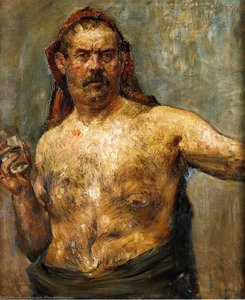 Self Portrait with a Glass1907

Essays om Homeric Laughter, First Version
 Det 19. Århundredes Mestre: Top 10 Kunstværker til Din BoligOplev 19. århundredets kunst gennem 10 ikoniske mesterværker! Fra Monet og Manet til Courbet – udforsk romantik, impressionisme & realisme.…
 Romantic Realism's Finest: 10 Masterpieces for Your Home | OriginalUniqueArtExplore 10 defining masterpieces of Romantic Realism! Discover Courbet, Millet & Daumier's powerful paintings—capturing emotion and social …
 Lovis Corinth: Bridging Impressionism & Expressionism – A Study of Artistic EvolutionExplore the fascinating artistic journey of Lovis Corinth, a pivotal figure bridging Impressionism & Expressionism. Discover his evolution,…