
 Se i rummet
 Del som kort
 Del
Del
 Detaljer
 Guide
Guide

 Download
 Lignende værker
 Røntgenundersøgelse
 Diasshow
 Q&A
Q&A Statistikker
COUPE DE CERISES, PRUNES ET MELON


 Vis mere
Giclée / Kunsttryk
Giclée- eller lærredstryk i museumskvalitet med hurtig produktion og fleksible muligheder for finish. ( Køb håndmalet maleri Skift til digitalt billede)




P118B Dkr10

P118H Dkr10

P118W Dkr10

P438Z Dkr10

P508JH Dkr12

P508YH Dkr12

P805H Dkr10

P805Z Dkr10

P919BZ Dkr10

P919G Dkr10

P919XJ Dkr10

P959ZH Dkr10

P968JZ Dkr12

W106C Dkr8

W218G Dkr10

W218JH Dkr8

W218Y Dkr10

W307PJ Dkr10

W316G Dkr10

W316PJ Dkr8

W316Y Dkr10

W398PJ Dkr8

W4111J Dkr10

W500HY Dkr15

W500JH Dkr15

W692G Dkr12

W849H Dkr8

W940BG Dkr15

W953PJ Dkr8




Vælg mellem vores forudindstillede størrelser, der matcher kunstværkets originale proportioner.

Indtast den bredde og højde, du har brug for, så det passer til din ramme eller din væg. Et print kan kun beskæres, aldrig gøres større end selve billedet, så en størrelse med et andet format vil medføre, at dele af motivet går tabt. Vi sender dig en digital mockup til godkendelse, før vi printer noget. Billedet vist på denne side viser ikke den faktiske beskæring — det er kun mockuppen, der gør.
Verdensomspændende levering () på 2 uger i stedet for de sædvanlige 4/5 uger. (1 november)

Gratis ekspresforsendelse til hele verden

Lærred af linned i høj kvalitet

Fuld transportforsikring

Garanti for refusion af told og importafgifter

Garanti for præcis farvegengivelse

100 dages returret ved fabrikationsfejl

100% fuld returret

Mængderabat ved flere køb
 Glasmulighed er kun tilgængelig i størrelser under 110 cm

COUPE DE CERISES, PRUNES ET MELON
Giclée / Kunsttryk
Størrelse på reproduktion
-


Samlet pris
Dkr 538
Louise Moillon’s “Coupe de Cerises, Prunes et Melon”: A Baroque Still Life of Quiet Abundance
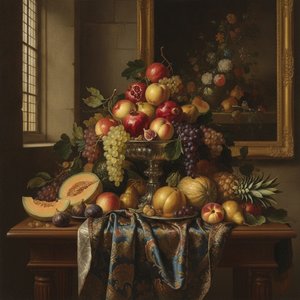
The painting "Coupe de cerises, prunes et melon" by Louise Moillon, completed around 1633, is more than just a depiction of fruit; it's a meticulously crafted meditation on beauty, abundance, and the fleeting nature of pleasure. Within its deceptively simple composition lies a wealth of Baroque artistry – a masterful blend of Flemish realism, French elegance, and subtle symbolism that continues to captivate viewers centuries later. This intimate still life, now residing within the hallowed halls of the Louvre Museum in Paris, offers a rare glimpse into the world of a pioneering female artist operating within a traditionally male-dominated field.
Moillon’s artistic journey unfolded against the backdrop of 17th-century France, a period marked by religious upheaval and burgeoning artistic innovation. Born into a Huguenot family – refugees fleeing persecution in Holland – her upbringing instilled a deep appreciation for naturalism and symbolic representation, qualities that profoundly shaped her distinctive style. Unlike many of her contemporaries who favored grand historical or mythological scenes, Moillon focused on the quiet beauty of everyday objects, elevating them to an almost sacred level through her painstaking attention to detail and masterful use of light and shadow.
A Symphony of Color and Texture
The painting’s immediate impact is one of serene elegance. Moillon employs a carefully orchestrated palette – a harmonious blend of deep browns, rich reds, vibrant yellows, and muted greens – that draws the eye into the heart of the composition: a gleaming porcelain bowl overflowing with an array of fruits. The cerises, bursting with juicy red color, are strategically placed to command attention, their brightness contrasted against the darker tones of the plums and melon. Moillon’s technique is characterized by an extraordinary level of detail; each fruit – from the velvety texture of the melon rind to the delicate veins on a plum leaf – is rendered with astonishing precision.
The artist's mastery extends beyond mere representation. Moillon skillfully manipulates light and shadow, creating a dramatic chiaroscuro effect that adds depth and volume to the scene. The strong directional lighting, originating from an unseen source above and slightly to the left, casts long, elegant shadows that define the forms of each object, lending them a tangible presence. This masterful use of light not only enhances the visual impact but also evokes a sense of stillness and contemplation – inviting the viewer to linger and appreciate the beauty before them.
Symbolism and Context
Still lifes during the Renaissance and Baroque periods were often imbued with symbolic meaning, representing concepts such as wealth, prosperity, and mortality. In "Coupe de cerises," the abundance of fruit can be interpreted as a symbol of earthly delights – a reminder of the pleasures of life but also a poignant acknowledgment of their transient nature. The carefully arranged composition itself suggests an order and harmony that reflects the ideals of classical art and Renaissance thought.
Furthermore, Moillon’s work is rooted in the artistic traditions of the Netherlands, particularly the Flemish school of painting, which was highly influential in France during this period. The use of trompe l'oeil – a technique designed to create an illusion of three-dimensionality – is evident in the subtle details and realistic textures that contribute to the painting’s overall sense of depth and realism. The placement of the bowl on a dark wooden table, extending into the background, further enhances this effect, blurring the boundaries between the painted world and the viewer's perception.
A Timeless Masterpiece
"Coupe de cerises, prunes et melon" stands as a testament to Louise Moillon’s artistic skill and her ability to capture the essence of beauty in a single image. It is a painting that rewards repeated viewing, revealing new details and nuances with each encounter. More than just a still life, it's a profound meditation on art, nature, and the human experience – a timeless masterpiece that continues to inspire and delight viewers today. Reproductions of this iconic work offer an accessible way to bring its serene elegance into any space, allowing one to appreciate the artistry and symbolism within.
Spørgsmål og svar
Hvilken kunstner tilskrives "COUPE DE CERISES, PRUNES ET MELON"?
"COUPE DE CERISES, PRUNES ET MELON" blev skabt af Louise Moillon. Informationen på denne side beskriver Louise Moillons originale værk.
Hvilken atmosfære ville en reproduktion af "COUPE DE CERISES, PRUNES ET MELON" af Louise Moillon tilføre et rum?
Med sin Elegant stemning foreslås "COUPE DE CERISES, PRUNES ET MELON" til et Living Room.
Hvor kendt er "COUPE DE CERISES, PRUNES ET MELON" af Louise Moillon?
"COUPE DE CERISES, PRUNES ET MELON" er klassificeret som Recognized.
Kunstnerbiografi
Louise Moillons stille genialitet
I barokkens storslåede og vidtrækkende fortællinger, hvor drama og bevægelse ofte dominerer lærredet, tilbyder værkerne af Louise Moillon et dybtgående og meditativt alternativ. Moillon blev født i Paris i 1610 og trådte frem i en verden formet af de intense religiøse og kulturelle omvæltninger i 17. århundredes Frankrig. Hendes selve slægt fortæller en historie om modstandskraft og kunstnerisk arv; som efterkommer af huguenotflygtninge fra Holland var hun opslugt af en tradition, der værdsatte den omhyggende observation af den naturlige verden. Denne baggrund gav mere end blot en familiehistorie – den tilbød et stilistisk ordforråd med rødder i den hollandske mestring af lys, tekstur og symbolsk realisme.
Moillons tidlige liv var præget af både tab og dyb kunstnerisk vejledning. Da hendes far, landskabsmaleren og kunsthandleren Nicolas Moillon, døde, da hun kun var ti år gammel, kunne det have ændret hendes livsbane, men hendes opvækst forblev dybt forankret i kunsten. Under vejledning af sin stedfar, François Garnier, en dygtig kunstner og kunsthandler, forfinede hun en teknik, der skulle blive hendes varemærke. Hendes uddannelse handlede ikke blot om påføring af pigment på lærred, men var en fordybelse i sin tids humanistiske værdier, hvor hun lærte at se det guddommelige i de mindste detaljer af en modnende frugt eller et kronblads delikate kurve.
En mestring af tekstur og lys
Moillons sande geni ligger i hendes evne til at transformere det hverdagsagtige til det ekstraordinære. Hendes kompositioner er karakteriseret ved en fredfyldt stilhed, en ro, der inviterer beskueren til at dvæle og observere. Hun besad en næsten overnaturlig evne til at indfange sine motivers taktile kvaliteter – citronskallens voksagtige overflade, ferskenens bløde dun eller den gennemsigtige saft fra et knust bær. I værker som Stilleben med citroner og Curaçao-appelsiner i en hvid polyloberet skål kan man fornemme frugtens kølige fugt mod porcelænets hårde, glaserede overflade, hvilket skaber en sanselig oplevelse, der transcenderer det todimensionale plan.
Hendes teknik var dybt påvirket af de naturalistiske traditioner i de protestantiske kredse, som hun bevægede sig i. Denne tilgang foretrak klarhed og præcision frem for de teatralske skygger hos de mere flamboyante barokmestre. I stedet brugte Moillon lyset til at forme sine motiver ved hjælp af subtile farvenuancer for at skabe volumen og dybde. Hendes palet, selvom den ofte fokuserede på naturens levende farver, blev brugt med en sådan mådehold, at hver farve føltes lysende, som om de var oplyst indefra. Denne mestring gjorde det muligt for hende at bygge bro mellem ren botanisk illustration og højere kunst, hvilket indgydede hvert værk med en følelse af liv og vitalitet.
Eftermæle og historisk betydning
Gennem sit lange liv, der strakte sig over næsten ni årtier, opnåede Moillon en grad af berømmelse, som var sjælden for kvindelige kunstnere i hendes samtid. Hendes evne til at sikre bestillinger fra prestigefyldte mæcener, herunder medlemmer af det kongelige hof, vidner om den ubestridelige kvalitet og sofistikering i hendes værk. Selvom hendes arbejde ofte fokuserede på stillebenets intime skala, var dens indvirkning omfattende og bidrog betydeligt til udviklingen af den franske stillebens-tradition.
Louise Moillons historiske betydning rækker ud over hendes tekniske færdigheder; hun repræsenterer et vitalt bindeled mellem den hollandske naturalistiske tradition og den spirende franske æstetik i det 17. århundrede. Hendes malerier fungerer som vinduer ind til en tabt verden af parisiske markeder og private haver, der indfanger en følelse af overflod og forgængelig skønhed. I dag er hendes værker dyrebare skatte i institutioner som Louvre, hvor de står som vedvarende vidnesbyrd om et liv dedikeret til at finde det ekstraordinære i det ordinære. Hendes eftermæle findes i hvert penselstrøg, der hylder den stille, betagende pragt i den naturlige verden.

Louise Moillon
1610 - 1696
Kort om kunstneren
- Artistic Movement Or Style: Barok stilleben
- Artists Or Movements Influenced By This Artist:
- Michelangelo
- Rafael
- Tizian
- Artists Who Influenced This Artist:
- Isaac Moillon
- François Garnier
- Date Of Birth: Paris, Frankrig (1610)
- Date Of Death: 1696
- Full Name: Louise Moillon
- Nationality: Fransk
- Notable Artworks:
- Kurv med abrikoser
- SKÅL MED KIRSBERRER, BLOMMER OG MELON
- Kurv med ferskner, kvinder og blommer
- Place Of Birth: Paris
Relaterede artikler
Nature's Bounty: The Art History of Fruit Arrangement Masterpieces and the Baroque Still Life Tradition
Explore the profound beauty of fruit arrangement masterpieces. From Dutch Golden Age opulence to Baroque chiaroscuro, discover the art history, symbolism, and timeless elegance of classical still life paintings for the discerning collector.

Lys, skygge og lidenskab: En autoritativ guide til barokkens dramatiske kunstværker fra det 17. århundrede
Få en autoritativ guide til barokkens dramatiske lys og teknikker. Oplev det 17. århundredes mestre her.

Baroque Classicism: The Grandeur of Order and Drama in 17th-Century Art History
Explore the profound elegance of Baroque Classicism. Discover how 17th-century masters synthesized dramatic emotion with classical order through the lens of the Counter-Reformation and the works of legends like Carlo Maratta and Andrea Sacchi.

Barokkens Mestre: Top 10 Kunstværker der Definerede en Æra | OriginalUniqueArt.dk
Oplev barokkens storhed! Dyk ned i 10 ikoniske kunstværker af Caravaggio, Rembrandt & Vermeer. Lær historierne bag mesterværkerne og find inspiration til din indretning med museumskvalitets reproduktioner på OriginalUniqueArt.com

The Bountiful Still Life: Symbolism & Artistic Representation of Fruit Across Art History
Explore the rich history of still life painting & the symbolism of fruit across art movements. Discover masterpieces from Caravaggio to Cézanne with OriginalUniqueArt – expert guidance & museum-quality reproductions.