

 Preview
 Bestil tryk Køb højopløseligt billede
 Del
Del
 Del
Del
 Detaljer
 Tilføj til favoritter

 Download
 Lignende værker
 Røntgenundersøgelse
 Diasshow
Skin


 Se mere
Håndlavet oliereproduktion
Håndmalet olie på lærred i din valgte størrelse og ramme, udført efter bestilling af vores kunstnere.




































Vælg mellem vores forudindstillede størrelser, der matcher kunstværkets originale proportioner.

Du kan indtaste dine egne mål for at passe til en bestemt ramme eller plads. Hvis den valgte størrelse ikke stemmer overens med det originale billedes proportioner, vil vi enten beskære kunstværket eller udvide maleriet med yderligere håndmalede elementer. En digital skitse sendes til din godkendelse, før produktionen påbegyndes.
Bemærk venligst, at forhåndsvisningen på skærmen ikke afspejler den faktiske beskæring eller udvidelse. Kun skitsen vil nøjagtigt vise den endelige komposition.
Selvom specialmål er mulige, anbefaler vi at vælge en dimension fra den foruddefinerede liste for at bevare de originale proportioner.
Efter bestilling vil OriginalUniqueArt.com team sende en e-mail til kunden for at få instruktioner og levere et udkast til en skitse.
Levering i hele verden () på 3/4 uger i stedet for de standard 5 uger. (25 juli). Ingen kompromiser med kvaliteten.

Gratis ekspresforsendelse til hele verden

Lærred af linned i høj kvalitet

Fuld transportforsikring

Garanti for refusion af told og importafgifter

Garanti for præcis farvegengivelse

60 dages returret (kun ved fabrikationsfejl)

100% Tilfredshedsgaranti

Mængderabat tilgængelig
 Glasmulighed er kun tilgængelig i størrelser under 110 cm

Skin
Reproduktionsmetode
Størrelse på reproduktion
-


Samlet pris
-
Kunstnerens biografi
A Cartography of Memory: The World Within Latifa Echakhch’s Installations
Latifa Echakhch, born in 1974 in El Khnassa, Morocco, is an artist whose work resonates with a quiet power—a power derived not from grand gestures but from the meticulous accumulation of detail and the evocative resonance of everyday objects. Her journey as an artist has been one of navigating cultural boundaries, personal histories, and the complex interplay between public space and individual experience. Echakhch’s installations are less about presenting definitive statements than they are about creating environments that invite contemplation, prompting viewers to question their own perceptions of belonging, identity, and the weight of collective memory. Growing up in Morocco before relocating to France for her studies, she developed a keen sensitivity to the subtle shifts in cultural context and the ways in which objects can carry layers of meaning beyond their immediate function. This early exposure informs much of her practice, where seemingly mundane items—pharmaceutical bottles, rugs, furniture—become vessels for exploring broader socio-political narratives.From Personal Narrative to Public Space
Echakhch’s artistic development has been marked by a gradual expansion from intensely personal explorations to increasingly ambitious interventions in public space. Early works often focused on the domestic sphere, utilizing found objects and materials to reconstruct fragmented memories of her childhood home and Moroccan culture. These pieces weren't nostalgic recreations but rather deconstructed environments—spaces that hinted at absence, displacement, and the challenges of translation. She began to explore themes of migration and exile, not through direct representation, but by focusing on the traces left behind: the remnants of lives lived, the objects that bear witness to journeys undertaken. This shift towards public space allowed Echakhch to engage with a wider audience and address more overtly political concerns. Her installations often occupy architectural spaces—abandoned buildings, museums, or even city squares—transforming them into sites of collective reflection. A key element in her work is the deliberate use of scale; she frequently creates environments that are both immersive and disorienting, challenging viewers’ sense of spatial orientation and prompting a heightened awareness of their own bodies within the artwork.The Language of Absence and the Politics of Display
A defining characteristic of Echakhch's work is her masterful use of absence as a powerful artistic tool. She doesn’t necessarily *show* trauma or conflict, but rather creates spaces that evoke its presence—spaces filled with echoes of loss, displacement, and the fragility of identity. This is often achieved through the strategic removal or fragmentation of objects, leaving behind voids that speak volumes about what has been lost or suppressed. Her installations frequently incorporate elements of Islamic art and architecture, not as a celebration of cultural heritage but as a means of questioning its representation within Western contexts. She challenges conventional notions of authenticity and originality by appropriating and recontextualizing traditional motifs, highlighting the complexities of cultural exchange and the politics of display. The use of materials like rugs, for example, is particularly significant; they are not merely decorative elements but rather symbols of domesticity, tradition, and the often-unacknowledged labor that goes into their creation. Echakhch’s work also engages with the history of colonialism, subtly addressing its lasting impact on both Morocco and France.Recognition and Lasting Impact
Latifa Echakhch has received widespread critical acclaim for her innovative installations and thought-provoking explorations of socio-political themes. Her participation in the Venice Biennale in 2013 brought her work to an international audience, solidifying her reputation as a leading contemporary artist. That same year, she was awarded the prestigious Marcel Duchamp Prize, further recognizing her significant contribution to the field of contemporary art.- Her installations have been exhibited in major museums and galleries around the world
- She has received numerous awards and fellowships for her work
- Echakhch’s work is held in prominent public and private collections
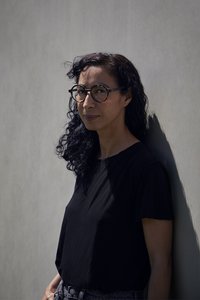
latifa echakhch
1974 - , Morocco
Kort om kunstneren
- Artistic Movement Or Style: Contemporary installation art
- Date Of Birth: 1974
- Full Name: Latifa Echakhch
- Nationality: Moroccan-French
- Place Of Birth: El Khnassa, Morocco
Relaterede artikler
Farvens Mestre: Top 10 Kunstværker der Definerer Emotion og Stil | OriginalUniqueArt
Oplev farvens magi i kunsten! Udforsk top 10 ikoniske malerier fra Monet, Van Gogh & Picasso. Lær om teknikker og inspiration bag berømte værker. Find museumskvalitets kunsttryk til dit hjem på OriginalUniqueArt.com.
Henri Matisse' Top 25 Kunstværker: Farvernes Mester & Indretningens Ikoner
Oplev Henri Matisse' 25 mest ikoniske kunstværker – fra Fauvisme til Paper Cutouts. Lær historien bag farvernes mester og find inspiration til din boligindretning med museumskvalitets reproduktioner på OriginalUniqueArt.com.

Paul Cézannes 25 Mesterværker: En Kunstnerisk Rejse til Moderne Malerkunst | OriginalUniqueArt.dk
Oplev Paul Cézannes 25 mest ikoniske malerier – fra stilleben til landskaber. Lær om impressionismen, hans unikke stil og køb eksklusive kunsttryk på OriginalUniqueArt.dk. Find inspiration til din indretning!

Silent Narratives: Exploring the Enduring Appeal of Still Life Painting Across Centuries
Explore the rich history of still life painting with OriginalUniqueArt. Discover Dutch Masters, decode vanitas symbolism & learn about collecting timeless art. Expert insights and museum-quality reproductions.
The Enduring Appeal of Still Life: A Historical & Contemporary Exploration
Explore the rich history & symbolism of still life painting with OriginalUniqueArt. Discover masterpieces from the Dutch Golden Age, learn about vanitas art, and find expert guidance for collecting timeless artworks.

