Menu
Text size

() ·

A painting made for you, by hand

Paul Hartland Carnival. Composition with two masks .

Håndlavet oliereproduktion

Håndmalet olie på lærred i din valgte størrelse og ramme, udført efter bestilling af vores kunstnere. ( Skift til printsalg Skift til digitalt billede)

Beskrivelse af samlerobjektet

Explore Laszlo Moholy-Nagy’s ‘Paul Hartland Carnival’! A surreal collage of masks & textures, blending pop art & psychedelic imagery. Discover this unique 1934 artwork.

Kunstnerbiografi

László Moholy-Nagy (1895-1946) var en pioner inden kunst, Bauhaus og fotografering. Kendt for 'New Vision' og integrationen af teknologi i kunsten.

from ·

Chapter 1

How large should it be?

Slide to change the size; the picture on the left shows the frame at its real width. The proportions of the original are kept.

Standardstørrelse
speciallavet
CM
INCH

Vælg mellem vores forudindstillede størrelser, der matcher kunstværkets originale proportioner.

bredde
højde

Indtast den bredde og højde, du har brug for, så det passer til din ramme eller din væg. Da dette er håndmalet, kan kunstneren ved en anden form på størrelsen male lidt mere rundt om billedet eller skære lidt væk — det er op til dig. Vi sender dig et digitalt mockup til godkendelse, før maleriet påbegyndes. Billedet, der vises på denne side, viser ikke det endelige resultat — det er kun mockuppet, der gør.

Chapter 2

How should it arrive?

Choose the edges of the stretched canvas

Choose your frame

Corner sample of the WhiteWrap canvas edge finish, stretched on massivt træ bars
White Dkr1
Corner sample of the BlurSideWrap canvas edge finish, stretched on massivt træ bars
Blurside Dkr1
Corner sample of the ExtendedWrap canvas edge finish, stretched on massivt træ bars
Extended Dkr1
Corner sample of the P118B picture frame: støbt polystyren, 5 cm wide and 3 cm thick
P118B Dkr10
Corner sample of the P118H picture frame: støbt polystyren, 5 cm wide and 3 cm thick
P118H Dkr10
Corner sample of the P118W picture frame: støbt polystyren, 5 cm wide and 3 cm thick
P118W Dkr10
Corner sample of the P438Z picture frame: støbt polystyren, 5.5 cm wide and 3.5 cm thick
P438Z Dkr10
Corner sample of the P508JH picture frame: støbt polystyren, 7 cm wide and 3.5 cm thick
P508JH Dkr12
Corner sample of the P508YH picture frame: støbt polystyren, 7 cm wide and 3.5 cm thick
P508YH Dkr12
Corner sample of the P805H picture frame: støbt polystyren, 5 cm wide and 3.5 cm thick
P805H Dkr10
Corner sample of the P805Z picture frame: støbt polystyren, 5 cm wide and 3.5 cm thick
P805Z Dkr10
Corner sample of the P919BZ picture frame: støbt polystyren, 7 cm wide and 3.5 cm thick
P919BZ Dkr10
Corner sample of the P919G picture frame: støbt polystyren, 7 cm wide and 3.5 cm thick
P919G Dkr10
Corner sample of the P919XJ picture frame: støbt polystyren, 7 cm wide and 3.5 cm thick
P919XJ Dkr10
Corner sample of the P959ZH picture frame: støbt polystyren, 5 cm wide and 3 cm thick
P959ZH Dkr10
Corner sample of the P968JZ picture frame: støbt polystyren, 6 cm wide and 4 cm thick
P968JZ Dkr12
Corner sample of the W106C picture frame: massivt træ, 5 cm wide and 3 cm thick
W106C Dkr8
Corner sample of the W218G picture frame: massivt træ, 5 cm wide and 3 cm thick
W218G Dkr10
Corner sample of the W218JH picture frame: massivt træ, 5 cm wide and 3 cm thick
W218JH Dkr8
Corner sample of the W218Y picture frame: massivt træ, 5 cm wide and 3 cm thick
W218Y Dkr10
Corner sample of the W307PJ picture frame: massivt træ, 6 cm wide and 3 cm thick
W307PJ Dkr10
Corner sample of the W316G picture frame: massivt træ, 6 cm wide and 3 cm thick
W316G Dkr10
Corner sample of the W316PJ picture frame: massivt træ, 6 cm wide and 3 cm thick
W316PJ Dkr8
Corner sample of the W316Y picture frame: massivt træ, 6 cm wide and 3 cm thick
W316Y Dkr10
Corner sample of the W398PJ picture frame: massivt træ, 5 cm wide and 3 cm thick
W398PJ Dkr8
Corner sample of the W4111J picture frame: massivt træ, 6.5 cm wide and 3.5 cm thick
W4111J Dkr10
Corner sample of the W500HY picture frame: massivt træ, 7 cm wide and 5 cm thick
W500HY Dkr15
Corner sample of the W500JH picture frame: massivt træ, 7 cm wide and 5 cm thick
W500JH Dkr15
Corner sample of the W692G picture frame: massivt træ, 8 cm wide and 4 cm thick
W692G Dkr12
Corner sample of the W849H picture frame: massivt træ, 5 cm wide and 3 cm thick
W849H Dkr8
Corner sample of the W940BG picture frame: massivt træ, 7.5 cm wide and 4.5 cm thick
W940BG Dkr15
Corner sample of the W953PJ picture frame: massivt træ, 6 cm wide and 3.5 cm thick
W953PJ Dkr8
Corner sample of the H24-GOLD picture frame: udskåret træ med gesso, 10 cm wide and 6 cm thick
H24-GOLD Dkr30
Corner sample of the H24-SILVER picture frame: udskåret træ med gesso, 10 cm wide and 6 cm thick
H24-SILVER Dkr30
Corner sample of the H36-GOLD picture frame: udskåret træ med gesso, 15 cm wide and 6.5 cm thick
H36-GOLD Dkr45
Corner sample of the H36-SILVER picture frame: udskåret træ med gesso, 15 cm wide and 6.5 cm thick
H36-SILVER Dkr45
Ramme-forhåndsvisning
Indrammet

Moulding: . Overall size with the frame: .

Chapter 3

Who paints it, and should anything change?

Examples of what can be changed: Replace face with customer photo; Add pet (e.g., replace cat with dog); Include hidden message in background; Change background landscape or elements.
After order, OriginalUniqueArt.com team will email client for instructions and provide a mockup preview

Verdensomspændende levering () på 3-4 uger i stedet for de standard 5 uger. (30 oktober). Ingen kompromiser med kvaliteten.

Chapter 4

The finishing touches

A nameplate, as in a museum?

Detaljer om indgraveret bronzeskilt

This elegant plaque features the artist's name and the title of the artwork, finely engraved for a timeless presentation.

It is made from bronze with a refined, elegant finish. The text is precisely laser-engraved for a sharp and permanent result. Measuring 9x2 cm, the plaque is compact yet easy to read. It's built to be durable and scratch-resistant, offering a professional, museum-quality look. Mounting is simple thanks to the included adhesive backing.

Detaljer om gennemsigtig akrylplade

The plaque includes essential engraved details such as the artist's name, the title of the artwork, the date it was created, the type of media used-like oil on canvas or watercolor-a brief description of the piece, and a QR code that links to the complete artwork information.

It is crafted from clear acrylic, offering a sleek, modern appearance. The text is UV-engraved in black to ensure strong visual contrast. With a size of 10x15 cm, it ensures optimal readability. It comes equipped with two metal hooks for secure wall mounting. The plaque is designed to be weather-resistant, making it suitable for various environments, and it includes interactive features that work seamlessly with smartphone scanning.

Detaljer om sort akrylplade

This elegant plaque includes engraved information such as the artist's name, the title of the artwork, the date it was created, the type of media used (like oil on canvas or watercolor), a short description of the artwork, and a QR code for quick access to more information.

The plaque itself is made from refined black acrylic with a premium finish. The text is laser-engraved in white for high contrast and readability. Its size is 10x15 cm, designed to be easy to read. It comes with two metal hooks for professional mounting. The design is sleek and fits any interior style. It is also weather-resistant and durable, with built-in digital integration for mobile compatibility.

A protective varnish?

When do you need it?

Chapter 5

Your painting, as you ordered it

Paul Hartland Carnival. Composition with two masks .

Reproduktionsmetode

Størrelse på reproduktion

-

Eksklusivt udvalgte senior-kunstnere

Mere detaljerigdom, finesse og ekstra produktionstid

-

Indramning af reproduktion

-

-

For kunstværker eller reproduktioner, der er større end 105 cm (ca. 41 tommer) på en hvilken som helst side, vil rammen blive leveret som et adskilt sæt. Denne metode sikrer sikker levering og forhindrer skader under transport.

Professionel montering er påkrævet – dette er ikke et gør-det-selv produkt.
Sættet skal samles, og lærredet skal opspændes af en erfaren professionel indrammer ved brug af trælim (ikke medfølger), en lærredsspænder og klemmer til at holde blindrammen vinkelret, mens limen tørrer. Forkert samling eller ujævn spænding af lærredet kan beskadige kunstværket permanent og er ikke dækket af vores garanti.

  • Alle massive trælister er inkluderet, præcist tilpasset i størrelsen.

  • Samles med de medfølgende skruer samt trælim til hjørneforbindelserne, som ikke medfølger og skal anskaffes af din indrammer.

  • Professionelt værktøj er påkrævet og medfølger ikke: en lærredsstrækker (spændetang) og klemmer til at holde blindrammen vinkelret, mens limen tørrer.

Vigtigt:
Hjørneforbindelserne kræver trælim, listerne skal holdes fast med skruetvinger, indtil limen er helt tør, og opspænding af lærredet på den samlede ramme kræver en lærredsspænder. Ingen af disse dele er inkluderet i sættet. Vi anbefaler, at du kontakter en erfaren professionel indrammer, før du bestiller denne størrelse.

Navneskilt

-

-

Beskyttende fernis

Blank lak (fremhæver farverne og beskytter mod lys og fugt)

-

Tilpas mit kunstværk

Eksempler på tilpasningsmuligheder: Udskift ansigt med kunde-foto; Tilføj kæledyr (f.eks. udskift kat med hund); Inkluder skjult besked i baggrunden; Ændr baggrundslandskab eller elementer.

-

Hurtig levering

Verdensomspændende levering () på 3-4 uger i stedet for de standard 5 uger. (30 oktober). Ingen kompromiser med kvaliteten.

-

Ekspreslevering

Verdensomspændende levering til inden for 5 uger. (6 november).

Inkluderet

Samlet pris

Dkr 2153

Samlet pris Dkr 2153

Glasmulighed er kun tilgængelig i størrelser under 110 cm

Included with every order

  • Gratis ekspresforsendelse til hele verden
  • Lærred af linned i høj kvalitet
  • Fuld transportforsikring
  • Garanti for refusion af told og importafgifter
  • Garanti for præcis farvegengivelse
  • 100 dages returret ved fabrikationsfejl
  • 100% fuld returret
  • Mængderabat ved flere køb

The Dreamlike World of László Moholy-Nagy: Unveiling “Paul Hartland Carnival”

László Moholy-Nagy’s “Paul Hartland Carnival. Composition with two masks.”, created in 1934, isn't merely a painting; it’s an immersive journey into the subconscious, a vibrant collision of memory and illusion rendered in bold colors and fragmented forms. This artwork, now available as a high-quality reproduction through OriginalUniqueArt.com, stands as a testament to Moholy-Nagy’s pioneering spirit – his relentless experimentation with photography, collage, and the very nature of perception. It's a piece that immediately demands attention, pulling the viewer into its dreamlike atmosphere and prompting questions about identity, representation, and the power of visual language.

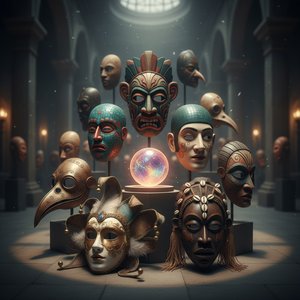
At first glance, the composition appears chaotic—two figures, their faces obscured by layers of textured material, dominate the central space. However, a closer look reveals a carefully orchestrated balance. Sharp angular lines intersect with softer curves, creating a dynamic tension that mirrors the complexities of human experience. The use of reflective surfaces – cellophane, perhaps, or other translucent materials – adds an ethereal quality, blurring the boundaries between reality and illusion. Fragments of what seem to be photographs, printed matter, and even architectural elements are interwoven, suggesting a world constructed from disparate memories and experiences.

A Pioneer of “New Vision”: Moholy-Nagy’s Artistic Philosophy

To fully appreciate “Paul Hartland Carnival,” it's crucial to understand the context of Moholy-Nagy’s artistic philosophy, which he termed "New Vision." Rejecting traditional notions of representation, he believed that photography could reveal hidden aspects of reality – a world beyond what the eye perceives. This concept profoundly influenced his work, leading him to experiment with photograms (images created by placing objects directly on light-sensitive paper) and other techniques designed to manipulate perception. He sought to capture not just appearances but also the *feeling* of a subject, translating it into visual form.

The artwork’s vibrant color palette – dominated by reds, yellows, and blues – further reinforces this sense of heightened emotion and subjective experience. These aren't naturalistic colors; they are deliberately chosen to evoke specific moods and sensations. The use of contrasting hues creates a dynamic visual rhythm, drawing the eye across the composition and adding to its overall intensity.

Historical Context: Dadaism, Constructivism, and the Dawn of Modernity

“Paul Hartland Carnival” was created during a period of profound social and artistic upheaval. The early 1930s witnessed the rise of Dadaism in Europe, a movement that challenged traditional notions of art and embraced absurdity and anti-establishment sentiment. Simultaneously, Constructivism – a Russian avant-garde movement focused on geometric abstraction and industrial materials – was gaining momentum. Moholy-Nagy’s work reflects these influences, blending elements of both styles while forging his own unique visual language.

His time at the Bauhaus school in Weimar further shaped his artistic approach, emphasizing design principles and exploring new technologies. The artwork's fragmented composition and use of unconventional materials can be seen as a direct response to the rapidly changing world around him – a world grappling with industrialization, urbanization, and the anxieties of modernity. It’s a visual echo of the era’s dynamism and uncertainty.

Symbolism and Emotional Resonance: A Portrait of the Psyche

While the specific meaning of “Paul Hartland Carnival” remains open to interpretation, it's clear that the two masked figures represent something deeper than mere portraits. They could symbolize duality, hidden identities, or perhaps the fragmented nature of selfhood. The masks themselves suggest a deliberate concealment, inviting us to question what lies beneath the surface.

Ultimately, this artwork is an invitation to engage with our own subconscious – to explore the layers of memory, emotion, and experience that shape our perceptions. It’s a powerful reminder of the transformative potential of art, capable of transporting us beyond the realm of the literal and into the depths of the human psyche. A reproduction of “Paul Hartland Carnival” offers a captivating glimpse into Moholy-Nagy's visionary world, bringing this extraordinary piece to your home or office.

Spørgsmål og svar

Hvornår er "Paul Hartland Carnival. Composition with two masks ." af László Moholy-Nagy skabt?

"Paul Hartland Carnival. Composition with two masks ." stammer fra 1934. Datoen placerer værket i László Moholy-Nagy's karriere og dets tidsalder.

Hvilken lysstyrke har "Paul Hartland Carnival. Composition with two masks ." af László Moholy-Nagy?

"Paul Hartland Carnival. Composition with two masks ." af László Moholy-Nagy har en luminans på Bright Balance. Luminans beskriver, hvor meget lys farverne ser ud til at reflektere.

Hvilken størrelse anbefales til "Paul Hartland Carnival. Composition with two masks ." i et Living Room?

Til et Living Room anbefales "Paul Hartland Carnival. Composition with two masks ." i en trykstørrelse på Large.

More about this painting

Se i rummet Se i AR Skift til printsalg Skift til digitalt billede Del som kort
Detaljer Guide Tilføj til favoritter Download Lignende værker Røntgenundersøgelse Diasshow Q&A Statistikker

In numbers

  • 1934the year it was painted
  • 29frames to choose from
  • standard sizes, in its own proportions
  • 5weeks to paint and deliver it
László Moholy-Nagy

László Moholy-Nagy

1895 - 1946, Ungarn

Quick facts about László Moholy-Nagy

  • Artistic Movement Or Style: Konstruktivisme, Bauhaus
  • Artists Or Movements Influenced By This Artist: ['Suprematisme']
  • Artists Who Influenced This Artist: ['Robert Berény']
  • Date Of Birth: 1895
  • Date Of Death: 1946
  • Full Name: László Moholy-Nagy
  • Nationality: Ungarsk
  • Notable Artworks:
    • Lichtrequisit
    • Flower
    • Storm
  • Place Of Birth: Bacs-Kajala, Ungarn

Kunstnerbiografi

László Moholy-Nagy: En Pioner Af Moderne Kunst og Bauhaus

László Moholy-Nagy var en dybt indflydelsesrig ungarsk maler, fotograf, skulptør og designer. Han er bedst kendt for sine markante bidrag til Bauhaus-skolen og sin banebrydende arbejde indenfor konstruktivisme, typografi, fotografi og kinetisk kunst. Hans kunstneriske filosofi var centreret omkring at integrere teknologi og industri i kunsten, idet han argumenterede for en ny vision af kreativitet, der omfavnede den moderne verden. Han var en mand, der konstant søgte at bryde grænserne for det traditionelle kunstbegreb og udforske nye måder at skabe på.

Tidlig Liv og Indflydelser

Moholy-Nagys barndom var præget af en kompleks familiehistorie. Han blev født László Weisz i Bácsborsód, Ungarn, i 1895, til en jødisk familie. Hans far, Lipót Weisz, var en stor landejer, og familien boede i et hus der fulgte med jobbet. Det var hans onkel, Guszti bácsi (László’s maternal uncle), en advokat, der blev hans værge og spillede en central rolle i hans tidlige liv og uddannelse. Denne barndomsmiljø havde stor indflydelse på hans udvikling som kunstner, idet han lærte at se potentiale i samarbejde og vejledning. Han studerede jura i Budapest, men eftervirkningerne af Første Verdenskrig åbnede døre for ham til at opleve den vilde avantgarde-scene i Europa. Han blev eksponeret for nye ideer gennem tidsskrifter som "Jelenkor" og det aktivistiske kreds omkring Lajos Kassák’s tidsskrift "Ma." Disse tidlige erfaringer var afgørende for at forme hans kunstneriske syn. Hans interesse for moderne kunst blev yderligere styrket ved studier med den ungarske fauviste Robert Berény, der introducerede ham til farve og ekspressionisme. Han deltog kortvarigt i den ungarske sovjetrepublik, hvilket gav ham et indblik i politiske og sociale omvæltninger. Moholy-Nagys kunstneriske rejse var dybt påvirket af konstruktivismen og suprematismen – bevægelser der fremhævede geometrisk abstraktion og industrielle materialer. Disse ideer, der understregede funktionalitet og orden, blev til fundamentet for hans senere værker. Han så potentiale i at kombinere det organiske med det mekaniske, det naturlige med det kunstneriske.

Årene på Bauhaus og "Ny Syn"

I 1923 sluttede Moholy-Nagy sig til Bauhaus-skolen i Weimar, hvor han oprindeligt underviste sammen med Josef Albers og senere overtog ledelsen af metalværkstedet efter Johannes Itten. Hans ankomst markerede et skift væk fra ekspressionismen mod en mere konstruktivistisk og designorienteret tilgang, der stemte overens med skolens oprindelige mål – at forene kunst og industri. Han var ikke blot en underviser; han var en aktiv deltager i skolens filosofiske diskussioner og forsøgte konstant at udfordre etablerede normer. Moholy-Nagy er mest berømt for at have opfundet udtrykket "Ny Syn" (Neues Sehen). Dette koncept beskrev hans overbevisning om, at kameraet kunne afsløre aspekter af virkeligheden, der var usynlige for det menneskelige øje. Han mente, at fotografien ikke blot var en måde at gengive billeder på, men også en metode til at skabe nye perspektiver og forståelse. "Ny Syn" blev et centralt element i hans fotografering og kunstneriske eksperimenter. Han eksperimenterede intensivt med fotogrammer – teknikker, hvor objekter placeres direkte på lysfølsomt papir for at skabe billeder uden brug af et kamera. Han udforskede også brugen af farver, lys og bevægelse i sine værker, ofte ved hjælp af innovative metoder til at manipulere materialer og skabe dynamiske effekter.

Vigtigste Resultater og Innovationer

En af Moholy-Nagys mest kendte værker er "Lichtrequisit einer elektrischen bühne" (Light-Space Modulator), der blev afsluttet i 1930. Dette kinetiske skulptur anvendte bevægelige dele og projektion af lys til at skabe dynamiske mønstre på omkringliggende overflader. Det betragtes som en forløber for både kinetisk kunst og lyskunst, idet det demonstrerede potentialet i at kombinere mekanik og optik for at skabe levende, interaktive installationer. Han var også en dygtig fotograf og filmkunstner. Hans fotografering udforskede abstraktion, tekstur og bevægelse, ofte ved hjælp af ukonventionelle teknikker som photomontage og eksperimentel belysning. Han ventured også ind i filmen, hvor han udforskede nye måder at fortælle historier på gennem billeder og lyd. Moholy-Nagy var en passioneret underviser, der inspirerede generationer af kunstnere og designere ved sine kurser på Bauhaus og senere ved New Bauhaus i Chicago (som han grundlagde). Hans arbejde var ikke blot et udtryk for personlig kreativitet, men også en invitation til at udforske nye muligheder for kunst og design.

Historisk Betydning

László Moholy-Nagy står som en afgørende figur i det 20. århundredes moderne kunst, der forbinder maleri, skulptur, fotografi og industriel design. Hans bidrag til Bauhaus-skolen var afgørende for at forme skolens curriculum og æstetik, hvilket har efterladt et vedvarende indtryk på designuddannelse over hele verden. Han argumenterede for integrationen af teknologi i kunsten, hvilket forudså mange udviklinger indenfor nutidig kunstpraksis. Hans koncept om "Ny Syn" inspirerer stadig kunstnere og fotografer til at udforske mulighederne for perception og repræsentation gennem innovative teknikker. Moholy-Nagy var en mand, der konstant søgte at bryde grænserne for det traditionelle kunstbegreb og udforske nye måder at skabe på, og hans arv lever videre i den moderne kunstverden.

Hurtige fakta

  • Notable elements: Masks, textures
  • Title: Paul Hartland Carnival
  • Location: Gemeentemuseum, Hague
  • Artist: László Moholy-Nagy
  • Year: 1934