
 Se i fuld skala
 Del
Del Del
Del
 Detaljer

 Download
 Lignende værker
 Røntgenundersøgelse
 Diasshow
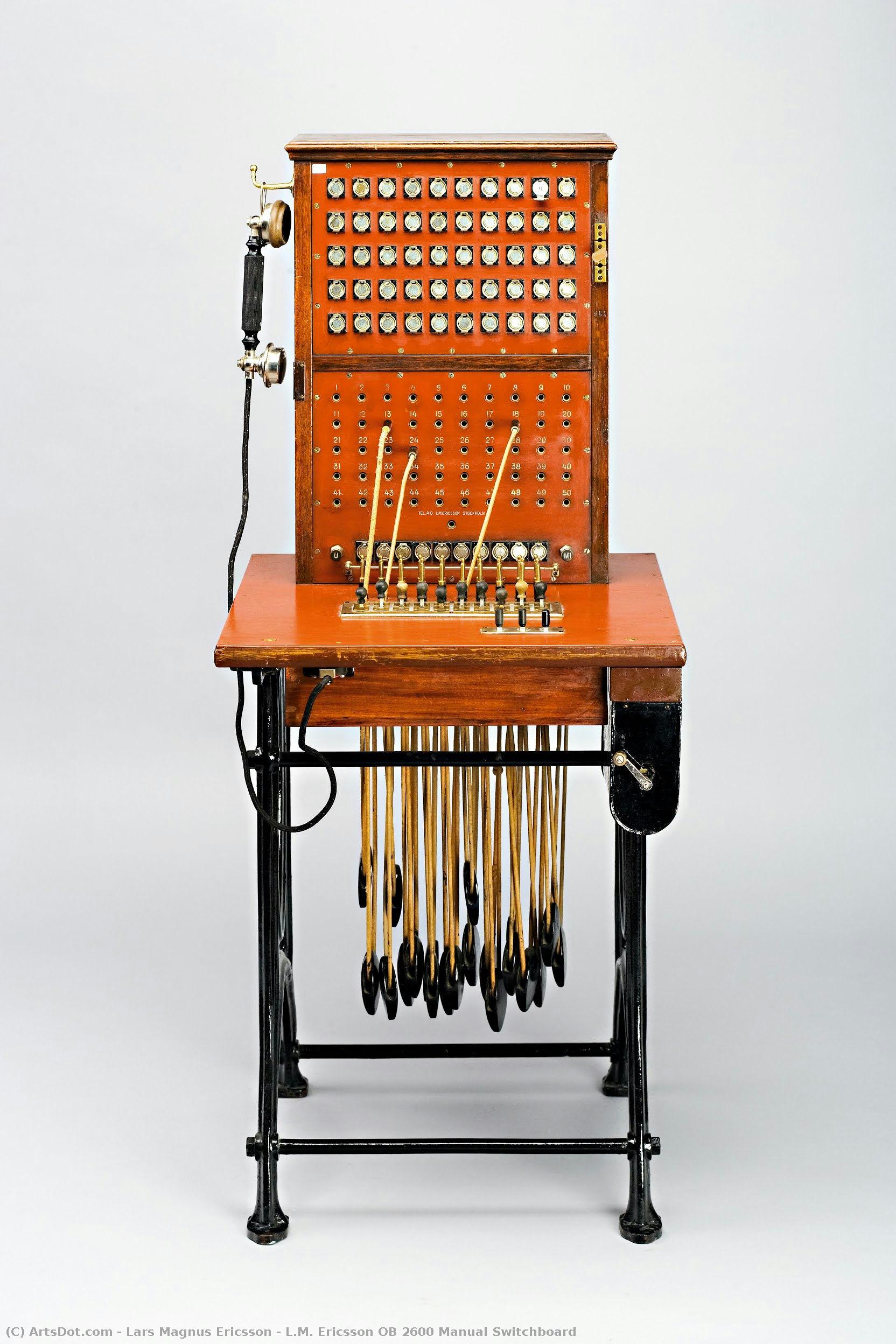
L.M. Ericsson OB 2600 Manual Switchboard
 1900
1900 135.0 x 57.0 cm
 Fundação Portuguesa das Comunicações
 Se mere
Håndlavet oliereproduktion
Håndmalet olie på lærred i din valgte størrelse og ramme, udført efter bestilling af vores kunstnere. ( Køb print Køb billede)




































Vælg mellem vores forudindstillede størrelser, der matcher kunstværkets originale proportioner.

Du kan indtaste dine egne mål for at passe til en bestemt ramme eller plads. Hvis den valgte størrelse ikke stemmer overens med det originale billedes proportioner, vil vi enten beskære kunstværket eller udvide maleriet med yderligere håndmalede elementer. En digital skitse sendes til din godkendelse, før produktionen påbegyndes.
Bemærk venligst, at forhåndsvisningen på skærmen ikke afspejler den faktiske beskæring eller udvidelse. Kun skitsen vil nøjagtigt vise den endelige komposition.
Selvom specialmål er mulige, anbefaler vi at vælge en dimension fra den foruddefinerede liste for at bevare de originale proportioner.
Efter bestilling vil OriginalUniqueArt.com team sende en e-mail til kunden for at få instruktioner og levere et udkast til en skitse.
Levering i hele verden () på 3/4 uger i stedet for de standard 5 uger. (17 august). Ingen kompromiser med kvaliteten.

Gratis ekspresforsendelse til hele verden

Lærred af linned i høj kvalitet

Fuld transportforsikring

Garanti for refusion af told og importafgifter

Garanti for præcis farvegengivelse

60 dages returret (kun ved fabrikationsfejl)

100% Tilfredshedsgaranti

Mængderabat tilgængelig
 Glasmulighed er kun tilgængelig i størrelser under 110 cm

L.M. Ericsson OB 2600 Manual Switchboard
Reproduktionsmetode
Størrelse på reproduktion
-


Samlet pris
$ 300
Beskrivelse af kunstværket
Kunstnerens biografi
A Pioneer of Communication: Lars Magnus Ericsson
Lars Magnus Ericsson (1846-1926) stands as a monumental figure in the annals of technological innovation, primarily recognized for establishing Ericsson—a global telecom powerhouse that continues to shape our interconnected world today. Born in Nordenmässa, Sweden, his early life was marked by hardship following his father’s untimely death and subsequent labor as a miner, experiences which instilled within him a resilience and determination that would define his entire career trajectory. Despite limited formal education beyond the village school for five years, Ericsson demonstrated an extraordinary aptitude for mechanics and instrumentation from a remarkably young age—constructing Sweden's inaugural telephone line at just seventeen years old. This formative achievement foreshadowed his lifelong fascination with harnessing scientific principles to improve human life.- Early Influences & Apprenticeship: Ericsson’s intellectual curiosity blossomed during his apprenticeship under Öllers & Co., where he honed his skills in instrument making and collaborated closely with Alexander Graham Bell, refining Bell's telephone design—a pivotal step toward simplifying its cumbersome construction.
- Founding Ericsson & Innovation: Recognizing the transformative potential of telephony, Ericsson partnered with Carl Johan Andersson to establish a workshop in Stockholm in 1876, analyzing existing telephone technologies and crafting his own versions inspired by Siemens telephones. This visionary undertaking cemented Ericsson’s commitment to pushing boundaries and challenging conventional wisdom.
The Birth of a Telecom Giant
Ericsson's entrepreneurial spirit propelled him beyond mere tinkering; he established Telefonaktiebolaget LM Ericsson, capitalizing on Bell’s advancements and Siemens’ innovations. This strategic foresight resulted in the creation of a company that would rapidly ascend to prominence—a testament to his astute understanding of market dynamics and technological trends. Notably, Ericsson spearheaded the development of Bluetooth technology, solidifying its position as one of the foremost innovators in wireless communication.- Notable Designs: Ericsson’s legacy extends beyond corporate success; he produced iconic telephone designs—the OB 2600 Manual Switchboard and the Wall Phone—which exemplify his commitment to both functionality and aesthetic elegance. These creations represent a significant contribution to industrial design history.
A Legacy of Persistence & Vision
Ericsson’s personal life was marked by profound loss—the premature deaths of his son Johan and grandson Lars Magnus Jr., tragedies that underscored the fragility of human existence yet fueled his unwavering dedication to his craft. Despite facing considerable challenges, he remained steadfast in his belief in technological progress and consistently championed innovation—a perspective reflected in his skepticism regarding patents and his admiration for Siemens’ approach to technological advancement.- Recognition & Remembrance: Though Ericsson shunned public acclaim, he commanded immense respect from his employees—a testament to his integrity and leadership qualities. His final resting place at Hågelby gård serves as a poignant reminder of his enduring influence on Swedish history and culture.
Ericsson’s Enduring Impact
Lars Magnus Ericsson's contribution to the advancement of communication technology is undeniable. He fundamentally altered how people interact, fostering global connectivity and shaping the landscape of modern society. His pioneering spirit continues to inspire innovation and underscores the transformative power of scientific curiosity—a legacy that secures his place as one of Sweden’s most celebrated inventors and entrepreneurs.
lars magnus ericsson
1846 - 1926 , Sweden
Kort om kunstneren
- Artistic Movement Or Style: Industrial Design
- Artists Or Movements Influenced By This Artist: ['Bluetooth']
- Artists Who Influenced This Artist: ['Siemens & Halske']
- Date Of Birth: May 5, 1846
- Date Of Death: December 17, 1926
- Full Name: Lars Magnus Ericsson
- Nationality: Swedish
- Notable Artworks:
- L. M. ERICSSON AC110 Desk Telephone
- L.M. Ericsson OB 2600 Manual Switchboard
- Place Of Birth: Nordenmässa, Sweden

