

 Se i rummet
 Del som kort
 Del
Del
 Detaljer
 Guide
Guide

 Download
 Lignende værker
 Røntgenundersøgelse
 Diasshow
 Statistikker
Construction for Noble Ladies
 Dada
Dada 1919
1919 103.0 x 83.0 cm
 Los Angeles County Museum of Art
 Vis mere
Håndlavet oliereproduktion
Håndmalet olie på lærred i din valgte størrelse og ramme, udført efter bestilling af vores kunstnere. ( Skift til printsalg Skift til digitalt billede)




P118B Dkr10

P118H Dkr10

P118W Dkr10

P438Z Dkr10

P508JH Dkr12

P508YH Dkr12

P805H Dkr10

P805Z Dkr10

P919BZ Dkr10

P919G Dkr10

P919XJ Dkr10

P959ZH Dkr10

P968JZ Dkr12

W106C Dkr8

W218G Dkr10

W218JH Dkr8

W218Y Dkr10

W307PJ Dkr10

W316G Dkr10

W316PJ Dkr8

W316Y Dkr10

W398PJ Dkr8

W4111J Dkr10

W500HY Dkr15

W500JH Dkr15

W692G Dkr12

W849H Dkr8

W940BG Dkr15

W953PJ Dkr8




Vælg mellem vores forudindstillede størrelser, der matcher kunstværkets originale proportioner.

Indtast den bredde og højde, du har brug for, så det passer til din ramme eller din væg. Da dette er håndmalet, kan kunstneren ved en anden form på størrelsen male lidt mere rundt om billedet eller skære lidt væk — det er op til dig. Vi sender dig et digitalt mockup til godkendelse, før maleriet påbegyndes. Billedet, der vises på denne side, viser ikke det endelige resultat — det er kun mockuppet, der gør.
Efter bestilling vil OriginalUniqueArt.com team sende en e-mail til kunden for at indhente instruktioner og fremsende et udkast til gennemgang
Verdensomspændende levering () på 3-4 uger i stedet for de standard 5 uger. (28 oktober). Ingen kompromiser med kvaliteten.

Gratis ekspresforsendelse til hele verden

Lærred af linned i høj kvalitet

Fuld transportforsikring

Garanti for refusion af told og importafgifter

Garanti for præcis farvegengivelse

100 dages returret ved fabrikationsfejl

100% fuld returret

Mængderabat ved flere køb
 Glasmulighed er kun tilgængelig i størrelser under 110 cm

Construction for Noble Ladies
Reproduktionsmetode
Størrelse på reproduktion
-


Samlet pris
Dkr 1972
Kunstnerbiografi
Kurt Schwitters: A Life in Merz
Early Life and Education
- Born: June 20, 1887, in Hanover, Germany.
- Schwitters was the only child of Eduard and Henriette Schwitters. His father co-owned a ladies' clothing shop.
- The family’s financial situation improved after selling the business in 1898, allowing them to live off rental income from properties they acquired.
- He studied art at the Dresden Academy from 1909-1915 alongside artists like Otto Dix and George Grosz, though he seemingly remained unaware of their work at the time.
- Schwitters suffered his first epileptic seizure in 1901, which later exempted him from military service for a period during World War I.
Artistic Development and the Birth of Merz
- Initially, Schwitters worked in a post-impressionist style. His early work reflected this influence.
- The devastation of World War I profoundly impacted his artistic direction. He felt traditional academic training was irrelevant in the face of societal collapse.
- “In the war, things were in terrible turmoil…everything had broken down and new things had to be made out of the fragments; and this is Merz.”
- Around 1918, he began creating abstract collages using found objects – scraps of paper, tickets, and other discarded materials.
- The term “Merz” itself came from a fragment of text (“Commerz und Privatbank”) cut from an advertisement and incorporated into one of his early works, *Das Merzbild* (1918-19).
Key Works and Artistic Styles
- Merz Pictures: These collages are arguably Schwitters’ most famous contribution. They represent a radical departure from traditional art, embracing chance and the aesthetics of everyday life.
- Merzbau: A monumental architectural construction within his home in Hanover, continuously evolving over decades. It was a three-dimensional embodiment of Merz principles – a labyrinthine space filled with niches, grottoes, and found objects.
- Assemblage & Installation Art: Schwitters pioneered these forms, blurring the boundaries between painting, sculpture, and architecture.
- He also worked in poetry, sound, graphic design, and typography, exploring a wide range of artistic media.
Influences and Connections
- Early influences included post-impressionism, but he quickly moved beyond these conventions.
- He came into contact with members of the Berlin avant-garde – Raoul Hausmann, Hannah Höch, and Hans Arp – through Herwarth Walden’s *Der Sturm* gallery.
- While associated with Dadaism, Schwitters maintained a distinct artistic identity. He was initially rejected by some Dadaists for his ties to expressionism.
Later Life and Legacy
- Facing increasing persecution under the Nazi regime due to his “degenerate art,” Schwitters fled Germany in 1937.
- He spent time in Norway and England, continuing to create Merz works despite challenging circumstances. He was briefly interned as an enemy alien during World War II.
- Died: January 8, 1948, in Ambleside, England.
- Kurt Schwitters’ work profoundly influenced subsequent generations of artists, particularly those involved in Pop Art, Minimalism, and Conceptual Art.
- His innovative use of found objects and his exploration of the relationship between art and everyday life continue to resonate with contemporary audiences.
Historical Significance
- Schwitters’ Merz aesthetic challenged traditional notions of artistic beauty and authorship.
- He expanded the definition of art by incorporating non-art materials and blurring the lines between different disciplines.
- His work remains a powerful testament to the creative potential of fragmentation, reconstruction, and the embrace of chance.

Kurt Schwitters
1887 - 1948
Kort om kunstneren
- Name: Kurt Schwitters
- Movement:
- Dadaism
- Constructivism
- Surrealism
- Merz
- Birth Date: June 20, 1887
- Death Date: 1948
- Birth Place: Hanover, Germany
- Nationality: German
- Date Of Birth: 1887
- Date Of Death: 1948
- Notable Works:
- Merz pictures
- Merzbau
Relaterede artikler

Geometrisk Abstraktion: Top 10 Kunstværker der Definerede Bevægelsen | OriginalUniqueArt.dk
Oplev de 10 mest ikoniske værker inden for geometrisk abstraktion! Fra Kandinsky til Mondrian – lær historierne bag disse banebrydende kunstnere og deres farverige malerier. Find museumskvalitets reproduktioner & inspiration til din indretning på OriginalUniqueArt.dk.

Top 10 Abstrakt Ekspressionisme Mesterværker – Kunst der Forandrede Verden | OriginalUniqueArt.com
Oplev de 10 mest ikoniske værker inden for Abstrakt Ekspressionisme – Jackson Pollock, Mark Rothko og mere. Lær historien bag kunstnerne & teknikken. Find museumskvalitets reproduktioner på OriginalUniqueArt.com.
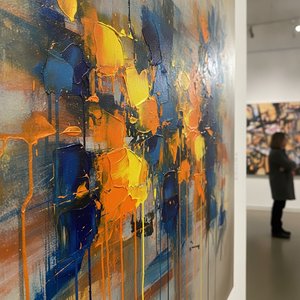
Beyond the Lines: Mastering the High-Impact World of Contemporary Abstraction
Master the high-impact world of contemporary abstraction. Discover how bold colors, textures, and modern movements like Abstract Expressionism can transform your space with premium, high-energy art curated for the design-conscious professional.
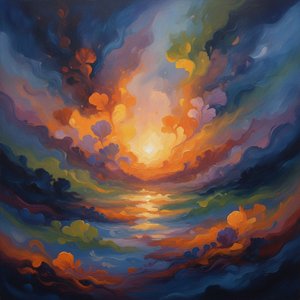
The Soul of Color: A Journey into the Emotional Resonance of Lyrical Abstraction
Embark on a cultural journey through Lyrical Abstraction. Explore how masters like Kandinsky used color and motion to translate emotion into visual poetry. Discover the profound beauty of abstract expressionism and learn to curate emotional resonance in your own art collection.

Lyrical Abstraction: The High-Energy Soul of Modern Art’s Most Vibrant Movement
Dive into the high-energy world of Lyrical Abstraction. Explore how bold colors, fluid motion, and emotional depth define this modern masterpiece movement. Discover iconic artists and learn to bring this vibrant, soulful energy into your contemporary space.