
 Se i rummet
 Del som kort
 Del
Del
 Detaljer
 Guide
Guide

 Download
 Lignende værker
 Røntgenundersøgelse
 Diasshow
 Spørgsmål og svar
 Statistikker
Chandelier Hanging

- 46.0 x 79.0 cm


 Vis mere
Kunstværket vist på denne side er beskyttet af ophavsretsloven, hvilket betyder, at vi ikke lovligt kan skabe eller sælge en identisk reproduktion. Denne beskyttelse håndhæves i henhold til internationale aftaler som f.eks. den Bernerkonventionen og af nationale love, herunder de bestemmelser, der er fastlagt i Amerikansk ophavsretslov - Titel 17.
Denne metode overholder fuldt ud ophavsretsreglerne, da den ikke indebærer kopiering eller duplikering af det beskyttede kunstværk. I stedet er der tale om en kreativ nytolkning – et nyt maleri, som er inspireret af det oprindelige, men ikke identisk med det.
Giclée / Kunsttryk
Giclée- eller lærredstryk i museumskvalitet med hurtig produktion og fleksible muligheder for finish. ( Køb håndmalet maleri Skift til digitalt billede)




P118B Dkr10

P118H Dkr10

P118W Dkr10

P438Z Dkr10

P508JH Dkr12

P508YH Dkr12

P805H Dkr10

P805Z Dkr10

P919BZ Dkr10

P919G Dkr10

P919XJ Dkr10

P959ZH Dkr10

P968JZ Dkr12

W106C Dkr8

W218G Dkr10

W218JH Dkr8

W218Y Dkr10

W307PJ Dkr10

W316G Dkr10

W316PJ Dkr8

W316Y Dkr10

W398PJ Dkr8

W4111J Dkr10

W500HY Dkr15

W500JH Dkr15

W692G Dkr12

W849H Dkr8

W940BG Dkr15

W953PJ Dkr8




Vælg mellem vores forudindstillede størrelser, der matcher kunstværkets originale proportioner.

Indtast den bredde og højde, du har brug for, så det passer til din ramme eller din væg. Et print kan kun beskæres, aldrig gøres større end selve billedet, så en størrelse med et andet format vil medføre, at dele af motivet går tabt. Vi sender dig en digital mockup til godkendelse, før vi printer noget. Billedet vist på denne side viser ikke den faktiske beskæring — det er kun mockuppen, der gør.
Verdensomspændende levering () på 2 uger i stedet for de sædvanlige 4/5 uger. (3 november)

Gratis ekspresforsendelse til hele verden

Lærred af linned i høj kvalitet

Fuld transportforsikring

Garanti for refusion af told og importafgifter

Garanti for præcis farvegengivelse

100 dages returret ved fabrikationsfejl

100% fuld returret

Mængderabat ved flere køb
 Glasmulighed er kun tilgængelig i størrelser under 110 cm

Chandelier Hanging
Giclée / Kunsttryk
Størrelse på reproduktion
-


Samlet pris
Dkr 540
Chandelier Hanging: A Surreal Pop Art Dialogue
The artwork presents an arresting juxtaposition – a commonplace chandelier reimagined as a playful commentary on domesticity and consumer culture through the unexpected inclusion of colorful stockings. Created by Kiki Kogelnik, born in Blagoveshchensk, Austria, in 1935, this piece embodies the spirit of Pop Art’s fascination with everyday objects elevated to symbolic significance. Its creation coincided with the anxieties surrounding the Space Race and the burgeoning influence of technological advancements on societal perceptions – themes that resonate powerfully within Kogelnik's broader artistic vision.- Composition & Perspective: The central focus is undeniably the chandelier, positioned against a stark white wall, offering a frontal view that emphasizes its geometric form and sculptural presence. Lines dominate the structure of the chandelier itself and subtly delineate the contours of the stockings, creating a sense of stability amidst the vibrant visual chaos.
- Material & Technique: Likely executed in oil paint or acrylic on canvas, Kogelnik’s technique prioritizes capturing color and shape with remarkable precision while maintaining an overall aesthetic that leans towards spontaneity and delight. The use of vinyl and acrylic hanger suggests a deliberate engagement with industrial materials—a characteristic trait of Pop Art artists who sought to challenge traditional artistic conventions.
- Color Palette & Symbolism: The artwork’s chromatic vibrancy is immediately striking, dominated by the bold hues of the stockings – blues, greens, reds, whites, yellows, blacks and more – which create a dramatic contrast against the neutral backdrop. This deliberate color choice isn't merely decorative; it speaks to Pop Art’s embrace of commercial imagery and its exploration of psychological associations.
- Stylistic Influences: Kogelnik drew inspiration from Serge Poliakoff of the École de Paris, acknowledging the influence of European Abstract Expressionism on her formative artistic journey. However, she swiftly established her own distinctive style, rejecting pure abstraction in favor of a more expressive approach that anticipates the stylistic developments of Pop Art.
- Emotional Impact: Ultimately, “Chandelier Hanging” succeeds in provoking contemplation about our relationship with objects and traditions. The absurdity inherent in repurposing a chandelier—a symbol of grandeur and formality—with stockings—representing comfort and domesticity—invites viewers to question societal norms and embrace unconventional perspectives.
Historical Context & Artistic Movement
The artwork’s genesis occurred during the Cold War era, a period marked by intense ideological rivalry between East and West and fueled by anxieties surrounding nuclear proliferation. Kogelnik's artistic explorations mirrored this broader societal preoccupation with technological progress and its impact on human experience—particularly as reflected in her fascination with cyborgs and representations of femininity. Her work stands apart from prevailing trends within European Abstraction, aligning instead with the burgeoning Pop Art movement’s rejection of elitist aesthetics and embrace of vernacular imagery.Detailed Analysis: Form & Texture
The artwork's shallow depth contributes to its immersive quality, drawing viewers into a carefully crafted visual space where form and texture intertwine. The smooth surface of the ceiling and wall contrasts subtly with the textured fabric of the stockings—a deliberate choice that enhances tactile perception and reinforces the artwork’s symbolic resonance. The artist skillfully employs geometric shapes—primarily derived from the stocking forms—to convey stability and precision, mirroring the influence of Constructivism on her artistic sensibilities.Concluding Remarks: Legacy & Interpretation
Kiki Kogelnik's “Chandelier Hanging” remains a testament to her unwavering commitment to challenging artistic boundaries and fostering dialogue about pressing social issues. Recognized as one of Austria’s most important Pop artists, she paved the way for future generations of female creatives who dared to explore feminist themes and question conventional societal expectations. Its enduring appeal lies in its ability to capture both the playful exuberance of Pop Art and the profound contemplation inherent in confronting familiar objects with fresh perspectives—a legacy that continues to inspire artistic innovation today.Spørgsmål og svar
Hvem er ophavsmanden til "Chandelier Hanging", og hvilken kunstretning tilhører værket?
"Chandelier Hanging" blev skabt af Kiki Kogelnik i Pop Art-stil. Kunstneren og stilen identificerer værkets tradition.
Hvor høj er kontrasten i "Chandelier Hanging" af Kiki Kogelnik?
"Chandelier Hanging" af Kiki Kogelnik fremviser en Serene kontrast mellem sine lyse og mørke områder.
Hvad er lysstyrken i "Chandelier Hanging" af Kiki Kogelnik?
"Chandelier Hanging" af Kiki Kogelnik har en luminans på Luminous. Luminans beskriver, hvor meget lys farverne ser ud til at reflektere.
Kunstnerbiografi
Kiki Kogelnik: Life and Legacy
Early Life and Education
Kiki Kogelnik (1935–1997) was a pivotal Austrian painter, sculptor, and printmaker. Born in Blagoveshchensk, Austria, she received her artistic training at the Vienna Academy of Fine Arts. This foundational education provided her with the technical skills that would later be employed in her innovative and often provocative works.
Artistic Development and Influences
Kogelnik’s early career, beginning in 1961 at Galerie nächst St. Stephan in Vienna, was marked by abstract compositions. Initially, she drew inspiration from artists like Serge Poliakoff of the École de Paris. However, Kogelnik quickly developed her own distinct style, moving away from pure abstraction and embracing the emerging Pop Art aesthetic. While often categorized within Pop Art, she frequently expressed reservations about being solely defined by this movement.
Key Themes and Artistic Style
Throughout her career, Kogelnik explored a range of themes including technology, consumerism, and – particularly in the 1970s – the representation of women in media. Her work is characterized by vibrant colors, bold shapes, and a playful yet critical approach to societal norms. She frequently utilized materials like vinyl and plastic, reflecting her interest in modern industrial processes.
- Her “Women Works” directly addressed stereotypical portrayals of femininity.
- She often incorporated elements of science fiction and space exploration into her art.
- Kogelnik’s sculptures and hangings are known for their dynamic forms and tactile qualities.
Major Achievements and Recognition
Kogelnik achieved significant recognition during her lifetime, exhibiting widely in Europe and the United States. A large retrospective of her work was held at the Belvedere Museum in Vienna in 1997, shortly after her death. In 1998, she was posthumously awarded Austria’s highest decoration for services to the country – the Decoration of Honour for Services to the Republic of Austria – a testament to her lasting impact on Austrian art and culture.
Historical Significance
Kiki Kogelnik is considered one of Austria's most important Pop-related artists. Her work challenged conventional artistic boundaries and offered a unique perspective on the social and political landscape of the 20th century. She paved the way for future generations of female artists, particularly those interested in exploring feminist themes and challenging societal expectations. Her innovative use of materials and her willingness to experiment with different forms continue to inspire artists today.
Death and Legacy
Kiki Kogelnik passed away on February 1, 1997, in Vienna due to cancer. She is buried in Bleiburg, Austria. Her legacy continues through her artwork, which remains highly sought after by collectors and museums worldwide.
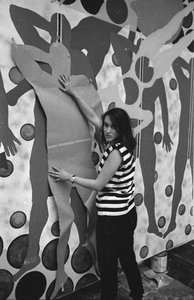
Kiki Kogelnik
1935 - 1997 , Austria
Kort om kunstneren
- Name: Kiki Kogelnik
- Movement: Pop Art
- Birth Date: 1935
- Death Date: 1997
- Birth Place: Blagoveshchensk, Austria
- Nationality: Austrian
- Date Of Birth: 1935
- Date Of Death: 1997
- Influenced By: Serge Poliakoff
- Notable Works:
- Fly Me to the Moon
- Untitled (Skull)
- Place Of Birth: Blagoveshchensk, Austria
Relaterede artikler

Top 10 Bronzemesterværker: Kunsthistorien Ændret for Evigt | OriginalUniqueArt.dk
Oplev de 10 mest legendariske bronzemesterværker, der har formet kunsthistorien! Fra Rodin til Degas – lær historierne bag ikoniske skulpturer og find inspiration til din indretning. Køb museumskvalitets reproduktioner på OriginalUniqueArt.com.

Pop Surrealism Unveiled: The Sophisticated Intersection of Vibrant Pop Art and Dreamlike Subconscious Landscapes
Explore the captivating world of Pop Surrealism. Discover how vibrant Pop Art meets dreamlike subconscious imagery through the works of masters like Jeff Soto and Ryan Heshka. An expert guide for discerning collectors seeking to understand this profound contemporary art movement.

The Enduring Form: Exploring Themes & Techniques in Sculpture Across Historical Periods
Explore the rich history of sculpture from ancient masterpieces to contemporary innovations. Discover key techniques, influential artists & investment potential for discerning art collectors.

Bronzeskulpturers Mestre: 10 Værker der Ændrede Kunsthistorien | OriginalUniqueArt
Oplev de 10 mest legendariske bronzeskulpturer, der har formet kunsthistorien! Fra Rodin til Vigeland – lær historierne bag mesterværkerne og find inspiration til din indretning. Køb museumskvalitets reproduktioner på OriginalUniqueArt.com.

The Enduring Form: Sculpture Across History, Technique & Emotional Resonance
Explore the rich history of sculpture with OriginalUniqueArt. Discover key techniques, influential artists & investment potential for discerning collectors. Expert insights into valuing and collecting timeless masterpieces.