Pop Art · 1990
Icons (Keith Haring, 1990)
Keith Haring (1958–1990) har skabt Icons. Det er fra 1990. Det tilhører Pop Art-bevægelsen. Den er udført i Lithograph. Det opbevares på Nakamura Keith Haring Collection i Hōkuto, Japan.
- 1990
- Lithograph
- Nakamura Keith Haring Collection, Hōkuto

 Se i rummet

 Håndmalet oliemalerie
 Del som kort
 Del
 Faktablad


 Download
 Lignende værker
 Røntgenundersøgelse
 Diasshow
 Spørgsmål og svar

 Statistikker
Icons kort fortalt
- Titel
- Icons
- Kunstner
- Keith Haring (1958–1990)
- Kunstner født i
- Reading, USA
- Dato
- 1990
- Medium
- Lithograph
- Hvor det kan ses
- Nakamura Keith Haring Collection, Hōkuto, Japan
- Bevægelse
- Pop Art
- Periode
- Modern
- Motiv
- keith haring, radiant baby, iconic figure, youthful innocence, symbolism, new york art
Hvad forestiller Icons?
A Chronicle of Innocence and Chaos: Exploring Keith Haring’s ‘Icons’
Keith Haring's “Icons,” created in 1990 – the same year as his untimely passing – stands as a potent testament to the artist’s explosive engagement with urban life, social commentary, and the very nature of human experience. Published during a period of profound cultural shift in New York City, these lithographs capture a raw energy that continues to resonate today. The series, comprised of recurring figures like the crawling baby, the dog, the angel, the winged man, and the ubiquitous smiley face, isn’t merely a collection of images; it's a carefully constructed dialogue between innocence, chaos, spirituality, and the anxieties of a rapidly changing world.
- The Radiant Baby: Perhaps the most instantly recognizable element within “Icons,” the crawling baby – often referred to as "The Radiant Baby" – embodies Haring’s core philosophy. Initially conceived as a symbol of youthful innocence, purity, and potential, it quickly evolved into something far more complex. The figure's vulnerability speaks to the fragility of life, while its upward gaze suggests an aspiration towards transcendence. It is deeply personal, reflecting Haring himself—a young man navigating his own path with unwavering optimism.
- Animal Allegories: Haring’s use of animal figures adds another layer of interpretation. The barking dog, a recurring motif, doesn't offer simple allegorical meaning; instead, it often represents action, suspicion, and the inherent anxieties within human interaction. Conversely, the angel figure transcends mere religious iconography, becoming a representation of spiritual guidance alongside the complexities of life, power, and chaos—a potent juxtaposition reflecting Haring’s own exploration of faith and doubt.
- The Winged Man: The “Winged Man,” with its prominent ‘x’ marking on the chest, is arguably the most densely layered in symbolism. Initially interpreted as a mark of death or a sign of mystery, it quickly became associated with coupling, representing both union and the unknown. Haring deliberately blurred these meanings, inviting viewers to grapple with the inherent contradictions within human existence.
Technique and Style: A Bold New Vision
Haring’s artistic style is instantly identifiable – a vibrant explosion of black outlines on a stark white background. This deceptively simple technique—developed through his early street art practice—allowed him to create monumental images that commanded attention, particularly within the context of crowded urban spaces. The lithograph process itself, with its inherent limitations in color and tonal range, forced Haring to focus on form, line, and composition, resulting in a powerfully graphic aesthetic. His use of bold, simplified shapes – reminiscent of comic book art and children’s illustrations – was deliberately accessible, aiming to bypass intellectual barriers and speak directly to the emotions of his audience.
Historical Context and Cultural Significance
Created in 1990, “Icons” emerged during a pivotal moment in New York City's artistic landscape. Haring’s work coincided with the rise of graffiti art and the burgeoning AIDS crisis, reflecting a growing awareness of social injustice and a desire for open dialogue. His figures, often appearing in public spaces, became symbols of resistance and solidarity, challenging conventional notions of art and engaging directly with the concerns of marginalized communities. The series' publication during his final year is particularly poignant, adding an element of urgency and reflection to its already complex themes.
Emotional Impact and Artistic Legacy
“Icons” continues to captivate viewers with its raw energy and profound emotional resonance. Haring’s work isn’t simply decorative; it's a powerful meditation on life, death, innocence, and the human condition. The vibrant colors and dynamic compositions evoke a sense of joy, wonder, and perhaps even unease – mirroring the complexities of our own experiences. As a key figure in 20th-century art, Haring’s influence extends far beyond his immediate circle, inspiring generations of artists to embrace bold expression and engage with social issues through their work.
Hvilket museum udstiller Icons?
Nakamura Keith Haring Collection
Hōkuto, Japan
Et fristed for strålende linjer: Nakamura Keith Haring Collection Indlejret i de betagende Yatsugatake-bjerge i Hōkuto, Japan, ligger en sand unik destination for kunstelskere og beundrere af levende udtryk: Nakamura Keith Haring Collection. Mere end blot et museum er det en fordybende oplevelse – en pilgrimsrejse ind i hjertet af én mands ekstraordinære vision. Grundlagt af Kazuo Nakamura, en passioneret samler, der første gang mødte Harings værker i New York City i 1987, har denne private institution omhyggeligt kurateret en samling på over 300 værker.
Højopløselige billeder af Icons

Protected by copyright: these files are for personal reference, not a licence to republish.
Keith Haring, Icons (1990), Nakamura Keith Haring Collection.
Spørgsmål om Icons besvaret
Hvilket museum udstiller det originale "Icons"?
"Icons" af Keith Haring er udstillet på Nakamura Keith Haring Collection, Hōkuto, Japan. Museets fortegnelse henviser til det originale værk og ikke til reproduktioner.
Hvornår er "Icons" af Keith Haring skabt?
"Icons" af Keith Haring blev skabt i 1990.
Hvilken teknik er "Icons" udført med?
"Icons" er udført i Lithograph.
Hvad forestiller "Icons"?
"Icons" af Keith Haring forestiller: keith haring, radiant baby, iconic figure, youthful innocence, symbolism, new york art, character design.
Er "Icons" fri for ophavsret?
Ophavsretsstatus for "Icons" af Keith Haring: værket er stadig beskyttet af ophavsret. Dette afgør, om der frit må foretages reproduktioner af billedet.
Hvem har skabt "Icons"?
"Icons" tilskrives Keith Haring.
Hvilken kunstretning tilhører "Icons" af Keith Haring?
"Icons" er et værk fra Pop Art. Denne stilart angiver den kunstneriske tradition, som værket indgår i.
Hvor i Keith Harings karriere placerer "Icons" sig?
Inden for Keith Harings karriere tilhører "Icons" perioden Late Period, hvilket gør det muligt at sammenligne værket med kunstnerens øvrige værker.
Hvor gammel var Keith Haring, da vedkommende skabte "Icons"?
Da "Icons" blev skabt i 1990, var Keith Haring – født i 1958 – 32 år gammel.
Om kunstneren, Keith Haring

1958–1990, USA
Keith Haring
En Strålende Arv: Livet og Kunsten af Keith Haring Keith Allen Haring, et navn uadskilleligt forbundet med 1980’ernes pulserende New York City, var langt mere end blot en kunstner; han var et kulturelt fænomen. Født den 4. maj 1958 i Reading, Pennsylvania, begyndte hans kunstneriske rejse ikke inden for de formelle rammer af akademisk træning, men snarere midt i barndommens legende landskaber. Påvirket af de finurlige tegnefilm fra Walt Disney og Dr.
Også af Keith Haring
 Montreux
 Ukendt (235)
 Altertavle: Kristi liv1990
 Andy Mus1986
Essays om Icons
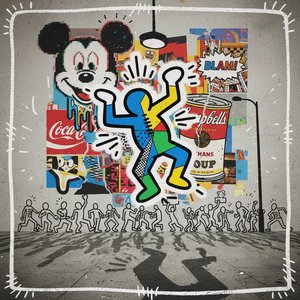 Keith Haring: Subverting Pop Culture – An Examination of Social Commentary & Artistic InnovationExplore the revolutionary art of Keith Haring – a powerful blend of pop aesthetics & social activism. Discover his iconic works, influences…
 Unveiling the Raw Emotion: The Top 25 Masterpieces by Francis BaconJourney through the raw emotion of Francis Bacon's most iconic works. From distorted figures to visceral portraits, explore 25 masterpieces…
 James Abbott McNeill Whistler: Top 25 Kunstværker – Skønhed, Harmoni & Historie | OriginalUniqueArtOplev James Abbott McNeill Whistlers 25 mest ikoniske kunstværker. Fordyb dig i æstetismens verden, tonale malerier & harmoniske kompositio…