

 Se i rummet
 Send
Send Del
Del
 Detaljer
 Studieguide til kunstværker

 Download
 Lignende værker
 Røntgenundersøgelse
 Se diasshow
 Statistik
Reaper


 Læs mere
Håndlavet oliereproduktion
Håndmalet olie på lærred i din valgte størrelse og ramme, udført efter bestilling af vores kunstnere. ( Skift til printversion Skift til digitalt billede)




P118B Dkr10

P118H Dkr10

P118W Dkr10

P438Z Dkr10

P508JH Dkr12

P508YH Dkr12

P805H Dkr10

P805Z Dkr10

P919BZ Dkr10

P919G Dkr10

P919XJ Dkr10

P959ZH Dkr10

P968JZ Dkr12

W106C Dkr8

W218G Dkr10

W218JH Dkr8

W218Y Dkr10

W307PJ Dkr10

W316G Dkr10

W316PJ Dkr8

W316Y Dkr10

W398PJ Dkr8

W4111J Dkr10

W500HY Dkr15

W500JH Dkr15

W692G Dkr12

W849H Dkr8

W940BG Dkr15

W953PJ Dkr8




Vælg mellem vores forudindstillede størrelser, der matcher kunstværkets originale proportioner.

Indtast den bredde og højde, du har brug for, så det passer til din ramme eller din væg. Da dette er håndmalet, kan kunstneren ved en anden form på størrelsen male lidt mere rundt om billedet eller skære lidt væk — det er op til dig. Vi sender dig et digitalt mockup til godkendelse, før maleriet påbegyndes. Billedet, der vises på denne side, viser ikke det endelige resultat — det er kun mockuppet, der gør.
Efter bestilling vil OriginalUniqueArt.com team sende en e-mail til kunden for at indhente instruktioner og fremsende et udkast til gennemgang.
Levering i hele verden () på 3-4 uger i stedet for de standard 5 uger. (22 oktober). Ingen kompromiser med kvaliteten.

Gratis ekspresforsendelse til hele verden

Lærred af linned i høj kvalitet

Komplet transportforsikring

Garanti for refusion af told og importafgifter

Garanti for autentisk farvegengivelse

100 dages returret ved fabrikationsfejl

100% fuld returret

Mængderabat ved flere køb
 Glasmulighed er kun tilgængelig i størrelser under 110 cm

Reaper
Reproduktionsmateriale
Reproduktionsstørrelse
-


Samlet pris
Dkr 1966
A Glimpse into Modernity: Decoding Kazimir Malevich’s ‘Reaper’
Kazimir Malevich's 1912 painting, ‘Reaper,’ is not merely an image of agricultural labor; it’s a pivotal moment in the seismic shift occurring within early 20th-century art. Emerging from a period of intense experimentation and artistic ferment, this work stands as a compelling bridge between the representational world and the burgeoning realm of abstraction. The scene depicts a woman, bent in the act of tying her shoes – or perhaps tending to the earth itself – rendered not with realistic detail but through the fractured planes and bold color choices characteristic of Cubism. A red hat punctuates the composition, drawing the eye amidst the geometric deconstruction of form. Hints of other figures linger in the background, suggesting a communal existence yet remaining deliberately indistinct, almost spectral. The inclusion of an umbrella adds a curious element, perhaps symbolizing protection or simply another facet of everyday life caught within Malevich’s innovative vision.
The Ukrainian Roots and Parisian Influences
Born in Kyiv Oblast, Ukraine, to a Polish family, Kazimir Malevich carried the weight of his cultural heritage throughout his artistic journey. His early exposure to Ukrainian folk art instilled in him an appreciation for simplified forms and vibrant colors – elements that would subtly resurface even as he ventured into radical abstraction. However, it was a transformative trip to Paris in 1912 that truly ignited his artistic evolution. Immersed in the heart of the European avant-garde, Malevich encountered the groundbreaking work of Cubists like Picasso and Braque. He absorbed their techniques of fragmentation and multiple perspectives, but rather than simply imitating them, he began to synthesize these influences with his own unique sensibility. ‘Reaper’ is a testament to this synthesis – a painting that demonstrates a clear understanding of Cubist principles while simultaneously hinting at the distinct path Malevich would soon forge.
Beyond Representation: The Dawn of Suprematism
‘Reaper’ occupies a crucial position in Malevich's artistic development, preceding his most famous and revolutionary creation – the ‘Black Square.’ While still rooted in recognizable subject matter, the painting demonstrates Malevich’s growing desire to move beyond mere representation. He wasn’t interested in depicting *what* he saw, but rather in conveying *how* he felt about what he saw. This pursuit of pure feeling would ultimately lead him to Suprematism, an artistic movement centered on basic geometric forms and a limited color palette. In ‘Reaper,’ we see the seeds of this philosophy being sown – the simplification of form, the emphasis on underlying structure, and the rejection of traditional perspective all point towards the radical abstraction that lay ahead. The painting isn’t about a woman tying her shoes; it's about the essence of human labor, the geometry inherent in everyday life, and the artist’s attempt to distill these concepts into their purest form.
A Legacy of Innovation: ‘Reaper’ as a Catalyst
The impact of Kazimir Malevich extends far beyond his own body of work. He fundamentally altered the course of 20th-century art, paving the way for movements like Minimalism and Conceptual Art. ‘Reaper,’ though often overshadowed by his later, more purely abstract creations, remains a vital piece in understanding this evolution. It’s a painting that challenges viewers to reconsider their perceptions of reality, to look beyond surface appearances, and to appreciate the power of form and color as independent expressive elements. For collectors and interior designers alike, a reproduction of ‘Reaper’ offers not just an aesthetically striking addition to any space, but also a conversation starter – a window into a pivotal moment in art history and a testament to the enduring legacy of one of its most visionary pioneers.
Spørgsmål & svar
Hvornår og i hvilken stil er "Reaper" af Kazimir Malevich skabt?
"Reaper" af Kazimir Malevich er dateret 1912 og tilhører Kazimir Malevich.
Hvor kendt er "Reaper" af Kazimir Malevich?
"Reaper" er klassificeret som Recognized.
Hvem har skabt "Reaper", og i hvilket år?
"Reaper" blev skabt af Kazimir Malevich i 1912.
Om kunstneren
Kazimir Malevich: En Pioner indenfor Abstrakt Kunst
Kazimir Malevich (1878-1935) var en ukrainsk kunstner og en banebrydende figur inden for abstrakt kunst, hvis revolutionerende værker som ”Sort Tavle” har efterladt sig et dybt præg på moderne kunsthistorie. Hans arbejde udforskede nye territorier af følelse og geometri og udfordrede fundamentale idéer om kunstens rolle i samfundet. Denne artikel vil beskrive Malevichs liv, hans kunstneriske udvikling og hans betydning som en af de mest indflydelsesrige kunstnere på det 20. århundrede.Tidlig Liv og Påvirkninger
Malevich blev født i Kyiv Oblast, Ukraine, i 1878 til en polsk familie. Hans barndom var præget af den ukrainske landsbyidyl og dens rige folkelige kultur – elementer der senere ville finde deres vej ind i hans kunstneriske arbejde. Han modtog grundlæggende kunstuddannelse i Kyiv, hvor han blev introduceret til klassisk kunsthistorie og teknikker. Men allerede tidligt søgte Malevich efter inspiration uden for Ukrainens grænser og udviklede en interesse for europæiske kunststrømninger som Impressionisme og Symbolisme. Disse erfaringer ville forme hans kunstneriske verdensbillede og give ham et fundament til senere eksperimenter med nye stilformer.Kunstnerisk Udvikling & Nøgle Strømninger
Malevichs kunstneriske rejse begyndte i Paris i 1912, hvor han blev mødt af den europæiske avantgarde og fik direkte kontakt med kunstnere som Picasso og Matisse. Han eksperimenterede aktivt med forskellige teknikker og stilarter – Cubisme var særligt vigtig for hans udvikling – før han omkring 1915 fandt sin egen unikke stil: Suprematism. Denne nye bevægelse prægede sig ved en fuldstændig afvisning af traditionelle kunstformer og søgte efter et ærligt udtryk af følelser gennem rene geometriske figurer og farver. Dette var ikke blot en teknisk udfordring, men også en filosofisk erklæring om kunstens rolle i verden. Suprematism blev direkte inspireret af Vladimir Tatlin og Piet Mondrian.Nøgleværker & Filosofi
Malevichs mest ikoniske værker inkluderer ”Sort Tavle” (1915), hvor han reducerede billedet til blot en enkelt kvadratisk tavle, hvilket repræsenterede et radikalt brud med kunsthistorien og blev betragtet som et fundament for abstrakt kunst. Hans andet hovedværk var ”White on White” (1918), hvor han udforskede konceptet om ren geometri og følelse ved at præsentere kvadratiske områder af hvid maling på kvadratiske områder af hvid papir – en ekstrem reduktion, der skulle udtrykke essensen af kunstens ånd. Disse værker blev mødt med både begejstring og kritik fra kunstkritikerne og kunstnere på hans tid, men Malevichs vision om abstrakt kunst fortsatte at fascinere efterfølgende generationer af kunstnere. Han beskrev Suprematism som ”kunsten af det rene kvadrat” og hævdede, at målrettet kunst skulle være fri for alle referencer til den fysiske verden og fokusere på direkte følelsesmæssig kommunikation.Historisk Betydning & Eftervirkninger
Kazimir Malevichs arbejde havde en enorm indflydelse på udviklingen af abstrakt kunst i hele Europa og Rusland. Han blev betragtet som en af de vigtigste figurer inden for den russiske avantgarde og inspirerede kunstnere som El Lissitzky og Aleksandr Rodchenko til at udforske nye muligheder indenfor geometrisk abstraktion. Malevichs filosofi om kunstens rolle og hans eksperimenter med rene former blev mødt med både støtte og modstand fra konservative kræfter i samfundet, men hans arbejde fortsatte at være relevant for kunstnere og kunsthistorikere gennem hele det 20. århundrede. Han døde i Leningrad (nu St. Petersburg) i 1935 efter en kort periode med politisk repression og blev æret som en af Ukrainas største kunstnere og en pioner indenfor abstrakt kunstens historie. Hans værker udgør stadig dagligt inspiration for kunstnere verden over.
Kazimir Malevich
1878 - 1935 , Ukraine
Hurtige fakta
- Artistic Movement Or Style: Suprematisme, Abstrakt kunst
- Artists Or Movements Influenced By This Artist:
- Minimalisme
- Konstruktivisme
- Artists Who Influenced This Artist:
- Impressionisme
- Fauvisme
- Kubisme
- Date Of Birth: 1878
- Date Of Death: 1935
- Full Name: Kazimir Severinovich Malevich
- Nationality: Ukrainsk/Russisk
- Notable Artworks:
- Sorttavle
- Hvid på hvid
- Bygning under konstruktion
- Place Of Birth: Kijev, Ukraine
Relaterede artikler
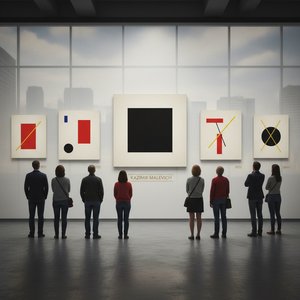
Kazimir Malevich: Pioneering Suprematism & the Quest for Non-Objective Art
Explore the revolutionary art of Kazimir Malevich & his groundbreaking Suprematism movement. Discover the origins, core principles, and lasting impact of this pivotal force in modern abstract painting.

Geometrisk Abstraktion: Top 10 Kunstværker der Definerede Bevægelsen | OriginalUniqueArt.dk
Oplev de 10 mest ikoniske værker inden for geometrisk abstraktion! Fra Kandinsky til Mondrian – lær historierne bag disse banebrydende kunstnere og deres farverige malerier. Find museumskvalitets reproduktioner & inspiration til din indretning på OriginalUniqueArt.dk.

Suprematism Explained: The Radical Geometry and Pure Feeling of Kazimir Malevich
Explore the radical world of Suprematism. Discover how Kazimir Malevich revolutionized modern art through pure geometric abstraction, non-objective form, and the supremacy of feeling. An essential guide for art students and collectors seeking deep historical context.
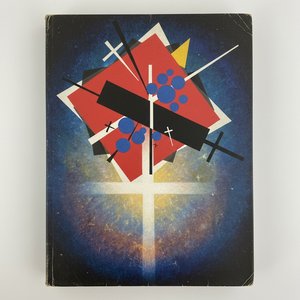
Beyond Representation: Exploring the Radical Geometry of Suprematism & Its Spiritual Foundations
Explore the revolutionary world of Suprematism with our expert guide. Discover Kazimir Malevich's groundbreaking art, its spiritual foundations & lasting influence on modern design. Learn about collecting this iconic movement.
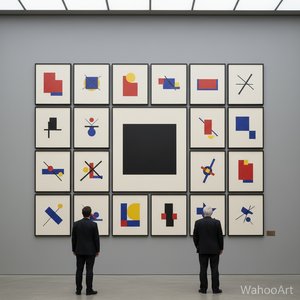
Kazimir Malevichs 25 Mesterværker: En Rejse Ind i Abstrakt Kunst | OriginalUniqueArt
Oplev Kazimir Malevichs 25 mest ikoniske værker! Dyk ned i Suprematismens verden, fra 'Sort Firkant' til 'Hvidt på Hvidt'. Find inspiration og køb museumskvalitets kunsttryk hos OriginalUniqueArt.com – din kilde til abstrakt kunst & eksklusiv vægkunst.


