

 Se i rummet
 Send
Send Del
Del
 Detaljer
 Guide
Guide

 Download
 Lignende værker
 Røntgenundersøgelse
 Se diasshow
 Statistik
Parrot Woman with Bird


 Læs mere
Giclée / Kunsttryk
Giclée- eller lærredstryk i museumskvalitet med hurtig produktion og fleksible muligheder for finish. ( Bestil håndmalet reproduktion Skift til digitalt billede)




































Vælg mellem vores forudindstillede størrelser, der matcher kunstværkets originale proportioner.

Du kan indtaste dine egne mål for at passe til en specifik ramme eller et bestemt område. Hvis den valgte størrelse ikke stemmer overens med det originale billedes proportioner, vil vi enten beskære kunstværket eller udvide billedet med en spejlet eller ensfarvet kant. En digital mockup vil blive sendt til din godkendelse, før produktionen påbegyndes.
Bemærk venligst, at forhåndsvisningen på skærmen ikke afspejler den faktiske beskæring eller udvidelse. Kun mockuppen vil nøjagtigt vise den endelige komposition.
Selvom specialmål er tilgængelige, anbefaler vi at vælge et mål fra den foruddefinerede liste for at bevare de originale proportioner.
Verdensomspændende levering () på 2 uger i stedet for de sædvanlige 4/5 uger. (21 september)

Gratis ekspresforsendelse til hele verden

Lærred af linned i høj kvalitet

Komplet transportforsikring

Garanti for refusion af told og importafgifter

Garanti for autentisk farvegengivelse

100 dages returret ved fabrikationsfejl

100% fuld returret

Mængderabat ved flere køb
 Glasmulighed er kun tilgængelig i størrelser under 110 cm

Parrot Woman with Bird
Giclée / Kunsttryk
Reproduktionsstørrelse
-


Samlet pris
$ 81
Composition and Symbolism
The painting features a woman with a parrot on her shoulder, accompanied by another bird standing beside her. The scene is set against a vibrant outdoor background, complete with a chair, clock, handbag, and bowl. Two additional birds are visible in the background, adding to the sense of freedom and spontaneity that pervades the artwork. The use of bold colors and distorted forms creates a sense of energy and movement, drawing the viewer's eye through the composition. Key elements of the painting include:- The parrot on the woman's shoulder, symbolizing creativity and playfulness
- The bird standing beside her, representing companionship and harmony
- The clock in the background, hinting at the passage of time and the fleeting nature of life
The Parrot Woman with Bird is a testament to Appel's innovative style, which continues to inspire artists and art lovers today. As a prominent figure in the CoBrA movement, Appel's work embodies the spirit of experimentation and creativity that defined this artistic era. To learn more about the Smithsonian American Art Museum and its collection, visit /art/list/?Filter=A@D3CD73-The-Cooper-Gallery-Barnsley-United-Kingdom.
Om kunstneren
A Life Painted in Bold Strokes: The World of Karel Appel
Christiaan Karel Appel, known affectionately as ‘Kik’ from childhood, burst onto the post-war art scene like a vibrant explosion of color and energy. Born in Amsterdam in 1921, his early life was steeped in the everyday rhythms of working-class Holland – his father a barber, his lineage tracing back to French Huguenots through his mother. This grounding, however, would soon be superseded by an irrepressible artistic drive that defied convention and ultimately reshaped the landscape of European art. A pivotal moment arrived at age fourteen with his first painting, a still life of fruit, followed shortly after by a paint set and easel gifted by his uncle Karel Chevalier, who also provided early instruction. These gifts weren’t merely tools; they were keys unlocking a world where imagination reigned supreme. The shadow of the Second World War loomed large over Appel’s formative years. Studying at the Rijksakademie van Beeldende Kunsten in Amsterdam during the German occupation proved challenging, yet it was there he forged lifelong bonds with fellow artists Corneille and Constant, friendships that would prove crucial to his artistic evolution. Facing opposition from his parents regarding his chosen path and fearing forced labor under Nazi rule, Appel bravely left home, choosing a life dedicated to art over conformity.The CoBrA Revolution: Spontaneity and the Childlike Vision
Appel’s artistic journey truly ignited with the formation of the CoBrA group in 1948 – an acronym derived from Copenhagen, Brussels, and Amsterdam, representing the movement's core cities. Alongside Corneille, Constant, Jan Nieuwenhuys, and Christian Dotremont, Appel spearheaded a radical departure from established artistic norms. CoBrA wasn’t merely a style; it was a philosophy rooted in spontaneity, experimentation, and a profound embrace of the untamed creativity found in children's art and primitive cultures. Influenced by masters like Pablo Picasso and Henri Matisse, as well as the raw energy of Jean Dubuffet, Appel rejected rigid formalism in favor of intuitive expression. He began sculpting in 1947, utilizing assemblage techniques – constructing works from found materials painted in a bold palette of white, red, yellow, blue, and black. This period saw him involved with the Experimentele Groep, further solidifying his commitment to artistic innovation. The controversial fresco "Questioning Children" (1949), commissioned for Amsterdam City Hall, exemplified CoBrA’s provocative spirit but also sparked public outcry, ultimately leading to its being covered up – a testament to the movement's challenging nature. Appel drew inspiration from Danish and Nordic mythology, weaving these ancient narratives into his increasingly abstract compositions.International Horizons: From Paris to New York and Beyond
Facing resistance to CoBrA’s radical vision in the Netherlands, Appel relocated to Paris in 1950, a city that offered greater artistic freedom and recognition. This marked the beginning of an expansive period of international travel and exposure. He journeyed to Mexico, the USA, Yugoslavia, and Brazil, absorbing diverse cultural influences that enriched his artistic vocabulary. His time in New York City and Florence further broadened his horizons, allowing him to connect with a wider network of artists and collectors. A breakthrough moment arrived in 1954 with his first American gallery exhibition at the Martha Jackson Gallery, followed by the inclusion of "Child and Beast II" (1951) in the influential Museum of Modern Art exhibition “The New Decade” in 1955. Appel’s murals became increasingly prominent during this period, showcasing his ability to translate his dynamic style onto a larger scale. Despite initial challenges, his work experienced a resurgence in popularity in the Netherlands after 1990, with major exhibitions organized by Rudy Fuchs in Amsterdam and Brussels, solidifying his legacy within his homeland.A Lasting Legacy: The Karel Appel Foundation and Enduring Influence
Karel Appel’s impact on post-war European art is undeniable. He established the Karel Appel Foundation to safeguard his artworks and promote public awareness of his oeuvre, ensuring that future generations could experience the power of his vision. A temporary loss of artwork in 2002 underscored the importance of this foundation, with the pieces thankfully recovered in 2012. The foundation now serves as his official estate and image archive, represented in the U.S. by The Artists Rights Society. Appel’s work continues to be exhibited internationally, a testament to its enduring appeal and relevance. He wasn’t simply a painter or sculptor; he was a poet of form and color, a champion of spontaneity, and a fearless innovator who dared to challenge artistic conventions. His legacy lies not only in the vibrant canvases and sculptures he created but also in his unwavering belief in the power of art to express the raw, untamed spirit of human experience. His work remains a significant contribution to post-war European art, particularly within the CoBrA movement. Appel’s influence can be seen in contemporary artists who embrace experimentation and reject traditional boundaries, ensuring that his bold vision continues to inspire for years to come.
Karel Appel
1921 - 2006 , Holland
Hurtige fakta
- Artistic Movement Or Style: CoBrA, Expressionism
- Artists Or Movements Influenced By This Artist: ['CoBrA movement']
- Artists Who Influenced This Artist:
- Picasso
- Matisse
- Dubuffet
- Date Of Birth: April 25, 1921
- Date Of Death: May 3, 2006
- Full Name: Christiaan Karel Appel
- Nationality: Dutch
- Notable Artworks:
- Square Man
- Parrot Woman with Bird
- Hip, Hip, Hoorah
- Place Of Birth: Amsterdam, Netherlands
Relaterede artikler

The Soul of Color: A Journey into the Emotional Resonance of Lyrical Abstraction
Embark on a cultural journey through Lyrical Abstraction. Explore how masters like Kandinsky used color and motion to translate emotion into visual poetry. Discover the profound beauty of abstract expressionism and learn to curate emotional resonance in your own art collection.

Kandinskys 25 Mesterværker: En Rejse Ind i Abstrakt Kunst | OriginalUniqueArt.com
Oplev Kandinskys 25 mest ikoniske værker! Dyk ned i abstrakt kunst, ekspressionisme og farvernes sprog. Find luksus reproduktioner af berømte malerier som 'Komposition VIII' på OriginalUniqueArt.com – inspiration til din vægkunst & indretning.

Top 10 Abstrakt Ekspressionisme Mesterværker – Kunst der Forandrede Verden | OriginalUniqueArt.com
Oplev de 10 mest ikoniske værker inden for Abstrakt Ekspressionisme – Jackson Pollock, Mark Rothko og mere. Lær historien bag kunstnerne & teknikken. Find museumskvalitets reproduktioner på OriginalUniqueArt.com.
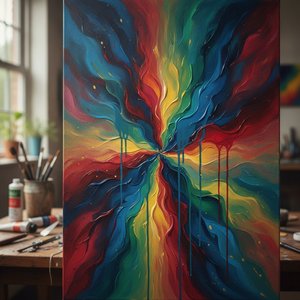
Lyrical Abstraction: The Emotional Power of Color and Form in Modern Art History
Explore the profound emotional depth of Lyrical Abstraction. Discover how masters like Raymond Parker used color and form to bridge Impressionism and Abstract Expressionism. Learn about this pivotal movement through our expert-led art history guide.
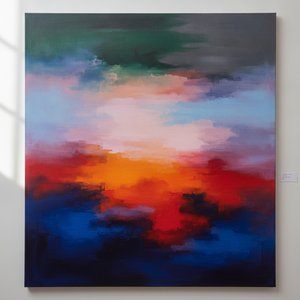
Color Field Painting: The Emotional Power of Pure Abstraction and Chromatic Depth
Explore the profound emotional depth of Color Field painting. Discover the history of mid-century abstraction, from Rothko to Newman, and learn how pure color transforms the viewer's experience through our expert art history guide.