
 Se i rummet
 Del som kort
 Del
Del
 Detaljer
 Guide
Guide

 Download
 Lignende værker
 Røntgenundersøgelse
 Diasshow
 Spørgsmål og svar
 Statistikker
La petite charrette


 Vis mere
Giclée / Kunsttryk
Giclée- eller lærredstryk i museumskvalitet med hurtig produktion og fleksible muligheder for finish. ( Køb håndmalet maleri Skift til digitalt billede)




P118B Dkr10

P118H Dkr10

P118W Dkr10

P438Z Dkr10

P508JH Dkr12

P508YH Dkr12

P805H Dkr10

P805Z Dkr10

P919BZ Dkr10

P919G Dkr10

P919XJ Dkr10

P959ZH Dkr10

P968JZ Dkr12

W106C Dkr8

W218G Dkr10

W218JH Dkr8

W218Y Dkr10

W307PJ Dkr10

W316G Dkr10

W316PJ Dkr8

W316Y Dkr10

W398PJ Dkr8

W4111J Dkr10

W500HY Dkr15

W500JH Dkr15

W692G Dkr12

W849H Dkr8

W940BG Dkr15

W953PJ Dkr8




Vælg mellem vores forudindstillede størrelser, der matcher kunstværkets originale proportioner.

Indtast den bredde og højde, du har brug for, så det passer til din ramme eller din væg. Et print kan kun beskæres, aldrig gøres større end selve billedet, så en størrelse med et andet format vil medføre, at dele af motivet går tabt. Vi sender dig en digital mockup til godkendelse, før vi printer noget. Billedet vist på denne side viser ikke den faktiske beskæring — det er kun mockuppen, der gør.
Verdensomspændende levering () på 2 uger i stedet for de sædvanlige 4/5 uger. (6 november)

Gratis ekspresforsendelse til hele verden

Lærred af linned i høj kvalitet

Fuld transportforsikring

Garanti for refusion af told og importafgifter

Garanti for præcis farvegengivelse

100 dages returret ved fabrikationsfejl

100% fuld returret

Mængderabat ved flere køb
 Glasmulighed er kun tilgængelig i størrelser under 110 cm

La petite charrette
Giclée / Kunsttryk
Størrelse på reproduktion
-


Samlet pris
Dkr 541
A Snapshot of Rural Life: Jules Dupré’s “La Petite Charrette”
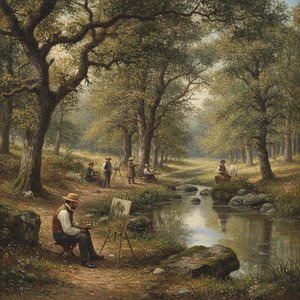
Jules Dupré's "La Petite Charrette" isn’t merely a depiction of a rural scene; it’s a carefully constructed evocation of a bygone era, a poignant glimpse into the quiet rhythms and enduring beauty of French countryside life in the 19th century. Painted with an almost palpable sense of tranquility, the artwork transports us to a world where time seems to slow, and the simple act of pulling a cart along a dusty road becomes imbued with significance. Dupré, a key figure within the Barbizon School, deliberately eschewed the romanticized idealism often associated with landscape painting, instead choosing to capture the raw, unvarnished reality of peasant life – its hardships, its dignity, and its deep connection to the land.
The Language of Light and Line: Composition and Technique
The composition of “La Petite Charrette” is masterfully balanced, utilizing a horizontal format to emphasize the expansive landscape. The winding dirt road acts as a powerful linear element, drawing the viewer’s eye into the scene and establishing a sense of depth. A towering oak tree dominates the upper right corner, its branches reaching skyward like protective arms – a symbol of strength, resilience, and perhaps even a silent witness to generations of rural life. Dupré employs an academic realist style, meticulously rendering each element with careful attention to detail. Notice the short, broken brushstrokes used to suggest the rough texture of the road, contrasting sharply with the smoother application in the distant hills. The subtle variations in tone create a remarkable sense of depth and atmosphere, mimicking the effects of atmospheric perspective – a technique perfected by artists like Constable.
- Color Palette: Dominated by earthy browns, greens, and yellows, reflecting the natural hues of the French countryside.
- Brushwork: A blend of short, broken strokes for texture and smoother application for distance.
- Linear Elements: The winding road serves as a primary guide through the composition.
Symbolism and Emotional Resonance
Beyond its realistic depiction, “La Petite Charrette” resonates with deeper symbolic meaning. The simple act of pulling a cart represents labor, sustenance, and connection to the land – fundamental aspects of peasant life. The quiet solitude of the scene evokes feelings of tranquility, simplicity, and perhaps even a touch of melancholy. Dupré wasn’t simply painting a landscape; he was capturing a mood, an atmosphere, and a way of life that was slowly disappearing in the face of industrialization. The distant hills, rendered with subtle atmospheric perspective, suggest both the vastness of the countryside and the enduring connection between humanity and nature.
A Legacy of Barbizon: Historical Context
Jules Dupré’s work is inextricably linked to the Barbizon School, a movement that championed direct observation and emotional resonance in landscape painting. Rejecting the idealized landscapes favored by earlier generations, the Barbizon artists sought to capture the raw beauty and inherent drama of nature as they experienced it. Dupré's focus on depicting the realities of peasant life—the hard work, the simple pleasures, and the profound connection to the land—aligns perfectly with the Barbizon School’s core values. His paintings offer a valuable window into 19th-century France, providing insights into the lives and perspectives of those who shaped its rural landscape.
Spørgsmål og svar
Hvilken kunstner tilskrives "La petite charrette"?
"La petite charrette" blev skabt af Jules Dupré. Informationen på denne side beskriver Jules Duprés originale værk.
Hvad foreslås der at bruge "La petite charrette" af Jules Dupré til?
Den foreslåede anvendelse af "La petite charrette" af Jules Dupré er Harmony, men den kan også tjene andre formål.
Hvilken printstørrelse og orientering anbefales til "La petite charrette"?
Et print af "La petite charrette" af Jules Dupré anbefales i størrelsen Medium med Landscape orientering.
Kunstnerbiografi
Barbisons dramatiske sjæl
Jules Dupré (1811–1889) står som en hjørnesten i Barbizon-skolen, en kunstnerisk bevægelse, der hyldede rå observation og følelsesmæssig resonans i landskabsmaleriet. I modsætning til sine samtidige, såsom Corot, der ofte søgte den lyriske skønhed og den rolige stilhed, kæmpede Dupré med naturens mørkere og mere stormfulde sider. Han besad en unik evne til at indfange stormens rasen, skumringens melankolske storhed og elementernes utrættelige energi, og han formidlede disse oplevelser med en uovertruffen intensitet. Født i Nantes, Frankrig, begyndte Duprés kunstneriske rejse midt i en spirende fascination for den naturlige verden og dens evne til at vække dybe, ofte turbulente, menneskelige følelser.
Hans tidlige liv lagde fundamentet for en omhyggelig sans for detaljen og en værdsættelse af håndværket, kvaliteter der blev slebet gennem hans fars porcelænsfabrik. Denne formative oplevelse skulle senere oversættes til hans egne kunstneriske bestræbelser, hvilket var særligt tydeligt i hans tidlige værker, hvor han udforskede de indviklede detaljer i keramisk dekoration. Som lærling inden for porcelænsdekoration lærte han disciplinen bag fine linjer og teksturer – et færdighedssæt, der med tiden udviklede sig til hans mesterlige håndtering af atmosfærisk dybde og organiske former.
En vision formet af storm og himmel
Duprés karriereforløb blev uigenkaldeligt formet af hans møde med John Constables banebrydende lærreder. Denne eksponering for engelske landskabstraditioner antændte et ønske om at indfange essensen af naturens dynamik – det utrættelige samspil mellem vindblæst løv og det dramatiske vekselspil mellem lys og skygge i dagens mest uforudsigelige timer. Ved sin rejse til Storbritannien i 1831 foretog Dupré dybdegående studier af disse engelske mestre, og han vendte tilbage til Frankrig med en portefølje af billedsprog, der ville omdefinere hans tilgang til landskabet.
Han fandt særlig inspiration i kystdistrikterne omkring Southampton og Plymouth. Disse enorme vandflader, der reflekterede turbulente himle, fungerede som det perfekte laboratorium for ham til at studere stormskydernes voldsomme bevægelser og havets rastløshed. Hans malerier fra denne periode er ikke blot afbildninger af landskaber; de er viscerale udtryk for stemning og følelse, gennemsyret af en mærkbar dramatik og endda sorg. Ved at omfavne Barbizon-æstetikken prioriterede Dupré ekspressive farvepaletter og dristige penselstrøg frem for idealiserede eller polerede repræsentationer, hvilket lod selve malingens tekstur spejle jordens råhed.
Barbizon-mesterens eftermæle
Som en central skikkelse i Barbizon-gruppen knyttede Dupré tætte bånd til andre legendariske malere, herunder Théodore Rousseau. Hans opstigning i det franske kunstetablissement var markeret af betydningsfulde milepæle, såsom hans optagelse på Salonen og den officielle anerkendelse gennem medaljer for sine landskaber. Hans arbejde blev synonymt med en vis klangfuld og resonant farveharmoni, hvor lyset fra en nedadgående sol eller mørket fra en kommende storm kunne føles af beskueren ligeså meget, som det kunne ses.
I dag huskes Jules Dupré som en af de mest indflydelsesrige franske landskabsmalere fra det 19. århundrede. Hans bidrag til kunsten ligger i hans evne til at bygge bro mellem ren observation og romantisk følelse. Gennem værker som La Petite Charrette, Cows Crossing a Ford og hans stemningsfulde skildringer af flodlandskaber, lærte han generationer af kunstnere, at naturen ikke blot er et motiv, der skal males, men en kraftfuld størrelse, der skal opleves. Hans eftermæle forbliver indlejret i de tunge, atmosfæriske teksturer og de dramatiske, levende himle, som fortsat formår at fange den moderne fantasi.

Jules Dupré
1811 - 1889 , Frankrig
Kort om kunstneren
- Bemærkelsesværdige Værker:
- Morning and Evening at the Louvre
- Crossing the Bridge in the Wallace Collection
- Dødsdato: 6. oktober 1889
- Fulde Navn: Jules Dupré
- Fødested: Frankrig
- Fødselsdato: Nantes, Frankrig (1811)
- Kunstnere Der Påvirkede Denne Kunstner: ['Constable']
- Kunstnere Eller Bevægelser Påvirket Af Denne Kunstner: ['Romantisk maleri']
- Kunstnerisk Bevægelse Eller Stil: Barbizon-skolen
- Nationalitet: Fransk
Relaterede artikler
The Barbizon School: The Revolution of Naturalism and the Birth of Plein Air Landscape Painting
Explore the profound impact of the Barbizon School on landscape painting. Discover how masters like Rousseau and Corot revolutionized art through plein air naturalism, moving from academic idealism to the authentic beauty of the French countryside.

Cultivating Visions: A Historical Journey Through Rural Landscapes in Art
Explore the rich history of rural landscape painting with OriginalUniqueArt. Discover Impressionist masterpieces, key artists & movements. Find your perfect serene artwork and bring nature's beauty home.

The Barbizon School: A Professional Guide to Naturalism and Landscape Mastery for Interior Designers
Explore the Barbizon School's mastery of naturalism. An expert guide for hotel designers and procurement managers on sourcing high-quality landscape reproductions to elevate hospitality and corporate interiors with authentic, large-scale fine art solutions.

Evoking Nature's Sublime: A Comprehensive Exploration of 19th-Century Landscape Painting
Explore the captivating world of 19th-century landscape painting! Discover renowned artists like Friedrich & Monet, key movements, and find the perfect artwork to bring nature's serenity into your home. Expert insights at OriginalUniqueArt.

John Constables 25 Mesterværker: En Hyldest til Englands Landskabskunst | OriginalUniqueArt.com
Oplev John Constables 25 mest ikoniske værker! Fordyb dig i engelsk romantik, betagende landskaber og tidløs skønhed. Køb museumskvalitets reproduktioner af 'The Hay Wain' & mere på OriginalUniqueArt.com – inspiration til dit hjem.