() ·

A painting made for you, by hand

Pietà

Håndlavet oliereproduktion

Håndmalet olie på lærred i din valgte størrelse og ramme, udført efter bestilling af vores kunstnere. ( Skift til printsalg Skift til digitalt billede)

Beskrivelse af samlerobjektet

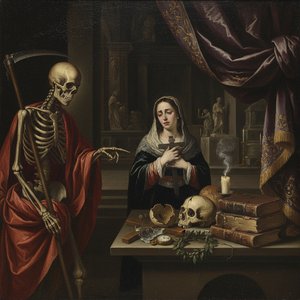
Explore Juan de Valdés Leal’s dramatic Pietà (1657), a poignant Baroque masterpiece depicting Mary Magdalene. Witness intense emotion & masterful chiaroscuro in this Spanish religious artwork.

Kunstnerbiografi

Juan de Valdés Leal var en spansk maler og graver kendt for sin dramatiske barok kunststil og hans prægede billeder af vanitas og religiøse temaer. Opdag museumskvalitet reprints hos OriginalUniqueArt.com!

from ·

Chapter 1

How large should it be?

Slide to change the size; the picture on the left shows the frame at its real width. The proportions of the original are kept.

Standardstørrelse
speciallavet
CM
INCH

Vælg mellem vores forudindstillede størrelser, der matcher kunstværkets originale proportioner.

bredde
højde

Indtast den bredde og højde, du har brug for, så det passer til din ramme eller din væg. Da dette er håndmalet, kan kunstneren ved en anden form på størrelsen male lidt mere rundt om billedet eller skære lidt væk — det er op til dig. Vi sender dig et digitalt mockup til godkendelse, før maleriet påbegyndes. Billedet, der vises på denne side, viser ikke det endelige resultat — det er kun mockuppet, der gør.

Chapter 2

How should it arrive?

Choose the edges of the stretched canvas

Choose your frame

Corner sample of the WhiteWrap canvas edge finish, stretched on massivt træ bars
White Dkr1
Corner sample of the BlurSideWrap canvas edge finish, stretched on massivt træ bars
Blurside Dkr1
Corner sample of the ExtendedWrap canvas edge finish, stretched on massivt træ bars
Extended Dkr1
Corner sample of the P118B picture frame: støbt polystyren, 5 cm wide and 3 cm thick
P118B Dkr10
Corner sample of the P118H picture frame: støbt polystyren, 5 cm wide and 3 cm thick
P118H Dkr10
Corner sample of the P118W picture frame: støbt polystyren, 5 cm wide and 3 cm thick
P118W Dkr10
Corner sample of the P438Z picture frame: støbt polystyren, 5.5 cm wide and 3.5 cm thick
P438Z Dkr10
Corner sample of the P508JH picture frame: støbt polystyren, 7 cm wide and 3.5 cm thick
P508JH Dkr12
Corner sample of the P508YH picture frame: støbt polystyren, 7 cm wide and 3.5 cm thick
P508YH Dkr12
Corner sample of the P805H picture frame: støbt polystyren, 5 cm wide and 3.5 cm thick
P805H Dkr10
Corner sample of the P805Z picture frame: støbt polystyren, 5 cm wide and 3.5 cm thick
P805Z Dkr10
Corner sample of the P919BZ picture frame: støbt polystyren, 7 cm wide and 3.5 cm thick
P919BZ Dkr10
Corner sample of the P919G picture frame: støbt polystyren, 7 cm wide and 3.5 cm thick
P919G Dkr10
Corner sample of the P919XJ picture frame: støbt polystyren, 7 cm wide and 3.5 cm thick
P919XJ Dkr10
Corner sample of the P959ZH picture frame: støbt polystyren, 5 cm wide and 3 cm thick
P959ZH Dkr10
Corner sample of the P968JZ picture frame: støbt polystyren, 6 cm wide and 4 cm thick
P968JZ Dkr12
Corner sample of the W106C picture frame: massivt træ, 5 cm wide and 3 cm thick
W106C Dkr8
Corner sample of the W218G picture frame: massivt træ, 5 cm wide and 3 cm thick
W218G Dkr10
Corner sample of the W218JH picture frame: massivt træ, 5 cm wide and 3 cm thick
W218JH Dkr8
Corner sample of the W218Y picture frame: massivt træ, 5 cm wide and 3 cm thick
W218Y Dkr10
Corner sample of the W307PJ picture frame: massivt træ, 6 cm wide and 3 cm thick
W307PJ Dkr10
Corner sample of the W316G picture frame: massivt træ, 6 cm wide and 3 cm thick
W316G Dkr10
Corner sample of the W316PJ picture frame: massivt træ, 6 cm wide and 3 cm thick
W316PJ Dkr8
Corner sample of the W316Y picture frame: massivt træ, 6 cm wide and 3 cm thick
W316Y Dkr10
Corner sample of the W398PJ picture frame: massivt træ, 5 cm wide and 3 cm thick
W398PJ Dkr8
Corner sample of the W4111J picture frame: massivt træ, 6.5 cm wide and 3.5 cm thick
W4111J Dkr10
Corner sample of the W500HY picture frame: massivt træ, 7 cm wide and 5 cm thick
W500HY Dkr15
Corner sample of the W500JH picture frame: massivt træ, 7 cm wide and 5 cm thick
W500JH Dkr15
Corner sample of the W692G picture frame: massivt træ, 8 cm wide and 4 cm thick
W692G Dkr12
Corner sample of the W849H picture frame: massivt træ, 5 cm wide and 3 cm thick
W849H Dkr8
Corner sample of the W940BG picture frame: massivt træ, 7.5 cm wide and 4.5 cm thick
W940BG Dkr15
Corner sample of the W953PJ picture frame: massivt træ, 6 cm wide and 3.5 cm thick
W953PJ Dkr8
Corner sample of the H24-GOLD picture frame: udskåret træ med gesso, 10 cm wide and 6 cm thick
H24-GOLD Dkr30
Corner sample of the H24-SILVER picture frame: udskåret træ med gesso, 10 cm wide and 6 cm thick
H24-SILVER Dkr30
Corner sample of the H36-GOLD picture frame: udskåret træ med gesso, 15 cm wide and 6.5 cm thick
H36-GOLD Dkr45
Corner sample of the H36-SILVER picture frame: udskåret træ med gesso, 15 cm wide and 6.5 cm thick
H36-SILVER Dkr45
Ramme-forhåndsvisning
Indrammet

Moulding: . Overall size with the frame: .

Chapter 3

Who paints it, and should anything change?

Examples of what can be changed: Replace face with customer photo; Add pet (e.g., replace cat with dog); Include hidden message in background; Change background landscape or elements.
After order, OriginalUniqueArt.com team will email client for instructions and provide a mockup preview

Verdensomspændende levering () på 3-4 uger i stedet for de standard 5 uger. (31 oktober). Ingen kompromiser med kvaliteten.

Chapter 4

The finishing touches

A nameplate, as in a museum?

Detaljer om indgraveret bronzeskilt

This elegant plaque features the artist's name and the title of the artwork, finely engraved for a timeless presentation.

It is made from bronze with a refined, elegant finish. The text is precisely laser-engraved for a sharp and permanent result. Measuring 9x2 cm, the plaque is compact yet easy to read. It's built to be durable and scratch-resistant, offering a professional, museum-quality look. Mounting is simple thanks to the included adhesive backing.

Detaljer om gennemsigtig akrylplade

The plaque includes essential engraved details such as the artist's name, the title of the artwork, the date it was created, the type of media used-like oil on canvas or watercolor-a brief description of the piece, and a QR code that links to the complete artwork information.

It is crafted from clear acrylic, offering a sleek, modern appearance. The text is UV-engraved in black to ensure strong visual contrast. With a size of 10x15 cm, it ensures optimal readability. It comes equipped with two metal hooks for secure wall mounting. The plaque is designed to be weather-resistant, making it suitable for various environments, and it includes interactive features that work seamlessly with smartphone scanning.

Detaljer om sort akrylplade

This elegant plaque includes engraved information such as the artist's name, the title of the artwork, the date it was created, the type of media used (like oil on canvas or watercolor), a short description of the artwork, and a QR code for quick access to more information.

The plaque itself is made from refined black acrylic with a premium finish. The text is laser-engraved in white for high contrast and readability. Its size is 10x15 cm, designed to be easy to read. It comes with two metal hooks for professional mounting. The design is sleek and fits any interior style. It is also weather-resistant and durable, with built-in digital integration for mobile compatibility.

A protective varnish?

When do you need it?

Chapter 5

Your painting, as you ordered it

Pietà

Reproduktionsmetode

Størrelse på reproduktion

-

Eksklusivt udvalgte senior-kunstnere

Mere detaljerigdom, finesse og ekstra produktionstid

-

Indramning af reproduktion

-

-

For kunstværker eller reproduktioner, der er større end 105 cm (ca. 41 tommer) på en hvilken som helst side, vil rammen blive leveret som et adskilt sæt. Denne metode sikrer sikker levering og forhindrer skader under transport.

Professionel montering er påkrævet – dette er ikke et gør-det-selv produkt.
Sættet skal samles, og lærredet skal opspændes af en erfaren professionel indrammer ved brug af trælim (ikke medfølger), en lærredsspænder og klemmer til at holde blindrammen vinkelret, mens limen tørrer. Forkert samling eller ujævn spænding af lærredet kan beskadige kunstværket permanent og er ikke dækket af vores garanti.

  • Alle massive trælister er inkluderet, præcist tilpasset i størrelsen.

  • Samles med de medfølgende skruer samt trælim til hjørneforbindelserne, som ikke medfølger og skal anskaffes af din indrammer.

  • Professionelt værktøj er påkrævet og medfølger ikke: en lærredsstrækker (spændetang) og klemmer til at holde blindrammen vinkelret, mens limen tørrer.

Vigtigt:
Hjørneforbindelserne kræver trælim, listerne skal holdes fast med skruetvinger, indtil limen er helt tør, og opspænding af lærredet på den samlede ramme kræver en lærredsspænder. Ingen af disse dele er inkluderet i sættet. Vi anbefaler, at du kontakter en erfaren professionel indrammer, før du bestiller denne størrelse.

Navneskilt

-

-

Beskyttende fernis

Blank lak (fremhæver farverne og beskytter mod lys og fugt)

-

Tilpas mit kunstværk

Eksempler på tilpasningsmuligheder: Udskift ansigt med kunde-foto; Tilføj kæledyr (f.eks. udskift kat med hund); Inkluder skjult besked i baggrunden; Ændr baggrundslandskab eller elementer.

-

Hurtig levering

Verdensomspændende levering () på 3-4 uger i stedet for de standard 5 uger. (31 oktober). Ingen kompromiser med kvaliteten.

-

Ekspreslevering

Verdensomspændende levering til inden for 5 uger. (7 november).

Inkluderet

Samlet pris

Dkr 2159

Samlet pris Dkr 2159

Glasmulighed er kun tilgængelig i størrelser under 110 cm

Included with every order

  • Gratis ekspresforsendelse til hele verden
  • Lærred af linned i høj kvalitet
  • Fuld transportforsikring
  • Garanti for refusion af told og importafgifter
  • Garanti for præcis farvegengivelse
  • 100 dages returret ved fabrikationsfejl
  • 100% fuld returret
  • Mængderabat ved flere køb

The Heart of Sorrow: An Exploration of Valdés Leal’s Pietà

Juan de Valdés Leal's 1657 “Pietà” is not merely a depiction of grief; it’s an immersion into the profound sorrow and spiritual weight of Christian iconography. Born in Seville during the height of the Spanish Baroque, Leal was deeply influenced by the traditions of theatrical sculpture, particularly the evocative “pasos”—elaborate processions featuring religious figures rendered with intense emotion—a practice common in Spain. This painting transcends simple representation, aiming instead to evoke a visceral response from the viewer, mirroring the agony of Mary Magdalene cradling the lifeless body of Christ.

The subject itself – the Pietà – has resonated through Western art for centuries. It’s a timeless image: the Virgin Mary, serene yet heartbroken, holding her son after his crucifixion. Leal masterfully captures this essence, moving beyond the idealized beauty often associated with depictions of the Madonna. Instead, we see a woman marked by sorrow, her expression a complex blend of grief and acceptance. The composition is deliberately tight, drawing our focus entirely to the central figures – a deliberate choice that intensifies the emotional impact. The diagonal line created by Christ’s body, sloping from left to right, guides the eye through the scene, mirroring the descent into despair.

Baroque Drama: Technique and Composition

Leal's mastery lies in his skillful deployment of Baroque techniques. The painting is dominated by *chiaroscuro*, a dramatic contrast between light and dark that sculpts the figures and imbues the scene with an almost theatrical quality. Light focuses intensely on Mary Magdalene and Christ’s body, casting deep shadows around them – these aren't merely stylistic choices; they symbolize the darkness of sin and suffering. The artist employs impasto—thickly applied paint—to create a richly textured surface, adding depth and physicality to the figures. Brushstrokes are bold and expressive, conveying movement and emotion with every mark.

The flattened perspective, characteristic of Baroque art, prioritizes emotional impact over strict realism. Leal doesn’t strive for photographic accuracy; instead, he uses color and form to create a heightened sense of drama and immediacy. The muted palette—primarily dark browns, reds, and blues—contributes to the somber atmosphere, reinforcing the theme of loss and mourning. The use of strong lines further emphasizes the dynamism of the scene, preventing it from feeling static or lifeless.

Symbolism and Spiritual Resonance

Beyond its visual power, the “Pietà” is rich in symbolism. The image directly references Christian iconography, but Leal imbues it with a distinctly Spanish sensibility. The gruesome details of Christ’s suffering—a hallmark of Spanish religious art—are not presented gratuitously; they serve to heighten the spiritual fervor and underscore the sacrifice made for humanity's salvation. Mary Magdalene’s posture – cradling the body with unwavering devotion – represents faith, loyalty, and acceptance of God’s will.

The scene as a whole speaks to universal themes of grief, loss, and redemption. It invites contemplation on mortality, suffering, and the enduring power of love and compassion. Leal's “Pietà” is more than just a religious painting; it’s a profound meditation on the human condition, rendered with breathtaking skill and emotional intensity.

Spørgsmål og svar

Hvordan beskrives stemningen i "Pietà" af Juan de Valdés Leal?

Den overordnede stemning i "Pietà" af Juan de Valdés Leal er Dramatic. Stemningen beskriver værkets generelle atmosfære.

Hvor stor er kontrasten i "Pietà" af Juan de Valdés Leal?

"Pietà" af Juan de Valdés Leal fremviser en Gentle kontrast mellem sine lyse og mørke områder.

Hvilken farvepalette og hvilken dominerende farve definerer "Pietà"?

"Pietà" af Juan de Valdés Leal benytter en Earthy farvepalet, hvor Gray (#938366) er den dominerende farve.

More about this painting

Se i rummet Se i AR Skift til printsalg Skift til digitalt billede Del som kort
Detaljer Guide Tilføj til favoritter Download Lignende værker Røntgenundersøgelse Diasshow Q&A Statistikker

In numbers

  • 1657the year it was painted
  • 29frames to choose from
  • standard sizes, in its own proportions
  • 5weeks to paint and deliver it
Juan de Valdés Leal

Juan de Valdés Leal

1622 - 1690, Spanien

Quick facts about Juan de Valdés Leal

  • Artistic Movement Or Style: Barok
  • Artists Who Influenced This Artist:
    • Antonio del Castillo
    • Francisco Herrera el Viejo
  • Date Of Birth: 4 maj 1622
  • Full Name: Juan de Nisa Valdés Leal
  • Nationality: Spansk
  • Notable Artworks:
    • Historia del profeta Elías
    • Martirio de San Andrés
    • Triunfo de la Cruz
  • Place Of Birth: Sevilla, Spanien

Kunstnerbiografi

Juan de Valdés Leal (1622 - 1690): A Master of Baroque Drama

Juan de Nisa Valdés Leal, born in Seville in 1622, stands as a pivotal figure in the history of Spanish Baroque painting. His artistic journey encompassed painting, sculpture, and architecture—a testament to his multifaceted talent and intellectual curiosity—leaving an indelible mark on Sevillian art and shaping the aesthetic sensibilities of his era. From humble beginnings studying under Antonio del Castillo in Córdoba, Leal ascended to prominence as a leader within the Seville Academy of Art, establishing it alongside Bartolomé Esteban Murillo in 1656, marking a significant moment in artistic innovation and patronage.

Early Training and Artistic Influences

Leal’s formative years were steeped in the traditions of Córdoba’s artistic milieu, where he honed his skills under the tutelage of Antonio del Castillo—a master known for his meticulous realism and profound understanding of humanist ideals. This early exposure instilled in him a disciplined approach to observation and representation, profoundly impacting his subsequent stylistic choices. Furthermore, Leal's engagement with Herrera the Elder’s workshop fostered an appreciation for dramatic lighting and expressive composition—elements that would become hallmarks of his oeuvre. The influence of Herrera’s theatrical style is palpable in works like “The Saint Andrew,” demonstrating Leal’s ability to capture emotion and grandeur within a single canvas.

Notable Works and Artistic Style

Leal's artistic output is characterized by an unwavering commitment to conveying profound psychological depth alongside technical virtuosity. His most celebrated paintings—including "History of the Prophet Elias," “Martyrdom of St. Andrew,” and “Triumph of the Cross”—are imbued with a palpable sense of solemnity and drama, reflecting the prevailing spiritual fervor of the Baroque period. He skillfully employed chiaroscuro—the dramatic interplay of light and shadow—to heighten emotional impact and create immersive visual experiences for viewers. Leal’s compositions are dynamic and energetic, capturing movement and gesture with remarkable precision—a stylistic hallmark that distinguishes him from Murillo's more serene aesthetic. His exploration of themes like vanitas—symbolic representations of mortality—underscores his intellectual engagement with humanist concerns about the human condition.

The Seville Academy and Artistic Legacy

Leal’s founding of the Seville Academy of Art alongside Murillo represents a watershed moment in Sevillian artistic culture. This institution served as a crucible for experimentation and innovation, fostering a collaborative environment that propelled the development of Baroque painting techniques and broadened artistic horizons. Leal's presidency demonstrated his leadership qualities and commitment to nurturing talent—solidifying his position as one of Spain’s foremost artists and educators. His influence extended beyond the academy walls, shaping the artistic sensibilities of subsequent generations and contributing to the enduring legacy of Sevillian Baroque art.

Concluding Reflections

Juan de Valdés Leal's artistic achievements stand as a testament to his unwavering dedication to craftmanship and intellectual curiosity. Despite facing challenges during the turbulent second half of the 17th century, he persevered in producing works that continue to captivate audiences today—works imbued with dramatic intensity, psychological insight, and masterful execution. His legacy resides not only in his iconic paintings but also in his role as a catalyst for artistic innovation and cultural enrichment—a true embodiment of the spirit of Baroque Spain.

Hurtige fakta

  • Notable elements: Chiaroscuro, diagonal lines
  • Artistic style: Dramatic realism
  • Subject or theme: Lamentation of Christ
  • Movement: Baroque
  • Influences: Spanish tradition
  • Medium: Oil on canvas

Kunstquiz

Der er kun ét korrekt svar på hvert spørgsmål.

Spørgsmål 1:
What is the primary subject depicted in Juan de Valdés Leal’s ‘Pietà’?
Spørgsmål 2:
Which artistic movement heavily influenced Juan de Valdés Leal’s ‘Pietà’?
Spørgsmål 3:
The painting utilizes a technique called 'chiaroscuro'. What does this term refer to?
Spørgsmål 4:
What is a key characteristic of the ‘pasos’ (carved and painted ensembles) that influenced Leal's work?
Spørgsmål 5:
In the ‘Pietà’, what does the composition’s diagonal lines primarily emphasize?
Udforsk kunstværker organiseret efter temaer, stilarter og karakteristika.