
 Del som kort
 Del
Del
 Detaljer
 Guide
Guide

 Download
 Lignende værker
 Diasshow
 Spørgsmål og svar
 Statistikker
The Republic


 Vis mere
Giclée / Kunsttryk
Giclée- eller lærredstryk i museumskvalitet med hurtig produktion og fleksible muligheder for finish. ( Køb håndmalet maleri Skift til digitalt billede)




































Vælg mellem vores forudindstillede størrelser, der matcher kunstværkets originale proportioner.

Indtast den bredde og højde, du har brug for, så det passer til din ramme eller din væg. Et print kan kun beskæres, aldrig gøres større end selve billedet, så en størrelse med et andet format vil medføre, at dele af motivet går tabt. Vi sender dig en digital mockup til godkendelse, før vi printer noget. Billedet vist på denne side viser ikke den faktiske beskæring — det er kun mockuppen, der gør.
Verdensomspændende levering () på 2 uger i stedet for de sædvanlige 4/5 uger. (8 november)

Gratis ekspresforsendelse til hele verden

Lærred af linned i høj kvalitet

Fuld transportforsikring

Garanti for refusion af told og importafgifter

Garanti for præcis farvegengivelse

100 dages returret ved fabrikationsfejl

100% fuld returret

Mængderabat ved flere køb
 Glasmulighed er kun tilgængelig i størrelser under 110 cm

The Republic
Giclée / Kunsttryk
Størrelse på reproduktion
-


Samlet pris
Dkr 540
Kunstnerbiografi
Joseph Chinard: A Neoclassical Sculptor Bridging Naturalism and Sentiment
- Early Life and Training (1756-1784): Joseph Chinard was born in Lyon, France, in 1756. His artistic journey began with training as a painter at the government-supported École Royale de Dessin in Lyon. He subsequently studied sculpture locally before attracting the patronage of a benefactor who facilitated his travel to Rome in 1784.
- Roman Period and Early Recognition (1784-1792): Chinard's time in Rome proved pivotal. He diligently produced copies of classical antiquities, demonstrating his burgeoning skill and appreciation for the Roman artistic heritage. His participation in the Accademia di San Luca resulted in a prestigious prize – a terracotta sculpture of Perseus and Andromeda, which remains within their collection. This achievement marked him as an exceptional talent, particularly noteworthy for a non-Italian artist.
- Revolutionary Turmoil and Return to Dijon (1791-1800): Chinard's second sojourn in Rome coincided with the French Revolution. His revolutionary sympathies led to his temporary internment in Castel Sant’Angelo in 1791 due to concerns over a terracotta model for a candelabrum base depicting Apollo trampling superstition – an act deemed subversive by authorities. Following his release and expulsion from Rome in December 1792, he settled in Dijon.
- Salon Exhibitions and Portraiture (1800-1813): Chinard gained further recognition through exhibitions at the Salon. His marble bust of Madame de Verninac was first displayed in plaster at the 1800 Salon, followed by a marble version in 1808. Notably, he sculpted a bust of Juliette Récamier, now held by the J. Paul Getty Museum, which achieved considerable fame and was reproduced in marble. While primarily based between Lyon and Italy, Chinard occasionally visited Paris to showcase his work.
- Style, Influences, and Legacy: Chinard’s style is characterized by a neoclassical foundation infused with naturalism and sentiment. His Roman experiences profoundly influenced his artistic vision, evident in the classical motifs and forms present in his sculptures. However, he distinguished himself through an ability to imbue his works with emotional depth and realistic detail, moving beyond mere imitation of antiquity. His terracotta family allegories, adapting funeral monument conventions, presented intimate portrayals of familial affection. Though much of his public sculpture in Lyon was lost during the Revolution, interest in Chinard was revived with a retrospective at the Musée des Arts Décoratifs in Paris (1909-10). His works can be found in prominent collections including the Louvre, the Musée des Beaux-Arts de Lyon, the Metropolitan Museum of Art, and the National Gallery of Art.
Key Works
- Perseus and Andromeda: A terracotta sculpture demonstrating his early talent and Roman influence. View Artwork
- Juliette Récamier (left profile): A marble bust showcasing his skill in portraiture and capturing the essence of a prominent figure. View Artwork
- Terra Cotta Bust of Pierre-Pomponne-Amédée Pocholle: A commissioned work demonstrating his ability to capture likeness and commemorate public figures.
Further Exploration
- Learn more about Joseph Chinard on our artist page: View Artist Page

Joseph Chinard
1756 - 1813 , France
Kort om kunstneren
- Full Name: Joseph Chinard
- Nationality: French
- Date Of Birth: 1756
- Date Of Death: 1813
- Place Of Birth: Lyon, France
- Notable Artworks:
- Perseus and Andromeda
- Juliette Récamier (left profile)
- Artistic Movement Or Style: Neoclassical, Naturalism
- Artists Who Influenced This Artist: ['Roman Antiquities']
Relaterede artikler

Top 10 Bronzemesterværker: Kunsthistorien Ændret for Evigt | OriginalUniqueArt.dk
Oplev de 10 mest legendariske bronzemesterværker, der har formet kunsthistorien! Fra Rodin til Degas – lær historierne bag ikoniske skulpturer og find inspiration til din indretning. Køb museumskvalitets reproduktioner på OriginalUniqueArt.com.

Bronzeskulpturers Mestre: 10 Værker der Ændrede Kunsthistorien | OriginalUniqueArt
Oplev de 10 mest legendariske bronzeskulpturer, der har formet kunsthistorien! Fra Rodin til Vigeland – lær historierne bag mesterværkerne og find inspiration til din indretning. Køb museumskvalitets reproduktioner på OriginalUniqueArt.com.

The Enduring Allure of Marble in Art History: From Classical Sculpture to Modern Abstraction
Explore the captivating history of marble sculpture from ancient Greece to modern art. Discover renowned artists like Canova & Michelangelo, carving techniques, and investment insights at OriginalUniqueArt.

Timeless Elegance: A Complete Guide to the Sublime Beauty and Artistry of Marble Sculpture
Discover the sublime beauty of marble art through an expert exploration of Renaissance and Neoclassical masterpieces. From the delicate textures of Carpeaux to the grandeur of Sansovino, immerse yourself in a guide to timeless elegance and sculptural perfection.
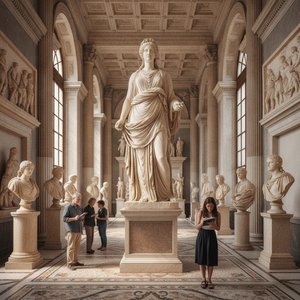
Timeless Grandeur: Exploring the Eternal Beauty and Art-Historical Legacy of Marble Sculpture
Explore the profound legacy of marble sculpture, from Classical antiquity to Neoclassical mastery. A definitive guide for elite collectors and designers seeking to integrate the luminous, eternal beauty of stone into sophisticated, high-end architectural spaces.