
 Se i fuld skala
 Del
Del Del
Del
 Detaljer

 Download
 Lignende værker
 Røntgenundersøgelse
 Diasshow
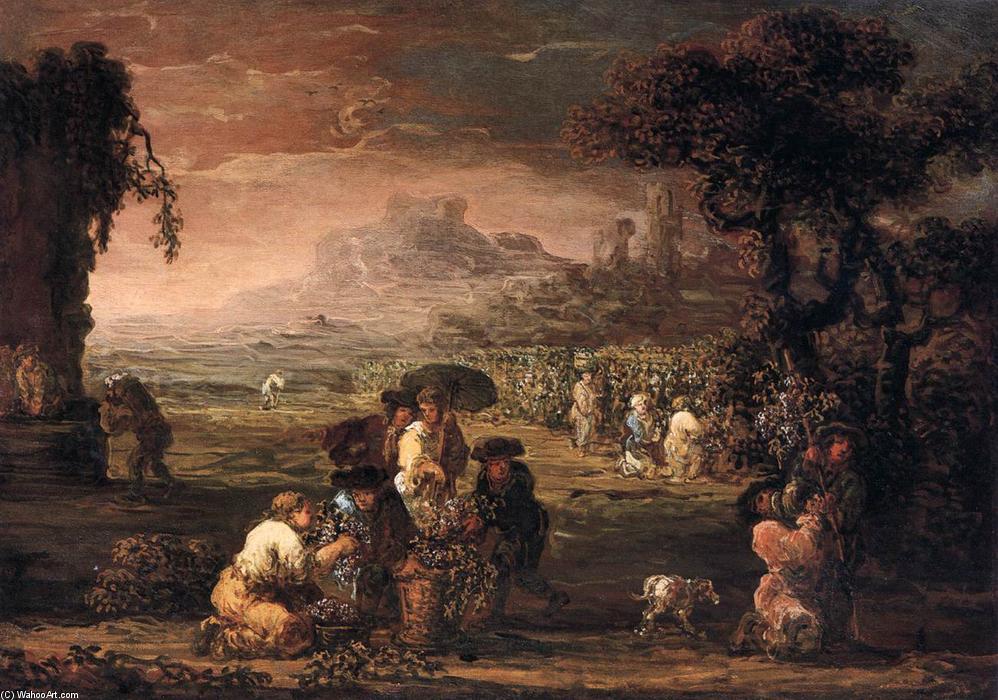
Grape Harvest
 Baroque
 1660
1660 98.0 x 134.0 cm
 Academy of Fine Arts Vienna
 Se mere
Håndlavet oliereproduktion
Håndmalet olie på lærred i din valgte størrelse og ramme, udført efter bestilling af vores kunstnere. ( Køb print Køb billede)




































Vælg mellem vores forudindstillede størrelser, der matcher kunstværkets originale proportioner.

Du kan indtaste dine egne mål for at passe til en bestemt ramme eller plads. Hvis den valgte størrelse ikke stemmer overens med det originale billedes proportioner, vil vi enten beskære kunstværket eller udvide maleriet med yderligere håndmalede elementer. En digital skitse sendes til din godkendelse, før produktionen påbegyndes.
Bemærk venligst, at forhåndsvisningen på skærmen ikke afspejler den faktiske beskæring eller udvidelse. Kun skitsen vil nøjagtigt vise den endelige komposition.
Selvom specialmål er mulige, anbefaler vi at vælge en dimension fra den foruddefinerede liste for at bevare de originale proportioner.
Efter bestilling vil OriginalUniqueArt.com team sende en e-mail til kunden for at få instruktioner og levere et udkast til en skitse.
Levering i hele verden () på 3/4 uger i stedet for de standard 5 uger. (18 august). Ingen kompromiser med kvaliteten.

Gratis ekspresforsendelse til hele verden

Lærred af linned i høj kvalitet

Fuld transportforsikring

Garanti for refusion af told og importafgifter

Garanti for præcis farvegengivelse

60 dages returret (kun ved fabrikationsfejl)

100% Tilfredshedsgaranti

Mængderabat tilgængelig
 Glasmulighed er kun tilgængelig i størrelser under 110 cm

Grape Harvest
Reproduktionsmetode
Størrelse på reproduktion
-


Samlet pris
$ 450
Beskrivelse af kunstværket
A Scene of Rural Life
The scene captures a group of people engrossed in the act of grape harvesting. The figures are scattered across the foreground, their forms rendered with a sense of depth and perspective that adds to the realism of the painting. Their attire suggests a rural setting, possibly in a region known for viticulture. The background features a landscape unfolding under a dramatic sky filled with clouds, with a castle perched atop a hill, adding an element of grandeur to the scene. Key Elements of the painting include the use of earth tones, punctuated by occasional splashes of green from the foliage and blue from the sky. These colors create a harmonious balance within the composition, enhancing its visual appeal. The artist's attention to detail is evident in the depiction of the grape harvest, with each figure engaged in a specific activity, from picking grapes to carrying baskets.- The painting is a testament to Joos De Momper The Younger's ability to bring life to canvas through his use of color, light, and shadow.
- The Academy of Fine Arts Vienna houses an impressive collection of artworks, including paintings by other notable artists such as Pieter De Molyn and Jan Van Bijlert.
- For those interested in learning more about Joos De Momper The Younger and his works, visit /art/list/?Filter=8Y3DVF-Joos-De-Momper-The-Younger-Grape-Harvest for a detailed overview of the painting.
The captivating "Grape Harvest" is a must-see for art enthusiasts and those interested in the Baroque period. Its intricate details and beautiful composition make it a standout piece in the world of art.
Kunstnerens biografi
The Architect of Atmospheric Vistas
Joos de Momper the Younger stands as a pivotal figure in Flemish Baroque landscape painting, bridging the gap between the expressive dynamism of Pieter Bruegel the Elder and the opulent grandeur of Peter Paul Rubens. His artistic legacy resides primarily in his breathtaking depictions of mountainous vistas—scenes imbued with an unparalleled sense of drama and psychological depth. Born into a family steeped in artistic tradition in Antwerp, de Momper’s lineage traced back to his grandfather, Bartolomeus de Momper, a respected landscape painter himself. This familial influence undoubtedly shaped his early artistic inclinations and instilled within him a profound appreciation for capturing the sublime beauty of nature. He received formal training from his father, bolstering his technical skills and establishing a foundation for his distinctive style.
Recognizing the importance of broadening his horizons, de Momostemper embarked on a formative journey to Italy in the 1580s, immersing himself in the artistic fervor of Rome and absorbing the innovations of Mannerism—a stylistic movement that would subtly inform his subsequent work. His ascent within the Antwerp Guild of St. Luke at just seventeen years old signaled a decisive step toward establishing his professional career. His membership afforded him access to invaluable resources and fostered connections with influential patrons, securing commissions that propelled him to prominence. Notably, Archduchess Isabella Clara Eugenia, ruler of Flanders, demonstrated her unwavering support by petitioning the Antwerp magistrates for an exemption from customary taxes and fees—a testament to de Momper’s reputation as a respected artist and his contribution to the cultural landscape of the era.
A Master of Collaboration and Transition
The true brilliance of de Momper's oeuvre lies in its position at a historical crossroads. His work is situated at the delicate transition from late 16th-century Mannerism to the greater realism in landscape painting that developed in the early 17th century. While his compositions often retain the intricate, almost fantastical details characteristic of the Mannerist tradition, they are increasingly infused with an atmospheric truthfulness that anticipates the Dutch Golden Age. This evolution is most evident in his ability to manipulate light and distance, creating a sense of infinite space through the use of aerial perspective, where distant mountains dissolve into soft, hazy blues.
Perhaps de Momper's most significant contribution to the history of art was his ability to work alongside other titans of the Flemish Baroque. He was not merely a solitary painter but a collaborator who elevated the landscape genre through shared vision. His partnerships were legendary, most notably with Jan Brueghel the Elder. In works such as their celebrated Landscape housed in the Museo del Prado, de Momper provided the sweeping, dramatic terrain while Brueghel added the delicate, intricate details of flora and fauna. These collaborations created monumental compositions that defined the aesthetic of the era. His influence also extended to later masters like Francken II and Snayers, ensuring that his stylistic DNA persisted through the 17-century.
Legacy of the Flemish Landscape
Beyond the grand vistas, de Momper possessed a remarkable ability to capture the pulse of rural life. His canvases often featured scenes of everyday labor—such as the rhythmic toil of a grape harvest or the quiet activity of village life—rendered with a sense of depth and perspective that added a profound layer of realism to his work. Whether depicting a River with Castle, Horsemen and Woodcutters or a solitary, sun-drenched cottage, his ability to imbue the landscape with human narrative remains unparalleled.
The historical significance of Joos de Momper the Younger cannot be overstated. He helped transform the landscape from a mere backdrop for religious or historical scenes into a subject worthy of intense psychological and aesthetic study. His mastery over the elements—the mist, the rugged stone, and the shifting light—laid the groundwork for the landscape traditions that would dominate European art for centuries to come. Today, his works remain cherished in the world's most prestigious collections, from the British Museum to the Academy of Fine Arts Vienna, serving as enduring windows into the soul of the Flemish Baroque.

Joos de Momper the Younger
1564 - 1635
Kort om kunstneren
- Artistic Movement Or Style: Baroque Landscape Painting
- Artists Or Movements Influenced By This Artist: ['Peter Paul Rubens']
- Artists Who Influenced This Artist: ['Pieter Brueghel the Elder']
- Date Of Death: 1635
- Full Name: Joos de Momper the Younger
- Nationality: Flemish
- Notable Artworks:
- Landscape with Travellers
- Grape Harvest
- Place Of Birth: Antwerp
Relaterede artikler

Demandes Commerciales
APS ofrece reproducciones de bellas artes y encargos personalizados desde 2004. Confían en nosotros corporaciones, hoteles y coleccionistas selectos para obras de arte de calidad museística, servicio discreto y soluciones artísticas completas. ¡Póngase en contacto con nosotros para obtener un presupuesto personalizado!

Goyas Mesterværker: Top 25 Kunstværker fra den Spanske Sjæl – OriginalUniqueArt.com
Oplev Francisco Goyas 25 mest ikoniske kunstværker. Fra portrætter til 'De Sorte Malerier' – dyk ned i den spanske romantiks sjæl og Goyas teknikker. Find museumskvalitets reproduktioner & inspiration til din indretning på OriginalUniqueArt.com.

Om os
Opdag vores historie! Vi bringer kunst i verdensklasse ind i dit liv gennem ekspertudvalg, skræddersyede kreationer og gratis forhåndsvisninger. Godkendt af private og virksomheder siden år 2000.

Mastering Drama and Light: A Definitive Guide to the Flemish Baroque Art Movement
Explore the dramatic brilliance of the Flemish Baroque movement. Discover how masters like Peter Paul Rubens utilized chiaroscuro and dynamic composition to redefine art history through light, shadow, and unparalleled emotion.
Drama and Light: Discover the Captivating Grandeur of Baroque Art
Immerse yourself in the dramatic splendor of Baroque art. Explore the profound impact of light, shadow, and the Counter-Reformation through an expert historical lens, celebrating the masters who defined an era of unparalleled grandeur and emotional intensity.

