
 Se i rummet
 Del som kort
 Del
Del
 Detaljer
 Guide
Guide

 Download
 Lignende værker
 Røntgenundersøgelse
 Diasshow
 Spørgsmål og svar
 Statistikker
Alexander Hamilton

- 78.0 x 63.0 cm


 Vis mere
Giclée / Kunsttryk
Giclée- eller lærredstryk i museumskvalitet med hurtig produktion og fleksible muligheder for finish. ( Køb håndmalet maleri Skift til digitalt billede)




































Vælg mellem vores forudindstillede størrelser, der matcher kunstværkets originale proportioner.

Indtast den bredde og højde, du har brug for, så det passer til din ramme eller din væg. Et print kan kun beskæres, aldrig gøres større end selve billedet, så en størrelse med et andet format vil medføre, at dele af motivet går tabt. Vi sender dig en digital mockup til godkendelse, før vi printer noget. Billedet vist på denne side viser ikke den faktiske beskæring — det er kun mockuppen, der gør.
Verdensomspændende levering () på 2 uger i stedet for de sædvanlige 4/5 uger. (10 november)

Gratis ekspresforsendelse til hele verden

Lærred af linned i høj kvalitet

Fuld transportforsikring

Garanti for refusion af told og importafgifter

Garanti for præcis farvegengivelse

100 dages returret ved fabrikationsfejl

100% fuld returret

Mængderabat ved flere køb
 Glasmulighed er kun tilgængelig i størrelser under 110 cm

Alexander Hamilton
Giclée / Kunsttryk
Størrelse på reproduktion
-


Samlet pris
Dkr 541
A Gaze Through Time: The Enduring Presence of Alexander Hamilton
In the quiet intensity of John Trumbull’s 1804 portrait, we encounter more than just a mere likeness; we meet the very essence of an era. Alexander Hamilton, a man whose intellect and ambition helped forge the foundations of a nation, stares back at us with a profound, unwavering seriousness. The canvas holds an arresting gaze—one that seems to pierce through the centuries to engage the modern viewer in a silent dialogue. Trumbull, a painter who lived through the American Revolution, brings a unique, eyewitness authority to this work, imbuing the portrait with a sense of historical weight and psychological depth. Every brushstroke serves to capture not just the face of a statesman, but the spirit of America's nascent republic.Mastery of Neoclassical Technique and Light
Trumbull’s technical execution is a masterclass in the Neoclassical style, prioritizing idealized form and a balanced, harmonious composition. The artist employs chiaroscuro—the dramatic interplay of light and shadow—to sculpt Hamilton's features, imbuing the portrait with a three-dimensional presence that feels almost tactile. This manipulation of light serves to highlight the subject's intellectual fervor, drawing the eye to the subtle musculature of his face and the meticulous rendering of his attire. The palette is intentionally subdued, dominated by earthy browns, creams, and deep blacks, which creates a sophisticated contrast against the subject's white hair and formal clothing. This restrained color scheme directs all emotional energy toward Hamilton’s expression, emphasizing a sense of gravity and contemplative strength.A Legacy Captured in Oil
Beyond its aesthetic brilliance, the painting is steeped in the turbulent history of the early United States. Painted shortly after Hamilton’s tragic death in a duel with Aaron Burr, the portrait reflects the profound anxieties surrounding political rivalries and the fragility of republican ideals during that period. Trumbull captures Hamilton at a moment of significant intellectual engagement, portraying him as a man actively shaping the nation's financial future. For the collector or interior designer, this piece offers more than just decoration; it provides a window into the soul of American history. The portrait’s ability to distill complex historical narratives into an emotionally resonant visual representation makes it a timeless addition to any curated collection, offering a sense of dignity, permanence, and scholarly elegance to any space.Spørgsmål og svar
Hvor harmoniske er farverne i "Alexander Hamilton" af John Trumbull?
Farverne i "Alexander Hamilton" af John Trumbull udviser en Unified Palette harmoni. Harmoni beskriver, hvordan farverne relaterer sig til hinanden.
Hvad er den dominerende farve i "Alexander Hamilton" af John Trumbull?
Den farve, der træder tydeligst frem i "Alexander Hamilton", er Phthalo Green (#221914). Den dominerende farve er nyttig, når man skal matche et kunstværk med en indretning.
Hvad er teknikken og årstallet for "Alexander Hamilton" af John Trumbull?
"Alexander Hamilton" af John Trumbull er udført i Oil On Canvas og er fra 1804.
Kunstnerbiografi
A Life Etched in Revolution: The World of John Trumbull
John Trumbull, a name synonymous with the visual narrative of America’s birth, was more than just a painter; he was a witness, a soldier, and a chronicler of a nation forging its identity. Born in Lebanon, Connecticut, in 1756, into a family steeped in patriotic fervor – his father, Jonathan Trumbull, served as governor throughout the Revolutionary War – young John’s destiny seemed intertwined with the unfolding drama of independence. A childhood accident tragically cost him the use of one eye, yet this perceived limitation may have paradoxically sharpened his observational skills, contributing to the meticulous detail that would become a hallmark of his artistic style. His early education at Harvard College further cultivated a mind primed for both intellectual rigor and creative expression. Even before fully embracing his calling as an artist, Trumbull’s life was already imbued with a sense of duty and service, sketching fortifications during the Siege of Boston – a foreshadowing of his future role in immortalizing the Revolution on canvas.From Battlefield to Brushstroke: Artistic Formation and Influences
The path to becoming “the Painter of the Revolution” wasn’t immediate. Financial constraints initially led Trumbull down various avenues, but the pull towards art proved irresistible. In 1780, he embarked on a journey to London, seeking tutelage under the esteemed Benjamin West, an American expatriate who had achieved prominence as a history painter. West recognized Trumbull’s potential and encouraged him to focus on scenes from the War of Independence, suggesting smaller-scale works and miniature portraits – a practical approach that allowed Trumbull to hone his skills while establishing a clientele. Over the course of his career, he produced approximately 250 miniatures, demonstrating remarkable versatility and precision. However, West’s influence extended beyond technique; he instilled in Trumbull an appreciation for classical history painting, inspiring him to imbue his work with dramatic composition and allegorical depth. This fusion of historical accuracy and artistic grandeur would define Trumbull's mature style. The experience wasn’t without hardship; a brief but alarming arrest on suspicion of espionage – retaliation for the execution of Major André – forced a temporary retreat from British society, yet ultimately solidified his commitment to portraying the American cause.Immortalizing Independence: Masterpieces and Historical Significance
Trumbull’s most enduring legacy lies in his monumental historical paintings, particularly those that now grace the Capitol Rotunda. The Declaration of Independence, perhaps his most iconic work, is a carefully constructed tableau depicting the momentous occasion with remarkable fidelity. It's not merely a record of who was present but an attempt to capture the gravity and solemnity of the event. Famously, this painting found its way onto the reverse of the two-dollar bill, cementing its place in American iconography. Other significant works include The Surrender of Cornwallis at Yorktown, The Surrender of General Burgoyne, and George Washington before the Battle of Trenton. These paintings weren’t simply artistic endeavors; they were acts of national commemoration, designed to inspire patriotism and solidify a shared historical narrative. Trumbull meticulously researched each scene, consulting with veterans and studying contemporary accounts to ensure accuracy. His preparatory sketches, like the Study for Surrender of Cornwallis at Yorktown, reveal his painstaking planning process and dedication to detail. In an era devoid of photographic documentation, Trumbull’s paintings served as invaluable visual records, shaping public understanding of the Revolution and its key figures. His meticulous attention to detail—evident in every brushstroke—transformed ordinary events into powerful symbols of liberty and resilience. He captured not just faces but emotions, conveying the palpable tension and drama of pivotal moments in American history. Trumbull’s artistic vision was profoundly influenced by Benjamin West's teachings, who championed a grand historical style rooted in classical ideals. This stylistic choice ensured that Trumbull’s paintings would resonate with audiences across generations, serving as enduring reminders of America’s struggle for independence.A Lasting Legacy: Collections and Enduring Influence
John Trumbull’s contributions extend beyond his celebrated canvases. He was a staunch advocate for the arts in America, serving as president of the American Academy of Fine Arts from 1816 to 1835, tirelessly working to foster a vibrant artistic community within the young nation. His paintings are now held in prestigious institutions across the country, including Yale University Art Gallery, the Smithsonian American Art Museum, and the Virginia Museum of Fine Arts, ensuring their accessibility for generations to come. The prominent display of his works within the United States Capitol serves as a lasting tribute to his dedication to both art and history.- His paintings continue to inspire artists and historians alike.
- They offer invaluable insights into the aesthetics and ideals of the early American republic.
- Trumbull’s commitment to historical accuracy set a precedent for future generations of American historical painters.

John Trumbull
1756 - 1843 , USA
Kort om kunstneren
- Artistic Movement Or Style: Historisk maleri
- Artists Who Influenced This Artist: ['Benjamin West']
- Date Of Birth: Juni 6, 1756
- Date Of Death: 1843
- Full Name: John Trumbull
- Nationality: Amerikaner
- Notable Artworks:
- Deklarationen om uafhængighed
- Cornwalises kapitulation
- George Washington før slaget ved Trenton
- Place Of Birth: Lebanon, USA
Relaterede artikler
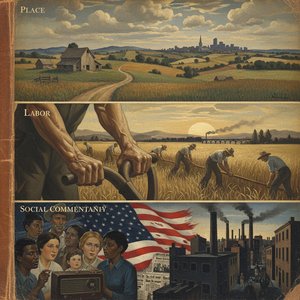
American Regionalism: A Crucible of Identity – Exploring Themes of Place, Labor & Social Commentary
Explore American Regionalism's powerful depiction of the American heartland during the Great Depression. Discover Grant Wood, Thomas Hart Benton & more. Expert analysis & high-quality art reproductions at OriginalUniqueArt.

Amerikansk Realisme: 10 Mesterværker der Definerede En Kunstbevægelse – Find Din Inspiration Hos OriginalUniqueArt
Oplev de 10 mest ikoniske værker inden for amerikansk realisme! Fra Edward Hopper til Andrew Wyeth – lær historierne bag mesterværkerne og find inspiration til dit hjem. Køb museumskvalitets reproduktioner på OriginalUniqueArt.com.

Grant Wood & American Regionalism: Identity, Myth & the Rural Landscape
Explore the world of Grant Wood & American Regionalism with OriginalUniqueArt. Discover the symbolism behind 'American Gothic', recurring themes, and the movement's lasting impact on art history. High-quality reproductions available.

John Singer Sargent: Top 25 Mesterværker – Portrætter & Historier | OriginalUniqueArt.dk
Oplev John Singer Sargents 25 mest ikoniske malerier – fra elegante portrætter til impressionistiske mesterværker. Lær historierne bag kunsten & find inspiration til din indretning med OriginalUniqueArt.com. Udforsk samlingen online!

John Constables 25 Mesterværker: En Hyldest til Englands Landskabskunst | OriginalUniqueArt.com
Oplev John Constables 25 mest ikoniske værker! Fordyb dig i engelsk romantik, betagende landskaber og tidløs skønhed. Køb museumskvalitets reproduktioner af 'The Hay Wain' & mere på OriginalUniqueArt.com – inspiration til dit hjem.