
 Se i rummet
 Del som kort
 Del
Del
 Detaljer
 Guide
Guide

 Download
 Lignende værker
 Røntgenundersøgelse
 Diasshow
 Spørgsmål og svar
 Statistikker
Lady Hamilton as a Bacchante

- 38.0 x 28.0 cm


 Vis mere
Giclée / Kunsttryk
Giclée- eller lærredstryk i museumskvalitet med hurtig produktion og fleksible muligheder for finish. ( Køb håndmalet maleri Skift til digitalt billede)




P118B Dkr10

P118H Dkr10

P118W Dkr10

P438Z Dkr10

P508JH Dkr12

P508YH Dkr12

P805H Dkr10

P805Z Dkr10

P919BZ Dkr10

P919G Dkr10

P919XJ Dkr10

P959ZH Dkr10

P968JZ Dkr12

W106C Dkr8

W218G Dkr10

W218JH Dkr8

W218Y Dkr10

W307PJ Dkr10

W316G Dkr10

W316PJ Dkr8

W316Y Dkr10

W398PJ Dkr8

W4111J Dkr10

W500HY Dkr15

W500JH Dkr15

W692G Dkr12

W849H Dkr8

W940BG Dkr15

W953PJ Dkr8




Vælg mellem vores forudindstillede størrelser, der matcher kunstværkets originale proportioner.

Indtast den bredde og højde, du har brug for, så det passer til din ramme eller din væg. Et print kan kun beskæres, aldrig gøres større end selve billedet, så en størrelse med et andet format vil medføre, at dele af motivet går tabt. Vi sender dig en digital mockup til godkendelse, før vi printer noget. Billedet vist på denne side viser ikke den faktiske beskæring — det er kun mockuppen, der gør.
Verdensomspændende levering () på 2 uger i stedet for de sædvanlige 4/5 uger. (10 november)

Gratis ekspresforsendelse til hele verden

Lærred af linned i høj kvalitet

Fuld transportforsikring

Garanti for refusion af told og importafgifter

Garanti for præcis farvegengivelse

100 dages returret ved fabrikationsfejl

100% fuld returret

Mængderabat ved flere køb
 Glasmulighed er kun tilgængelig i størrelser under 110 cm

Lady Hamilton as a Bacchante
Giclée / Kunsttryk
Størrelse på reproduktion
-


Samlet pris
Dkr 541
Lady Hamilton as a Bacchante: A Dance of Desire and Roman Echoes
Élisabeth Louise Vigée Le Brun’s “Lady Hamilton as a Bacchante,” painted in 1792, is more than just a portrait; it's a carefully constructed tableau vivant, brimming with theatricality, historical allusion, and the simmering intensity of a forbidden love. The painting captures Emma Hart Hamilton – later Lady Hamilton – not merely as a beautiful woman, but as a figure drawn from ancient mythology, embodying both earthly allure and ethereal grace. Le Brun, a prominent artist in the French court, skillfully employs the conventions of Neoclassicism while subtly injecting elements of Romanticism, creating an image that is simultaneously formal and deeply emotive.
The subject herself, Emma Hamilton, was a captivating figure. A former dancer and actress, she possessed a remarkable beauty and charm, which quickly caught the eye of Sir William Hamilton, the British Ambassador to Naples. Their affair became legendary, fueled by mutual admiration and a shared passion for art and culture. Le Brun’s choice to depict her as a Bacchante – a follower of Dionysus, the god of wine, revelry, and ecstasy – is profoundly symbolic. It speaks to the intoxicating nature of their relationship, suggesting a world of unrestrained pleasure and passionate abandon. The pose itself—hand raised to her chin, eyes gazing directly at the viewer—commands attention, inviting us into this private, almost illicit, scene.
The Techniques of Illusion: Mezzotint and Dramatic Lighting
“Lady Hamilton as a Bacchante” is executed in mezzotint, a printmaking technique that lends itself beautifully to capturing both subtle tonal variations and dramatic contrasts. This process, perfected by John Raphael Smith (a key figure in the painting’s creation), involved meticulously roughening a metal plate with ink, creating areas of deep blackness that would then be selectively wiped away to reveal the white paper beneath. The result is an image rich in texture and shadow, reminiscent of Rembrandt's masterful use of chiaroscuro. Smith’s engraving, which served as the basis for Le Brun’s painting, further amplified this effect, adding layers of detail and emphasizing the theatricality of the scene.
Le Brun masterfully utilizes lighting to heighten the drama. The figure is bathed in a soft, diffused light that highlights her flowing white dress and the delicate folds of her hair. This luminosity contrasts sharply with the darker background, creating a sense of depth and drawing our attention to Hamilton’s face—a study in composure and vulnerability. The careful manipulation of light and shadow not only enhances the visual impact but also contributes to the painting's overall mood of restrained passion.
Historical Context and Mythic Resonance
To fully appreciate “Lady Hamilton as a Bacchante,” it’s crucial to understand its historical context. The painting was created during the tumultuous years following the French Revolution, a period marked by political upheaval and social change. The Neoclassical style, of which Le Brun was a prominent proponent, sought to revive the ideals of ancient Greece and Rome—a deliberate reaction against the excesses of the Baroque era. By depicting Hamilton as a Bacchante, Le Brun subtly references Roman mythology, specifically the Bacchanalia – frenzied religious rites dedicated to Dionysus that were outlawed by Roman authorities.
The choice of the Bacchantes motif also reflects the broader cultural anxieties of the time. The bacchantic frenzy represented both liberation and chaos—a potent symbol for a society grappling with uncertainty and moral decay. Hamilton’s embrace of this mythological role can be interpreted as an assertion of her own agency, a defiant rejection of societal constraints.
A Legacy of Beauty and Intrigue
“Lady Hamilton as a Bacchante” remains one of the most captivating portraits of the late 18th century. It’s a testament to Le Brun's artistic skill, Smith’s masterful printmaking, and the enduring power of myth and romance. The painting continues to fascinate viewers with its blend of beauty, drama, and historical significance. Reproductions offer a remarkable opportunity to experience this iconic image firsthand, bringing its timeless allure into any setting—from grand galleries to intimate interiors.
Spørgsmål og svar
Hvilken atmosfære ville en reproduktion af "Lady Hamilton as a Bacchante" af John Raphael Smith tilføre et rum?
Den Romantic atmosfære i "Lady Hamilton as a Bacchante" af John Raphael Smith komplementerer det anbefalede rum: et Living Room.
Hvor kan jeg finde en guide til "Lady Hamilton as a Bacchante"?
Guiden til "Lady Hamilton as a Bacchante" findes på værkets Elevguide-side – et printbart faktablad, der præsenterer værket sammen med dets billedtekst, kreditering og identifikationstabel (kunstner, datoer, medie, original størrelse, samling).
Hvilket rum anbefales "Lady Hamilton as a Bacchante" af John Raphael Smith til?
En reproduktion af "Lady Hamilton as a Bacchante" vil passe smukt ind i et Living Room.
Kunstnerbiografi
A Life Etched in Light: The World of John Raphael Smith
John Raphael Smith, født i Derby i 1752, var en central figur i det blomstrende britiske kunstmiljø under den sene georgianske æra. Hans historie er præget af bemærkelsesværdig alsidighed – maler, mezzotintegraver, forhandler og mentor for en hel generation af kunstneriske lysende stjerner. Selvom han måske ikke er lige så fejret i dag som nogle af sine samtidige, resonerede Smiths indflydelse dybt gennem det kunstneriske landskab på hans tid, og formåede at forme både den tekniske dygtighed og de æstetiske sanser hos utallige kunstnere. Hans tidlige liv, præget af atmosfæren i en malerens hjem – hans far, Thomas Smith, var en respekteret landskabsmaler – gav fertile grund for hans spirende talent. En indledende læreplads som linneddukkehandel tilbød en praktisk forståelse, men det var trækningen mod kunstnerisk udtryk, der i sidste ende definerede hans vej. En flytning til London i 1767 markerede begyndelsen på hans karriere, hvor han supplerede indkomst fra miniatureportrætter med en ivrig omfavnelse af trykkunst.Master of Mezzotint and Portraiture
Smith etablerede sig hurtigt som mester i mezzotintegravering – en teknik, der krævede både præcis dygtighed og kunstnerisk vision. Denne proces, der involverede skabelsen af tonevariationer gennem skrabning og polering af en kobberplade, tillod en ekstraordinær grad af detalje og atmosfærisk dybde. Hans tidlige succeser med tryk efter værker af Henry Benbridge og andre hurtigt opnåede anerkendelse, men det var hans engagement med Sir Joshua Reynoldss arbejde, der virkelig cementerede hans ry. Over 40 reproduktioner af Reynolds’ malerier strømmede fra Smiths hånd, hvilket demonstrerede en bemærkelsesværdig evne til ikke kun at gengive ligheden, men også de subtile nuancer af farve og tekstur, der var iboende i originalerne. Denne dedikation til at gengive Reynoldss stil viste Smiths tekniske mesterskab og etablerede ham som en førende graver på hans tid. Ud over portrætter udforskede Smith genren og satiriske motiver – mere end 400 værker i alt – hvilket afslørede et skarpt observationsøjeblik og en legesyg humor. Hans portrætter var især bemærkelsesværdige for deres realisme og opmærksomhed på detaljer, der gav intime glimt ind i livet af fremtrædende personer.Royal Patronage and Artistic Collaboration
Smiths talent blev ikke ubemærket. I 1784 fik han en prestigefyldt udnævnelse som Mezzotintegraver til Wales’ Prins, hvilket befæstede hans position inden for det kunstneriske etablissement. Denne kongelige venskab åbnede døre til bestillinger fra indflydelsesrige personer, hvilket resulterede i slående portrætter af figurer som Charles James Fox, Benjamin Thompson og Lieutenant William Collingwood, samt Mrs. Carnac. *Disse værker er vidn om Smiths evne til at fange både fysisk lighed og psykologisk dybde.* Hans involvering udvidede sig ud over blot reproduktion; han var en skarp trykkhandler og forhandler og samarbejdede bevidst med den radikale kunstner og forfatter William Blake. Denne association fremhævede Smiths villighed til at engagere sig i forskellige kunstneriske stemmer og hans rolle i at fremme et levende intellektuelt miljø i London’s kunstverden. En særligt bemærkelsesværdig bestilling kom fra John Milnes, der bad Smith om at reproducere Joseph Wright of Derby’s hjemsøgende mesterværk, *The Captive*. Den resulterende tryk blev begrænset til kun 20 eksemplarer, før pladen bevidst blev ødelagt, hvilket tilføjede et aura af eksklusivitet og sjældenhed til dette ekstraordinære værk.A Legacy Forged in Mentorship
Måske er Smiths mest vedvarende arv ikke kun hans egne kunstneriske output, men også hans dedikation til at pleje den næste generation af talent. Han tjente som en produktiv mentor og vejleder for mange unge kunstnere, der senere blev fejrede i deres egen rette ret.- Blandt hans elever er store navne som J.M.W. Turner,
- Charles H. Hodges,
- William Ward og
- Thomas Girtin.

John Raphael Smith
1752 - 1812 , Storbritannien
Kort om kunstneren
- Artistic Movement Or Style: Mezzotint, portræt
- Artists Or Movements Influenced By This Artist:
- Turner
- Girtin
- Artists Who Influenced This Artist:
- Henry Benbridge
- Reynolds
- Date Of Birth: 1752
- Date Of Death: 1812
- Full Name: John Raphael Smith
- Nationality: Britisk
- Notable Artworks:
- The Captive
- Lt. Collingwood
- Place Of Birth: Derby, Storbritannien
Relaterede artikler

John Singer Sargent: Top 25 Mesterværker – Portrætter & Historier | OriginalUniqueArt.dk
Oplev John Singer Sargents 25 mest ikoniske malerier – fra elegante portrætter til impressionistiske mesterværker. Lær historierne bag kunsten & find inspiration til din indretning med OriginalUniqueArt.com. Udforsk samlingen online!

John Constables 25 Mesterværker: En Hyldest til Englands Landskabskunst | OriginalUniqueArt.com
Oplev John Constables 25 mest ikoniske værker! Fordyb dig i engelsk romantik, betagende landskaber og tidløs skønhed. Køb museumskvalitets reproduktioner af 'The Hay Wain' & mere på OriginalUniqueArt.com – inspiration til dit hjem.

Thomas Stuart Smith: A Study in British Impressionism & the Poetic Landscape
Explore the captivating world of Thomas Stuart Smith (1815-1869), a Scottish painter bridging Romantic realism and British Impressionism. Discover his genre scenes, philanthropic legacy & stunning interiors.

Raphaels 25 Mesterværker: Kunst, Historie & Inspiration til Dit Hjem | OriginalUniqueArt
Oplev Raphaels 25 mest ikoniske værker! Dyk ned i renæssancens kunsthistorie, fra 'Skolen i Athen' til smukke madonna-malerier. Find inspiration & køb museumskvalitets reproduktioner på OriginalUniqueArt.com.
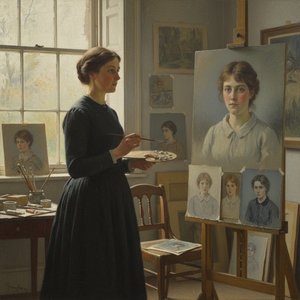
Gwen John: Intimacy, Modernity & the Quiet Power of Welsh Portraiture
Explore the captivating world of Gwen John, a pioneering Welsh artist renowned for her intimate portraits & subtle style. Discover her life, legacy, and how to bring her timeless beauty into your home with OriginalUniqueArt.