

 Se i rummet
 Send
Send Del
Del
 Detaljer
 Studieguide til kunstværker

 Download
 Lignende værker
 Røntgenundersøgelse
 Se diasshow
 Statistik
The Introduction

 Læs mere
Håndlavet oliereproduktion
Håndmalet olie på lærred i din valgte størrelse og ramme, udført efter bestilling af vores kunstnere. ( Skift til printversion Skift til digitalt billede)




P118B Dkr10

P118H Dkr10

P118W Dkr10

P438Z Dkr10

P508JH Dkr12

P508YH Dkr12

P805H Dkr10

P805Z Dkr10

P919BZ Dkr10

P919G Dkr10

P919XJ Dkr10

P959ZH Dkr10

P968JZ Dkr12

W106C Dkr8

W218G Dkr10

W218JH Dkr8

W218Y Dkr10

W307PJ Dkr10

W316G Dkr10

W316PJ Dkr8

W316Y Dkr10

W398PJ Dkr8

W4111J Dkr10

W500HY Dkr15

W500JH Dkr15

W692G Dkr12

W849H Dkr8

W940BG Dkr15

W953PJ Dkr8




Vælg mellem vores forudindstillede størrelser, der matcher kunstværkets originale proportioner.

Indtast den bredde og højde, du har brug for, så det passer til din ramme eller din væg. Da dette er håndmalet, kan kunstneren ved en anden form på størrelsen male lidt mere rundt om billedet eller skære lidt væk — det er op til dig. Vi sender dig et digitalt mockup til godkendelse, før maleriet påbegyndes. Billedet, der vises på denne side, viser ikke det endelige resultat — det er kun mockuppet, der gør.
Efter bestilling vil OriginalUniqueArt.com team sende en e-mail til kunden for at indhente instruktioner og fremsende et udkast til gennemgang.
Levering i hele verden () på 3-4 uger i stedet for de standard 5 uger. (22 oktober). Ingen kompromiser med kvaliteten.

Gratis ekspresforsendelse til hele verden

Lærred af linned i høj kvalitet

Komplet transportforsikring

Garanti for refusion af told og importafgifter

Garanti for autentisk farvegengivelse

100 dages returret ved fabrikationsfejl

100% fuld returret

Mængderabat ved flere køb
 Glasmulighed er kun tilgængelig i størrelser under 110 cm

The Introduction
Reproduktionsmateriale
Reproduktionsstørrelse
-


Samlet pris
Dkr 1957
Om kunstneren
John Haynes-Williams: A Victorian Master of Everyday Life
John Haynes-Williams (1836-1908) wasn’t a name that typically graces the halls of grand museums or dominates art historical discourse. Yet, within the quiet intimacy of his meticulously rendered scenes – portraits, genre paintings, and historical subjects – lies a remarkable talent for capturing the essence of Victorian England. Born in Scarborough, Yorkshire, into a family with deep roots in English landed gentry, Haynes-Williams’s artistic journey began not with formal training but through a keen observation of the world around him, a fascination that would ultimately define his distinctive style.
His early life was marked by a strong connection to the natural world and a burgeoning interest in art. While details remain somewhat sparse – Haynes-Williams wasn’t particularly forthcoming about his formal education – it's believed he honed his skills through self-study and perhaps informal instruction, absorbing the techniques of earlier generations of British artists. This foundation proved crucial as he began to develop his signature approach: a detailed realism that eschewed dramatic gestures or grand narratives in favor of capturing the subtle nuances of ordinary life. His work reflects a deep appreciation for domesticity, social interactions, and the quiet beauty found within everyday routines – a sensibility remarkably ahead of its time.
The Rise of a Genre Painter
Haynes-Williams’s career gained momentum in the late 1860s and early 1870s. He quickly established himself as a prolific painter, producing a vast body of work that showcased his remarkable technical skill and insightful eye. His subjects were largely drawn from the lives of the middle and upper classes – families gathered around hearths, gentlemen engaged in conversation, women tending to domestic duties—but he approached these scenes with an almost anthropological curiosity, seeking to reveal not just what people *did*, but also how they *felt*. This is particularly evident in his portraits, where he masterfully conveyed a sense of personality and character through subtle shifts in expression and posture. His ability to capture the fleeting emotions of his subjects—a flicker of amusement, a hint of melancholy—is a testament to his deep understanding of human psychology.
A pivotal moment in Haynes-Williams’s career was his association with Sir Otto Jaffe, a prominent portrait painter who served as his mentor. Jaffe recognized Haynes-Williams's potential and provided him with invaluable guidance on technique and composition. The influence of Jaffe is readily apparent in Haynes-Williams’s later work, particularly in the careful attention to detail and the refined use of light and shadow that characterize his paintings.
Key Works and Artistic Techniques
Several of Haynes-Williams's paintings stand out as particularly noteworthy examples of his artistic skill and vision. “The Introduction,” a captivating depiction of a family gathered around a table, exemplifies his ability to create a sense of intimacy and warmth. The painting’s rich colors, meticulously rendered details, and carefully observed expressions convey a feeling of genuine connection between the figures. Similarly, his portrait of Alderman Walter Holland is a masterclass in formal portraiture, capturing the subject's dignity and gravitas with remarkable precision. The use of dark tones and subtle gradations of light creates a sense of depth and atmosphere, drawing the viewer into the scene.
Haynes-Williams’s technique was characterized by his painstaking attention to detail. He employed a layered approach to painting, building up thin glazes of color to create luminous surfaces and achieve remarkable tonal variations. His use of brushwork was subtle yet expressive, conveying texture and form with remarkable economy. He also demonstrated a keen understanding of perspective and composition, creating paintings that are both visually engaging and intellectually stimulating.
Legacy and Historical Significance
Despite not achieving widespread fame during his lifetime, John Haynes-Williams’s work has gained increasing recognition in recent years. His paintings offer a valuable glimpse into the social and cultural landscape of Victorian England—a period of rapid industrialization, social change, and profound artistic innovation. His focus on everyday life and ordinary people provides a counterpoint to the grand narratives often depicted by his contemporaries, reminding us of the beauty and significance found in the seemingly mundane.
Today, Haynes-Williams’s paintings are housed in collections around the world, including the Worcestershire Art Gallery and Museum. His work continues to be studied and admired for its technical skill, emotional depth, and insightful portrayal of Victorian society. He remains a significant figure in British genre painting, a testament to the enduring power of observation and artistic talent.

John Haynes Williams
1836 - 1908
Hurtige fakta
- Full Name: John Haynes-Williams
- Nationality: British
- Date Of Birth: 1836
- Date Of Death: 1908
- Place Of Birth: WahooArt
- Notable Artworks:
- The Introduction
- Alderman Walter Holland
- Sir Otto Jaffe
- Artistic Movement Or Style: Genre painting
- Artists Or Movements Influenced By This Artist: ['Victorian painting']
Relaterede artikler

John Singer Sargent: Top 25 Mesterværker – Portrætter & Historier | OriginalUniqueArt.dk
Oplev John Singer Sargents 25 mest ikoniske malerier – fra elegante portrætter til impressionistiske mesterværker. Lær historierne bag kunsten & find inspiration til din indretning med OriginalUniqueArt.com. Udforsk samlingen online!

John Gilbert: A Comprehensive Exploration of Technique, Context, and Enduring Legacy in Victorian Genre Painting
Explore the life & art of John Gilbert, a prolific Victorian painter renowned for his captivating genre scenes and Venetian-inspired style. Discover his legacy with OriginalUniqueArt.
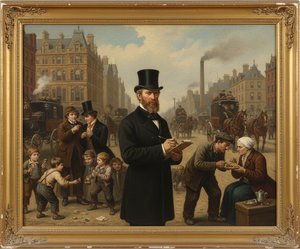
R.A. Benjamin Williams: Victorian Genre Painting & Social Commentary
Explore the captivating world of Benjamin Williams Leader's Victorian genre paintings. Discover his mastery of naturalism, social commentary & lasting influence on British art. Expert insights at OriginalUniqueArt.
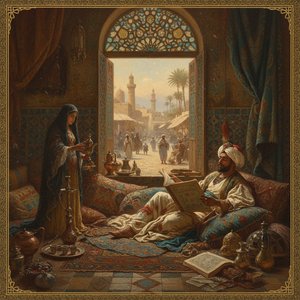
John Frederick Lewis: Orientalism, Detail & Genre Painting in 19th-Century British Art
Explore the captivating Orientalist paintings of John Frederick Lewis! Discover his mastery of detail, genre scenes & influence on 19th-century British art. Learn about his life, techniques & legacy at OriginalUniqueArt.

John Constables 25 Mesterværker: En Hyldest til Englands Landskabskunst | OriginalUniqueArt.com
Oplev John Constables 25 mest ikoniske værker! Fordyb dig i engelsk romantik, betagende landskaber og tidløs skønhed. Køb museumskvalitets reproduktioner af 'The Hay Wain' & mere på OriginalUniqueArt.com – inspiration til dit hjem.