Romantic Landscape Painting · 1813
East Bergholt (John Constable, 1813)
John Constable (1776–1837) har skabt East Bergholt. Det er fra 1813. Det tilhører Romantic Landscape Painting-bevægelsen. Den er udført i Acrylic On Canvas. Det opbevares på Yale Center for British Art i New Haven, USA.
- 1813
- Acrylic On Canvas
- Yale Center for British Art, New Haven

 Se i rummet

 Håndmalet oliemalerie
 Del som kort
 Del
 Faktablad


 Download
 Lignende værker
 Røntgenundersøgelse
 Diasshow
 Spørgsmål og svar

 Statistikker
East Bergholt kort fortalt
- Titel
- East Bergholt
- Kunstner
- John Constable (1776–1837)
- Kunstner født i
- East Bergholt, Storbritannien
- Dato
- 1813
- Medium
- Acrylic On Canvas
- Hvor det kan ses
- Yale Center for British Art, New Haven, USA
- Bevægelse
- Romantic Landscape Painting
- Motiv
- suffolk countryside, rural england, constable, landscape, pastoral, light and shadow
Hvad forestiller East Bergholt?
A Breath of Suffolk: John Constable’s ‘East Bergholt’
John Constable's “East Bergholt,” painted in 1813, isn’t simply a depiction of a rural English landscape; it’s a profound meditation on light, atmosphere, and the very essence of place. Born in East Bergholt itself – a fact that imbued his work with an unparalleled intimacy – Constable captured not just what he saw, but how he *felt* about the world around him. The painting unfolds as a quiet drama, a tableau vivant of everyday life set against the backdrop of Dedham Vale, the valley that would become inextricably linked to his artistic legacy. The muted palette, dominated by shades of grey and green, immediately establishes a mood of contemplative melancholy – a subtle tension between beauty and something almost melancholic. This isn’t a vibrant celebration of pastoral bliss; rather, it's an exploration of the land’s inherent complexity, its capacity for both serenity and shadowed introspection.
The Language of Light: Constable’s Revolutionary Technique
Constable was a revolutionary figure in landscape painting. He rejected the idealized, polished surfaces favored by his predecessors, opting instead for a technique that prioritized direct observation and the fleeting effects of light. “East Bergholt” exemplifies this perfectly. Notice how he employs broken brushstrokes – tiny, almost hesitant marks – to build up layers of color and texture. This method, known as ‘optical mixing,’ allowed him to capture the subtle shifts in illumination across the fields and trees with astonishing accuracy. The sky isn’t a uniform blue; it's a complex interplay of greys, whites, and hints of purple, reflecting the diffused light of an overcast day. He meticulously rendered the way sunlight filters through the branches, creating dappled patterns on the grass – a technique that would later become central to his style. This commitment to capturing the *truth* of natural light was groundbreaking and profoundly influenced generations of artists.
Figures Within the Landscape: Symbolism and Human Connection
The inclusion of figures within the vast landscape is crucial to understanding the painting’s deeper meaning. These aren't merely decorative elements; they are integral to Constable’s exploration of humanity’s relationship with nature. The group gathered in the field, engaged in some unspecified activity – perhaps farming or simply enjoying a moment together – represents a connection to the land and its rhythms. They are small, almost anonymous, yet their presence anchors the scene, reminding us that this is not just an abstract representation of nature but a lived experience. The horse grazing peacefully suggests a harmony between man and beast, further reinforcing the theme of rural life and its inherent beauty. The placement of these figures subtly directs our gaze across the landscape, inviting us to contemplate the relationship between human activity and the natural world.
A Window into a Time: Historical Context and Constable’s Vision
“East Bergholt” was painted during a period of significant social and artistic change in England. The early 19th century witnessed a growing interest in the English countryside, fueled by Romanticism's emphasis on emotion, imagination, and the sublime. Constable’s work aligns perfectly with this movement, capturing not just the physical beauty of the landscape but also its emotional resonance. He was deeply influenced by Claude Lorrain, whose idealized landscapes provided a foundation for his own explorations. However, Constable moved beyond Lorrain's static perfection, imbuing his paintings with a sense of immediacy and psychological depth. “East Bergholt” is more than just a record of a place; it’s a testament to Constable’s unique vision – a vision rooted in the soil of East Bergholt and imbued with a profound understanding of the English landscape.
OriginalUniqueArt offers exquisite, hand-painted reproductions of “East Bergholt,” allowing you to bring this iconic work into your home or office. Each reproduction is created using traditional techniques and archival quality materials, ensuring that it will retain its beauty and vibrancy for generations to come. Explore our collection today and experience the magic of Constable’s Suffolk.
Hvilket museum udstiller East Bergholt?
Yale Center for British Art
New Haven, USA
Historien om Yale Center for British Art Etableret i 1966 indtager Yale Center for British Art en betydningsfuld position i New Haven, Connecticut, i USA. Institutionen har sit udspring i en ekstraordinær gave bestående af en samling, der blev akkumuleret af Paul Mellon. Dette fundament transformerede landskabet for studier i britisk kunst i regionen og skabte et permanent hjem for værker, der sporer en nations visuelle identitets udvikling.


Højopløselige billeder af East Bergholt

Public domain: kunstneren døde i 1837.
Andre størrelser, beskæringer og kildehenvisning →John Constable, East Bergholt (1813), Yale Center for British Art. Public domain
Spørgsmål om East Bergholt besvaret
Hvor kan man i dag se "East Bergholt" af John Constable udstillet?
"East Bergholt" af John Constable er udstillet på Yale Center for British Art, New Haven, USA. Museets fortegnelse henviser til det originale værk og ikke til reproduktioner.
Hvornår blev "East Bergholt" skabt?
"East Bergholt" af John Constable blev skabt i 1813.
Hvilken teknik er "East Bergholt" udført med?
John Constable brugte Acrylic On Canvas-teknikken til "East Bergholt". Teknikken definerer det originale værks materielle karakter.
Hvad forestiller "East Bergholt"?
Motiverne i "East Bergholt" er suffolk countryside, rural england, constable, landscape, pastoral, light and shadow, figures.
Er billedet af "East Bergholt" af John Constable frit tilgængeligt i det offentlige domæne?
Ophavsretsstatus for "East Bergholt" af John Constable: værket er i det offentlige domæne – ophavsretten er udløbet. Dette afgør, om der frit må foretages reproduktioner af billedet.
Hvem har skabt "East Bergholt"?
Kunstneren bag "East Bergholt" er John Constable. Værket er katalogiseret under John Constables navn.
Hvilken kunstretning tilhører "East Bergholt" af John Constable?
"East Bergholt" af John Constable tilhører Romantic Landscape Painting-bevægelsen. Denne bevægelse giver den stilistiske kontekst for værket.
Hvilken periode i John Constables karriere tilhører "East Bergholt"?
"East Bergholt" tilhører Mature Period i John Constables karriere. Denne klassificering knytter værket til kunstnerens udvikling.
Hvor gammel var John Constable, da "East Bergholt" blev skabt i 1813?
John Constable var 37 år gammel, da vedkommende skabte "East Bergholt" i 1813. Alderen er beregnet ud fra kunstnerens fødselsår, 1776.
Om kunstneren, John Constable
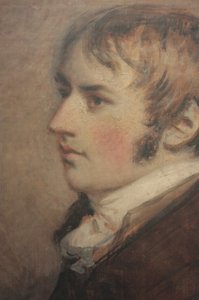
1776–1837, Storbritannien
John Constable
Tidligt liv, familie og uddannelse John Constable blev født i 1776 i landsbyen East Bergholt i Suffolk. Han var den anden søn af Golding og Ann (Watts) Constable. Hans far var en velstående korn- og kulhandler, der ejede Flatford Mill. Denne tætte forbindelse til floden og den lokale handel betød, at vandets rytmer og varernes konstante bevægelse var en integreret del af husholdningens daglige liv.
Om John Constable Bemærkelsesværdige værker af John Constable
Også af John Constable
 Havedalen1821
 Udsigt over Salisbury Cathedral fra Biskoppens Grund1823
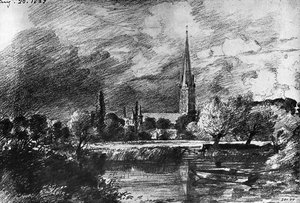 Salisbury Domkirke
 Høvognen (detalje)1821

Essays om East Bergholt
 The Language of Brushstrokes: How Texture and Technique Reveal the Soul of ArtDiscover the profound connection between texture and emotion in Impressionist art. Explore how masterful brushstrokes by Renoir and Monet c…
 25 Must-See Masterpieces at the Yale Center for British ArtExplore 25 iconic British masterpieces from Turner to Hogarth. Discover museum-quality art at OriginalUniqueArt.com.
 Mastering the English Landscape: The Top 25 Artworks by John ConstableImmerse yourself in the soul of the English countryside with our curated guide to John Constable's top 25 masterpieces. Explore the emotive…