
 Se i rummet
 Del som kort
 Del
Del
 Detaljer
 Guide
Guide

 Download
 Lignende værker
 Røntgenundersøgelse
 Diasshow
 Q&A
Q&A Statistikker
A Naval Ketch


 Vis mere
Giclée / Kunsttryk
Giclée- eller lærredstryk i museumskvalitet med hurtig produktion og fleksible muligheder for finish. ( Køb håndmalet maleri Skift til digitalt billede)




P118B Dkr10

P118H Dkr10

P118W Dkr10

P438Z Dkr10

P508JH Dkr12

P508YH Dkr12

P805H Dkr10

P805Z Dkr10

P919BZ Dkr10

P919G Dkr10

P919XJ Dkr10

P959ZH Dkr10

P968JZ Dkr12

W106C Dkr8

W218G Dkr10

W218JH Dkr8

W218Y Dkr10

W307PJ Dkr10

W316G Dkr10

W316PJ Dkr8

W316Y Dkr10

W398PJ Dkr8

W4111J Dkr10

W500HY Dkr15

W500JH Dkr15

W692G Dkr12

W849H Dkr8

W940BG Dkr15

W953PJ Dkr8




Vælg mellem vores forudindstillede størrelser, der matcher kunstværkets originale proportioner.

Indtast den bredde og højde, du har brug for, så det passer til din ramme eller din væg. Et print kan kun beskæres, aldrig gøres større end selve billedet, så en størrelse med et andet format vil medføre, at dele af motivet går tabt. Vi sender dig en digital mockup til godkendelse, før vi printer noget. Billedet vist på denne side viser ikke den faktiske beskæring — det er kun mockuppen, der gør.
Verdensomspændende levering () på 2 uger i stedet for de sædvanlige 4/5 uger. (31 oktober)

Gratis ekspresforsendelse til hele verden

Lærred af linned i høj kvalitet

Fuld transportforsikring

Garanti for refusion af told og importafgifter

Garanti for præcis farvegengivelse

100 dages returret ved fabrikationsfejl

100% fuld returret

Mængderabat ved flere køb
 Glasmulighed er kun tilgængelig i størrelser under 110 cm

A Naval Ketch
Giclée / Kunsttryk
Størrelse på reproduktion
-


Samlet pris
Dkr 538
Kunstnerbiografi
The Shipwright of the Canvas: The Life of John Cleveley the Elder
In the heart of eighteenth-century London, amidst the rhythmic sounds of hammers and the scent of fresh timber at the Deptford Dockyard, a unique artistic vision was being forged. John Cleveley the Elder (c. 1712 – 1777) did not emerge from the polished studios of fine art academies, but rather from the practical, gritty reality of a shipwright’s workshop. Born in Southwark, his early life was defined by the tactile mastery of wood and iron. As a carpenter belonging to His Majesty’s Navy, Cleveley possessed an intimate, structural understanding of the vessels that dominated the seas of his era. This foundational knowledge would later become the very soul of his artistry, allowing him to transcend mere illustration and achieve a profound level of maritime realism that few of his contemporaries could replicate.
Cleveley’s journey is a testament to the power of observation. Without formal academic training, he relied on an innate ability to translate the technical complexities of naval architecture into evocative oil paintings. His dual vocation—working as a carpenter while developing his painterly hand—meant that every line of a hull and every tension in a mast was informed by firsthand experience. When one gazes upon his depictions of ships under construction, such as the celebrated Sixth-Rate on the Stocks, one does not merely see a painting; one witnesses the meticulous precision of a man who understood the weight, the grain, and the engineering of the maritime world.
A Mastery of Light, Sea, and Motion
The brilliance of Cleveley’s work lies in his ability to marry technical accuracy with an atmospheric sensitivity. While his compositions are anchored by the rigid geometry of naval construction, they are brought to life through a masterful use of light and shadow. He possessed a rare talent for capturing the mercurial nature of the sea—the way sunlight dances upon a cresting wave or how a heavy mist might shroud a distant frigate. In works like The Royal Caroline, painted in 1750, Cleveley demonstrates an extraordinary command over movement; the sails are not static objects but living entities, caught in a moment of energetic propulsion across the canvas.
His stylistic development allowed him to navigate various maritime themes, from the serene majesty of royal yachts to the visceral drama of naval engagements. He could pivot from the quiet, industrious atmosphere of the dockyards to the chaotic, salt-sprayed intensity of a storm. This versatility ensured his relevance among a wide range of patrons, including naval officers who sought accurate records of their vessels and collectors enamored by the romanticism of the high seas. His brushwork often balanced the fine detail required for ship portraits with a broader, more expressive touch when rendering the elements, creating a sense of depth and dimensionality that pulls the viewer into the very heart of the ocean.
Legacy and Historical Significance
The historical significance of John Cleveley the Elder extends far beyond his individual canvases. He was a pioneer of a genre that would come to define British visual identity during an age of naval supremacy. By documenting the evolution of shipbuilding and the grandeur of the Royal Navy, he provided a vital visual record of Britain's maritime ascendancy. His influence also echoed through his family; his son, John Cleveley the Younger, and his nephew, Robert Cleveley, continued this tradition of marine excellence, further cementing the Cleveley name as a cornerstone of British maritime art.
Today, the works of Cleveley the Elder serve as much more than historical artifacts. They are emotive windows into a vanished era of sail and timber. His ability to blend the technical precision of a craftsman with the poetic vision of an artist ensures that his legacy remains vibrant. Through his eyes, we do not just observe the ships of the eighteenth century; we feel the spray of the Atlantic, sense the tension of the rigging, and respect the enduring majesty of the sea.

John Cleveley The Elder
1712 - 1777
Kort om kunstneren
- Full Name: John Cleveley the Elder
- Nationality: English
- Date Of Birth: 1712
- Date Of Death: 1777
- Place Of Birth: Southwark, England
- Notable Artworks:
- Sixth-Rate on the Stocks
- The Royal Yacht Caroline
- HMS Brune
- Cambridge
- Artistic Movement Or Style: Marine Art
- Artists Who Influenced This Artist: ['Paul Sandby']
- Artists Or Movements Influenced By This Artist: ['Romanticism']
Relaterede artikler
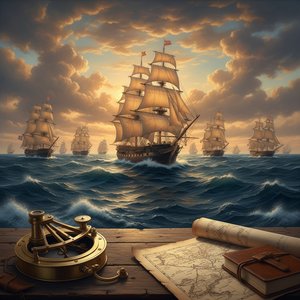
Sailing Through History: The Majestic Beauty and Artistry of 19th-Century Marine Masterpieces
Explore the breathtaking grandeur of 19th-century maritime art. From tempestuous seascapes to tranquil harbors, discover the masterful techniques of marine painters and learn how to bring these historical naval masterpieces into your home through exquisite oil reproductions.
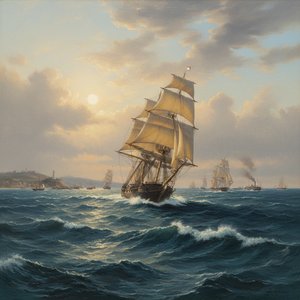
James E. Buttersworth: Navigating the Seas of Victorian Marine Painting
Explore the captivating world of James Edward Buttersworth, a foremost Victorian marine painter. Discover his meticulous ship portraits, America's Cup chronicles & enduring legacy in museums worldwide. Learn about his technique and style.

Fragt og retur
APS leverer ekspert global kunstforsendelse med museumniveau-omsorg, fuld sporing og en 100-dages pengene-tilbage-garanti. Fra toldstøtte til Priority Production, stol på en gennemsigtig service, sikker emballage og pålidelig levering til samlere, designere og gallerier.
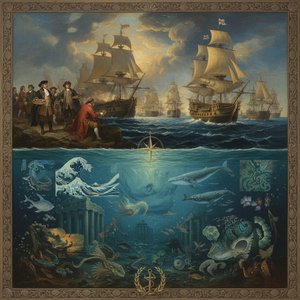
Navigating the Depths of Representation: A Historical Exploration of Marine Painting
Explore the rich history of marine painting with OriginalUniqueArt. Discover Dutch Masters, Romantic seascapes & renowned artists like Wyllie and Harris. Expert guidance for collectors & custom reproductions.

John Wilson Carmichael: Evoking Scottish Identity Through Dramatic Marine Painting
Explore the dramatic marine paintings of John Wilson Carmichael (1800-1868), a Victorian master renowned for his realistic seascapes and historical naval scenes. Discover his life, style & available hand-painted reproductions at OriginalUniqueArt.