
 Se i rummet
 Del som kort
 Del
Del
 Detaljer
 Guide
Guide

 Download
 Lignende værker
 Røntgenundersøgelse
 Diasshow
 Spørgsmål og svar
 Statistikker
Windmill near Delft


 Vis mere
Giclée / Kunsttryk
Giclée- eller lærredstryk i museumskvalitet med hurtig produktion og fleksible muligheder for finish. ( Køb håndmalet maleri Skift til digitalt billede)




P118B Dkr10

P118H Dkr10

P118W Dkr10

P438Z Dkr10

P508JH Dkr12

P508YH Dkr12

P805H Dkr10

P805Z Dkr10

P919BZ Dkr10

P919G Dkr10

P919XJ Dkr10

P959ZH Dkr10

P968JZ Dkr12

W106C Dkr8

W218G Dkr10

W218JH Dkr8

W218Y Dkr10

W307PJ Dkr10

W316G Dkr10

W316PJ Dkr8

W316Y Dkr10

W398PJ Dkr8

W4111J Dkr10

W500HY Dkr15

W500JH Dkr15

W692G Dkr12

W849H Dkr8

W940BG Dkr15

W953PJ Dkr8




Vælg mellem vores forudindstillede størrelser, der matcher kunstværkets originale proportioner.

Indtast den bredde og højde, du har brug for, så det passer til din ramme eller din væg. Et print kan kun beskæres, aldrig gøres større end selve billedet, så en størrelse med et andet format vil medføre, at dele af motivet går tabt. Vi sender dig en digital mockup til godkendelse, før vi printer noget. Billedet vist på denne side viser ikke den faktiske beskæring — det er kun mockuppen, der gør.
Verdensomspændende levering () på 2 uger i stedet for de sædvanlige 4/5 uger. (7 november)

Gratis ekspresforsendelse til hele verden

Lærred af linned i høj kvalitet

Fuld transportforsikring

Garanti for refusion af told og importafgifter

Garanti for præcis farvegengivelse

100 dages returret ved fabrikationsfejl

100% fuld returret

Mængderabat ved flere køb
 Glasmulighed er kun tilgængelig i størrelser under 110 cm

Windmill near Delft
Giclée / Kunsttryk
Størrelse på reproduktion
-


Samlet pris
Dkr 540
A Symphony of Light and Sky: The Essence of Windmill near Delft
In the quiet, sun-drenched landscapes of the Netherlands, certain moments possess a timeless quality that transcends the mere passage of years. Johan Barthold Jongkind’s 1857 masterpiece, Windmill near Delft, captures such a moment with unparalleled grace. This is not simply a landscape painting; it is a profound meditation on the ephemeral nature of light and the enduring spirit of the Dutch countryside. As the eye wanders across the canvas, one is immediately struck by the brilliant azure sky, where fluffy white clouds drift lazently, casting soft shadows upon the earth below. The composition is anchored by a solitary windmill, positioned with a deliberate, off-center elegance that guides the viewer’s gaze through a tranquil scene of rural life.
The painting serves as a vital bridge between the structured traditions of Dutch Romanticism and the burgeoning revolution of Impressionism. While the subject matter—a quintessential Dutch vista featuring a winding canal and figures engaged in daily rhythms—honors the heritage of masters like Vermeer, Jongkind’s technique whispers of a new era. He moves away from the rigid, meticulous outlines of his predecessors, opting instead for a loose, expressive brushwork that prioritizes atmosphere over anatomical precision. This approach allows the light to appear almost tactile, as if the viewer could feel the warmth of the sun filtering through an overcast afternoon. For the discerning collector or interior designer, this piece offers a sense of movement and vitality, making it a breathtaking focal point for any space seeking a touch of classical serenity paired with modern energy.
Technique and the Impressionistic Dawn
To study Windmill near Delft is to witness the early tremors of the Impressionist movement. Jongkind, a close contemporary and friend to Claude Monet and Eugène Boudin, utilized a palette that was both vibrant and harmoniously muted. His technique involves a sophisticated layering of oil paints to build depth and luminosity, creating a surface where colors bleed into one another with soft, feathered edges. The canal in the foreground acts as a mirror, reflecting the expansive heavens above and pulling the viewer deeper into the perspective of the landscape. This use of horizontal lines emphasizes the vastness of the Dutch horizon, instilling a sense of peace and boundless space.
The emotional resonance of the work lies in its ability to evoke nostalgia without descending into sentimentality. The scattered figures—women tending to flowers by the water’s edge and a man navigating a small boat—are not mere decorations; they are symbols of the quiet, industrious pulse of community life. There is a rhythmic quality to the composition, where the geometric strength of the windmill meets the organic, flowing shapes of the foliage and water. For those looking to adorn a home or gallery, this reproduction offers more than just aesthetic beauty; it provides an invitation to slow down and appreciate the fleeting, beautiful textures of the natural world.
Spørgsmål og svar
Hvilken teknik er "Windmill near Delft" udført med?
Johan Barthold Jongkind brugte Oil On Canvas-teknikken til "Windmill near Delft". Teknikken definerer det originale værks materielle karakter.
Fremstår farverne i "Windmill near Delft" kraftige eller bløde?
"Windmill near Delft" af Johan Barthold Jongkind har en Balanced farveintensitet.
Hvilken orientering har "Windmill near Delft" af Johan Barthold Jongkind?
"Windmill near Delft" af Johan Barthold Jongkind er en Portrait komposition. Det er værd at tjekke proportionerne, før du vælger en printstørrelse.
Kunstnerbiografi
Johan Barthold Jongkind: En Forerunner of Light and Atmosphere
Johan Barthold Jongkind, en navn der måske ikke umiddelbart er lige så kendt som Monet eller Renoir, indtager en central position i historien om Impressionismen. Han blev født den 3. juni 1819 i Lattrop, en lille by i Overijssel-provinsen i Holland, og hans kunstneriske rejse var præget af både talentfuldhed og personlige kampe. Hans tidlige liv udspillede sig blandt de rolige landskaber i regionen, hvilket dybt påvirkede hans livslange fascination for vand, lys og atmosfære. Selvom han oprindeligt blev ansat som kontorist, førte hans iboende kunstneriske tilbøjelser ham til Haag i 1837, hvor han begyndte sin formelle uddannelse under Andreas Schelfhout, en respekteret landskabsmaler, der var dybt forankret i den hollandske tradition. Denne baggrund viste sig at være afgørende, idet den indgydte Jongkind en minutiøs observation af naturen og en mesterskab i teknik, som senere blev infuseret med en tydeligt moderne sans. Det var en periode med læring af de grundlæggende elementer, men også en tid med stigende ambition, der fik ham til at søge yderligere kunstnerisk udvikling i det pulserende franske centrum i Paris.Parisian Encounters and Artistic Development
Flytningen til Paris i 1846 viste sig at være transformativ. Jongkind trådte ind i studierne hos Eugène Isabey og François-Édouard Picot, og fordybede sig i det franske kunstmiljø. Han opnåede hurtigt anerkendelse, hvor han udstillede på Salon allerede i 1848 og igen i 1852, hvor han modtog en medalje. Disse år var præget af lovende perspektiver, men også af stigende indre uro. Jongkind kæmpede med anfald af depression og alkoholisme, udfordringer, der periodisk forstyrrede hans karriere og personlige liv. Trods disse vanskeligheder fortsatte han med at male produktivt, med fokus på scener fra Seinen, de travle parisensiske gader og de atmosfæriske nuancer i det omkringliggende landskab. Hans værker under denne periode afspejler en unik blanding af hollandsk realisme og den fremvoksende franske romantik, karakteriseret ved livlige penselstrøg og en skarp følsomhed over for lysets effekter. Han malede ikke blot landskaber; han fangede deres flygtende stemninger, deres øjeblikkelige skønhed. Denne evne til at formidle atmosfære blev hans signaturstil og en nøglefaktor, der påvirkede de efterfølgende kunstnere.A Mentor to Monet: The Seeds of Impressionism
Jongkind’s tilbagevenden til Holland i 1855 var midlertidig. Han slog derefter endelig rod i Paris i 1861, hvor hans kunstneriske vej krydsede den af Claude Monet. Denne møde viste sig at være dybt betydningsfuld for begge kunstnere. Jongkind blev en mentor for Monet, og delte sin viden om *plein air* maleri – at male direkte udendørs fra naturen – og opfordrede ham til at omfavne en mere spontan og udtryksfuld tilgang. Monet selv krediterede Jongkind for at give ham den "afgørende uddannelse" af hans øje, erkende i den ældre kunstners arbejde en frihed og følsomhed, der resonerede dybt med hans egne kunstneriske ambitioner. Han var ikke blot underviste teknik; han overførte en filosofi om at se, en måde at fange essensen af et øjeblik i tiden.The Influence of Dutch Masters and the Pursuit of Atmosphere
Jongkind’s artistic foundation was deeply rooted in the traditions of Dutch landscape painting. He studied the works of masters like Jacob van Ruisdael, whose moody poetic evocations of light and atmosphere profoundly influenced his own approach to art. This connection to the Dutch tradition is evident in Jongkind's early paintings, which share a similar sensitivity to color, brushwork, and the depiction of natural phenomena. However, he was not simply imitating his predecessors; he sought to transcend them by incorporating elements of French Romanticism and Impressionist techniques. He experimented with broken colors, loose brushstrokes, and an emphasis on capturing fleeting moments of light and atmosphere – a pursuit that would define his artistic legacy.Legacy and Lasting Influence
Selvom Jongkind aldrig opnåede den udbredte berømmelse, der nydes af nogle af sine samtidige, er hans bidrag til udviklingen af Impressionismen uomtvisteligt. Hans malerier, ofte karakteriseret ved deres løse penselstrøg, dramatiske himmellegemer og evocative brug af farver, banede vejen for en ny tilgang til landskabsmaleri. Han demonstrerede, at det at fange den subjektive oplevelse af lys og atmosfære var lige så vigtigt som nøjagtig gengivelse af fysisk virkelighed. Hans værker findes i anerkendte museer som Van Gogh Museet i Amsterdam og Musée d'Orsay i Paris, testamenter til hans vedvarende kunstneriske værdi. Han døde den 9. februar 1891 i Saint-Égrève, Frankrig, efterlod en arv, der fortsat inspirerer kunstnere og kunstelskere i dag.
Johan Barthold Jongkind
1819 - 1891 , Holland
Kort om kunstneren
- Artistic Movement Or Style: Impressionist forvalter
- Artists Or Movements Influenced By This Artist:
- Claude Monet
- Impressionisme
- Artists Who Influenced This Artist:
- Eugène Isabey
- Andreas Schelfhout
- Date Of Birth: 3. juni 1819
- Date Of Death: 9. feb. 1891
- Full Name: Johan Barthold Jongkind
- Nationality: Hollandsk
- Notable Artworks:
- Månelys på kanalen
- Sejnen
- Place Of Birth: Lattrop, Holland
Relaterede artikler

Evocations of Place: A Historical Journey Through Landscape Art
Explore the rich history of landscape art with OriginalUniqueArt. Discover renowned artists, movements like Impressionism & Romanticism, and expert guidance for collecting timeless pieces. Find your perfect serene escape today!

Romantikkens Landskaber: Top 10 Malerier der Definerede En Æra | OriginalUniqueArt
Oplev romantikkens storhedstid! Dyk ned i top 10 landskabsmalerier af Caspar David Friedrich, Turner & Constable. Historiske fortællinger og museumskvalitets reproduktioner på OriginalUniqueArt.com – find din inspiration til væggen her!

Golden Light & Dutch Skies: Bringing the Magic of Dutch Golden Age Landscapes into Your Home
Transform your home with the breathtaking light of Dutch Golden Age landscapes. Discover how hand-painted oil reproductions of masterworks like Ruisdael and Vermeer bring timeless elegance, atmosphere, and soulful texture to modern interiors. Elevate your space with museum-quality art.
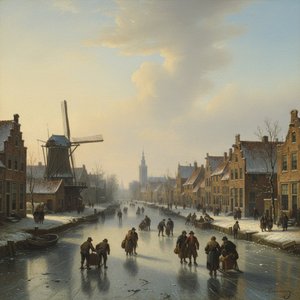
Charles Leickert: Capturing the Dutch Golden Age Light – A Comprehensive Study of Technique, Context, and Legacy
Explore the captivating winter landscapes of Charles Leickert, a master of Dutch Golden Age light & atmosphere. Discover his techniques, symbolism, and lasting legacy – a comprehensive study for art enthusiasts and collectors.

Golden Light & Dutch Skies: The Timeless Magic of Dutch Golden Age Landscapes
Discover the breathtaking beauty of Dutch Golden Age landscapes. Explore the mastery of light, chiaroscuro, and 17th-century realism through an expert art history lens, celebrating the enduring legacy of the Dutch Masters for discerning collectors and art lovers.