

 Se i fuld skala
 Del
Del Del
Del
 Detaljer

 Download
 Lignende værker
 Røntgenundersøgelse
 Diasshow
The Golden Age
 Acrylic On Canvas
- WallArt
- Dutch Mannerism
 1605
1605 23.0 x 31.0 cm
 Metropolitan Museum of Art
 Se mere
Håndlavet oliereproduktion
Håndmalet olie på lærred i din valgte størrelse og ramme, udført efter bestilling af vores kunstnere. ( Køb print Køb billede)




P118B $10

P118H $10

P118W $10

P438Z $10

P508JH $12

P508YH $12

P805H $10

P805Z $10

P919BZ $10

P919G $10

P919XJ $10

P959ZH $10

P968JZ $12

W106C $8

W218G $10

W218JH $8

W218Y $10

W307PJ $10

W316G $10

W316PJ $8

W316Y $10

W398PJ $8

W4111J $10

W500HY $15

W500JH $15

W692G $12

W849H $8

W940BG $15

W953PJ $8




Vælg mellem vores forudindstillede størrelser, der matcher kunstværkets originale proportioner.

Du kan indtaste dine egne mål for at passe til en bestemt ramme eller plads. Hvis den valgte størrelse ikke stemmer overens med det originale billedes proportioner, vil vi enten beskære kunstværket eller udvide maleriet med yderligere håndmalede elementer. En digital skitse sendes til din godkendelse, før produktionen påbegyndes.
Bemærk venligst, at forhåndsvisningen på skærmen ikke afspejler den faktiske beskæring eller udvidelse. Kun skitsen vil nøjagtigt vise den endelige komposition.
Selvom specialmål er mulige, anbefaler vi at vælge en dimension fra den foruddefinerede liste for at bevare de originale proportioner.
Efter bestilling vil OriginalUniqueArt.com team sende en e-mail til kunden for at få instruktioner og levere et udkast til en skitse.
Levering i hele verden () på 3/4 uger i stedet for de standard 5 uger. (19 august). Ingen kompromiser med kvaliteten.

Gratis ekspresforsendelse til hele verden

Lærred af linned i høj kvalitet

Fuld transportforsikring

Garanti for refusion af told og importafgifter

Garanti for præcis farvegengivelse

60 dages returret (kun ved fabrikationsfejl)

100% Tilfredshedsgaranti

Mængderabat tilgængelig
 Glasmulighed er kun tilgængelig i størrelser under 110 cm

The Golden Age
Reproduktionsmetode
Størrelse på reproduktion
-


Samlet pris
$ 300
Beskrivelse af kunstværket
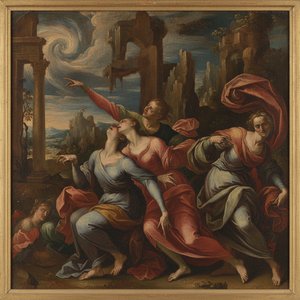
The Golden Age: A Symphony of Light and Innocence
The painting “The Golden Age,” created by Joachim Anthonisz Wtewael in 1605, stands as an emblem of Dutch Mannerism—a movement that prioritized stylized representation over naturalistic accuracy. More than just a depiction of a pastoral scene, it’s a profound meditation on the ideal state of humanity and a masterful demonstration of artistic innovation. Housed within the Metropolitan Museum of Art in New York City, this artwork invites viewers into a realm where beauty reigns supreme and moral contemplation intertwines with visual splendor.Composition and Style: Capturing Eternal Spring
Wtewael’s genius lies in his ability to distill the essence of Arcadia—the mythical paradise of shepherds and nymphs—into a single frame. The scene unfolds with remarkable dynamism, populated by nude figures engaged in graceful poses amidst lush foliage and a serene azure sky dotted with fluffy clouds. Unlike the prevailing naturalistic tendencies of its time, Wtewael eschewed detailed anatomical realism, opting instead for elongated forms and subtly distorted perspectives that heighten the sense of movement and ethereal beauty. The artist’s meticulous attention to detail—particularly in rendering the textures of drapery and foliage—contributes to an overall impression of exquisite craftsmanship.Technique: Copper Plate Printing – A Revolutionary Medium
Wtewael employed copper plate printing, a technique that was rapidly gaining popularity during the Renaissance. This method allowed for unparalleled precision and tonal subtlety compared to oil painting on canvas, enabling Wtewael to achieve breathtaking luminosity and depth. The artist skillfully utilized chiaroscuro—the dramatic interplay of light and shadow—to sculpt the figures and objects within the composition, creating a palpable sense of atmosphere and conveying an emotional resonance that transcends mere visual representation. This technique was particularly favored by artists who wished to produce multiple copies of their works, ensuring that Wtewael’s vision would reach a wider audience.Historical Context: Beyond Naturalism – Reflections on Virtue
“The Golden Age” emerged during the Dutch Renaissance—a period marked by burgeoning artistic creativity and intellectual curiosity. However, it diverged sharply from the prevailing stylistic conventions of its era, rejecting the obsession with naturalistic detail in favor of a more symbolic and emotionally charged aesthetic. The painting reflects the humanist ideals of the time, emphasizing human dignity and moral virtue. It’s considered to be one of the most important paintings of the Mannerist style, representing an artistic triumph that cemented Wtewael's reputation as a pioneer of innovative technique and expressive vision.Symbolism: An Echo of Mythological Paradise
The painting is steeped in symbolism, drawing heavily on classical mythology—specifically Hesiod’s depiction of the Ages of Man. The idyllic setting embodies the notion of “spring everlasting,” referencing the mythical Golden Age when humanity lived in harmony with nature and possessed an unblemished innocence. The nude figures represent purity and grace, symbolizing the ideal human form untouched by corruption. Furthermore, the presence of animals—such as the cow—underscores the importance of reverence for the natural world and reinforces the painting’s overarching message of moral contemplation.Emotional Impact: A Timeless Appeal
“The Golden Age” continues to captivate viewers centuries after its creation due to its profound emotional impact. The luminous palette, combined with Wtewael's masterful use of light and shadow, evokes a sense of serenity and wonder—transporting the viewer back to a time when beauty reigned supreme and moral virtue held sway. It serves as a poignant reminder of humanity’s capacity for transcendence and inspires us to strive for excellence in all endeavors. Its enduring legacy testifies to the power of art to communicate timeless truths and elevate the human spirit.Kunstnerens biografi
The Enduring Polish of a Mannerist Master
Joachim Anthonisz Wtewael, a name whispered among connoisseurs of the Dutch Golden Age, remains a captivating figure whose art defies easy categorization. Born in 1566 and passing away in 1638, his life was as multifaceted as his canvases. While his artistic genius shone brightly, it is equally notable that he was also a successful flax merchant and an active town councillor of Utrecht. This dual existence—the meticulous artisan alongside the pillar of civic society—suggests a man whose life demanded both worldly acumen and profound creative focus. Wtewael’s signature style, however, possessed a remarkable consistency; it remained largely untouched by the sweeping naturalistic currents that were reshaping art across Europe during his lifetime.
A Journey Through Style and Influence
Wtewael's early training rooted him deeply in the sophisticated vocabulary of late 16th-century Haarlem Mannerism. His initial professional life saw him working as a glassmaker and engraver within his father’s workshop, an apprenticeship that undoubtedly honed his hand for intricate detail. A pivotal period arrived when he embarked on travels through Italy and France starting in 1586. These sojourns were crucial, exposing him to the rich artistic currents of the Second School of Fontainebleau. Yet, despite these influences, Wtewael possessed a unique internal compass. His work is characterized by figures that are masterfully drawn, possessing an almost porcelain-like polish, often arranged in poses that feel wonderfully capricious and dramatically charged.
Thematic Depth: Myth Meets Devotion
The body of his surviving work—comprising around one hundred paintings, alongside numerous drawings and stained glass designs—reveals a fascinating thematic duality. He was equally at home depicting profound religious narratives as he was celebrating the lush drama of classical mythology. Consider works such as Adoration of the Shepherds juxtaposed with Venus and Mars Surprised by Vulcan. These pieces showcase his remarkable ability to weave together conventional sacred subjects with pagan lore, often imbuing both realms with a palpable, sometimes strong erotic undercurrent that draws the viewer into its narrative embrace. His attention to detail is breathtaking; in works like Perseus and Andromeda, housed notably at the Mauritshuis museum in Utrecht, one can trace his unparalleled skill.
Historical Significance and Legacy
What makes Wtewael’s contribution so significant is precisely that resistance to change. While naturalism beckoned artists toward greater realism, Wtewael held fast to a polished, idealized aesthetic, creating a body of work that feels both historically situated and eternally vibrant. His cabinet paintings, executed on copper plates, are particularly distinctive and numerous, offering intimate glimpses into his artistic process. Though the final decade of his life saw him retreat from painting—a period possibly marked by personal sorrow following the passing of his wife—the impact of his vision endures. He gifted art history a style that remains both highly polished and wonderfully unpredictable.

joachim anthonisz wtewael
1566 - 1638
Kort om kunstneren
- Artistic Movement Or Style: Mannerism
- Artists Who Influenced This Artist: ['Second school of Fontainebleau']
- Date Of Birth: 1566
- Date Of Death: 1638
- Full Name: Joachim Anthonisz Wtewael
- Nationality: Dutch
- Notable Artworks:
- Adoration of the Shepherds
- Venus and Mars surprised by Vulcan
Relaterede artikler

Hollandsk Barok: Top 10 Mesterværker der Definerede en Æra – Kunst til Dit Hjem
Oplev Hollandsk Barok's 10 mest ikoniske værker! Rembrandt, Vermeer & co. – dyk ned i historien bag mesterværkerne og find inspiration til din boligindretning. Køb luksus kunsttryk på OriginalUniqueArt.com.

Chiaroscuro and Character: A Definitive Guide to Light and Shadow in the Dutch Baroque Era
Explore the dramatic mastery of the Dutch Baroque era. Discover how masters like Rembrandt used chiaroscuro to transform everyday life into timeless art. An expert guide for collectors and enthusiasts seeking to understand the profound interplay of light and shadow.

Golden Age Reflections: Dutch Baroque Painting & Cultural Innovation
Explore the Dutch Golden Age of painting! Discover key artists like Vermeer & ter Borch, their innovative techniques, and the rich cultural context behind these Baroque masterpieces. Learn about collecting & appreciating this iconic art period.

Drama and Distortion: A Definitive Guide to the Mastery of Mannerism and Baroque Art
Explore the dramatic evolution from Mannerist distortion to Baroque grandeur. Discover how light, shadow, and emotion redefined art history through a masterclass in technical mastery and religious fervor.
Drama & Distortion: A Journey Through the Captivating World of Baroque Mannerism
Explore the dramatic tension of Mannerism and the opulent grandeur of Baroque art. Discover how masters used light, shadow, and distortion to redefine European history through a captivating journey of emotional intensity and spiritual fervor.

