
 Se i fuld skala
 Del
Del Del
Del
 Detaljer

 Download
 Lignende værker
 Røntgenundersøgelse
 Diasshow
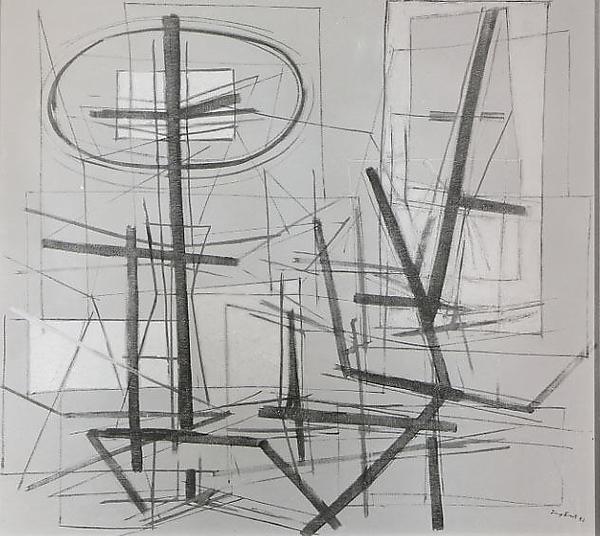
Almost Silence
 1952
1952 112.0 x 122.0 cm
 Se mere
Håndlavet oliereproduktion
Håndmalet olie på lærred i din valgte størrelse og ramme, udført efter bestilling af vores kunstnere. ( Køb print Køb billede)




































Vælg mellem vores forudindstillede størrelser, der matcher kunstværkets originale proportioner.

Du kan indtaste dine egne mål for at passe til en bestemt ramme eller plads. Hvis den valgte størrelse ikke stemmer overens med det originale billedes proportioner, vil vi enten beskære kunstværket eller udvide maleriet med yderligere håndmalede elementer. En digital skitse sendes til din godkendelse, før produktionen påbegyndes.
Bemærk venligst, at forhåndsvisningen på skærmen ikke afspejler den faktiske beskæring eller udvidelse. Kun skitsen vil nøjagtigt vise den endelige komposition.
Selvom specialmål er mulige, anbefaler vi at vælge en dimension fra den foruddefinerede liste for at bevare de originale proportioner.
Efter bestilling vil OriginalUniqueArt.com team sende en e-mail til kunden for at få instruktioner og levere et udkast til en skitse.
Levering i hele verden () på 3/4 uger i stedet for de standard 5 uger. (29 august). Ingen kompromiser med kvaliteten.

Gratis ekspresforsendelse til hele verden

Lærred af linned i høj kvalitet

Fuld transportforsikring

Garanti for refusion af told og importafgifter

Garanti for præcis farvegengivelse

60 dages returret (kun ved fabrikationsfejl)

100% Tilfredshedsgaranti

Mængderabat tilgængelig
 Glasmulighed er kun tilgængelig i størrelser under 110 cm

Almost Silence
Reproduktionsmetode
Størrelse på reproduktion
-


Samlet pris
$ 300
Kunstnerens biografi
A Life Forged in the Crucible of Exile
The story of Jimmy Ernst is one inextricably woven into the turbulent fabric of twentieth-century history, a narrative defined by displacement, survival, and the profound influence of the avant-garde. Born Hans-Ulrich Ernst in 1920 in Cologne, Germany, his very existence was shaped by the shadows of the era's most seismic political shifts. As the son of the legendary Surrealist master Max Ernst and the esteemed art historian Luise Straus-Ernst, Jimmy was born into a world where art and intellect were under constant siege. The rise of the Nazi regime in Germany brought personal tragedy to his doorstep; following the search of his mother's apartment by the SS, the family was fractured, eventually leading to his migration to New York in 1938. This transition from the heart of Europe to the burgeoning energy of America would become the defining metamorphosis of his life, turning a child of the German intelligentsia into a vital voice within the American art scene.
His early years were marked by an extraordinary exposure to the giants of Surrealism. During childhood visits to France, he moved through circles that included Salvador Dalí, Joan Miró, and Man Ray, absorbing the dreamlike logic and subversive spirit of the movement long before he ever picked up a brush with intent. However, his journey was also shadowed by the unimaginable loss of his mother in the Holocaust, a trauma that added a layer of poignant gravity to his later explorations of identity and memory.
The Irascible Spirit and the New York School
Upon arriving in New York, Ernst did not merely observe the art world; he became one of its most active architects. His connection to Peggy Guggenheim—who would become his stepmother—placed him at the epicenter of modernism. Serving as the director of the influential Art of This Century gallery, he helped curate the very movements that would redefine Western painting. It was during this era that Ernst emerged as a prominent member of the Irascible Eighteen, a defiant group of painters who famously protested the conservative policies of the Metropolitan Museum of Art. This group, captured in a legendary photograph by Nina Leen, included titans such as Jackson Pollock, Willem de Kooning, and Mark Rothko.
As a painter, Ernst’s work evolved from the inherited echoes of Surrealism into the vigorous, gestural language of Abstract Expressionism. His canvases became arenas for exploring the tension between form and chaos, often reflecting the themes of exile and the fractured nature of memory that haunted his biography. His technique was characterized by a profound sensitivity to texture and movement, allowing him to communicate the visceral emotions of a life lived amidst global upheaval. Through his brush, the trauma of the past and the liberation of the New York School found a singular, expressive voice.
Legacy and Artistic Endurance
The later years of Ernst's life were marked by both academic distinction and continued creative vigor. His contributions to art education were solidified through his role as an instructor at Brooklyn College, where he helped shape the next generation of American designers and painters. His accolades were numerous, reflecting a career of immense merit:
- Guggenheim Fellowship (1961), recognizing his mastery of abstract form.
- Election to the National Academy of Design as an Associate Academician in 1977.
- An honorary degree from Long Island University in 1982.
- Membership in the prestigious American Academy of Arts and Letters.
Even as he moved to the tranquil landscapes of East Hampton and Florida, the echoes of his complex heritage remained present in his work. His memoir, A Not-So-Still Life, serves as a moving testament to a man who navigated the wreckage of the old world to help build the foundations of the new. Today, Jimmy Ernst is remembered not just as the heir to a Surrealist dynasty, but as a formidable artist in his own right—a painter whose work stands as a bridge between the fractured dreams of Europe and the explosive freedom of American abstraction.
jimmy ernst
1920 - 1984 , Germany
Kort om kunstneren
- Artistic Movement Or Style: 1920s Art Deco
- Artists Or Movements Influenced By This Artist:
- Dada
- Surrealism
- Expressionism
- Artists Who Influenced This Artist: ['Marcel Duchamp']
- Date Of Death: 1984
- Nationality: WahooArt
- Notable Artworks: ['']

