
 Se i fuld skala
 Del
Del Del
Del
 Detaljer

 Download
 Lignende værker
 Røntgenundersøgelse
 Diasshow
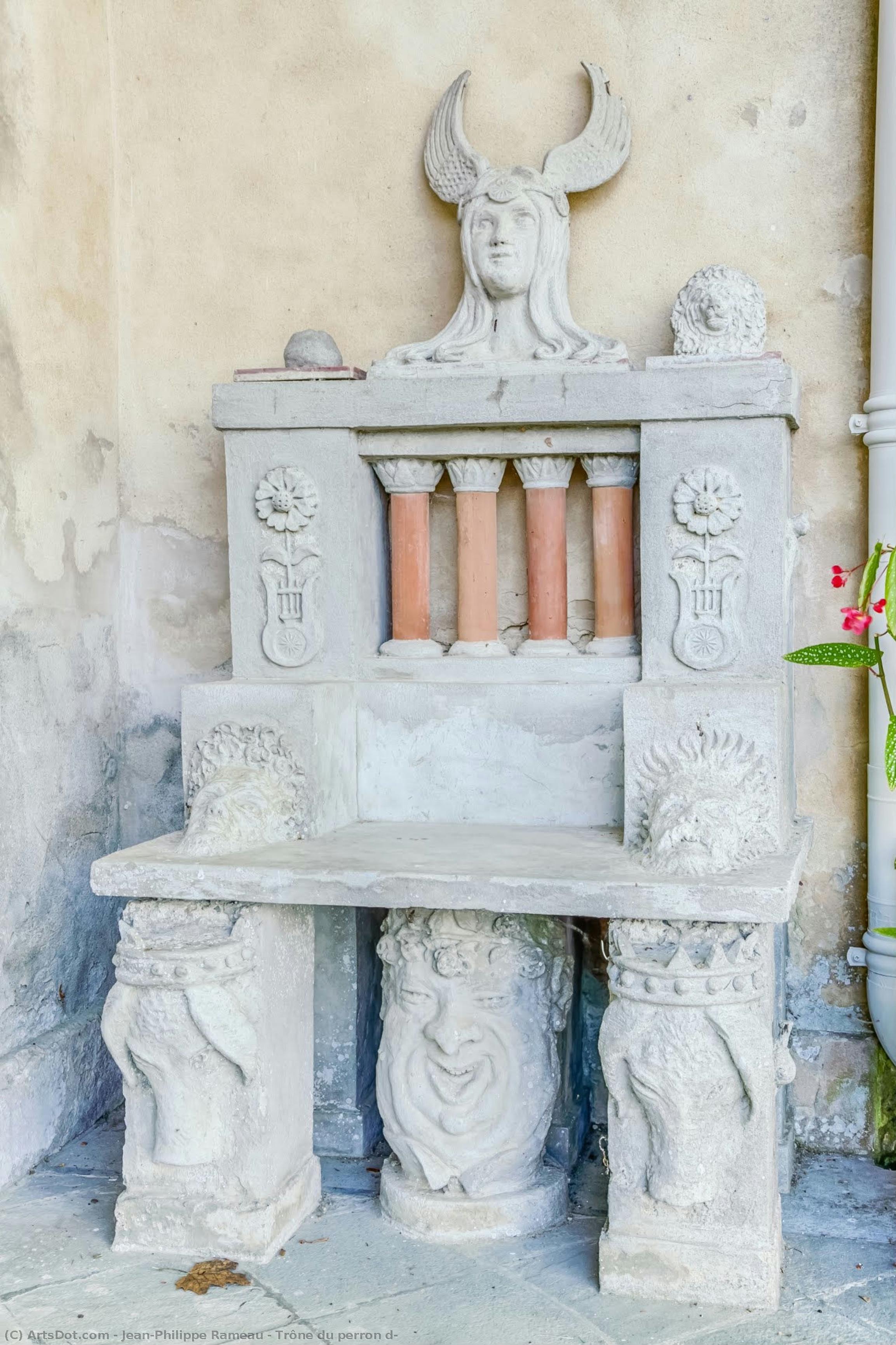
Trône du perron d


 Se mere
Køb et højopløst, forbedret digitalt billede, der er langt bedre end online-forhåndsvisningen.
Hver fil er omhyggeligt forberedt af vores interne specialister ved hjælp af avancerede værktøjer og ekspertmæssig manuel retuschering. Vi sikrer, at hvert billede har enestående klarhed, præcis farvegengivelse og fine detaljer.
Den endelige fil leveres via e-mail inden for 72 timer og er optimeret til øjeblikkelig brug i professionelle, redaktionelle og trykte miljøer. Det er den samme kvalitet, som førende designstudier, forlag og gallerier har tillid til.
Digitalt billede
Download en højopløselig fil til personlig fremvisning, print og kreative projekter. ( Køb print Køb håndlavet maleri)
Inkluderet i alle ordrer på digitale billeder
Ekspert digital levering, garanteret
Når du vælger OriginalUniqueArt.com, får du ikke blot et billede – du modtager et professionelt optimeret digitalt kunstværk, skabt med præcision og sikret med en tilfredshedsgaranti. Her er alt, hvad din ordre automatisk indeholder:

Hurtig levering via e-mail
Din højkvalitets digitale billedfil vil blive sendt til din e-mail inden for 72 timer efter bestilling – klar til øjeblikkelig brug.

AI-optimeret digital fil
Dit kunstværk optimeres professionelt ved hjælp af avancerede AI-værktøjer og manuel redigering, hvilket sikrer maksimal detaljegrad, klarhed og farvenøjagtighed.

Gratis livslang genlevering
Har du ved en fejl slettet eller mistet din fil? Ingen bekymring – vi sender den igen til enhver tid, helt gratis.

Ingen importgebyrer – nogensinde
Nyd dit kunstværk med det samme uden told, afgifter eller leveringsgebyrer – digitale downloads er altid skattefrie.

Garanteret farvenøjagtighed
Vi sikrer, at dit digitale billede gengiver de originale farver så præcist som muligt ved hjælp af professionelle værktøjer og farvestyring.

60 dages tilfredshedsgaranti
Hvis du ikke er tilfreds med dit digitale billede, vil vi revidere det eller refundere 100% inden for 60 dage – uden spørgsmål.

100% Pengene tilbage-garanti
Ik tilfreds? Få fuld refusion inden for 60 dage efter modtagelse af din digitale fil – uden spørgsmål.

Mængderabat
Køb 3 billeder, spar 10% - Køb 5, spar 15% - Køb 10+, spar 20%. Ideelt til kreative projekter, gallerier og bureauer.
Kunstnerens biografi
A Life Dedicated to Harmony: The World of Jean-Philippe Rameau
Born in Dijon, France, in 1683, Jean-Philippe Rameau’s path to becoming one of the most significant figures in French music was anything but conventional. Unlike many composers who began their musical journey in childhood, Rameau's formal training commenced relatively late. His father, a church organist, instilled in him a love for music, but it wasn’t until he moved to Paris that his true potential blossomed. Initially pursuing a career as an organist himself, holding positions at various churches, Rameau found himself increasingly drawn to the theoretical underpinnings of harmony and composition. This fascination would ultimately define his legacy, transforming him from a skilled performer into a revolutionary thinker and composer. He wasn’t simply *writing* music; he was dissecting it, understanding its fundamental principles, and then rebuilding it with unprecedented clarity and sophistication.From Organist to Opera Reformer: A Composer's Evolution
Rameau’s early compositions were primarily keyboard works – pieces for harpsichord and organ that showcased his burgeoning technical prowess and harmonic inventiveness. However, the true turning point in his career came with his foray into opera. Prior to Rameau, French opera, dominated by Jean-Baptiste Lully, adhered to a rather rigid stylistic framework. While elegant and refined, it often lacked dramatic depth and harmonic complexity. Rameau challenged these conventions head-on. His first operatic success, Hippolyte et Aricie (1733), was met with both acclaim and controversy. The work’s innovative use of dissonance, its focus on psychological realism in character portrayal, and its departure from traditional libretto structures ruffled feathers among conservative critics. Yet, it also captivated audiences with its emotional power and musical richness. He continued to compose operas throughout the 1730s and 40s – Castor et Pollux, Dardanus, and Zais among them – each pushing the boundaries of French operatic expression further. These weren’t merely entertainments; they were explorations of human passion, conflict, and morality set to music of breathtaking beauty and intellectual rigor.The Theorist as Composer: Codifying Harmony
What truly sets Rameau apart is his groundbreaking work in music theory. He didn't just compose beautiful melodies and harmonies; he *explained* why they worked, establishing a systematic framework for understanding the principles of tonality. His treatise, Traité de l’harmonie réduite à ses fondements naturels (Treatise on Harmony Reduced to its Natural Foundations), published in 1722, remains a cornerstone of musicological study. In it, he articulated the concept of the fundamental bass – the underlying harmonic progression that governs a musical piece – and demonstrated how chords are derived from natural acoustic phenomena. This wasn’t abstract intellectualism; Rameau believed that understanding harmony was essential for composing effective and expressive music. His theoretical insights directly informed his compositional practice, allowing him to create works of unparalleled clarity, balance, and emotional depth. He essentially provided the language with which future composers could articulate their musical ideas.Influences and Legacy: A Bridge Between Eras
Rameau’s influences were diverse. While he built upon the foundations laid by Lully and earlier French composers, he also drew inspiration from Italian opera – particularly the works of Alessandro Scarlatti – and even explored the contrapuntal techniques of Johann Sebastian Bach. However, Rameau wasn't simply imitating these sources; he synthesized them into something uniquely his own. His music represents a crucial bridge between the Baroque and Classical periods, foreshadowing many of the stylistic developments that would characterize the latter. Despite experiencing a period of relative neglect after his death in 1764, Rameau’s work underwent a significant revival in the 20th century. Today, he is recognized as one of the most important composers and music theorists of all time, whose influence continues to be felt by musicians and scholars alike.Major Achievements & Historical Significance
- Revolutionized French Opera: Transformed the genre with dramatic depth, psychological realism, and innovative harmonic language.
- Groundbreaking Music Theory: Established a systematic framework for understanding harmony in Traité de l’harmonie réduite à ses fondements naturels, influencing generations of composers.
- Masterful Keyboard Works: Composed pieces for harpsichord and organ that showcased his technical prowess and harmonic inventiveness.
- Bridged Baroque & Classical Eras: Synthesized diverse influences into a unique style, foreshadowing stylistic developments of the Classical period.
- Lasting Impact on Musicology: His theoretical writings remain essential for understanding the principles of tonality and musical structure.

jean-philippe rameau
1683 - 1764 , France
Kort om kunstneren
- Artistic Movement Or Style: Baroque
- Date Of Birth: 1683
- Date Of Death: 1764
- Full Name: Jean-Philippe Rameau
- Nationality: French
- Notable Artworks:
- Castor et Pollux
- Hippolyte et Aricie
- Les Indes galantes
- Place Of Birth: Dijon, France

