

 Se i rummet
 Del som kort
 Del
Del
 Detaljer
 Guide
Guide

 Download
 Lignende værker
 Røntgenundersøgelse
 Diasshow
 Q&A
Q&A Statistikker
Diane and the Stag
 Acrylic On Canvas
- WallArt
- Mannerist Sculpture
 1550
1550 211.0 x 258.0 cm
 Louvren
 Vis mere
Giclée / Kunsttryk
Giclée- eller lærredstryk i museumskvalitet med hurtig produktion og fleksible muligheder for finish. ( Køb håndmalet maleri Skift til digitalt billede)




P118B Dkr10

P118H Dkr10

P118W Dkr10

P438Z Dkr10

P508JH Dkr12

P508YH Dkr12

P805H Dkr10

P805Z Dkr10

P919BZ Dkr10

P919G Dkr10

P919XJ Dkr10

P959ZH Dkr10

P968JZ Dkr12

W106C Dkr8

W218G Dkr10

W218JH Dkr8

W218Y Dkr10

W307PJ Dkr10

W316G Dkr10

W316PJ Dkr8

W316Y Dkr10

W398PJ Dkr8

W4111J Dkr10

W500HY Dkr15

W500JH Dkr15

W692G Dkr12

W849H Dkr8

W940BG Dkr15

W953PJ Dkr8




Vælg mellem vores forudindstillede størrelser, der matcher kunstværkets originale proportioner.

Indtast den bredde og højde, du har brug for, så det passer til din ramme eller din væg. Et print kan kun beskæres, aldrig gøres større end selve billedet, så en størrelse med et andet format vil medføre, at dele af motivet går tabt. Vi sender dig en digital mockup til godkendelse, før vi printer noget. Billedet vist på denne side viser ikke den faktiske beskæring — det er kun mockuppen, der gør.
Verdensomspændende levering () på 2 uger i stedet for de sædvanlige 4/5 uger. (29 oktober)

Gratis ekspresforsendelse til hele verden

Lærred af linned i høj kvalitet

Fuld transportforsikring

Garanti for refusion af told og importafgifter

Garanti for præcis farvegengivelse

100 dages returret ved fabrikationsfejl

100% fuld returret

Mængderabat ved flere køb
 Glasmulighed er kun tilgængelig i størrelser under 110 cm

Diane and the Stag
Giclée / Kunsttryk
Størrelse på reproduktion
-


Samlet pris
Dkr 533
The Enigmatic Huntress: Jean Goujon’s “Diane and the Stag”
Jean Goujon's "Diane and the Stag," painted around 1550, isn't merely a depiction of a hunt; it’s a carefully constructed tableau brimming with allegorical weight and Renaissance grace. The painting immediately draws the eye to its central figure: Diane, the Roman goddess of the hunt, rendered in exquisite detail against a subtly textured background. She sits poised on a simple pedestal, her posture radiating both strength and serene contemplation – a captivating blend of predatory instinct and contemplative awareness. The deer at her feet aren’t passive victims; they possess an alert, almost intelligent gaze, suggesting a complex relationship between hunter and hunted, predator and prey. The composition isn't chaotic; rather, it’s meticulously balanced, reflecting the humanist ideals that were blossoming during the High Renaissance.
Goujon’s mastery lies in his ability to infuse classical motifs with a distinctly Mannerist sensibility. Notice the elongated forms of Diane’s limbs and the delicate drapery cascading around her – hallmarks of this style, which prioritized elegance and stylized movement over strict realism. The use of light is particularly noteworthy; it's diffused and atmospheric, creating a sense of depth and mystery within the scene. The muted palette—earth tones punctuated by subtle hints of crimson—contributes to the painting’s overall mood of quiet intensity.
A Tapestry of Symbolism
Beyond its aesthetic beauty, “Diane and the Stag” is rich in symbolic meaning. Diane herself represents not just the hunt but also chastity, virtue, and the wildness of nature. The stag, a frequent symbol in Renaissance art, embodies nobility, strength, and even sacrifice – qualities often associated with Diana’s role as a protector of young women. The two antlers above her head are particularly intriguing; they could be interpreted as representations of a goat or even a stylized depiction of the moon, adding layers of mythological allusion to the scene. The inclusion of the deer at her feet isn't simply decorative; it underscores the cyclical nature of life and death, mirroring the hunt’s inherent drama.
Furthermore, the painting can be viewed as an allegory for the human condition – a meditation on themes of control versus instinct, beauty versus brutality. Diane’s deliberate stance suggests a mastery over her surroundings, yet the presence of the deer reminds us of our vulnerability and dependence on the natural world. It's a delicate dance between power and submission, order and chaos.
Craftsmanship and Context
Goujon was one of the most prominent sculptors and architects of his time, working primarily in Rouen and later in Paris. His career coincided with a period of immense artistic innovation, as French art moved away from the rigid conventions of the Gothic era and embraced the dynamism and expressive qualities of the Renaissance. “Diane and the Stag” exemplifies this transition, showcasing Goujon’s ability to synthesize classical influences with his own unique style.
The painting was likely commissioned for a private patron, perhaps a wealthy nobleman or member of the court. The subject matter—a hunt scene—was popular during the Renaissance, reflecting the aristocratic pursuit of sport and the idealized vision of nature as a source of pleasure and prestige. It’s believed to have been part of a larger decorative scheme within a lavish interior, adding a touch of elegance and sophistication to its surroundings.
A Legacy of Elegance
“Diane and the Stag” remains a captivating work of art, offering viewers a glimpse into the artistic sensibilities of the High Renaissance. Its masterful composition, evocative symbolism, and exquisite craftsmanship continue to resonate today, inspiring admiration for Goujon’s skill and vision. Reproductions of this painting capture not only its visual beauty but also the profound depth of meaning embedded within its intricate details – a timeless testament to the enduring power of art to illuminate the human experience.
Spørgsmål og svar
Hvordan beskrives farvepaletten i "Diane and the Stag" af Jean Goujon?
"Diane and the Stag" af Jean Goujon benytter en Earthy farvepalette, der indfanger værkets overordnede farvekarakter.
Er farverne i "Diane and the Stag" af Jean Goujon livlige eller dæmpede?
Farven på "Diane and the Stag" har en mætning på Balanced Soft og en intensitet på Balanced.
Hvor mættet er farvepaletten i "Diane and the Stag"?
Farvepaletten i "Diane and the Stag" har en mætning på Balanced Soft.
Kunstnerbiografi
Billedhuggeren, der formede parisiske elegance
Jean Goujon (ca. 1510 – ca. 1565) står som en grundsten i fransk renæssanceskulptur og arkitektur, idet han legemliggjorde manierismens stilistiske glød, samtidig med at han forankrede sit værk i klassiske idealer. Han blev født i Normandiet, og hans tidlige liv forbliver indhyllet i uklarhed, men hans omfattende produktion etablerede ham hurtigt som en af epokens fremmeste kunstneriske stemmer – et vidnesbyrd om hans enorme talent og urokkelige dedikation til sit håndværk. Goujons rejse begyndte med formative oplevelser i Italien, hvor han opsugede den romerske skulpturs storhed og integrerede dens principper i sin egen særprægede stil. Denne indflydelse er mærkbar gennem hele hans værk, især tydelig i hans mesterlige behandling af draperier og anatomiske præcision.
Hans kunstneriske opstigning begyndte i katedralen i Rouen (1541-42), hvor han påtog sig den monumentale opgave at skabe gravmonumentet for Louis de Brézé, seigneur d'Anet – en bestilling, der fremviste hans spirende færdigheder og ambitioner. Dette ambitiøse projekt cementerede hans ry som en opadgående stjerne i det franske skulpturelle landskab. Samtidig forfinede han sine arkitektoniske evner ved Saint-Maclou Kirke, hvor han demonstrerede en medfødt evne til at forene kunstnerisk vision med strukturel ingeniørkunst. Det resulterende bygningsværk står som et magnifikt eksempel på renæssancens kirkelige arkitektur og afspejler Goujons engagement i både æstetisk skønhed og funktionel integritet.
Et partnerskab af visionær storhed
Da han flyttede til Paris i 1544, indledte Goujon et afgørende partnerskab med Pierre Lescot, arkitekten bag den ambitiøse rekonstruktion af katedralen Saint-Germain-l'Auxerrois. Sammen udtænkte og udførte de betagende skulpturelle dekorationer – mest bemærkelsesværdigt prædikestolen – et mesterværk, der eksemplificerer Lescots neoklassiske sans og Goujons mesterlige teknik med draperier. Denne samarbejdsepoke definerede det visuelle sprog i den franske renæssance, da Goujon begyndte at besjæle sten med en følelse af flydende bevægelse og æterisk ynde.
Højdepunktet af hans indflydelse er måske mest synligt i hans bidrag til Louvre. Hans arbejde på Façaden af Cour Carrée (Lescot-fløjen) forbliver en ikonisk bedrift, der fremviser klassisk elegance gennem indviklede udskæringer, som afspejler fransk kunstnerisk genialitet. I disse værker kan man observere det delikate samspil mellem lys og skygge over de skulpturerede figurer, et kendetegn ved hans evne til at indgyde liv i kold marmor. Hans mesterskab strakte sig også til Louvre-facaden (detalje), hvor hans udsøgte sans for detaljen skabte et mesterværk af manieristisk stil, der forener klassisk elegance med indviklede udskæringer, som fortsat betager beskuere århundreder senere.
Arven af ynde og klassisk form
Goujons eftermæle defineres af en uovertruffen evne til at harmonisere manierismens spænding med klassicismens ro. Hans skulpturer forestiller ofte nymfer og allegoriske figurer, der synes at svæve i deres arkitektoniske omgivelser, en teknik der mest berømt blev realiseret i hans Karyatider. Disse ti mesterlige figurer repræsenterer højdepunktet af det 16. århundredes franske renæssanceskulptur og bringer en følelse af klassisk storhed og sofistikeret elegance til beskueren. Gennem disse værker gjorde Goujon mere end blot at dekorere bygninger; han skulpturerede selve identiteten for fransk æstetisk forfinelse.
Den historiske betydning af hans arbejde kan ikke overvurderes, da hans tilgang til anatomi og drapering påvirkede generationer af europæiske kunstnere. Hans evne til at transformere tung sten til flydende, rytmiske former etablerede en standard for fransk klassicisme, som ville bestå længe efter hans død. I dag tjener resterne af hans geni – fra de indviklede detaljer i Louvrens fløje til hans dybe indflydelse på arkitektonisk ornamentik – som et varigt vidnesbyrd om en mand, der for alvor formede Paris' elegance.

Jean Goujon
1510 - 1567 , Frankrig
Kort om kunstneren
- Artistic Movement Or Style: Manierisme
- Artists Or Movements Influenced By This Artist: ['Fransk klassicisme']
- Artists Who Influenced This Artist: ['Michelangelo']
- Date Of Birth: ca. 1510 Normandiet, Frankrig
- Date Of Death: ca. 1567
- Full Name: Jean Goujon
- Nationality: Fransk
- Notable Artworks:
- Nymfer (detalje)
- Pietà
- Krig og fred
- Fontaine des Innocents
- Louvre-skulpturer
- Place Of Birth: Normandiet, Frankrig
Relaterede artikler
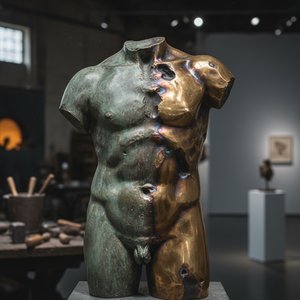
Bronzeskulpturens Vedvarende Arv: Historie, Teknikker og Moderne Fortolkninger
Udforsk bronzeskulpturens fascinerende historie og teknikker. Få indsigt i kunsthistorien, moderne fortolkninger og investeringsmuligheder. Ekspertviden for samlere.

Top 10 Bronzemesterværker: Kunsthistorien Ændret for Evigt | OriginalUniqueArt.dk
Oplev de 10 mest legendariske bronzemesterværker, der har formet kunsthistorien! Fra Rodin til Degas – lær historierne bag ikoniske skulpturer og find inspiration til din indretning. Køb museumskvalitets reproduktioner på OriginalUniqueArt.com.

The Enduring Form: Exploring Themes & Techniques in Sculpture Across Historical Periods
Explore the rich history of sculpture from ancient masterpieces to contemporary innovations. Discover key techniques, influential artists & investment potential for discerning art collectors.

Bronzeskulpturers Mestre: 10 Værker der Ændrede Kunsthistorien | OriginalUniqueArt
Oplev de 10 mest legendariske bronzeskulpturer, der har formet kunsthistorien! Fra Rodin til Vigeland – lær historierne bag mesterværkerne og find inspiration til din indretning. Køb museumskvalitets reproduktioner på OriginalUniqueArt.com.

The Enduring Form: Sculpture Across History, Technique & Emotional Resonance
Explore the rich history of sculpture with OriginalUniqueArt. Discover key techniques, influential artists & investment potential for discerning collectors. Expert insights into valuing and collecting timeless masterpieces.