

 Se i rummet
 Send
Send Del
Del
 Detaljer
 Studieguide til kunstværker

 Download
 Lignende værker
 Røntgenundersøgelse
 Se diasshow
 Statistik
Fruit and Flowers
 Oil On Canvas
- WallArt
- Dutch Golden Age
 1720
1720- Late Medieval
 81.0 x 60.0 cm
 Wallace Collection
 Læs mere
Giclée / Kunsttryk
Giclée- eller lærredstryk i museumskvalitet med hurtig produktion og fleksible muligheder for finish. ( Bestil håndmalet reproduktion Skift til digitalt billede)




P118B Dkr10

P118H Dkr10

P118W Dkr10

P438Z Dkr10

P508JH Dkr12

P508YH Dkr12

P805H Dkr10

P805Z Dkr10

P919BZ Dkr10

P919G Dkr10

P919XJ Dkr10

P959ZH Dkr10

P968JZ Dkr12

W106C Dkr8

W218G Dkr10

W218JH Dkr8

W218Y Dkr10

W307PJ Dkr10

W316G Dkr10

W316PJ Dkr8

W316Y Dkr10

W398PJ Dkr8

W4111J Dkr10

W500HY Dkr15

W500JH Dkr15

W692G Dkr12

W849H Dkr8

W940BG Dkr15

W953PJ Dkr8




Vælg mellem vores forudindstillede størrelser, der matcher kunstværkets originale proportioner.

Indtast den bredde og højde, du har brug for, så det passer til din ramme eller din væg. Et print kan kun beskæres, aldrig gøres større end billedet, så en størrelse med en anden form vil miste en del af motivet. Vi sender dig en digital mockup til godkendelse, før vi printer noget. Billedet vist på denne side viser ikke den faktiske beskæring — det er kun mockuppen, der gør.
Verdensomspændende levering () på 2 uger i stedet for de sædvanlige 4/5 uger. (27 oktober)

Gratis ekspresforsendelse til hele verden

Lærred af linned i høj kvalitet

Komplet transportforsikring

Garanti for refusion af told og importafgifter

Garanti for autentisk farvegengivelse

100 dages returret ved fabrikationsfejl

100% fuld returret

Mængderabat ved flere køb
 Glasmulighed er kun tilgængelig i størrelser under 110 cm

Fruit and Flowers
Giclée / Kunsttryk
Reproduktionsstørrelse
-


Samlet pris
Dkr 532
A Window Into Dutch Golden Age Brilliance: Jan van Huysum’s “Fruit and Flowers”
The world of still life painting often evokes images of meticulously arranged tables laden with delicacies – a testament to the opulence and abundance of 17th-century Dutch society. Yet, within this genre lies a profound depth, a subtle poetry in capturing the fleeting beauty of nature’s bounty. Jan van Huysum's “Fruit and Flowers,” painted around 1720, isn’t merely a depiction of a collection; it’s an immersive experience, a meticulously crafted illusion that invites the viewer to step into a world brimming with color, texture, and symbolic resonance. This particular piece, housed within the Wallace Collection in London, stands as a remarkable example of the artist's mastery – a testament to his dedication to realism and his profound understanding of light, form, and the very essence of beauty.
The Art of Illusion: Technique and Style
Van Huysum’s technique is nothing short of astonishing. He employed a masterful layering of thin glazes of oil paint, building up color and luminosity with painstaking precision. This approach, characteristic of the Dutch Golden Age, allowed him to achieve an unparalleled level of detail – from the velvety skin of a peach to the delicate veins of a leaf. Notice how he renders the textures: the smooth sheen of polished surfaces like the peaches contrasts sharply with the rougher bark of branches and the intricate details of foliage. The use of directional lighting, originating from an unseen source above and slightly to the left, dramatically enhances the three-dimensionality of the objects, casting deep shadows that add depth and realism. The composition itself is a carefully orchestrated dance of overlapping elements, creating a sense of overflowing richness and inviting the eye to explore every corner of the arrangement.
A Symphony of Symbolism: Fruit, Flowers, and Cherubs
Beyond its technical brilliance, “Fruit and Flowers” is rich in symbolic meaning. The abundance of fruit – grapes, peaches, pumpkins – speaks directly to themes of prosperity, fertility, and the bounty of nature. The inclusion of flowers like poppies and lilies further amplifies this symbolism, each carrying its own specific associations: poppies representing beauty and passion, lilies symbolizing purity and innocence. But perhaps the most intriguing element is the subtle presence of a small cherub figure nestled amongst the arrangement. This detail, a nod to classical allusion, adds a layer of narrative complexity, hinting at themes of grace, harmony, and the connection between humanity and the natural world. The butterflies fluttering around the composition contribute to the overall sense of movement and vitality, suggesting the ephemeral nature of beauty itself.
A Legacy of Blossoms: Context and Artistic Influence
Jan van Huysum’s artistic lineage is deeply rooted in his family's legacy. His father, Justus van Huysum the Elder, was a respected flower painter, and his brothers, Jacob and Michiel, followed suit, establishing a tradition of botanical illustration that flourished within the Dutch Golden Age. Van Huysum himself wasn’t initially drawn to floral subjects; he experimented with landscapes early in his career. However, he quickly discovered his true calling in still life, mastering the art of rendering nature with breathtaking realism and an almost obsessive attention to detail. His work reflects a deep appreciation for the natural world, combined with a sophisticated understanding of artistic technique – a potent combination that cemented his place as one of the most celebrated flower painters of his time. The influence of artists like Caravaggio, known for his dramatic use of light and shadow, is subtly evident in Van Huysum’s compositions, adding to the overall sense of drama and intensity.
Today, reproductions of “Fruit and Flowers” offer a remarkable opportunity to bring this exquisite masterpiece into your home or office. Each hand-painted rendition captures the essence of Van Huysum's original work, faithfully recreating his meticulous detail, vibrant colors, and evocative atmosphere. It’s more than just a painting; it’s a window into a bygone era – a celebration of beauty, abundance, and the enduring power of art.
Spørgsmål & svar
Hvad er den dominerende farve i "Fruit and Flowers" af Jan Van Huysum?
Espresso (#63574a) er den dominerende farve i "Fruit and Flowers" af Jan Van Huysum.
Hvilken følelse skaber farverne i "Fruit and Flowers" af Jan Van Huysum?
Den Earthy farvepalet i "Fruit and Flowers" af Jan Van Huysum harmonerer med værkets Reflective følelsesmæssige tone. Farven er en af de måder, et værk formidler følelser på.
Hvilken periode i Jan Van Huysums karriere tilhører "Fruit and Flowers"?
Inden for Jan Van Huysums karriere tilhører "Fruit and Flowers" perioden Mature Period. Denne fase gør det muligt at sammenligne værket med kunstnerens øvrige værker.
Om kunstneren
Jan van Huysum: Blomsterdalens Mester
Amsterdam i det 18. århundrede var et centrum for handel og kunstnerisk blomstring, og midt i denne strålende æra opstod Jan van Huysum (1682-1749), en mand hvis navn er uadskilleligt forbundet med den hollandske blomsterstilkunst. Født ind i en kunstnerfamilie – hans far, Justus van Huysum den Ældre, var selv en anerkendt blomstermaler, og brødrene Jacob og Michiel fulgte i faderens fodspor – virkede Jan van Huysums skæbne allerede forudbestemt. Men det var ikke umiddelbart blomster, der kaldte på ham; tidlige eksperimenter med landskaber viste sig at være mindre givende, og det var først inden for still lifes verden, at hans sande geni virkelig udfoldede sig.
Van Huysums kunstneriske fundament blev lagt af hans far, en oplevelse der ikke blot gav ham teknisk dygtighed, men også en forståelse for kunstmarkedets luner. Amsterdam i denne periode var et mekka for luksuriøse og dekorative malerier, og Van Huysum svarede på dette behov ved at skabe idealiserede visioner af skønhed, der skulle glæde og imponere. Hans tidlige værker afslører allerede en bemærkelsesværdig modenhed og opmærksomhed på detaljer, et løfte om den kommende storhed. Det var ikke blot gengivelse af naturen; det var en kunstnerisk fortolkning, hvor hver blomst, hvert blad, hver dråbe dug blev behandlet med en næsten kirurgisk præcision.
Lysets Dans og Farvens Magi: Teknikken Bag Blomsterpragt
Hvad der virkelig adskiller Van Huysum fra hans samtidige er den exceptionelle teknik. Han anvendte glatte, blanke penselstrøg, opbyggede lag på lag af maling for at skabe en næsten glasagtig overflade, der fremhævede farvernes rigdom og intensitet. Men det var ikke kun farven; det var lyset – måden det spillede henover kronblade, oplyste dugdråber og skabte en følelse af dybde og volumen. Historier florerede om hans evne til at male detaljer som myrer og dugdråber så realistisk, at de kunne ses uden forstørrelse – et vidnesbyrd om hans dedikation og færdigheder. Han var mester i at fange det flygtige øjebliks skønhed, og hans blomster synes næsten at dufte fra lærredet.
Van Huysums kompositioner er kendetegnet ved en raffineret elegance og balance. I modsætning til nogle af sine samtidige, der foretrak overfyldte arrangementer, undgik han bevidst ubalance og kaos. Selv i hans mere overdådige værker opretholdt han en følelse af harmoni og grace. Han inkorporerede ofte elementer af fantasi i sit arbejde, især i sine landskaber, der viste imaginære scener med klassiske arkitektoniske detaljer og stille træer. Disse var ikke forsøg på topografisk nøjagtighed, men snarere stemningsfulde baggrunde designet til at fremhæve blomsternes skønhed.
Fra Lokal Anerkendelse til International Berømmelse
Gennem hele sit liv nød Jan van Huysum betydelig anerkendelse og økonomisk succes. Hans malerier var eftertragtede af samlere, og han kunne kræve høje priser for sine værker – nogle gange op til 1.000 guilders, hvilket var fem gange prisen på et Rembrandt-maleri! Denne popularitet strakte sig ud over Holland; hans kunst fandt vej til kongelige hoffester og paladser i hele Europa. I dag kan hans mesterværker beundres i prestigefyldte museer verden over, herunder Louvre i Paris, National Gallery i London og samlinger i Berlin og Amsterdam.
Van Huysums indflydelse strakte sig langt ud over sin egen tid. Han inspirerede generationer af kunstnere, og hans stil satte standarden for hollandsk blomsterstilkunst. Hans evne til at fange naturens skønhed med en sådan præcision og elegance har gjort ham til en af de mest elskede og beundrede malere i historien. Jan van Huysum er mere end blot en kunstner; han er et symbol på den hollandske guldalders kunstneriske storhed, en evig hyldest til blomsternes skønhed og lysets magi.
Familiebånd og Kunstnerisk Arv
- Justus van Huysum den Ældre (1659–1716): Jan’s far, en produktiv maler af blomsterbilleder og dekorative skemaer.
- Jacob van Huysum (1688–1740): Jan's bror, også en bemærkelsesværdig kunstner specialiseret i botaniske illustrationer.
- Justus van Huysum den Yngre (1685-1707): En anden af Jan’s brødre der forfulgte maleri men døde ung.
- Michiel van Huysum (1703–1777): En halvbror, også en blomstermaler.
- Francina Margaretha van Huysum: Jan’s datter, der hjalp ham i hans arbejde og selv var en dygtig blomstermaler.
Van Huysum-familien repræsenterer en bemærkelsesværdig kunstnerisk slægt, der har bidraget væsentligt til det rige gobelin af hollandsk guldalder-maleri. Jan udmærker sig dog som det mest fejrede medlem og efterlader et uudsletteligt præg på kunstens historie med sine udsøgte og varige blomstermesterværker.

Jan Van Huysum
1682 - 1749 , Holland
Hurtige fakta
- Dødsdato: 8. februar 1749
- Fødested: Amsterdam, Holland
- Fødselsdato: 15. april 1682
- Nationalitet: Hollandsk
Relaterede artikler

Hollandske Mestre: Top 10 Værker fra Guldalderen – Kunst til Dit Hjem
Oplev de 10 mest ikoniske værker fra den hollandske guldalder! Rembrandt, Vermeer og andre mestre afsløres. Find inspiration til dit hjem & køb museumskvalitets kunsttryk på OriginalUniqueArt.com.

Golden Light & Dutch Skies: The Timeless Magic of Dutch Golden Age Landscapes
Discover the breathtaking beauty of Dutch Golden Age landscapes. Explore the mastery of light, chiaroscuro, and 17th-century realism through an expert art history lens, celebrating the enduring legacy of the Dutch Masters for discerning collectors and art lovers.
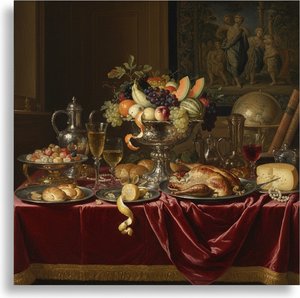
Abraham Hendricksz van Beyeren: Pioneering Dutch Still Life & the Banquet Tradition
Explore the captivating world of Dutch Golden Age still life with Abraham van Beyeren. Discover his innovative techniques, symbolic banquet scenes & lasting influence on art history. Learn about collecting these masterpieces.

Rembrandts Mesterværker: Top 25 Kunstværker til Din Væg – OriginalUniqueArt.dk
Oplev Rembrandts 25 mest ikoniske kunstværker! Fordyb dig i historierne bag 'Nattevagten', hans selvportrætter og bibelske motiver. Find museumskvalitets reproduktioner & inspiration til din væg på OriginalUniqueArt.com.

Jan Jansz Wijnants: A Study in Dutch Golden Age Still Life & Floral Transience
Explore the captivating world of Jan Wijnants and Dutch Golden Age still life painting. Discover symbolism, masterful techniques & lasting influence on floral art history. Learn more!
