 Se i rummet
 Del som kort
 Del
Del
 Detaljer
 Guide
Guide

 Download
 Lignende værker
 Røntgenundersøgelse
 Diasshow
 Q&A
Q&A Statistikker
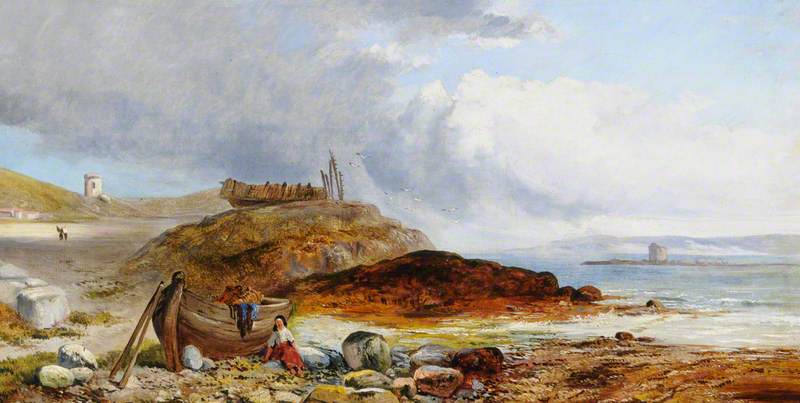
Belle Greve Bay

- 19.0 x 37.0 cm
 Vis mere
Få en printklar fil, der rækker langt ud over web-forhåndsvisningen. Hvert digitalt billede, vi sælger, stammer fra en højopløst master i vores database — typisk mellem 5.000 og 15.000 pixels i bredden — så du med selvtillid kan printe stort, beskære tæt eller gengive fine detaljer.
Ingen fil forlader vores studie uden at være blevet behandlet. En digital ekspert kontrollerer farverne i forhold til det originale maleri og korrigerer dem efter behov, hvorefter klarhed og detaljer forbedres med professionelle retoucheringsværktøjer — altid med fuld respekt for kunstnerens penselstrøg og stil. Resultatet er et billede, der ligner selve maleriet, og ikke blot et scannet billede med et filter.
Du godkender først, når du er tilfreds: Vores ekspert sender billedet til din gennemgang via e-mail inden for 72 timer. Ikke tilfreds? Bed om rettelser eller forbedringer, eller anmod om en refundering, hvis kvaliteten ikke lever op til forventningerne.
Dette er den kvalitet, som forlag, designstudier, gallerier og trykkerier stoler på.
Digitalt billede
Download en højopløselig fil til personlig fremvisning, print og kreative projekter. ( Skift til printsalg Køb håndmalet maleri)
Inkluderet i alle ordrer på digitale billeder
Ekspertise i digital levering, garanteret
Når du vælger OriginalUniqueArt.com, får du ikke blot et billede – du modtager et professionelt optimeret digitalt kunstværk, skabt med præcision og sikret med en tilfredshedsgaranti. Her er alt, hvad din ordre automatisk indeholder:

Hurtig levering via e-mail
Din højtopløselige digitale billedfil sendes til din e-mail inden for 72 timer efter bestilling – klar til øjeblikkelig brug.

AI-optimeret digital fil
Dit kunstværk optimeres professionelt ved hjælp af avancerede AI-værktøjer og manuel redigering, hvilket sikrer maksimal detaljegrad, klarhed og farvenøjagtighed.

Gratis livslang genlevering
Har du ved en fejl slettet eller mistet din fil? Ingen bekymring – vi sender den igen til enhver tid, helt gratis.

Ingen importgebyrer – nogensinde
Nyd dit kunstværk med det samme uden told, afgifter eller leveringsgebyrer – digitale downloads er altid skattefrie.

Garanteret farvenøjagtighed
Vi sikrer, at dit digitale billede gengiver de originale farver så præcist som muligt ved hjælp af professionelle værktøjer og farvestyring.

100 dages tilfredshedsgaranti
Hvis du ikke er tilfreds med dit digitale billede, vil vi revidere det eller refundere 100% inden for 100 dage – uden spørgsmål.

100% Pengene tilbage-garanti
Ik tilfreds? Få fuld refusion inden for 100 dage efter modtagelse af din digitale fil – uden spørgsmål.

Mængderabat ved storkøb
Køb 3 billeder, spar 10% - Køb 5, spar 15% - Køb 10+, spar 20%. Ideelt til kreative projekter, gallerier og bureauer.
Kunstnerens biografi
James Vivien de Fleury: A Master of British Pastoral Landscapes
James Vivien de Fleury (1847-1902) remains a quietly significant figure in 19th-century British art, a painter whose serene and meticulously rendered landscapes capture the essence of the English countryside and Italian waterways. Often overshadowed by his more flamboyant contemporaries, de Fleury’s work reveals a profound sensitivity to light, color, and the subtle rhythms of nature – qualities that imbue his scenes with an enduring sense of tranquility and beauty.
Born in Huddersfield, Yorkshire, into a prosperous wool merchant family, de Fleury's early life instilled within him a deep appreciation for the natural world. His father’s frequent travels to France and Belgium exposed young James to European artistic traditions, while his mother, an artist herself, nurtured his creative spirit. He received a classical education at Marlborough College, followed by studies in architecture at Peterhouse, Cambridge – a grounding that would later inform his precise observation of detail and composition. It was during his time at Cambridge that he discovered his passion for painting, initially as a pastime before dedicating himself fully to the pursuit.
De Fleury’s artistic journey began modestly, with early work in provincial theatres and small commissions. However, it was his move to London and subsequent association with Albert Korda's studio that proved pivotal. Working under Korda, he gained invaluable experience in producing “quota quickies”— inexpensive, mass-produced films—a common practice of the era. These early works, though commercially driven, provided a crucial foundation for his technical skills and understanding of cinematic composition. Crucially, they allowed him to hone his ability to capture fleeting moments of light and atmosphere – a skill that would later define his landscape paintings.
The Rise of a Landscape Painter
A turning point in de Fleury’s career arrived with his relocation to London in the late 1870s. He began exhibiting his work at the Royal Academy, steadily gaining recognition for his evocative depictions of rural England and Italy. His paintings weren't merely reproductions of scenery; they were imbued with a palpable sense of atmosphere – the dampness of a misty morning, the warmth of a summer afternoon, the shimmering light on water. He frequently depicted scenes from the Lake District, the Cotswolds, and the Italian Lakes, drawing inspiration from the picturesque beauty of these regions.
De Fleury’s technique was characterized by meticulous detail and a subtle use of color. He employed a delicate brushstroke to render textures – the rough bark of trees, the rippling surface of water, the folds of fabric. His compositions were often carefully balanced, creating a sense of harmony and serenity. Unlike some of his contemporaries who favored dramatic lighting effects, de Fleury preferred a more restrained approach, allowing the natural light to illuminate his scenes with a soft, diffused glow. His paintings are not grand or imposing; rather, they invite quiet contemplation and offer a glimpse into the peaceful rhythms of rural life.
Key Works and Influences
Among de Fleury’s most celebrated works are depictions of the River Thames, the Lake District, and the Italian Lakes. “River with Watermill and Village beyond” exemplifies his ability to capture the essence of a landscape – the interplay of light and shadow, the subtle details of the rural setting, and the sense of timelessness. His paintings of Belle Greve Bay in Jersey, and Luckham in Isle of Wight are also notable for their atmospheric quality and meticulous observation of detail.
De Fleury’s work was influenced by a variety of sources, including the Pre-Raphaelites, whose emphasis on beauty and nature resonated with his own artistic sensibilities. He also admired the works of Constable and Turner, masters of capturing the light and atmosphere of the English countryside. However, de Fleury developed a distinctly individual style – one characterized by its quiet elegance, meticulous detail, and profound sensitivity to the natural world.
Legacy and Historical Significance
Despite not achieving widespread fame during his lifetime, James Vivien de Fleury’s work has enjoyed a resurgence of interest in recent decades. His paintings are now recognized as important examples of 19th-century British landscape art – works that capture the beauty and tranquility of the English countryside with remarkable skill and sensitivity. De Fleury's contribution lies not in grand gestures or revolutionary techniques, but in his quietly assured mastery of observation and representation, offering viewers a serene escape into the heart of nature.
His paintings are held in numerous public collections, including the National Trust, demonstrating their enduring value and significance within the broader context of British art history. James Vivien de Fleury’s legacy is one of understated elegance, quiet beauty, and a profound appreciation for the natural world – qualities that continue to resonate with audiences today.

James Vivien De Fleury
1847 - 1902
Kort fortalt
- Artistic Movement Or Style: Romantic Landscape
- Artists Or Movements Influenced By This Artist:
- Hudson River School
- Pre-Raphaelites
- Artists Who Influenced This Artist:
- Turner
- Ruskin
- Date Of Birth: 1847
- Date Of Death: 1902
- Full Name: James Vivien de Fleury
- Nationality: British
- Notable Artworks:
- River with Watermill
- Belle Greve Bay
- Lake Lugano
- Margate Coast Scene
- Place Of Birth: Huddersfield, England