
 Se i rummet
 Del som kort
 Del
Del
 Detaljer
 Guide
Guide

 Download
 Lignende værker
 Røntgenundersøgelse
 Diasshow
 Spørgsmål og svar
 Statistikker
Hoved af en pige


 Vis mere
Giclée / Kunsttryk
Giclée- eller lærredstryk i museumskvalitet med hurtig produktion og fleksible muligheder for finish. ( Køb håndmalet maleri Skift til digitalt billede)




P118B Dkr10

P118H Dkr10

P118W Dkr10

P438Z Dkr10

P508JH Dkr12

P508YH Dkr12

P805H Dkr10

P805Z Dkr10

P919BZ Dkr10

P919G Dkr10

P919XJ Dkr10

P959ZH Dkr10

P968JZ Dkr12

W106C Dkr8

W218G Dkr10

W218JH Dkr8

W218Y Dkr10

W307PJ Dkr10

W316G Dkr10

W316PJ Dkr8

W316Y Dkr10

W398PJ Dkr8

W4111J Dkr10

W500HY Dkr15

W500JH Dkr15

W692G Dkr12

W849H Dkr8

W940BG Dkr15

W953PJ Dkr8




Vælg mellem vores forudindstillede størrelser, der matcher kunstværkets originale proportioner.

Indtast den bredde og højde, du har brug for, så det passer til din ramme eller din væg. Et print kan kun beskæres, aldrig gøres større end selve billedet, så en størrelse med et andet format vil medføre, at dele af motivet går tabt. Vi sender dig en digital mockup til godkendelse, før vi printer noget. Billedet vist på denne side viser ikke den faktiske beskæring — det er kun mockuppen, der gør.
Verdensomspændende levering () på 2 uger i stedet for de sædvanlige 4/5 uger. (7 november)

Gratis ekspresforsendelse til hele verden

Lærred af linned i høj kvalitet

Fuld transportforsikring

Garanti for refusion af told og importafgifter

Garanti for præcis farvegengivelse

100 dages returret ved fabrikationsfejl

100% fuld returret

Mængderabat ved flere køb
 Glasmulighed er kun tilgængelig i størrelser under 110 cm

Hoved af en pige
Giclée / Kunsttryk
Størrelse på reproduktion
-


Samlet pris
Dkr 540
Jacques François Joseph Saly og "Head of a Girl": En Klassisk Porträtts Elegans
Jacques François Joseph Saly (1717-1776) var en dansk og fransk skulptør, hvis kunstværker repræsenterer et vigtigt øjeblik i det europæiske Rokoko og Neoklassicismens udvikling. Han blev født i Valenciennes, Frankrig, hvor han modtog sin første kunstneriske uddannelse under Nicolas Fouquet, Louis XIV’s flamboyante finansminister – en erfaring der skulle forme hans senere stil og præcision. Saly fik et stipendium til den akademiske kunstskole i Rom i 1740-48, hvor han studerede klassisk skulptur og udviklede sin tekniske kunnen under vejledning af Guillaume Coustou. Efter nogle år tilbage i Paris blev han direktør for Det Kongelige Danske Kunstakademi i 1753, hvilket var et resultat af hans diplomatiske indsats og forbindelser til Frederik V – en beslutning der ikke blot gav ham en prestigefyldt karriererolle, men også symboliserede den nye æra af kunstnerisk udvikling og offentlig støtte i Danmark. Saly er mest kendt for sin monumentale statue af Frederik V., hvor han demonstrerede sin evne til at kombinere klassiske principper med praktisk udførelse – et projekt der skulle tage mange år og resultere i en ikonisk repræsentation af den danske konge og hans tid. Hans kunstværker udtrykker ofte følelser af elegance, harmoni og menneskelig skønhed, hvilket er karakteristisk for Neoklassicismens fokus på orden og idealisering. Denne stil var direkte inspireret af klassiske modeller fra antikviteten og søgte at efterligne den rene æstetik og symmetri, der prægede denne periode. Saly var en aktiv deltager i kunstneriske diskussioner og eksperimenter, hvilket bidrog til udviklingen af både dansk og fransk kunst på hans tid. "Head of a Girl," udført omkring 1770-90, er et eksempel på Saly’s præcision og forståelse for klassisk anatomi og udtryk. Busten er lavet af marmor og repræsenterer en ung kvindes hoved og torso – et værk der fanger essensen af Rokokoens følelsesladede kunstneriske stil og samtidig viser Saly’s tekniske færdigheder i detaljer som hårstyling og ansigtsudtryk. Kunstværket blev udstillet på Salonen i Paris i 1750-52, hvor det blev bemærket af kunsthistorikeren Stanislas Lami og kunstsamleren Mariette – hvilket understreger dets betydning inden for kunstens historie og kultur. Busten er blevet kopieret mange gange gennem tiden og fortsætter med at fascinere kunstnere og publikum verden over. Det præcise identitet af modellen til "Head of a Girl" forbliver ukendt, hvilket har været genstand for akademisk debat blandt kunsthistorikere og forskere. Teorierne om, at modellen var Alexandrine d'Etoiles (datter af Madame de Pompadour) eller Jean-Francois de Troy (direktør for den franske akademiske kunstskole i Rom), hvor Saly havde studeret tidligere), er blevet diskonteret efter omfattende undersøgelser. Bustens stil og teknik viser tydeligt Saly’s fokus på klassisk præcision og hans evne til at skildre menneskelig skønhed med stor følsomhed – hvilket gør det til et værk, der fortsat inspirerer kunstnere og kunstelskere i dag. Hvis du ønsker at bringe denne klassiske elegance ind i dit hjem eller kontor, tilbyder OriginalUniqueArt.com reproduktioner af høj kvalitet af Jacques François Joseph Saly’s "Head of a Girl." Lad os hjælpe dig med at finde den perfekte kunstværk til din smag og stil! Kontakt os idag for et personligt tilbud.Spørgsmål og svar
Er "Hoved af en pige" af Jacques François Joseph Saly et velkendt kunstværk?
Popularitetsniveauet for "Hoved af en pige" af Jacques François Joseph Saly er Anerkendt.
Hvor i Jacques François Joseph Salys karriere placerer "Hoved af en pige" sig?
Inden for Jacques François Joseph Salys karriere tilhører "Hoved af en pige" perioden Mature Style, hvilket gør det muligt at sammenligne værket med kunstnerens øvrige værker.
Hvilken størrelse og orientering anbefales til et print af "Hoved af en pige" af Jacques François Joseph Saly?
Et print af "Hoved af en pige" af Jacques François Joseph Saly anbefales i størrelsen Stor med Portrætformat orientering.
Kunstnerbiografi
A Sculptor of Enlightenment: The Life and Legacy of Jacques Saly
The history of eighteenth-century sculpture is often told through the lens of grand royal commissions and the pursuit of classical perfection, a narrative in which Jacques François Joseph Saly stands as a luminous figure. Born in 1717 in Valenciennes, France, Saly’s journey from a provincial apprentice to a central pillar of European neoclassicism is a testament to the era's burgeoning artistic mobility. His early training began at the tender age of nine under the local master Antoine Gilles, but his profound talent soon beckoned him toward the heart of the French art world. By 1732, he had arrived in Paris, immersing himself in the prestigious studio of Guillaume Coustou and attending the Académie royale de peinture et de sculpture. It was within these hallowed halls that Saly began to refine a style characterized by anatomical precision and a graceful command over form, earning him several medals that signaled the arrival of a master in the making.
Saly’s artistic identity was forged in the crucible of French grandeur, yet his most enduring impact would be felt far beyond the borders of his homeland. While his early years were steeped in the opulent traditions of the French court, his career took a transformative turn when he moved into the international sphere, working across France, Italy, and Malta. However, it was in Denmark that Saly truly found his monumental stage. His appointment as the Director of the Royal Danish Academy of Art from 1754 to 1771 was more than a professional milestone; it was a cultural mission. Under the patronage of the Danish crown, specifically during the era of Christian VII, Saly became an architect of national identity, blending the sophisticated aesthetics of French Neoclassianism with the ambitious architectural projects of the Danish Enlightenment.
Mastery in Marble and Bronze
The breadth of Saly’s oeuvre reflects a remarkable ability to navigate between the delicate intimacy of portraiture and the overwhelming scale of public monuments. His works often capture a sense of timelessness, where the cold rigidity of stone is breathed into life through meticulous detail. In pieces such as Hebe, one can observe his profound connection to classical mythology, utilizing the elegance of the Greek goddess to showcase a mastery of drapery and soft, flowing lines that suggest movement even in stillness. Similarly, his Head of a Girl demonstrates an exquisite sensitivity to the human form, capturing a fleeting moment of youthful grace with a tenderness that resonates across centuries.
Beyond the delicate, Saly possessed a rare talent for the monumental and the anatomical. His most celebrated achievement remains the Equestrian Statue of Frederick V of Denmark, located at Amalienborg. This colossal work serves as a pinnacle of his career, representing a triumph of technical skill and symbolic power. The statue, which depicts the monarch on horseback, required an extraordinary understanding of equine anatomy—a subject Saly studied with obsessive devotion. Through this work, he achieved a seamless integration of royal propaganda and artistic excellence, creating a landmark that continues to define the architectural landscape of Copenhagen.
The hallmarks of his technical development include:
- Anatomical Accuracy: A rigorous dedication to the study of musculature, particularly evident in his equine models and mythological figures.
- Neoclassical Harmony: The ability to balance the grandeur of classical themes with a clarity of composition that avoids unnecessary ornamentation.
- Material Versatility: An expert command over both the softness required for marble portraiture and the strength necessary for large-scale bronze casting.
A Lasting Impression on European Art
The historical significance of Jacques Saly lies in his role as a cultural bridge. He did not merely transplant French style to Northern Europe; rather, he helped cultivate a unique artistic synthesis that elevated the Danish Academy to international prominence. By collaborating with figures such as Nicolas Henri Jardin, Saly contributed to an era of architectural and sculptural innovation that sought to rival the great capitals of Europe. His life’s work represents the very essence of the Enlightenment—a period defined by the pursuit of order, the celebration of reason, and the elevation of human achievement through the beauty of the arts.
Though he passed away in 1776 in his native Valenciennes, Saly’s influence endured through the institutions he led and the monuments he left behind. He remains a vital figure for any student of the Neoclassical movement, embodying the transition from the ornate flourishes of the Rococo to the disciplined, noble simplicity that would define the modern era of sculpture. His legacy is etched not just in the marble of Copenhagen, but in the very spirit of European artistic excellence.

Jacques François Joseph Saly
1717 - 1776 , France
Kort om kunstneren
- Full Name: Jacques François Joseph Saly
- Nationality: French
- Date Of Birth: 1717
- Date Of Death: 1776
- Place Of Birth: Valenciennes, France
- Notable Artworks:
- Equestrian Statue of Frederick V
- Head of a Girl
- Hebe
- Artistic Movement Or Style: Neoclassical
- Artists Who Influenced This Artist:
- Jean-Baptiste Girardon
- Nicolas Beauvais
- Artists Or Movements Influenced By This Artist: ['French Academy']
Relaterede artikler

The Rococo Aesthetic: Opulence, Rebellion & the Pursuit of Pleasure in 18th-Century Art
Explore the opulent world of Rococo art! Discover its origins, key artists like Watteau & Boucher, and lasting influence on design. Expert insights for collectors & enthusiasts.
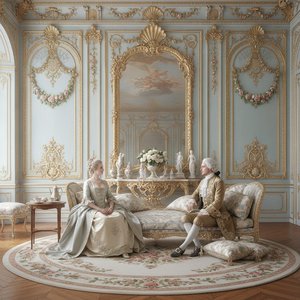
Rococo Art Guide: Elegance, Ornamentation, and the Era of Luxury
Explore the elegance of Rococo art. From Watteau to Fragonard, discover the history, aesthetics, and masters of 18th-century luxury in this expert guide for art lovers and collectors.

Rokokomaleriet: Top 10 Mesterværker der Definerede Epoken | OriginalUniqueArt.dk
Oplev Rokoko kunstens pragt! Dyk ned i 10 mesterværker fra Boucher, Watteau og Fragonard. Historier, teknikker & inspiration til dit hjem. Find museumskvalitets reproduktioner på OriginalUniqueArt.com

The Elegance of Rococo: A Journey Through Pastel Dreams and Ornate Splendor
Embark on an elegant journey through the Rococo era. Discover the delicate beauty of pastel masterpieces, the intricate artistry of 18th-century French masters, and how this era of ornate splendor continues to inspire timeless luxury in fine art collecting.

The Elegance of Rococo Portraiture: A Journey Through Grace, Soft Light, and Pastel Dreams
Discover the exquisite world of Rococo portraiture. Explore the delicate beauty of 18th-century French art, from pastel light to graceful asymmetry, and learn how to bring this era of elegance into your home through masterfully hand-painted oil reproductions.
