

 Se i fuld skala
 Del
Del Del
Del
 Detaljer

 Download
 Lignende værker
 Røntgenundersøgelse
 Diasshow
 Statistik
CLELIE PASSANT LE TIBRE


 Se mere
Håndlavet oliereproduktion
Håndmalet olie på lærred i din valgte størrelse og ramme, udført efter bestilling af vores kunstnere. ( Skift til print Skift til digitalt billede)




P118B $10

P118H $10

P118W $10

P438Z $10

P508JH $12

P508YH $12

P805H $10

P805Z $10

P919BZ $10

P919G $10

P919XJ $10

P959ZH $10

P968JZ $12

W106C $8

W218G $10

W218JH $8

W218Y $10

W307PJ $10

W316G $10

W316PJ $8

W316Y $10

W398PJ $8

W4111J $10

W500HY $15

W500JH $15

W692G $12

W849H $8

W940BG $15

W953PJ $8




Vælg mellem vores forudindstillede størrelser, der matcher kunstværkets originale proportioner.

Du kan indtaste dine egne mål for at passe til en bestemt ramme eller plads. Hvis den valgte størrelse ikke stemmer overens med det originale billedes proportioner, vil vi enten beskære kunstværket eller udvide maleriet med yderligere håndmalede elementer. En digital skitse sendes til din godkendelse, før produktionen påbegyndes.
Bemærk venligst, at forhåndsvisningen på skærmen ikke afspejler den faktiske beskæring eller udvidelse. Kun skitsen vil nøjagtigt vise den endelige komposition.
Selvom specialmål er mulige, anbefaler vi at vælge en dimension fra den foruddefinerede liste for at bevare de originale proportioner.
Efter bestilling vil OriginalUniqueArt.com team sende en e-mail til kunden for at få instruktioner og levere et udkast til en skitse.
Levering i hele verden () på 3/4 uger i stedet for de standard 5 uger. (18 september). Ingen kompromiser med kvaliteten.

Gratis ekspresforsendelse til hele verden

Lærred af linned i høj kvalitet

Fuld transportforsikring

Garanti for refusion af told og importafgifter

Garanti for præcis farvegengivelse

100 dages returret (kun ved fejl og mangler)

100% Tilfredshedsgaranti

Mængderabat tilgængelig
 Glasmulighed er kun tilgængelig i størrelser under 110 cm

CLELIE PASSANT LE TIBRE
Reproduktionsmetode
Størrelse på reproduktion
-


Samlet pris
$ 425
Clelie Passant Le Tibre: A Florentine Echo in Parisian Elegance
Jacques de Stella’s “Clelie Passant Le Tibre” transcends mere visual representation; it embodies the spirit of Renaissance Florence transplanted into the burgeoning artistic landscape of Paris. Painted circa 1630, this monumental canvas captures a scene brimming with classical allusion and imbued with an understated grandeur that speaks volumes about its creator's mastery. The artwork depicts Clelie Passant Le Tibre – a figure from Virgil’s Aeneid – traversing a riverbank adorned with lush foliage and populated by elegantly draped nude figures engaged in contemplative repose. This juxtaposition of mythological narrative and humanist observation exemplifies Stella’s signature style, blending the meticulous precision of Florentine disegno with the expressive warmth characteristic of Roman maniera vera.- Composition & Perspective: The painting employs a pyramidal structure, anchoring the central group of nude figures—Clelie herself and several companions—atop a subtly receding landscape. Linear perspective skillfully establishes depth, guiding the viewer’s gaze towards the distant cityscape, mirroring the architectural grandeur favored by Renaissance artists.
- Color Palette & Lighting: Stella utilizes a harmonious color palette dominated by warm hues – ochres, reds, golds – reflecting the influence of Venetian painting while maintaining a Florentine restraint. Soft, diffused lighting illuminates the figures and foliage, creating an atmosphere of serene beauty and enhancing the sculptural quality of the composition.
- Technique & Texture: Executed in oil paint on canvas, Stella’s technique demonstrates remarkable finesse. Brushstrokes are carefully blended to achieve smooth skin tones and subtle gradations of color, conveying a palpable sense of texture—particularly evident in the drapery folds and the horse’s coat—adding depth and realism to the scene.
- Symbolism & Narrative: Clelie Passant Le Tibre draws upon Virgil's epic poem, symbolizing purity and grace amidst the complexities of human experience. The nude figures represent idealized beauty and contemplation, reflecting humanist ideals prevalent during Stella’s time. Their serene poses invite reflection on themes of virtue and harmony.
- Emotional Impact: Beyond its formal elements, the artwork possesses a profound emotional resonance. Stella's masterful depiction evokes feelings of tranquility, admiration for classical art, and an appreciation for the sublime beauty of nature—a testament to his ability to capture the essence of human emotion through visual form.
Jacques de Stella: Bridging Artistic Traditions
Born in Lyon in 1596, Jacques de Stella’s artistic lineage traced back to François Stella, a painter and merchant of Flemish origin who instilled in his son a passion for art and scholarship. Despite lacking formal training due to his father's untimely demise, Stella benefited from the encouragement of his siblings—sculptor Madeleine and artist François the Younger—who fostered an environment conducive to artistic exploration. This familial influence propelled him towards a distinguished career marked by collaborations with prominent patrons and institutions, including Louis XIII and Cardinal Richelieu. Stella’s formative years in Florence between 1615 and 1620 proved pivotal in shaping his artistic vision. Immersed in the vibrant intellectual and artistic milieu of the Florentine Renaissance—where Michelangelo Buonarroti, Raffaello Sanzio, and Leonardo da Vinci exerted considerable influence—Stella absorbed the precepts of disegno, prioritizing anatomical accuracy and compositional balance. This Florentine grounding would subsequently inform his stylistic choices throughout his life’s work.Further Exploration: Artistic Influences & Historical Context
Stella's artistic output reflects a broader trend toward reconciling classical ideals with emerging Baroque sensibilities. While retaining the elegance of disegno, he embraced expressive brushwork and dramatic lighting—characteristics emblematic of Roman maniera vera—demonstrating an adaptability that cemented his reputation as one of the foremost painters of his era. His depictions of religious subjects—particularly the childhood of Christ—were celebrated for their meticulous detail and emotional intensity, securing him a place among the artistic luminaries of Louis XIII’s court.Recommended Resources
Kunstnerens biografi
Jacques de Stella: A Classicist Bridging Florence and Paris
Jacques de Stella (1596-1657) stands as a pivotal figure in 17th-century French art, a painter whose career seamlessly blended the rigorous principles of Florentine classicism with the burgeoning dynamism of Roman influence. Born in Lyon to a family steeped in artistic tradition – his father, François Stella, was a painter and merchant of Flemish origin – Stella’s early life laid the foundation for a remarkable trajectory. Despite his father's untimely death before providing formal training, Stella’s siblings, including sculptor Madeleine and artist François the Younger, fostered an environment rich with creative discourse and artistic practice. This familial legacy, coupled with his uncle Antoine Stella’s own artistic pursuits, propelled him towards a life dedicated to visual expression.
Stella's artistic journey commenced in Lyon, where he honed his skills before embarking on a transformative period in Florence between 1616 and 1621. This sojourn within the court of Cosimo II de Medici proved profoundly influential. Working alongside Jacques Callot, Stella immersed himself in the ideals of Renaissance art, absorbing the meticulous detail, balanced compositions, and profound moral narratives characteristic of Florentine painting. The influence of Florence is undeniably evident throughout his oeuvre, particularly in his masterful use of perspective, drapery, and the depiction of religious figures with a dignified solemnity.
The Roman Years: Poussin’s Shadow and Papal Patronage
Following Cosimo II's death in 1621, Stella relocated to Rome, where he spent the next decade establishing himself as a respected artist. This period witnessed a significant shift in his artistic sensibilities, marked by an increasing engagement with classical antiquity and, crucially, the teachings of Nicolas Poussin. Poussin’s emphasis on light, color, and idealized forms resonated deeply with Stella, shaping his approach to composition and subject matter. Their friendship fostered a shared pursuit of clarity, restraint, and spiritual depth – qualities that would become hallmarks of Stella's style.
Stella’s Roman career was further distinguished by his patronage from Pope Urban VIII, who recognized the artist’s talent and commissioned numerous works, including intricate paintings on stone (onyx, lapis-lazuli, or slate) alongside more traditional panel paintings. These commissions showcased Stella's technical virtuosity and his ability to translate complex narratives into visually compelling forms. His work during this time demonstrated a masterful command of technique, evident in the precise rendering of textures, the subtle gradations of light and shadow, and the harmonious integration of figures within their environments.
Religious Themes and Royal Recognition
Stella’s artistic output was particularly focused on religious subjects, most notably his poignant depictions of the “Childhood of Christ.” Five distinct versions of this iconic scene exist, each offering a subtly different interpretation of the narrative. These paintings are not merely representations of biblical events; they are imbued with a profound sense of tenderness, vulnerability, and spiritual contemplation. The meticulous detail with which Stella portrays the infant Jesus’s interactions with his parents – Mary and Joseph – speaks to his deep understanding of human emotion and his ability to convey complex theological ideas through visual imagery.
In 1634, Stella returned to Lyon before moving to Paris in 1635. His arrival in the capital marked a significant turning point in his career. Presented to King Louis XIII by Cardinal Richelieu, he was granted the prestigious title of ‘Peintre du Roi’ (King's Painter), a position that afforded him royal patronage and a guaranteed pension of 1000 livres. This recognition solidified Stella’s status as one of France’s leading artists, allowing him to continue his artistic pursuits with relative security and freedom.
A Collector and Legacy
Beyond his prolific painting and engraving activities, Jacques Stella was an avid art collector throughout his life. He amassed a remarkable collection of works by Poussin, Raphael, and Michelangelo, alongside drawings by Leonardo da Vinci – demonstrating a deep appreciation for the artistic heritage of the past. His dedication to preserving and studying these masterpieces underscores his commitment to both artistic creation and historical scholarship.
Stella’s career spanned several decades, marked by a remarkable adaptability and a willingness to embrace diverse artistic styles. He died in Paris, leaving behind a substantial body of work that continues to be admired for its elegance, technical skill, and profound spiritual depth. His influence on subsequent generations of French painters is undeniable, cementing his place as a key figure in the transition from Mannerism to Classicism and a vital link between the artistic traditions of Florence and France.
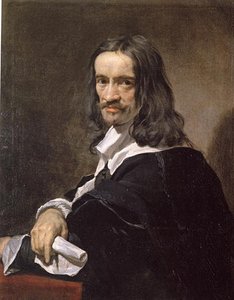
jacques de stella
1596 - 1657
Kort om kunstneren
- Artistic Movement Or Style: Classicism, Florentine & Roman art
- Artists Or Movements Influenced By This Artist:
- Poussin
- Raphael
- Artists Who Influenced This Artist:
- Jacques Callot
- Nicolas Poussin
- Date Of Birth: 1596
- Date Of Death: 1657
- Full Name: Jacques de Stella
- Nationality: French
- Notable Artworks:
- Jesus discovered by his parents
- La Vierge, L’Enfant Jésus et Saint Jean Baptiste
- Triomphe de Louis XIII
- Place Of Birth: Lyon, France
Relaterede artikler

Neo-klassicismens Mestre: Top 10 Kunstværker der Definerede en Epoke | OriginalUniqueArt.dk
Oplev neo-klassicismens storhedstid! Udforsk 10 ikoniske kunstværker af David, Ingres & Canova. Lær historierne bag disse mesterværker og find inspiration til din boligindretning med museumskvalitets reproduktioner på OriginalUniqueArt.com

Baroque Classicism: Reconciling Drama & Order in 17th-Century Art
Explore the captivating world of Baroque Classicism! Discover its history, key artists like Caravaggio & Rubens, and defining characteristics. Expert insights & high-quality reproductions at OriginalUniqueArt.

Baroque Classicism: The Grandeur of Order and Drama in 17th-Century Art History
Explore the profound elegance of Baroque Classicism. Discover how 17th-century masters synthesized dramatic emotion with classical order through the lens of the Counter-Reformation and the works of legends like Carlo Maratta and Andrea Sacchi.

Goyas Mesterværker: Top 25 Kunstværker fra den Spanske Sjæl – OriginalUniqueArt.com
Oplev Francisco Goyas 25 mest ikoniske kunstværker. Fra portrætter til 'De Sorte Malerier' – dyk ned i den spanske romantiks sjæl og Goyas teknikker. Find museumskvalitets reproduktioner & inspiration til din indretning på OriginalUniqueArt.com.

Om os
Opdag vores historie! Vi bringer kunst i verdensklasse ind i dit liv gennem ekspertudvalg, skræddersyede kreationer og gratis forhåndsvisninger. Godkendt af private og virksomheder siden år 2000.