
 Se i fuld skala
 Del
Del Del
Del
 Detaljer

 Download
 Lignende værker
 Røntgenundersøgelse
 Diasshow
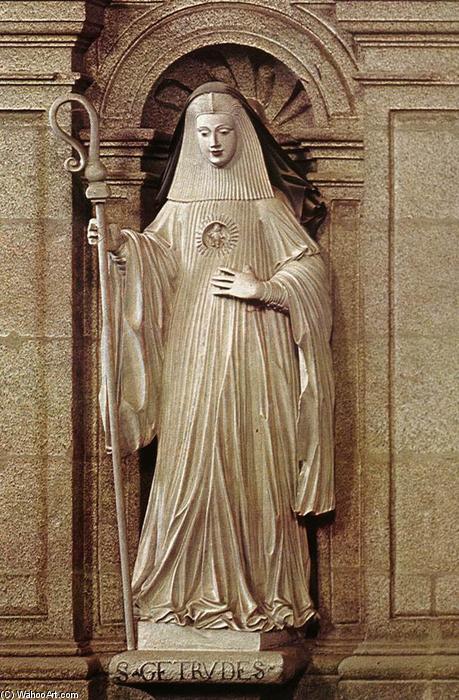
St Gertrude


 Se mere
Håndlavet oliereproduktion
Håndmalet olie på lærred i din valgte størrelse og ramme, udført efter bestilling af vores kunstnere. ( Køb print Køb billede)




































Vælg mellem vores forudindstillede størrelser, der matcher kunstværkets originale proportioner.

Du kan indtaste dine egne mål for at passe til en bestemt ramme eller plads. Hvis den valgte størrelse ikke stemmer overens med det originale billedes proportioner, vil vi enten beskære kunstværket eller udvide maleriet med yderligere håndmalede elementer. En digital skitse sendes til din godkendelse, før produktionen påbegyndes.
Bemærk venligst, at forhåndsvisningen på skærmen ikke afspejler den faktiske beskæring eller udvidelse. Kun skitsen vil nøjagtigt vise den endelige komposition.
Selvom specialmål er mulige, anbefaler vi at vælge en dimension fra den foruddefinerede liste for at bevare de originale proportioner.
Efter bestilling vil OriginalUniqueArt.com team sende en e-mail til kunden for at få instruktioner og levere et udkast til en skitse.
Levering i hele verden () på 3/4 uger i stedet for de standard 5 uger. (20 august). Ingen kompromiser med kvaliteten.

Gratis ekspresforsendelse til hele verden

Lærred af linned i høj kvalitet

Fuld transportforsikring

Garanti for refusion af told og importafgifter

Garanti for præcis farvegengivelse

60 dages returret (kun ved fabrikationsfejl)

100% Tilfredshedsgaranti

Mængderabat tilgængelig
 Glasmulighed er kun tilgængelig i størrelser under 110 cm

St Gertrude
Reproduktionsmetode
Størrelse på reproduktion
-


Samlet pris
$ 300
Kunstnerens biografi
The Sculptural Legacy of Jacinto Vieira
In the heart of the Portuguese Baroque, where light and shadow dance across gilded altarpieces, the name Jacinto Vieira resonates as a testament to the spiritual and artistic fervor of the eighteenth century. Born in the historic city of Braga around 1700, Vieira emerged from a region that was rapidly ascending to become the preeminent center for religious art in Portugal. While historical records from this era often shroud the intimate details of an artist's early life in mystery, the physical remnants of his labor provide a clear window into a soul dedicated to the divine. His work represents a pivotal moment in the transition of Portuguese craftsmanship, bridging the gap between the austere traditions of the previous century and the exuberant, theatrical grandeur that defined the reign of King João V.
The foundations of Vieira’s mastery were laid in the workshops of Braga, a city that had successfully supplanted Coimbra as the primary supplier of sacred sculpture. It is widely believed that his early training was deeply influenced by the masters of illusionistic technique, absorbing the principles of chiaroscuro and dramatic perspective that would later allow him to breathe life into stone and wood. This formative period instilled in him a profound understanding of how form could be used to evoke emotion, a skill that would become his hallmark as he navigated the complex demands of ecclesiastical commissions.
A Mastery of Stone and Spirit
Though often celebrated within the context of painting and monumental altarpieces, Vieira’s true distinction lies in his remarkable ability to manipulate medium and texture to serve religious narrative. One of his most significant achievements can be found in the Convent of Santa Maria in Arouca. In a departure from the customary use of wood prevalent in the region, Vieira undertook an ambitious series of statues carved from stone. This choice was not merely technical but deeply symbolic, as it allowed for a permanence and a weight that anchored the spiritual presence of the saints within the convent's architecture.
These sculptures, standing approximately two meters tall, depict a celestial assembly of female saints from the Cistercian and Benedictine Orders, alongside the revered Queen St. Mafalda. In these works, we observe a fascinating stylistic tension:
- The Persistence of Tradition: Rather than fully embracing the swirling, frenetic energy of the high Baroque, Vieira retained a certain monastic restraint, echoing the spiritual gravity of 17th-century art.
- Dynamic Form: Despite this restraint, his figures possess a subtle vitality, characterized by slightly twisted torsos and poses that suggest a quiet, internal movement.
- Textural Elegance: The artist demonstrated an exquisite command over drapery, carving stylized folds that cling to the bodies of the saints, undulating as if caught in a gentle, divine breeze.
Historical Significance and Artistic Vision
The career of Jacinto Vieira serves as a vital link in the evolution of Portuguese Baroque art. His ability to balance the monumental with the intimate allowed him to contribute significantly to the visual identity of Braga and its surrounding territories. By integrating his sculptural works into the very fabric of church walls and niches, he transformed architectural spaces into immersive theological experiences. His work on the Virgin of the Annunciation further showcases his preoccupation with facial expression and the nuanced portrayal of devotion, ensuring that each figure possessed a unique, recognizable humanity.
Ultimately, Vieira’s legacy is found in the enduring presence of his figures within the sacred landscapes of Portugal. He was an artist who understood that the purpose of art in the Baroque era was to move the heart and elevate the mind toward the heavens. Through his meticulous carving and his respect for the traditions of his predecessors, he helped solidify a period of unparalleled artistic opulence, leaving behind a trail of stone and spirit that continues to inspire awe in all who encounter his work.

jacinto vieira
1700 - 1760 , Portugal
Kort om kunstneren
- Artistic Movement Or Style: Baroque painting
- Artists Or Movements Influenced By This Artist: ['Italian Baroque']
- Artists Who Influenced This Artist: ['Gian Lorenzo Bernini']
- Date Of Birth: 1700
- Full Name: Jacinto Vieira
- Nationality: Portuguese
- Notable Artworks:
- The Visitation
- Saint Jerome in Prayer
- Place Of Birth: Braga, Portugal

