

 Se i fuld skala
 Del
Del Del
Del
 Detaljer

 Download
 Lignende værker
 Røntgenundersøgelse
 Diasshow
The Drummer


 Se mere
Håndlavet oliereproduktion
Håndmalet olie på lærred i din valgte størrelse og ramme, udført efter bestilling af vores kunstnere. ( Køb print Køb billede)




P118B $10

P118H $10

P118W $10

P438Z $10

P508JH $12

P508YH $12

P805H $10

P805Z $10

P919BZ $10

P919G $10

P919XJ $10

P959ZH $10

P968JZ $12

W106C $8

W218G $10

W218JH $8

W218Y $10

W307PJ $10

W316G $10

W316PJ $8

W316Y $10

W398PJ $8

W4111J $10

W500HY $15

W500JH $15

W692G $12

W849H $8

W940BG $15

W953PJ $8




Vælg mellem vores forudindstillede størrelser, der matcher kunstværkets originale proportioner.

Du kan indtaste dine egne mål for at passe til en bestemt ramme eller plads. Hvis den valgte størrelse ikke stemmer overens med det originale billedes proportioner, vil vi enten beskære kunstværket eller udvide maleriet med yderligere håndmalede elementer. En digital skitse sendes til din godkendelse, før produktionen påbegyndes.
Bemærk venligst, at forhåndsvisningen på skærmen ikke afspejler den faktiske beskæring eller udvidelse. Kun skitsen vil nøjagtigt vise den endelige komposition.
Selvom specialmål er mulige, anbefaler vi at vælge en dimension fra den foruddefinerede liste for at bevare de originale proportioner.
Efter bestilling vil OriginalUniqueArt.com team sende en e-mail til kunden for at få instruktioner og levere et udkast til en skitse.
Levering i hele verden () på 3/4 uger i stedet for de standard 5 uger. (13 august). Ingen kompromiser med kvaliteten.

Gratis ekspresforsendelse til hele verden

Lærred af linned i høj kvalitet

Fuld transportforsikring

Garanti for refusion af told og importafgifter

Garanti for præcis farvegengivelse

60 dages returret (kun ved fabrikationsfejl)

100% Tilfredshedsgaranti

Mængderabat tilgængelig
 Glasmulighed er kun tilgængelig i størrelser under 110 cm

The Drummer
Reproduktionsmetode
Størrelse på reproduktion
-


Samlet pris
$ 300
Beskrivelse af kunstværket
A Portrait of Quiet Intensity: Exploring “The Drummer”
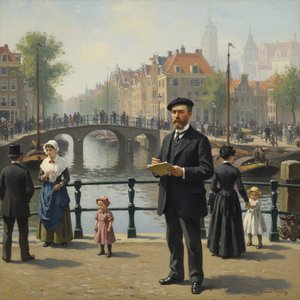
Isaac Lazarus Israëls’s “The Drummer,” painted circa 1885, isn't merely a depiction of a woman holding a drum; it’s a carefully constructed tableau brimming with understated emotion and a subtle commentary on the rhythms of everyday life in late 19th-century Amsterdam. Israëls, a pivotal figure within the Dutch Impressionist movement, masterfully captures a moment suspended between observation and engagement, inviting the viewer to contemplate the woman's gaze and the quiet power held within her posture.
The painting immediately draws attention to its central subject – a young woman seated in a simple wooden chair. Her attire is modest, suggesting a rural or working-class background, yet her presence exudes an unexpected dignity. She cradles a drum, not with flamboyant enthusiasm, but with a deliberate and almost reverent hold. The drum itself, rendered with meticulous detail, hints at its purpose – perhaps a source of entertainment, ritual, or even labor. Her eyes are fixed on something beyond the frame, lost in thought, creating an immediate sense of intimacy and inviting speculation about her inner world.
The Amsterdam Impressionist Palette: Technique and Style
Israëls’s technique is distinctly Impressionistic, characterized by loose brushstrokes, a vibrant yet muted color palette, and a focus on capturing the fleeting effects of light. He employs broken colors – applying paint in small, distinct strokes rather than blending them seamlessly – to create an atmospheric quality that suggests both warmth and shadow. The lighting, diffused and soft, washes over the scene, highlighting the textures of the wooden chair, the woman’s clothing, and the drum's surface. Notice how he uses subtle variations in tone to define form and volume, eschewing sharp outlines in favor of a more suggestive approach.
The composition is carefully balanced, with the woman occupying the central space while two figures – a seated man and a standing one – recede into the background. These secondary elements contribute to the sense of a lived-in scene, hinting at a domestic setting or perhaps a village gathering. The inclusion of the handbag adds another layer of detail, grounding the image in the realities of everyday life.
A Window into Dutch Society and Symbolism
“The Drummer” offers a poignant glimpse into the social fabric of Amsterdam during the late 19th century. Israëls was deeply interested in portraying the lives of ordinary people, particularly those who worked with their hands – farmers, laborers, and craftspeople. The woman’s humble attire and contemplative expression speak to the realities of working-class life, while her quiet strength suggests resilience and dignity. The drum itself carries symbolic weight; it can represent rhythm, tradition, community, or even a connection to ancestral roots.
Furthermore, the painting's composition echoes elements of Dutch genre paintings popular at the time, which often depicted scenes from rural life with a focus on realism and social commentary. Israëls’s work aligns with this tradition while simultaneously injecting it with his own distinctive Impressionistic style. The woman’s gaze, directed towards an unseen point, invites us to consider her thoughts and experiences – perhaps reflecting on the past, contemplating the future, or simply finding solace in the present moment.
Rediscovering Israëls: A Legacy of Observation
Isaac Lazarus Israëls remains a significant figure in Dutch art history. His ability to capture the essence of human experience through subtle observation and masterful technique continues to resonate with viewers today. “The Drummer” stands as a testament to his artistic vision, offering a captivating portrait that transcends its simple subject matter to become a profound meditation on life, memory, and the enduring power of quiet contemplation. Reproductions of this evocative work offer a beautiful way to bring Israëls’s insightful perspective into any space.
Kunstnerens biografi
Isaac Israëls: A Pioneer of Amsterdam Impressionism
Isaac Lazarus Israëls (1865 – 1934) stands as a cornerstone of Dutch Impressionist painting, embodying the spirit of innovation and artistic exploration that defined the Hague School’s successor. Born into an influential artistic lineage—his father, Jozef Israëls, being one of the foremost figures in the Hague School—Israëls inherited not only talent but also a profound understanding of artistic tradition and its potential for reimagining visual representation. From his early years, he demonstrated exceptional aptitude for painting, securing recognition before he even completed his formal education at the Royal Academy of Art in The Hague, where he forged a lifelong friendship with George Hendrik Breitner.This connection proved pivotal, shaping Israëls’ artistic vision and fostering collaborative endeavors that cemented their place within the burgeoning Impressionist movement.- Early Life & Artistic Beginnings: Israëls' upbringing instilled in him a deep appreciation for art, nurtured by his father’s unwavering dedication to capturing the essence of Dutch life. His prodigious talent manifested itself remarkably early—selling “Bugle Practice” at just sixteen years old—a feat that underscored his innate ability and foreshadowed his future success.This accomplishment speaks volumes about his artistic maturity and confidence.
- The Amsterdam Impressionist Circle: Israëls swiftly embraced the avant-garde ideals championed by the Tachtigers, rejecting academic conventions in favor of capturing fleeting moments of beauty and emotion. He established a studio in Amsterdam and cultivated close relationships with fellow artists like Breitner, creating a vibrant artistic milieu characterized by experimentation and intellectual discourse.Their shared commitment to Impressionist principles profoundly influenced Israëls’ stylistic choices.
- Key Works & Artistic Style: Israëls' oeuvre is distinguished by its luminous color palettes, loose brushwork, and masterful depictions of urban landscapes and portraits. Notable masterpieces include “Transport of Colonial Soldiers,” a monumental canvas reflecting the anxieties of his time; “The Coffee Sorters,” an evocative portrayal of daily life in Amsterdam’s bustling docks; and the iconic portrait of Mata Hari, capturing her enigmatic gaze with remarkable precision.His technique—characterized by rapid layering of paint—allowed him to convey immediacy and dynamism.
- Travels & Artistic Evolution: Israëls embarked on extensive journeys throughout Europe and Asia during the early 20th century, broadening his artistic horizons and exposing him to diverse cultural influences. His expeditions to India and the Dutch East Indies yielded invaluable sketches and paintings that enriched his artistic repertoire.These experiences instilled in him a sensitivity to exotic landscapes and traditions.
- Legacy & Recognition: Isaac Israëls’ enduring legacy resides not merely in his artistic achievements but also in his contribution to establishing Amsterdam Impressionism as a dominant force within Dutch art history. His paintings are now housed in prestigious museums worldwide, including the Van Gogh Museum and Mauritshuis, ensuring that his vision continues to inspire generations of artists.He achieved international acclaim, notably winning a Gold Medal at the 1928 Olympic Games for “Red Rider,” solidifying his reputation as one of the most celebrated painters of his era.
Influences & Artistic Vision
Israëls’ artistic sensibilities were deeply rooted in the traditions of Dutch painting, particularly the Hague School's focus on realism and tonal harmony.However, he swiftly transcended these conventions, embracing Impressionist principles that prioritized capturing light and color as perceived by the eye. The influence of Émile Zola—a fellow writer and artist—was palpable in Israëls’ exploration of social themes and his commitment to portraying human experience with empathy and nuance.He sought to convey emotion through visual language, mirroring the broader artistic currents of his time.Notable Paintings
Israëls' artistic output spanned a remarkable range of subjects, from monumental landscapes to intimate portraits. Among his most celebrated works are “Transport of Colonial Soldiers,” which powerfully captures the psychological impact of military service; “The Coffee Sorters,” an exquisitely detailed depiction of Amsterdam’s docks; and “Portrait of Mata Hari,” a haunting portrayal of the infamous dancer.These paintings exemplify Israëls' mastery of technique and his ability to convey profound emotional resonance.Conclusion
Isaac Lazarus Israëls remains an artist whose work continues to captivate audiences worldwide. His pioneering embrace of Impressionism, coupled with his unwavering dedication to artistic excellence, secured his place as a pivotal figure in Dutch art history.He bequeathed to posterity a legacy of luminous color, expressive brushwork, and insightful observation—a testament to the transformative power of artistic vision.
Isaac Israels
1865 - 1934 , Holland
Kort om kunstneren
- Artistic Movement Or Style: Hague School Impressionisme
- Artists Or Movements Influenced By This Artist: ['Émile Zola']
- Artists Who Influenced This Artist:
- Jozef Israëls
- George Hendrik Breitner
- Date Of Birth: 3. februar 1865
- Date Of Death: 7. oktober 1934
- Full Name: Isaac Lazarus Israëls
- Nationality: Nederlands
- Notable Artworks:
- Transport af kolonitransportører
- Kaffe sorter
- Portræt af Mata Hari
- Place Of Birth: Amsterdam, Nederland
Relaterede artikler
Isaac Lazarus Israëls: A Chronicle of Dutch Life & the Evolution of Impressionistic Realism
Explore the captivating world of Isaac Lazarus Israëls (1865-1934), a leading Dutch Amsterdam Impressionist. Discover his city scenes, portraits & travels through Asia – a chronicle of Dutch life and artistic evolution.

Chiaroscuro and Character: A Definitive Guide to Light and Shadow in the Dutch Baroque Era
Explore the dramatic mastery of the Dutch Baroque era. Discover how masters like Rembrandt used chiaroscuro to transform everyday life into timeless art. An expert guide for collectors and enthusiasts seeking to understand the profound interplay of light and shadow.

Golden Light & Dutch Skies: The Timeless Magic of Dutch Golden Age Landscapes
Discover the breathtaking beauty of Dutch Golden Age landscapes. Explore the mastery of light, chiaroscuro, and 17th-century realism through an expert art history lens, celebrating the enduring legacy of the Dutch Masters for discerning collectors and art lovers.

Hollandsk Barok: Top 10 Mesterværker der Definerede en Æra – Kunst til Dit Hjem
Oplev Hollandsk Barok's 10 mest ikoniske værker! Rembrandt, Vermeer & co. – dyk ned i historien bag mesterværkerne og find inspiration til din boligindretning. Køb luksus kunsttryk på OriginalUniqueArt.com.

Paul Cézannes 25 Mesterværker: En Kunstnerisk Rejse til Moderne Malerkunst | OriginalUniqueArt.dk
Oplev Paul Cézannes 25 mest ikoniske malerier – fra stilleben til landskaber. Lær om impressionismen, hans unikke stil og køb eksklusive kunsttryk på OriginalUniqueArt.dk. Find inspiration til din indretning!

