

 Se i rummet
 Del som kort
 Del
Del
 Detaljer
 Guide
Guide

 Download
 Lignende værker
 Røntgenundersøgelse
 Diasshow
 Q&A
Q&A Statistikker
Konvektionsvarme
 Akryl på lærred
- Vægkunst
- Functional Minimalism
 1960
1960 45.0 x 61.0 cm
 NEMO Science Museum
 Vis mere
Kunstværket vist på denne side er beskyttet af ophavsretsloven, hvilket betyder, at vi ikke lovligt kan skabe eller sælge en identisk reproduktion. Denne beskyttelse håndhæves i henhold til internationale aftaler som f.eks. den Bernerkonventionen og af nationale love, herunder de bestemmelser, der er fastlagt i Amerikansk ophavsretslov - Titel 17.
Denne metode overholder fuldt ud ophavsretsreglerne, da den ikke indebærer kopiering eller duplikering af det beskyttede kunstværk. I stedet er der tale om en kreativ nytolkning – et nyt maleri, som er inspireret af det oprindelige, men ikke identisk med det.
Giclée / Kunsttryk
Giclée- eller lærredstryk i museumskvalitet med hurtig produktion og fleksible muligheder for finish. ( Køb håndmalet maleri Skift til digitalt billede)




P118B Dkr10

P118H Dkr10

P118W Dkr10

P438Z Dkr10

P508JH Dkr12

P508YH Dkr12

P805H Dkr10

P805Z Dkr10

P919BZ Dkr10

P919G Dkr10

P919XJ Dkr10

P959ZH Dkr10

P968JZ Dkr12

W106C Dkr8

W218G Dkr10

W218JH Dkr8

W218Y Dkr10

W307PJ Dkr10

W316G Dkr10

W316PJ Dkr8

W316Y Dkr10

W398PJ Dkr8

W4111J Dkr10

W500HY Dkr15

W500JH Dkr15

W692G Dkr12

W849H Dkr8

W940BG Dkr15

W953PJ Dkr8




Vælg mellem vores forudindstillede størrelser, der matcher kunstværkets originale proportioner.

Indtast den bredde og højde, du har brug for, så det passer til din ramme eller din væg. Et print kan kun beskæres, aldrig gøres større end selve billedet, så en størrelse med et andet format vil medføre, at dele af motivet går tabt. Vi sender dig en digital mockup til godkendelse, før vi printer noget. Billedet vist på denne side viser ikke den faktiske beskæring — det er kun mockuppen, der gør.
Verdensomspændende levering () på 2 uger i stedet for de sædvanlige 4/5 uger. (30 oktober)

Gratis ekspresforsendelse til hele verden

Lærred af linned i høj kvalitet

Fuld transportforsikring

Garanti for refusion af told og importafgifter

Garanti for præcis farvegengivelse

100 dages returret ved fabrikationsfejl

100% fuld returret

Mængderabat ved flere køb
 Glasmulighed er kun tilgængelig i størrelser under 110 cm

Konvektionsvarme
Giclée / Kunsttryk
Størrelse på reproduktion
-


Samlet pris
Dkr 537
Convection Heater – Et Afslappet Udtryk for Minimalisme
Wim Rietveld, født i Utrecht i 1924 og død i samme by i 1985, var en dansk industriel og møbeldesigner, søn af Gerrit Rietveld – en arkitekt hvis banebrydende Mondrian Hus forbliver et af de mest ikoniske bygninger af modernistens æra. Fra sine tidlige år i Utrecht arvede Wim hans fars ubødvendige tro på enkelhed og geometrisk abstraktion som værktøj til at skabe smukke og hensigtsmæssige objekter. Denne indflydelse formede dybt hans kunstneriske vision og førte ham til at blive en førende figur i dansk design under efterkrigstiden.
- Tidlig Liv og Uddannelse: Wim Rietveld begyndte sin uddannelse på Det Kongelige Kunstakademi i København, hvor han blev præsenteret for de grundlæggende principper indenfor kunsthistorie og æstetik. Denne tidlige eksponering for modernistens ideer ville senere forme hans arbejde og hans forståelse af designets rolle i samfundet.
- Gerrit Rietveld’s Påvirkning: Hans far, Gerrit Rietveld, var en pioner indenfor arkitektur og møbeldesign, og hans fokus på funktionelle geometriske former og rene linjer havde en enorm indflydelse på Wim Rietveld. Han blev inspireret af sin fars arbejde og forsøgte at videreføre denne filosofi i sine egne projekter.
- Inventum og Gispen: Efter færdiggørelsen af hans kunststudier fik Wim Rietveld mulighed for at arbejde sammen med W. H. Gispen, en førende møbelproducent i Danmark. Samarbejdet førte til udviklingen af ikoniske møbler som Prinsesse Sofie lænestolen og Mondial skålen – objekter der perfekt kombinerede funktionalitet og æstetik.
Design Filosofi: Funktionel Minimalisme
Wim Rietveld var en ardent fortaler af funktionel minimalisme, hvilket betyder fokus på essensen af et objekt og eliminering af unødvendige dekorative elementer. Han mente, at ægte skønhed lå i enkelhed og præcision – principper han konstant søgte at anvende i sit arbejde. Denne filosofi var direkte inspireret af hans fars arkitektoniske stil og af den bredere modernistiske bevægelse, der dominerede dansk design i efterkrigstiden.
- Materialevalg: Rietveld brugte ofte robuste materialer som stål og træ til sine møbler og lamper. Han var særligt interesseret i at udforske nye teknologier og produktionsmetoder, hvilket førte til udviklingen af innovative designs.
- Geometriske Former: Hans møbler karakteriseres af rene geometriske former – kvadratiske og cylindriske linjer dominerer hans værker. Dette var et direkte resultat af hans fascination for matematisk abstraktion og hans ønske om at skabe objekter, der var både funktionelle og visuelt imponerende.
- Farvepalet: Rietveld anvendte ofte en begrænset farvepalette bestående af primære farver – rødt, gult og blåt – hvilket var et udtryk for hans minimalistiske æstetik. Han mente, at farve kunne bruges effektivt til at skabe atmosfære og fremhæve objekters struktur.
Mobilux: Et Symbol på Efterkrigstidens Optimisme
Den lille konventionelle ovn fra Inventum og Wim Rietveld er et perfekt eksempel på denne æra af funktionalitet og enkelhed. Designet blev født ud af behovet for komfort og effektivitet efter krigen, hvor materialer var sparsomme og innovation var essentielt. Ovnen repræsenterer ikke blot praktisk varme, men også en tro på fremtiden og en vilje til at skabe smukke objekter ved hjælp af simple principper.
- Form og Funktion: Ovnen er karakteriseret af sin kvadratiske form og den rene linjer – et direkte resultat af Rietvelds fokus på funktionel minimalisme. Det elegante stålfod og håndtag bidrager til ovnens æstetik uden at kompromittere dens praktiske anvendelse.
- Inventum Element: Ovnen er udstyret med en 2000 watt elektrisk Inventum element, hvilket sikrer effektiv varmeproduktion. Dette element er placeret mellem to let konvekte vægge af malet stål og perforeret øverst for at fremme luftcirkulationen.
- Symbolik: Ovnen symboliserer hjemmets komfort og sikkerhed samt den nye begyndelse efter krigen – en tid præget af optimisme og tro på teknologisk udvikling.
Spørgsmål og svar
Hvordan forenes kontrast og harmoni i "Konvektionsvarme"?
I "Konvektionsvarme" parres en Udsagn kontrast med en Ensartet farvepalette harmoni.
Hvilken stemning bringer "Konvektionsvarme" af Inventum, Wim Rietveld til et interiør?
Den Minimalistisk atmosfære i "Konvektionsvarme" af Inventum, Wim Rietveld komplementerer det anbefalede rum: et Stue og opholdsrum.
Hvilken national oprindelse ligger bag Functional Minimalism i "Konvektionsvarme"?
"Konvektionsvarme" forbinder Functional Minimalism-bevægelsen med Netherlands gennem skaberens fødested.
Kunstnerbiografi
The Legacy of Functional Elegance: The Life of Wim Rietveld
In the grand tapestry of Dutch modernism, few names resonate with as much quiet authority as Wim Rietveld. Born in 1924 in Utrecht, Wim was more than just a successor to a design dynasty; he was a visionary who translated the radical architectural principles of his father, Gerrit Rietveld, into the intimate language of everyday objects. Growing up in the shadow of the legendary Mondrian House, Wim was immersed from infancy in an environment where geometric abstraction and structural honesty were not merely aesthetic choices but fundamental truths. This early exposure to the avant-scale spatial experiments of his father provided a fertile ground for a career that would eventually redefine the boundaries between industrial utility and artistic grace.
His journey toward mastery began with a rigorous technical foundation, moving from an apprenticeship in construction to formal studies at the Royal Academy of Art in The Hague. This unique blend of technical prowess and artistic intuition allowed him to approach design not as a decorator, but as a constructor. He understood the soul of materials—the strength of steel, the warmth of laminated wood, and the versatility of plywood. As he navigated the post-war reconstruction era, a period marked by both scarcity and a desperate need for renewal, Wim’s work emerged as a beacon of hope, offering solutions that were as durable as they were beautiful.
A Symphony of Steel and Wood: The Design Evolution
The mid-century period saw the blossoming of Rietveld’s most iconic collaborations, most notably his transformative tenure at W. H. Gispen between 1953 and 1957. It was during these years that he truly mastered the art of functional minimalism. Working alongside talented peers like Friso Kramer, Wim sought to strip away the superfluous, leaving behind only the essential essence of form. His designs were characterized by a rhythmic interplay of lines and surfaces, often utilizing mass-production techniques to bring high-quality design to the broader public. The Mondrian Chair stands as a testament to this era, a piece that breathes the same geometric spirit as the De Stijl movement while remaining firmly rooted in the practical needs of modern living.
As his career progressed, Rietveld’s creative reach expanded far beyond the confines of furniture. He became a master of diverse industrial landscapes, applying his minimalist philosophy to everything from household appliances for Inventum to large-scale urban transport solutions for Werkspoor. His ability to imbue even a radiator or a drafting table with a sense of sculptural dignity is what separates him from his contemporaries. Whether it was the award-winning 1407 armchair, which earned him gold at the Milan Triennale, or the sleek, stackable seating that optimized modern office spaces, his work always maintained a certain poetic economy—a way of saying much with very little.
Historical Significance and the Enduring Modernist Spirit
The significance of Wim Rietveld lies in his ability to bridge the gap between the radical, often unapproachable experiments of early modernism and the practical requirements of a changing society. He did not merely design objects; he designed a way of life that valued clarity, efficiency, and aesthetic integrity. His later years, including his role as Head of Industrial Design at the University of Delft, allowed him to mentor a new generation, ensuring that the principles of Dutch functionalism would endure long after his passing in 1985.
Today, the works of Wim Rietveld are cherished not only as museum-grade artifacts but as living components of modern interiors. His legacy is found in:
- The mastery of materials: The seamless integration of metal and wood that defined mid-century Dutch style.
- The democratization of design: Creating high-quality, mass-producible items that brought beauty to the everyday person.
- A lasting aesthetic influence: A minimalist vocabulary that continues to inspire contemporary industrial designers worldwide.
In every clean line and purposeful curve of his creations, one can still feel the pulse of a designer who believed that true beauty is found in the perfect resolution of function and form.

Inventum, Wim Rietveld
1924 - 1985 , Netherlands
Kort om kunstneren
- Full Name: Wim Rietveld
- Nationality: Dutch
- Date Of Birth: 1924
- Date Of Death: 1985
- Place Of Birth: Utrecht, Netherlands
- Notable Artworks:
- Convection heater
- Mondial chair
- Artistic Movement Or Style: Modernism
- Artists Who Influenced This Artist: ['Gerrit Rietveld']
- Artists Or Movements Influenced By This Artist: ['Industrial design']
Relaterede artikler

Kandinskys 25 Mesterværker: En Rejse Ind i Abstrakt Kunst | OriginalUniqueArt.com
Oplev Kandinskys 25 mest ikoniske værker! Dyk ned i abstrakt kunst, ekspressionisme og farvernes sprog. Find luksus reproduktioner af berømte malerier som 'Komposition VIII' på OriginalUniqueArt.com – inspiration til din vægkunst & indretning.
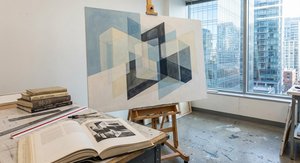
Beyond Form & Color: Geometric Abstraction's Enduring Legacy in Art History
Explore the captivating world of geometric abstraction! Discover its origins, key artists like Malevich & Mondrian, and why this movement remains highly valued by art collectors today. Expert insights at OriginalUniqueArt.

Beyond Form & Color: Geometric Abstraction's Evolution in 20th/21st Century Art
Explore the evolution of geometric abstraction from Cubism to contemporary art. Discover key artists like Malevich & Mondrian, investment insights, and expert collecting advice at OriginalUniqueArt.

Neo-Abstract Art: The High-Impact Evolution of Modern Visual Energy and Geometric Sophistication
Discover the power of Neo-Abstract art. Explore how bold geometric forms and high-impact visual energy are redefining modern design. Learn to curate sophisticated, high-energy spaces with the latest trends in contemporary abstraction and structural color.

Geometrisk Abstraktion: Top 10 Kunstværker der Definerede Bevægelsen | OriginalUniqueArt.dk
Oplev de 10 mest ikoniske værker inden for geometrisk abstraktion! Fra Kandinsky til Mondrian – lær historierne bag disse banebrydende kunstnere og deres farverige malerier. Find museumskvalitets reproduktioner & inspiration til din indretning på OriginalUniqueArt.dk.
