Romantic Antiquarianism · 1777
Wandering Minstrels (Hubert Robert, 1777)
Hubert Robert (1733–1808) har skabt Wandering Minstrels. Det er fra 1777. Det tilhører Romantic Antiquarianism-bevægelsen. Den er udført i Oil On Canvas. Det opbevares på Metropolitan Museum of Art i New York, USA. Målene er 175 × 123 cm.
- 1777
- Oil On Canvas
- 175 × 123 cm
- Metropolitan Museum of Art, New York

 Se i rummet

 Håndmalet oliemalerie
 Del som kort
 Del
 Faktablad


 Download
 Lignende værker
 Røntgenundersøgelse
 Diasshow
 Spørgsmål og svar

 Statistikker
Wandering Minstrels kort fortalt
- Titel
- Wandering Minstrels
- Kunstner
- Hubert Robert (1733–1808)
- Kunstner født i
- Paris, Frankrig
- Dato
- 1777
- Medium
- Oil On Canvas
- Dimensioner
- 175 × 123 cm
- Hvor det kan ses
- Metropolitan Museum of Art, New York, USA
- Bevægelse
- Romantic Antiquarianism
- Motiv
- landscapes, ruins, statues, minstrels, architecture, water
Hvad forestiller Wandering Minstrels?
A Vision of Leisure: Hubert Robert’s “Wandering Minstrels”
Hubert Robert's "Wandering Minstrels," painted in 1777, is more than just a picturesque landscape; it’s a meticulously constructed illusion, a fleeting moment captured with the artist’s signature blend of observation and romantic fancy. Commissioned by the Comte d’Artois as part of his extravagant pleasure pavilion at Bagatelle – a project undertaken with astonishing speed – the painting embodies the Rococo spirit of playful extravagance and the burgeoning fascination with ruins that would define much of the late 18th century. Robert, deeply influenced by his years spent in Italy, masterfully synthesizes elements of Roman architecture and sculpture with a distinctly French sensibility, creating a scene brimming with theatricality and an almost palpable sense of nostalgia.
The composition immediately draws the eye to the central obelisk, flanked by two elegant statues – likely representations of goddesses or allegorical figures. These monumental forms anchor the scene, providing a dramatic backdrop for the lively gathering below. The figures themselves are rendered with a remarkable degree of detail and movement; musicians strumming instruments, dancers twirling, and individuals engaged in various social interactions populate the foreground. Robert’s skill lies not just in depicting these figures accurately but also in conveying their energy and the overall atmosphere of merriment. Notice how he uses light to sculpt the forms, creating a sense of depth and volume that brings the scene vividly to life.
The Art of Illusion: Technique and Style
Robert’s technique is characterized by a loose, almost improvisational brushstroke – a hallmark of his “capriccio” style. He wasn't striving for photographic realism; instead, he prioritized capturing the *feeling* of a place, imbuing it with atmosphere and emotion. The use of color is particularly noteworthy: muted tones dominate, creating a hazy, dreamlike quality that reinforces the painting’s sense of timelessness. He expertly employs atmospheric perspective – objects in the distance appear paler and less distinct – to further enhance the illusion of depth and space. This technique, combined with his masterful handling of light and shadow, is what truly elevates “Wandering Minstrels” beyond a simple landscape depiction.
The painting’s genesis within the Bagatelle project offers crucial context. Robert was tasked with creating a series of six paintings for the pleasure pavilion's bathing room, all centered around the theme of water. This constraint – and the incredibly tight deadline – undoubtedly influenced his approach, leading him to draw upon diverse sources and synthesize them into a cohesive whole. The obelisk itself, for instance, likely derives from Roman architectural models studied by Robert during his time in Italy, while other elements are subtly adapted from French decorative motifs.
Symbolism and Historical Context
“Wandering Minstrels” is deeply rooted in the intellectual currents of the late 18th century. The fascination with ruins – a trend popularized by antiquarians like Johann Joachim Winckelmann – reflected a broader cultural preoccupation with the past, particularly the glories of antiquity. Robert’s incorporation of Roman architectural elements speaks to this interest, but he doesn't simply replicate classical forms; rather, he reimagines them within a distinctly French context. The figures themselves can be interpreted as symbols of leisure and social interaction, reflecting the aristocratic lifestyle enjoyed by the Comte d’Artois and his court.
The painting also subtly alludes to the changing role of art in society. During this period, artists were increasingly expected to create works that not only depicted reality but also evoked emotion and imagination. Robert's “capriccio” style – a genre characterized by fantastical landscapes and idealized scenes – perfectly embodies this shift. The scene is not meant to be a literal representation of a specific place or event; it’s an invented world, designed to transport the viewer to a realm of beauty and delight.
A Legacy of Romantic Vision
“Wandering Minstrels” stands as a testament to Hubert Robert's unique artistic vision. It is a captivating blend of observation, imagination, and technical skill – a painting that continues to enchant viewers with its evocative atmosphere and timeless appeal. Reproductions of this work offer an exceptional opportunity to bring this exquisite scene into your home, allowing you to experience the beauty and artistry of one of France’s most celebrated landscape painters. The intricate details and masterful use of light and color are particularly striking when reproduced on high-quality canvas or aluminum, capturing the essence of Robert's original vision with remarkable fidelity.
Hvilket museum udstiller Wandering Minstrels?
Metropolitan Museum of Art
New York, USA
Oprindelse og historie for Metropolitan Museum of Art Metropolitan Museum of Art begyndte med en vision, der blev delt af en gruppe forretningsmænd, finansfolk samt førende kunstnere og tænkere. Efter institutionens stiftelse i 1870 søgte museet efter et permanent hjem til at huse sine stadigt voksende erhvervelser. Før det fandt sin nuværende placering, havde museet kortvarigt residens på Douglas Mansion-ejendommen på West 14th Street.


Højopløselige billeder af Wandering Minstrels

Public domain: kunstneren døde i 1808.
Andre størrelser, beskæringer og kildehenvisning →Hubert Robert, Wandering Minstrels (1777), Metropolitan Museum of Art. Public domain
Spørgsmål om Wandering Minstrels besvaret
Hvor kan man i dag se "Wandering Minstrels" af Hubert Robert udstillet?
Originalen af "Wandering Minstrels" af Hubert Robert opbevares på Metropolitan Museum of Art, New York, USA. En reproduktion gør det muligt at udstille værket i hjemmet.
Hvornår er "Wandering Minstrels" af Hubert Robert skabt?
"Wandering Minstrels" af Hubert Robert er dateret til 1777.
Hvilken teknik er "Wandering Minstrels" udført med?
"Wandering Minstrels" af Hubert Robert er udført i Oil On Canvas. Reproduktionerne har til formål at gengive denne tekniks visuelle udtryk.
Hvad er de faktiske mål på "Wandering Minstrels" af Hubert Robert?
"Wandering Minstrels" måler 175 x 123 cm i sin oprindelige form. De originale dimensioner er en nyttig reference, når du skal vælge størrelsen på en reproduktion.
Hvad forestiller "Wandering Minstrels" af Hubert Robert?
Motiverne i "Wandering Minstrels" er landscapes, ruins, statues, minstrels, architecture, water, gathering, italy.
Er billedet af "Wandering Minstrels" af Hubert Robert frit tilgængeligt i det offentlige domæne?
Hvad angår ophavsret, er "Wandering Minstrels" i det offentlige domæne – ophavsretten er udløbet.
Hvem har skabt "Wandering Minstrels"?
Kunstneren bag "Wandering Minstrels" er Hubert Robert. Værket er katalogiseret under Hubert Roberts navn.
Hvilken kunstretning tilhører "Wandering Minstrels" af Hubert Robert?
"Wandering Minstrels" er et værk fra Romantic Antiquarianism. Denne stilart angiver den kunstneriske tradition, som værket indgår i.
Hvilken periode i Hubert Roberts karriere tilhører "Wandering Minstrels"?
Inden for Hubert Roberts karriere tilhører "Wandering Minstrels" perioden 18th Century, hvilket gør det muligt at sammenligne værket med kunstnerens øvrige værker.
Om kunstneren, Hubert Robert
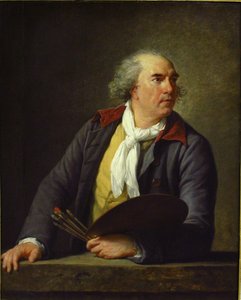
1733–1808, Frankrig
Hubert Robert
Tidligt liv, familie og kunstnerisk uddannelse Født i Paris i 1733 trådte Hubert Robert ind i en verden, hvor hans families sociale status var knyttet til tjeneste for andre. Hans far, Nicolas Robert, besad en stilling i husholdningen hos en fremtrædende skikkelse – en forbindelse, der i sidste ende ville lette den unge mands vej gennem de øvre lag af det franske samfund. Denne tidlige stabilitet lagde fundamentet for en formel uddannelse, som han gennemførte i de strukturerede rammer på Collège de Navarre. Ved 1751 havde han afsluttet sine studier under jesuitterne, hvilket gav ham en disciplineret intellektuel baggrund, før han rettede sit fokus mod de visuelle kunstarter.
Også af Hubert Robert
 The Pont du Gard1787
 The Finding of the Laocoön1773
 Le port de Ripetta
 PROJET D'AMENAGEMENT DE LA GRANDE GALERIE DU LOUVRE

Essays om Wandering Minstrels
 Hubert Robert: Picturing Ruins, Preserving Memory – A Study of Romantic Antiquarianism & Artistic InnovationExplore the captivating world of Hubert Robert, master of Romantic landscape painting & 'capriccio' ruins. Discover his historical context,…
 Eugène Boudin: Capturing Fleeting Moments – A Study of Light, Atmosphere & the Birth of ImpressionismExplore the life & art of Eugène Boudin, a pioneer of plein air painting and key influence on Impressionism. Discover his masterful light s…
 Mastering Light: The 25 Most Iconic Landscapes by Jean-Baptiste-Camille CorotImmerse yourself in the tranquil beauty of Jean-Baptiste-Camille Corot. Explore 25 iconic landscapes that defined the Barbizon school throu…