Romanticism · 1800
Architecture with Figures (Hubert Robert, 1800)
Hubert Robert (1733–1808) har skabt Architecture with Figures. Det er fra 1800. Det tilhører Romanticism-bevægelsen. Den er udført i Oil On Paper. Det opbevares på Statens Museum for Kunst i København, Danmark. Målene er 86 × 106 cm.
- 1800
- Oil On Paper
- 86 × 106 cm
- Statens Museum for Kunst, København

 Se i rummet

 Håndmalet oliemalerie
 Del som kort
 Del
 Faktablad


 Download
 Lignende værker
 Røntgenundersøgelse
 Diasshow
 Spørgsmål og svar

 Statistikker
Architecture with Figures kort fortalt
- Titel
- Architecture with Figures
- Kunstner
- Hubert Robert (1733–1808)
- Kunstner født i
- Paris, Frankrig
- Dato
- 1800
- Medium
- Oil On Paper
- Dimensioner
- 86 × 106 cm
- Hvor det kan ses
- Statens Museum for Kunst, København, Danmark
- Bevægelse
- Romanticism
- Periode
- 19th Century
- Motiv
- architecture, figures, columns, ruins, sky, stone
Hvad forestiller Architecture with Figures?
Identification of Architecture with Figures
Architecture with Figures is a painting by the French artist Hubert Robert. This work dates to about 1800. The artist, who was a member of the school of Romanticism, produced this piece during a period of significant transition in French art. Robert's background in both sculpture and painting informs the structural presence of the subjects within this composition.
The artwork depicts a scene of monumental classical ruins. The subject matter focuses on three figures—a standing man, a seated woman, and an older seated figure—who interact near a stone basin or altar. These figures are positioned amidst large-scale architectural elements, including massive columns and an arched structure. The scene is set under a vast, cloudy sky, with an obelisk visible in the distance to establish depth.
The visual presentation of the work relies on a monochromatic palette. It utilizes various shades of grey, black, and white to define the forms. This approach emphasizes the interplay of light and shadow across the textures of weathered stone, smooth marble, and soft fabric. The composition uses strong vertical lines from the columns and the obelisk to contrast with the curved lines of the arches and the draped clothing of the figures.
The Composition and Visual Elements
The composition is organized around large-scale architectural elements that establish a sense of monumental scale. On the right side, massive columns rise vertically, while an arched structure on the left side of the frame creates a boundary for the central scene. These structural components frame a central group of three figures positioned near a stone basin or altar. This group consists of a standing man, a seated woman, and an older seated figure engaged in interaction. In the background, an obelisk is placed in the distance, contributing to the receding perspective and the depth of the scene.
The color palette is monochromatic, utilizing various shades of grey, black, and white. This lack of hue emphasizes the interplay of light and shadow across the various surfaces. Dramatic lighting originates from a directional source, casting deep shadows and creating bright highlights on the textures of the weathered stone, the smooth marble, and the soft fabric of the draped clothing. The arrangement of lines reinforces the structural order, using strong verticality through the columns and the obelisk, contrasted by the curved lines of the classical arches and the organic forms of the figures and scattered flowers.
Technique and Artistic Method
The medium of this work appears to be a monochrome painting, likely executed in oil or wash on paper. The artist employs fine brushwork to render the intricate details of the architectural elements and the folds of the drapery. These precise strokes define the textures of the weathered stone and the soft surfaces of the fabric worn by the figures.
Robert frequently utilized the alla prima technique in his practice. This method involves applying paint in a direct and spontaneous manner. Such an approach allows for a sense of immediacy in the execution of the composition. The application of pigment creates a clear distinction between the solid, geometric forms of the columns and the more organic, fluid shapes of the human figures and scattered flowers.
The Artistic Style of Hubert Robert
Hubert Robert is noted for his landscape paintings and his development of the capriccio. These works consist of semi-fictitious, picturesque depictions of ruins located in Italy and France. His approach to these subjects involves a specific method of blending careful observation with a heightened imagination. This combination allows for the construction of theatrical atmospheres within the landscape. He often uses atmospheric perspective to soften distant horizons, which creates a sense of depth and space.
The artist's technique is characterized by a versatility that moves between the precision of a draftsman and the fluid touch of a painter. He frequently employed the alla prima technique, applying paint in a direct and spontaneous manner. This method contributes to the immediacy of his compositions. His work often utilizes light and shadow to manipulate the perception of space, using these elements to suggest a sense of history within the architectural forms.
Hvilket museum udstiller Architecture with Figures?
Statens Museum for Kunst
København, Danmark
Historien og oprindelsen af SMK Statens Museum for Kunst kan spore sin slægt helt tilbage til de private kunstsamlinger, som blev akkumuleret af de danske monarker. Disse kongelige besiddelser lagde fundamentet for det, der skulle blive Danmarks største kunstmuseum. Selvom institutionens rødder er tæt knyttet til disse suveræne samlinger, er dens formelle etablering markeret ved to betydningsfulde årstal.


Højopløselige billeder af Architecture with Figures

Public domain: kunstneren døde i 1808.
Andre størrelser, beskæringer og kildehenvisning →Hubert Robert, Architecture with Figures (1800), Statens Museum for Kunst. Public domain
Spørgsmål om Architecture with Figures besvaret
Hvor kan jeg se det originale værk "Architecture with Figures" af Hubert Robert?
Du kan se det originale værk "Architecture with Figures" på Statens Museum for Kunst, København, Danmark.
I hvilket år blev "Architecture with Figures" af Hubert Robert skabt?
"Architecture with Figures" af Hubert Robert blev skabt i 1800.
Hvilken teknik er brugt til "Architecture with Figures" af Hubert Robert?
"Architecture with Figures" af Hubert Robert er udført i Oil On Paper. Reproduktionerne har til formål at gengive denne tekniks visuelle udtryk.
Hvad er de faktiske mål på "Architecture with Figures" af Hubert Robert?
De registrerede mål for "Architecture with Figures" af Hubert Robert er 86.0 x 106.0cm. Reproduktioner kan bestilles i andre størrelser, mens de samme proportioner bevares.
Hvad forestiller "Architecture with Figures"?
"Architecture with Figures" af Hubert Robert forestiller: architecture, figures, columns, ruins, sky, stone, drapery.
Er billedet af "Architecture with Figures" af Hubert Robert frit tilgængeligt i det offentlige domæne?
"Architecture with Figures" af Hubert Robert er i det offentlige domæne – ophavsretten er udløbet. Denne status bestemmer, hvordan billedet af værket må reproduceres.
Hvem har skabt "Architecture with Figures"?
"Architecture with Figures" tilskrives Hubert Robert.
Hvilken kunstretning tilhører "Architecture with Figures" af Hubert Robert?
"Architecture with Figures" er et værk fra Romanticism. Denne stilart angiver den kunstneriske tradition, som værket indgår i.
Hvilken fase af Hubert Roberts kunstneriske udvikling repræsenterer "Architecture with Figures"?
"Architecture with Figures" repræsenterer Hubert Roberts Late Period.
Om kunstneren, Hubert Robert
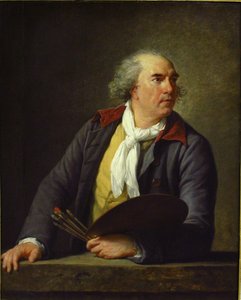
1733–1808, Frankrig
Hubert Robert
Tidligt liv, familie og kunstnerisk uddannelse Født i Paris i 1733 trådte Hubert Robert ind i en verden, hvor hans families sociale status var knyttet til tjeneste for andre. Hans far, Nicolas Robert, besad en stilling i husholdningen hos en fremtrædende skikkelse – en forbindelse, der i sidste ende ville lette den unge mands vej gennem de øvre lag af det franske samfund. Denne tidlige stabilitet lagde fundamentet for en formel uddannelse, som han gennemførte i de strukturerede rammer på Collège de Navarre. Ved 1751 havde han afsluttet sine studier under jesuitterne, hvilket gav ham en disciplineret intellektuel baggrund, før han rettede sit fokus mod de visuelle kunstarter.
Også af Hubert Robert
 The Pont du Gard1787
 The Finding of the Laocoön1773
 Le port de Ripetta
 PROJET D'AMENAGEMENT DE LA GRANDE GALERIE DU LOUVRE

Essays om Architecture with Figures
 Hubert Robert: Picturing Ruins, Preserving Memory – A Study of Romantic Antiquarianism & Artistic InnovationExplore the captivating world of Hubert Robert, master of Romantic landscape painting & 'capriccio' ruins. Discover his historical context,…
 Vedute and Capriccio: Distinguishing Topographical Views from Architectural FantasyMaster the difference between veduta and capriccio through expert art history analysis. Explore the masters of Italian landscape art today.
 French artworks of the 1880sFrench Impressionist masterpieces by Claude Monet, Pierre-Auguste Renoir, and Georges Seurat. Find museum-quality reproductions on Original…