
 Se i fuld skala
 Del
Del Del
Del
 Detaljer

 Download
 Lignende værker
 Røntgenundersøgelse
 Diasshow
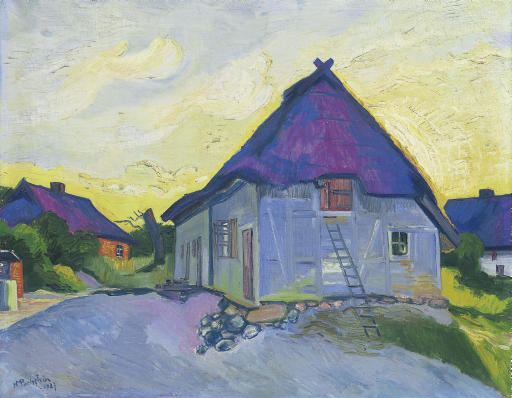
Herbstabend
 Se mere
Håndlavet oliereproduktion
Håndmalet olie på lærred i din valgte størrelse og ramme, udført efter bestilling af vores kunstnere. ( Skift til print Skift til billede)




































Vælg mellem vores forudindstillede størrelser, der matcher kunstværkets originale proportioner.

Du kan indtaste dine egne mål for at passe til en bestemt ramme eller plads. Hvis den valgte størrelse ikke stemmer overens med det originale billedes proportioner, vil vi enten beskære kunstværket eller udvide maleriet med yderligere håndmalede elementer. En digital skitse sendes til din godkendelse, før produktionen påbegyndes.
Bemærk venligst, at forhåndsvisningen på skærmen ikke afspejler den faktiske beskæring eller udvidelse. Kun skitsen vil nøjagtigt vise den endelige komposition.
Selvom specialmål er mulige, anbefaler vi at vælge en dimension fra den foruddefinerede liste for at bevare de originale proportioner.
Efter bestilling vil OriginalUniqueArt.com team sende en e-mail til kunden for at få instruktioner og levere et udkast til en skitse.
Levering i hele verden () på 3/4 uger i stedet for de standard 5 uger. (11 august). Ingen kompromiser med kvaliteten.

Gratis ekspresforsendelse til hele verden

Lærred af linned i høj kvalitet

Fuld transportforsikring

Garanti for refusion af told og importafgifter

Garanti for præcis farvegengivelse

60 dages returret (kun ved fabrikationsfejl)

100% Tilfredshedsgaranti

Mængderabat tilgængelig
 Glasmulighed er kun tilgængelig i størrelser under 110 cm

Herbstabend
Reproduktionsmetode
Størrelse på reproduktion
-


Samlet pris
$ 300
Kunstnerens biografi
The Vibrant Pulse of German Expressionism
Born in the industrial heart of Zwickau in 1881, Hermann Max Pechstein emerged from a working-class background to become one of the most commanding figures of the early twentieth-century avant-garde. His journey into the soul of modern art began not with grand academic pretension, but through a grounded connection to craftsmanship and the raw textures of life. As the son of a textile worker, Pechstein’s early sensibilities were shaped by the rhythmic, tactile world of industry, a foundation that would later manifest in his bold, uninhibited use of line and color. His formal education at the Royal Academy of Applied Arts and the Royal Academy of Fine Arts in Dresden provided him with a technical rigor that set him apart from many of his contemporaries; he was, uniquely, the only member of the legendary Die Brücke group to have undergone such comprehensive academic training.
The trajectory of Pechstein’s career was irrevocably altered in 1906 when a chance encounter at a Dresden exhibition introduced him to Erich Heckel and the burgeoning collective known as Die Brücke. This fellowship of artists sought to bridge the gap between the past and a new, visceral modernity, stripping away the polite veneers of academicism to reveal the emotional truth beneath. Pechstein’s work during this period began to vibrate with a newfound energy, shedding the lingering decorative influences of Art Nouveau in favor of something far more primal. His travels through Italy and France acted as a powerful catalyst, where the sun-drenched palettes of the Fauves and the structural clarity of the Renaissance masters merged within his mind, resulting in a style characterized by simplified forms and an intense, unmixed application of pigment.
A Legacy Forged in Color and Conflict
As his reputation grew, Pechstein’s canvases became windows into the shifting spirit of post-WWI Germany. His art was never merely decorative; it was a profound exploration of human existence, captured through scenes of lively dancers, tranquil landscapes, and intimate portraits. In works such as Girl at a Table, one can witness his mastery of expressive lines and a sophisticated use of color that breathes life into the subject, often utilizing models like Lotte Kaprolat to ground his visionary abstractions in human warmth. His ability to capture the vitality of everyday life—from the rhythmic movement in his Dancers series to the vibrant, sun-soaked atmospheres of his island scenes—cemented his status as a master of the Expressionist idiom.
However, the brilliance of Pechstein’s vision was met with profound darkness during the rise of the Nazi regime. His commitment to emotional honesty and formal experimentation led the state to label his work as Degenerate Art. This period of persecution saw more than 300 of his paintings stripped from German museums, a devastating blow to both the artist and the cultural fabric of his nation. Despite this systematic attempt to erase his contribution, Pechstein’s spirit remained unbroken. He continued to paint through the turbulence of war and political upheaval, leaving behind a legacy that serves as a testament to the resilience of the creative impulse. Today, we recognize Max Pechstein not just as a painter, but as a pioneer who dared to use color as a language of liberation, ensuring that the vibrant pulse of German Expressionism continues to resonate through the halls of art history.

Hermann Max Pechstein
1881 - 1955 , Germany
Kort om kunstneren
- Artistic Movement Or Style: Cubism, Surrealism
- Artists Or Movements Influenced By This Artist: ['Georges Braque']
- Artists Who Influenced This Artist:
- Paul Cézanne
- African art
- Date Of Birth: October 25, 1881
- Date Of Death: April 8, 1973
- Full Name: Pablo Diego José Francisco de Paula Juan Nepomuceno María de los Remedios Cipriano de la Santísima Trinidad Ruiz y Picasso
- Nationality: Spanish
- Notable Artworks:
- Guernica
- Les Demoiselles d’Avignon
- The Weeping Woman
- Girl Before a Mirror
- Place Of Birth: Málaga, Spain


