
 Se i rummet
 Del som kort
 Del
Del
 Detaljer
 Guide
Guide

 Download
 Lignende værker
 Røntgenundersøgelse
 Diasshow
 Spørgsmål og svar
 Statistikker
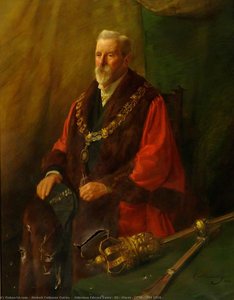
John

- 59.0 x 49.0 cm

 Vis mere
Giclée / Kunsttryk
Giclée- eller lærredstryk i museumskvalitet med hurtig produktion og fleksible muligheder for finish. ( Køb håndmalet maleri Skift til digitalt billede)




































Vælg mellem vores forudindstillede størrelser, der matcher kunstværkets originale proportioner.

Indtast den bredde og højde, du har brug for, så det passer til din ramme eller din væg. Et print kan kun beskæres, aldrig gøres større end selve billedet, så en størrelse med et andet format vil medføre, at dele af motivet går tabt. Vi sender dig en digital mockup til godkendelse, før vi printer noget. Billedet vist på denne side viser ikke den faktiske beskæring — det er kun mockuppen, der gør.
Verdensomspændende levering () på 2 uger i stedet for de sædvanlige 4/5 uger. (13 november)

Gratis ekspresforsendelse til hele verden

Lærred af linned i høj kvalitet

Fuld transportforsikring

Garanti for refusion af told og importafgifter

Garanti for præcis farvegengivelse

100 dages returret ved fabrikationsfejl

100% fuld returret

Mængderabat ved flere køb
 Glasmulighed er kun tilgængelig i størrelser under 110 cm

John
Giclée / Kunsttryk
Størrelse på reproduktion
-


Samlet pris
Dkr 540
Kunstnerbiografi
The Soul in the Surface: The Life and Legacy of Herbert Colborne Oakley
In the golden, twilight era of the Victorian age, few artists possessed the quiet ability to freeze a moment of human dignity as effectively as Herbert Colborne Oakley. Born in 1869 in the industrious heart of Coventry, Warwickshire, Oakley emerged not merely as a painter of faces, but as a chronicler of character. His journey from the Midlands to the heights of British portraiture was paved with a profound reverence for classical tradition and an almost spiritual commitment to the nuances of the human psyche. To look upon an Oakley canvas is to encounter a world where elegance meets an enduring moral seriousness, a realm where every brushstroke serves to illuminate the inner stillness of his subjects.
The foundation of Oakley’s mastery was laid within the hallowed halls of the Birmingham School of Art. It was here that he encountered the monumental influence of George Frederic Watts, a mentor whose philosophy would become the heartbeat of Oakley’s own practice. From Watts, Oakley inherited more than just technical prowess; he absorbed a belief in the power of idealized beauty and the necessity of conveying psychological depth through visual representation. This lineage is palpable in Oakley's work, where figures are often rendered with a serene, almost meditative grace, inviting the viewer into a state of spiritual contemplation that transcends the mere physical likeness.
A Mastery of Light and Layering
As his career flourished, Oakley’s technical repertoire became increasingly sophisticated, marked by a meticulousness that defined the pinnacle of Victorian painting. He was a master of the glazing technique, a laborious process involving the application of multiple translucent layers of pigment to achieve a luminous, breathing surface. This method allowed him to capture the subtle interplay of light upon skin and fabric, creating an atmospheric depth that felt both tangible and ethereal. His ability to manipulate light was not merely a display of skill, but a tool used to sculpt emotion, lending his portraits a timeless quality that seems to defy the passing of decades.
His body of work, which exceeds three hundred paintings, reveals a remarkable versatility in subject matter. While he is most celebrated for his formal portraits of the Birmingham elite and prominent social figures, he also ventured into the evocative realm of genre painting. In these scenes, Oakley captured the rhythms of everyday life with an acute sensitivity to social context. Whether depicting the quiet dignity of a gentleman or the spirited innocence found in works like Welsh Gamin, his brush remained ever-focused on the human element, finding extraordinary stories within ordinary moments.
The Enduring Echo of a Victorian Vision
The historical significance of Herbert Colborne Oakley lies in his role as a bridge between the rigid formalisms of the mid-Victorian period and the more psychologically complex portraiture of the early twentieth century. He did not seek to disrupt the traditions of his predecessors but rather to refine and deepen them, ensuring that the values of grace, restraint, and dignity remained central to the British artistic identity. His portraits of notable figures—ranging from academic luminaries like Herbert Lionel Drake to local leaders—serve as vital historical documents, preserving the likenesses and the perceived essences of a vanishing era.
Though the world moved toward the fragmented abstractions of Modernism, Oakley’s dedication to the classical ideal remained unshakable. His legacy is found in the quiet power of his compositions and the enduring emotional resonance of his subjects. To study his work today is to rediscover a lost language of serenity and substance, reminding us that true portraiture is not simply about capturing how a person looks, but about revealing who they are beneath the surface.
Herbert Colborne Oakley
1869 - 1944
Kort om kunstneren
- Artistic Movement Or Style: Victorian Portraiture
- Artists Or Movements Influenced By This Artist: ['Pre-Raphaelites']
- Artists Who Influenced This Artist: ['William Holman Hunt']
- Date Of Birth: 1869
- Date Of Death: 1944
- Full Name: Herbert Colborne Oakley
- Nationality: British
- Notable Artworks:
- Bathers
- Alderman Edward Bance
- Place Of Birth: Coventry, England